NOTE: Unfortunately, due to illness & surgery, the previous weekly summary was published on the 11thSeptember. To aid my recovery, this summary only covers the latest week. Thank you, Neal.
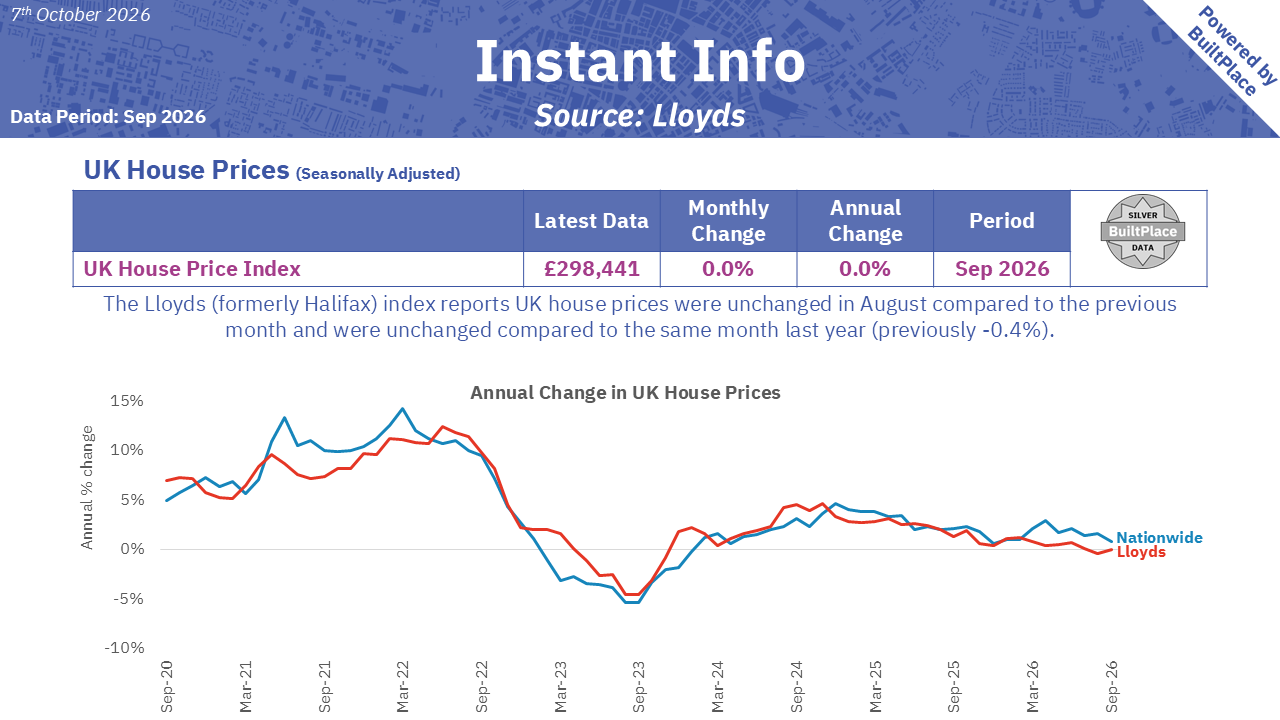
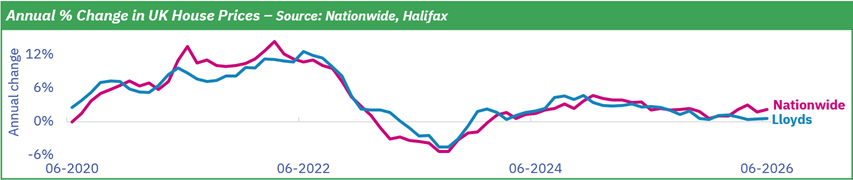
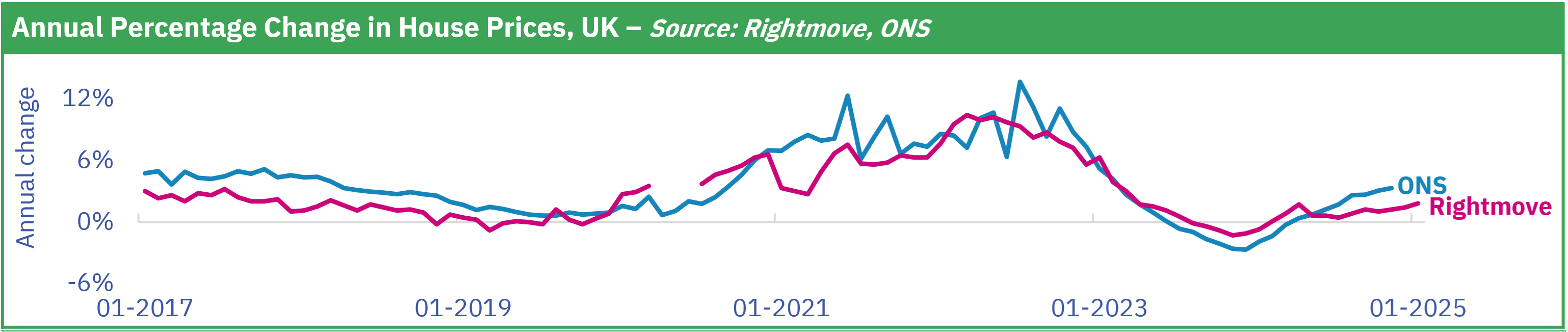
DATA: Lloyds reported UK house were unchanged in year to Sep 2026
They report(PDF) UK house prices were unchanged compared to both the previous month and the same month last year. They also report “Northern Ireland continues to lead the UK, with annual house price growth increasing to +7.4 %” while “Greater London recorded the largest annual decline, down -2.2% year -on -year to £531,548, closely followed by the South East, down -2.1% to £380,829”.
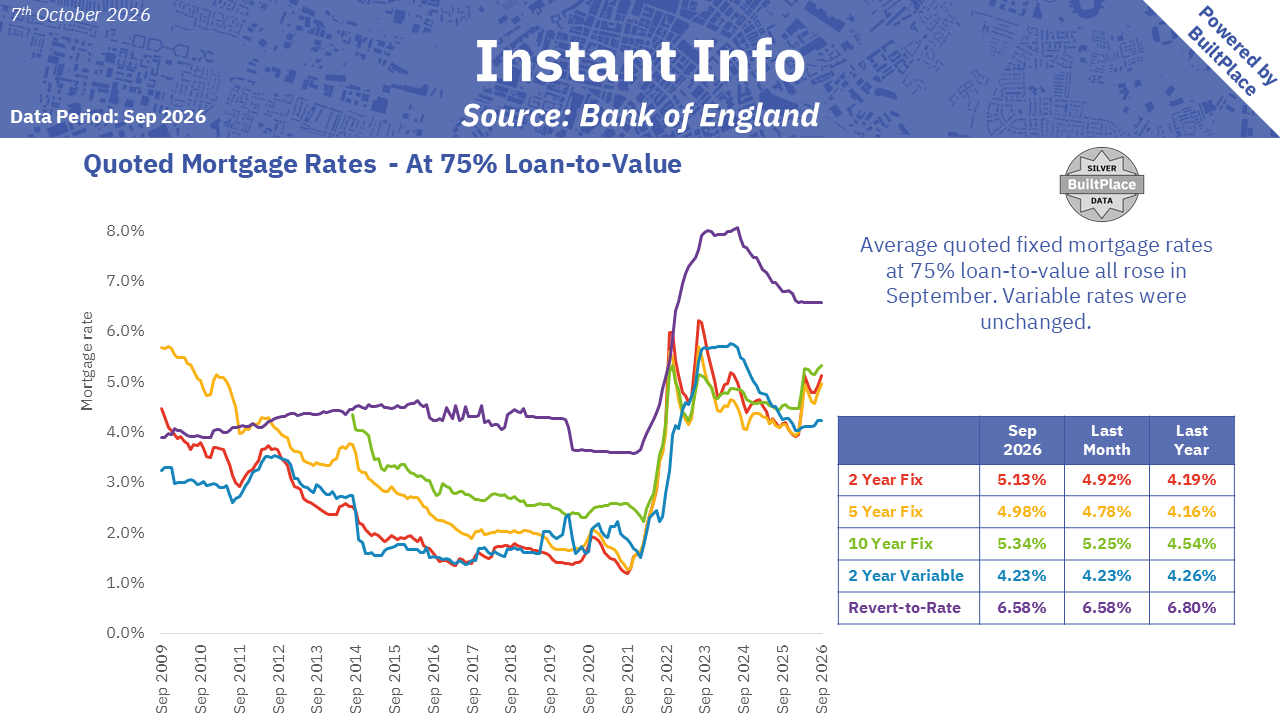
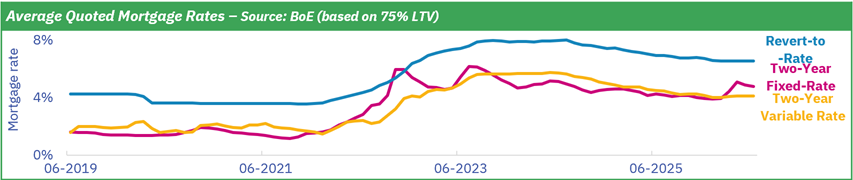
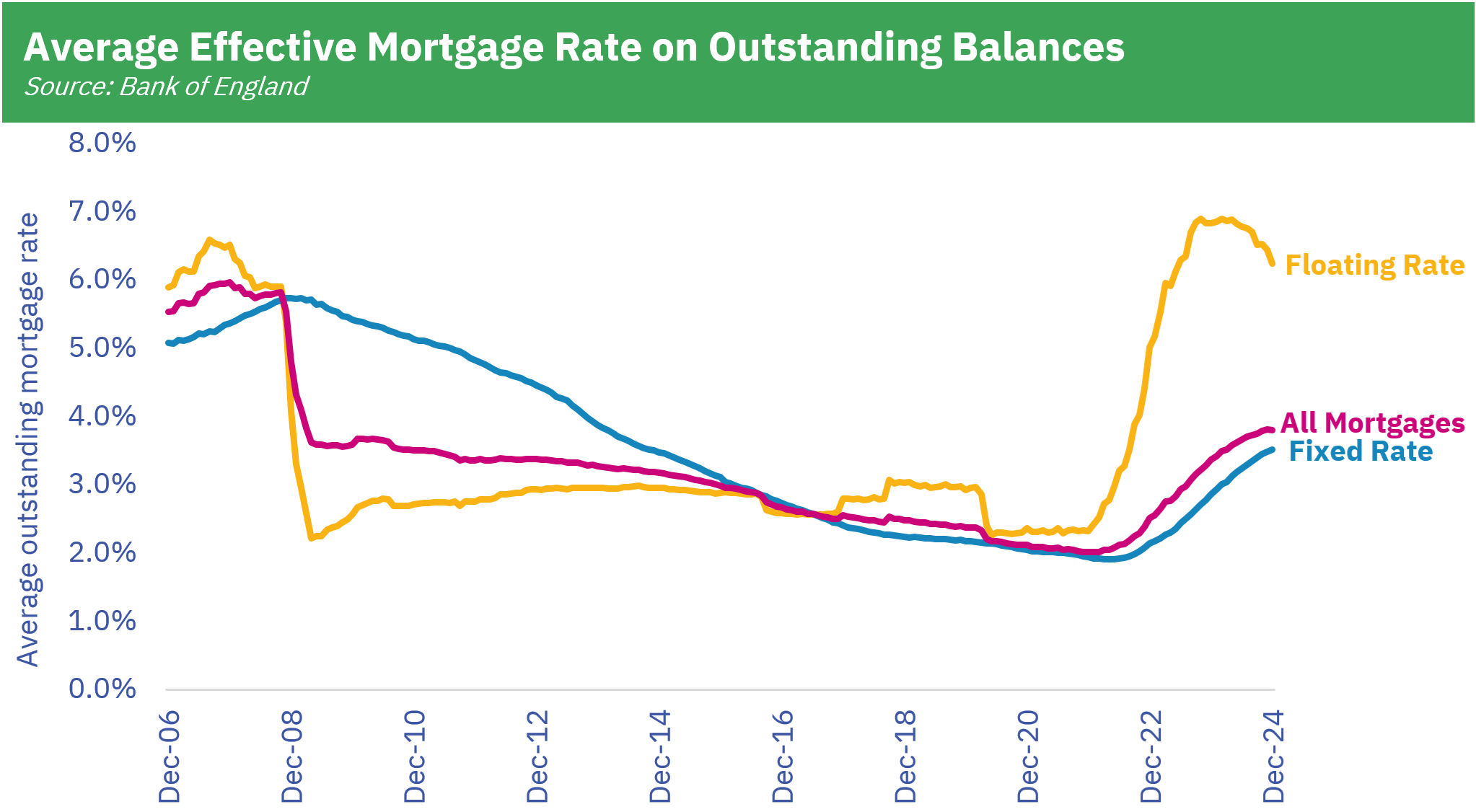
DATA: Bank of England published quoted mortgage rates for Sep 2026
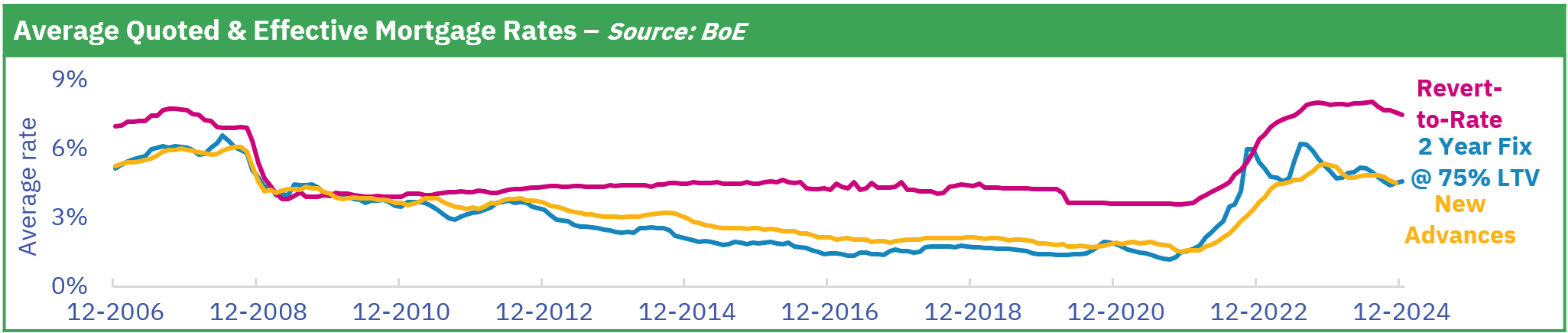
They report the average rate on a two-year fixed-rate mortgage at 75% loan-to-value increased to 5.13% in September, from 4.92% the previous month – that’s slightly below the recent peak of 5.14% in April but October’s figure is likely to be higher. The two-year variable rate and revert-to-rate rates were unchanged, at 4.23% and 6.58% respectively.
DATA: DfBT published construction building materials stats for Sep 2026
They report “deliveries of bricks decreased by 10.1% in August 2026 compared with August 2025” and “the material price index for ‘All Work’ increased by 6.4% in August 2026 compared with August 2025”.
DATA: BoE published Credit Conditions Survey for Q3 2026
They report “Lenders reported that the availability of secured credit to households decreased in the three months to end-August 2026 (Q3)” and “It was expected to increase slightly over the next three months to end-November 2026 (Q4)”. They also reported that “demand for secured lending for house purchase decreased in Q3, and was expected to increase slightly in Q4”.
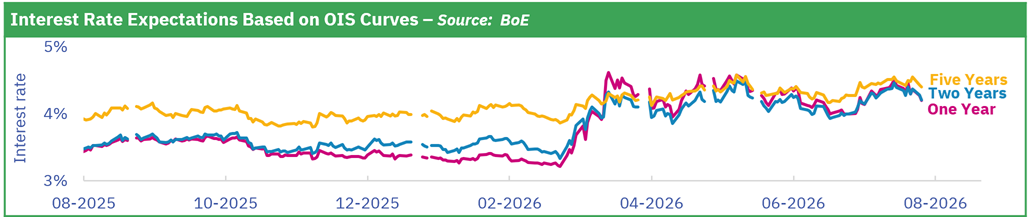
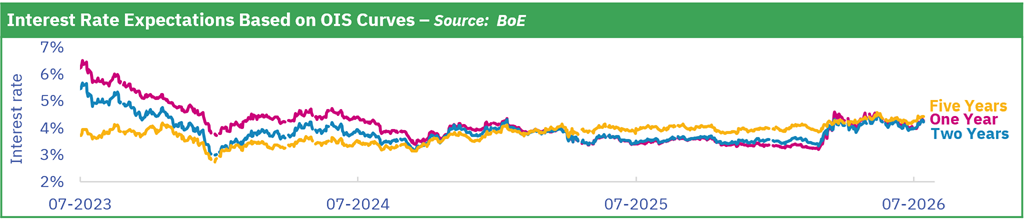
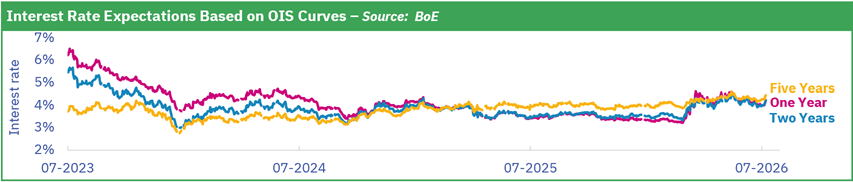
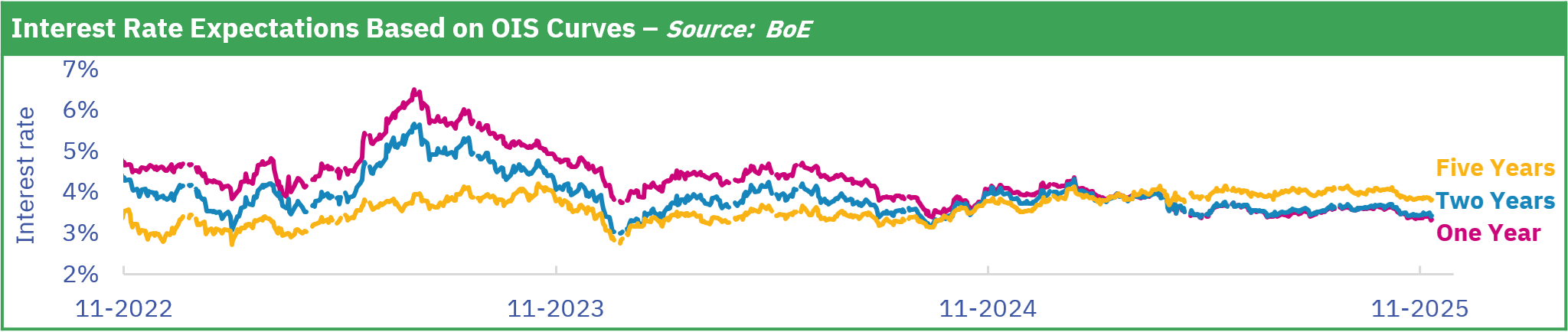
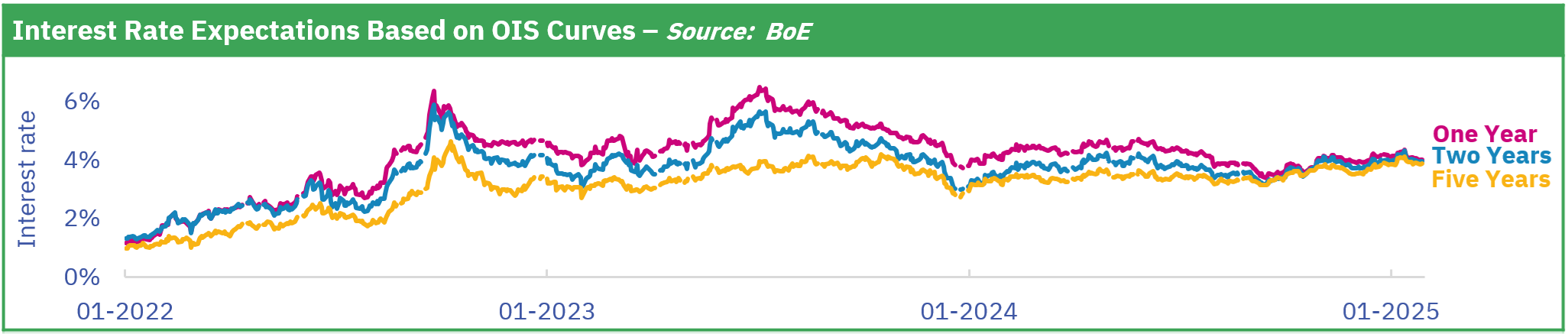
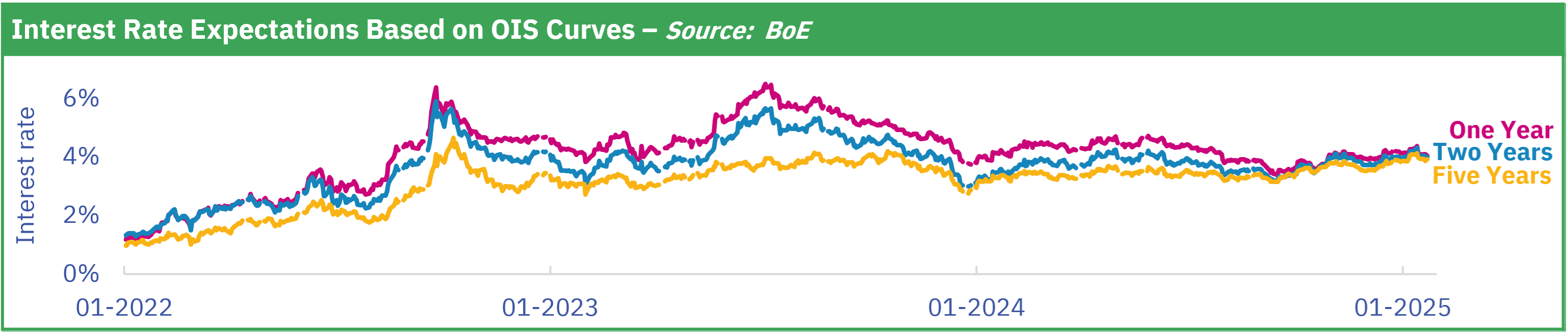
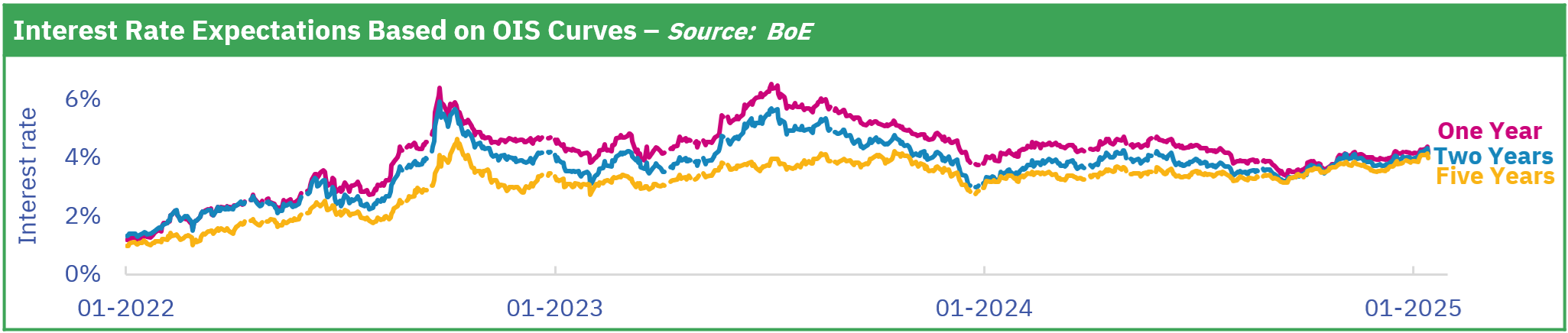
DATA: Financial Market Expectations For BoE’s Bank Rate
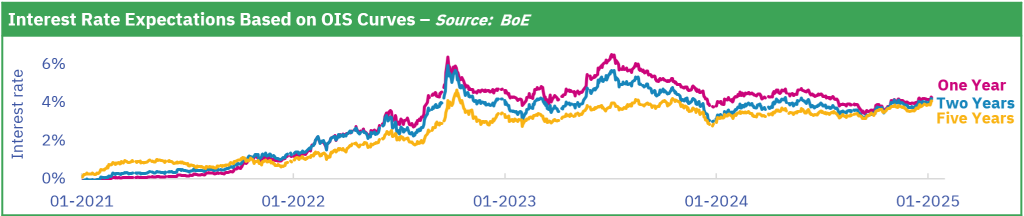
The chart provides a summary for the expected future level of Bank Rate based on daily data. The One Year figure was 4.78% on the 7th Oct, down from 4.86% on the 30th Sep.
This chart provides a summary of the number of new sales listings on Rightmove based on weekly data (indexed, with 2023 = 100). The 52-week average was 108.7 for the week commencing 13th Sep, slightly lower than the 108.8 reading for the previous week.
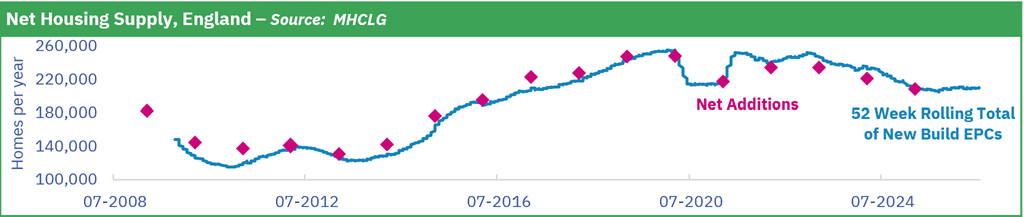
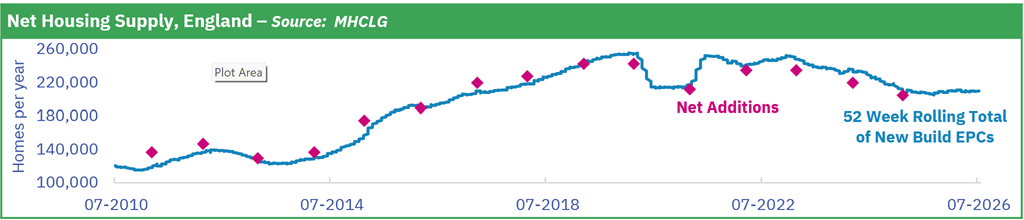
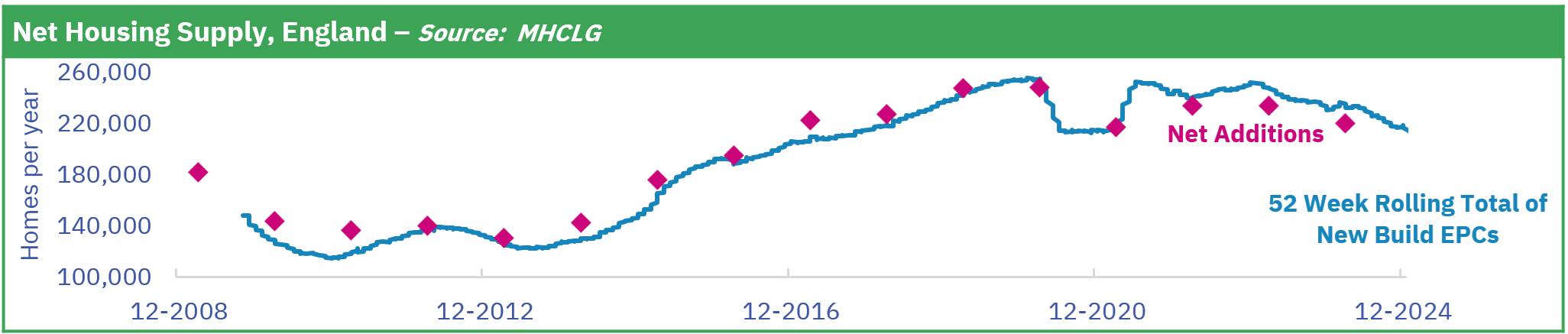
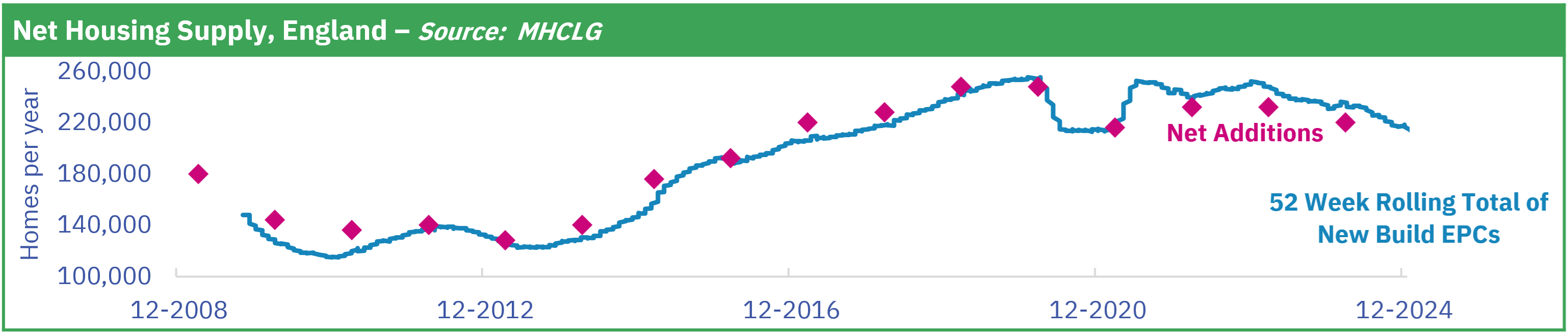
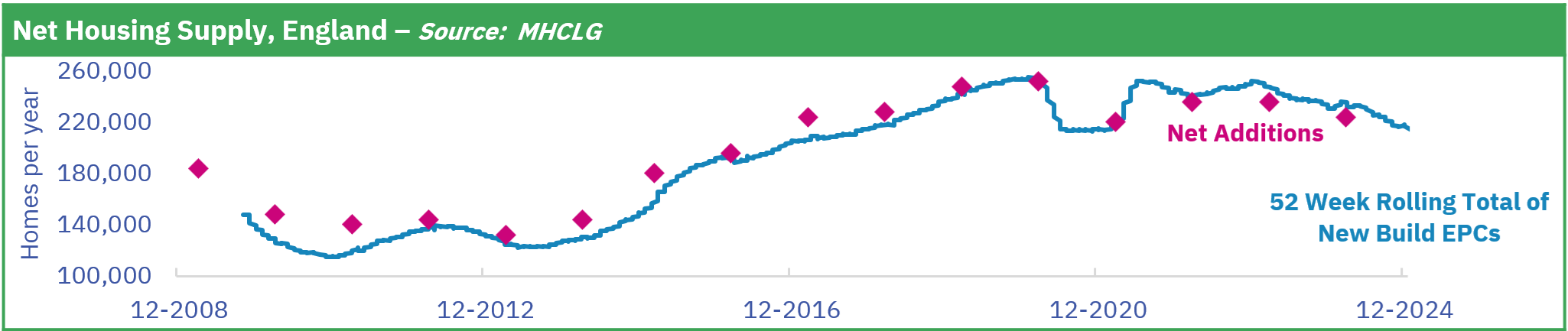
DATA: New Build Energy Performance Certificates, England
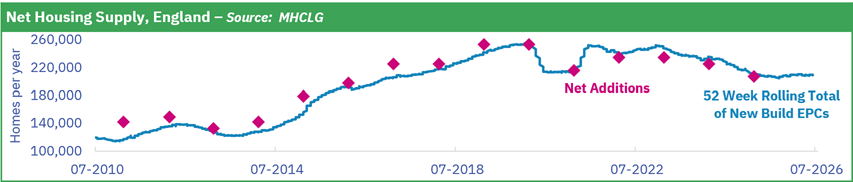
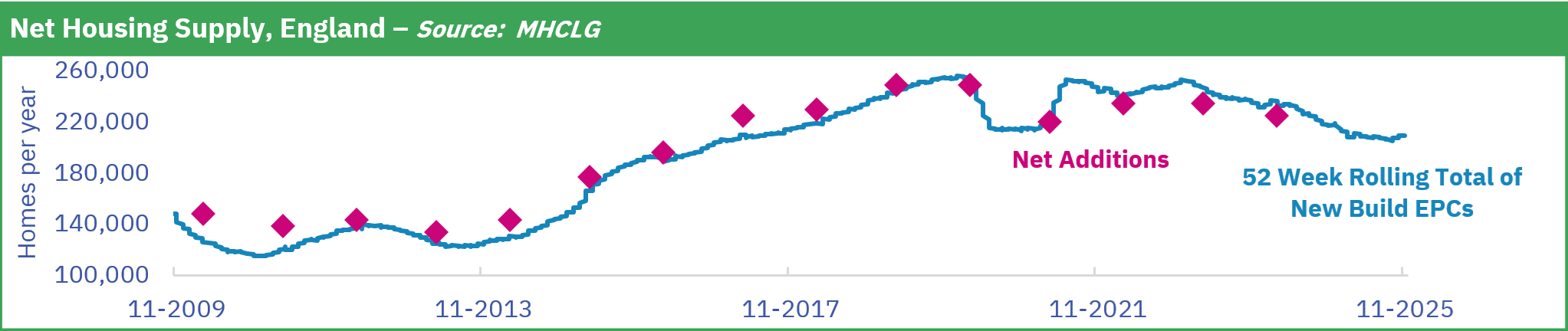
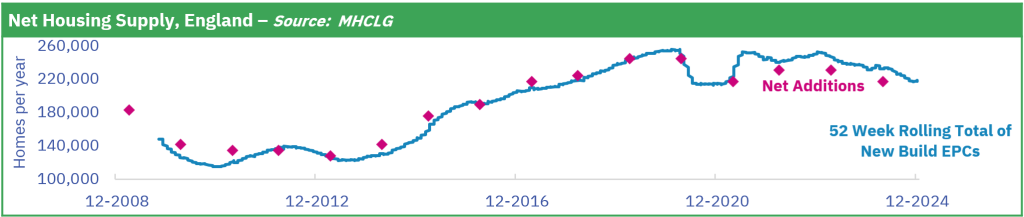
This chart provides a summary of the number of EPCs on new build properties, a useful leading indicator for net additions. The 52-week rolling total was 205,618 for the week commencing 28th Sep, lower than the 205,829 total for the previous week.
POLICY: MHCLG consultation on Awaan’s Law in the PRS
“This consultation looks at the approach to applying Awaab’s Law to tenancies in the private rented sector and to certain types of accommodation occupied under licence”.
REPORT(PDF): RICS published residential market survey for Sep 2026
They report “Macroeconomic headwinds weigh on the near-term outlook, with interest rate expectations moving higher in recent weeks” as “Buyer demand remains subdued, while near-term sales expectations have edged back into marginally negative territory” and “House prices continue to face modest downward pressure at the headline level”.
REPORT: Scottish Gov on tenant engagement with MEES
The research, on the Minimum Energy Efficiency Standard in the private rented sector found that “With trust in landlords low, participants responded well to the legal obligation for change that the proposed MEES offer”.
They report “The gap in mortgage pricing between the mainstream and buy-to-let markets has never been more favourable to buy to let. Two-year fixed rate deals in the buy-to-let market were, on average, 73 basis points cheaper than those available to owner occupiers at the end of August, but this reflected significantly higher arrangement fees in the buy-to-let market”.
REPORT: JRF published Poverty in Scotland 2026 report
They find “In 2022–25, 17% of people (940,000) in Scotland were in relative poverty after housing costs” and “Despite some progress, the legal target to reduce relative child poverty to 10% by 2030/31 is set to be missed by a wide margin”.
REPORT: JRF on how rent controls reduce the cost of LHA uprating
They suggest “The Autumn Budget should mark the beginning of a permanent return to annual uplifts of Local Housing Allowance (LHA)” and “This uprating should be paired with a rent control that would slow rental growth directly within this Parliament” as it would “significantly reduce the cost of future LHA uprating overtime and protect government finances from large jumps in rents”.
REPORT: Crisis reported on cutting homelessness in Scotland
The “Independent analysis for Crisis Scotland by Heriot-Watt University models ten policy interventions and finds a comprehensive package could cut the most severe homelessness by 47% by 2028”.
REPORT: HBF reported on Planning Performance Agreements
They report “Local authorities are increasingly relying on additional payments from developers to resource the planning process” but the “Growing reliance on Planning Performance Agreements risks masking the true time taken to determine applications”.
REPORT: Onward reported on reducing housing benefit spending
“As well as addressing the unsustainability of housing benefits spending, this paper also considers ways to correct some of the underlying unfairness to those paying for both their own housing and their neighbours’”.
REPORT: Savills reported on the Build-to-Rent sector in Q3 2026
They report “More than £900 million was invested in Q3 2026, taking year-to-date volumes to c.£4.2 billion – more than any previous year at this point” and “Q4 has accounted for the largest share of annual investment in each of the past three years, so 2026 could deliver a new annual record by year-end”.
BLOG: Bank Underground on using CHAPS as a leading indicator for sales
They find “UK property transactions can be identified and observed directly within minutes of payment settlement using CHAPS, the UK’s high-value payment system” and it “closely aligns with existing official housing market statistics and therefore can act as a reliable real-time indicator of these statistics”. Can we have some weekly data published please!
They suggest social housing can unlock more housing supply but “realising its potential requires more than putting additional grant into the existing system” and “means rebuilding social housing as a stable, counter-cyclical source of demand, and using devolution to organise delivery at the scale needed to transform how Britain builds”.
NEWS: Hamptons reported on how the mansion tax is reshaping the market
They report “Evidence from agreed sales suggests the £2.0m threshold is increasingly acting as a psychological and financial barrier” and “The number of sales agreed between £2.0m and £2.2m is down 4% year-to-date” while “agreed sales within the 10% below the threshold (£1.8m to £1.99m) are up 19% year-to-date”.
CORPORATE: Unite Group published Q3 Trading Update
They report “Across the Unite Students portfolio, 95.6% of beds are now sold for the 2026/27 academic year (2025/26: 95.3%)” and “Since A-Level results, we have agreed nominations with universities for an additional 450 beds for the 2026/27 academic year, reflecting increased acceptances at the strongest universities”. They also report “Our leasing performance has delivered 0.6% growth in like-for-like income” which “reflects a modest increase in occupancy and a 0.3% reduction in annual rents” while they have “seen a 15% improvement in income in Nottingham, where targeted price reductions have driven materially higher occupancy”.
Chart of the Week
The number of Energy Performance Certificates for new build dwellings is a useful leading indicator for net additions (see chart above). Across England, the figure had been consistently hovering around 210,000 p.a. in 2026 but since August it has been trending downwards, to 205,600 at the end of September.
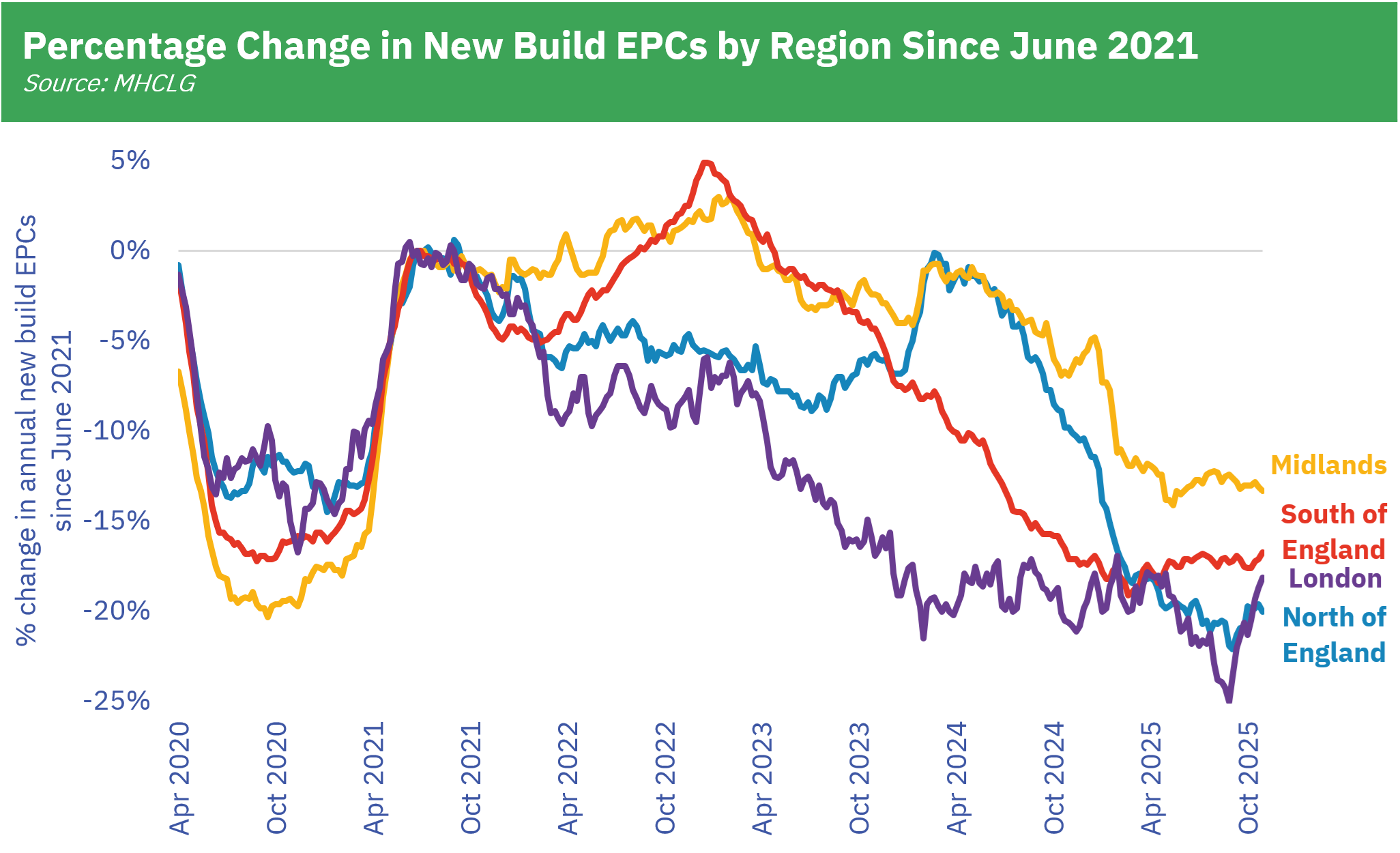
Looking at the regional data, as per the chart below, shows a mixed picture. The annual number of new build EPCs in the south of England had been slowly recovering but has been in decline since around February, while in London the data is more volatile but hit a recent high in August. However, it has fallen sharply (-5%) since then. Delivery in the Midlands has been low but relatively stable but there has been a fall-off in delivery in the north of England since August.
I wouldn’t expect these figures to get better anytime soon given the underlying economic environment and it’s possible that the delayed implementation of the Your First Home scheme might lead to some potential new homes buyers delaying their decision as they wait to find out if they qualify for the scheme. Publishing the income cap would go some way to helping buyers assess whether they should wait or not, but this is always a risk with announcing but delaying the implementation of a housing market intervention.
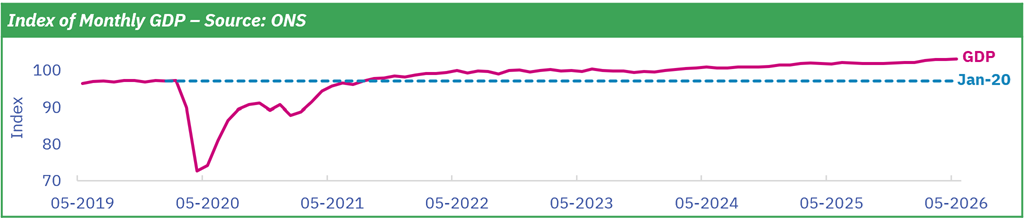
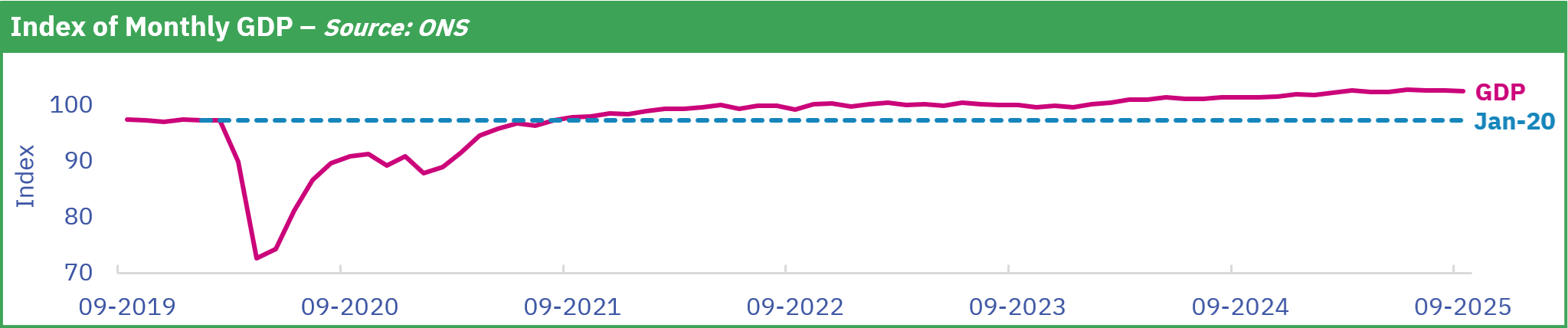
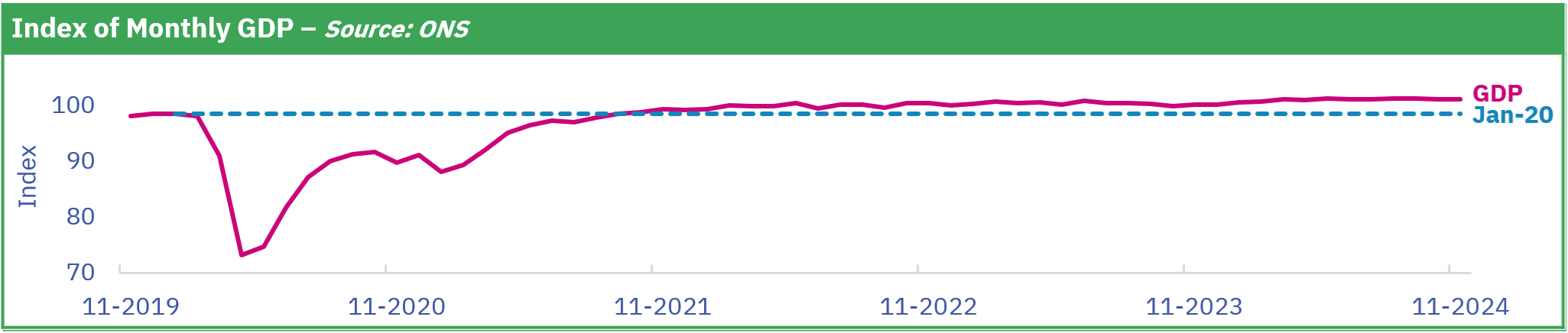
DATA: ONS estimated monthly GDP rose 1.6% in year to Jul 2026
They report the 0.4% monthly growth was “because of rises of 0.4% in services, of 0.2% in production and of 0.1% in construction”.
DATA: Lloyds reported UK house prices fell 0.4% in year to Aug 2026
They report(PDF) the “first year-on-year decrease since November 2023”. They also report “Northern Ireland continues to record the strongest annual growth, with prices up +6.9% year-on–year” and “The South East saw the largest decline, with prices down -1.6% year-on-year to £381,729, followed by Greater London , where prices fell -1.5%”.
DATA: BoE published quoted mortgage rate data for Aug 2026
They report the average two-year fixed-rate mortgage at 75% loan-to-value increased to 4.92% from 4.79% the previous month and from 4.10% in August last year. The revert-to-rate was unchanged from the previous month, at 6.58%. See Chart of the Week for more on mortgage rates.
The Mortgage Lenders and Administrators stats provides lots of information on the state of lending. The FCA and BoE provide summaries and we publish a Digging Deeper slide deck.
DATA: FCA published Mortgage Charter uptake data for Q2 2026
They report “In Q2 2026, around 22,400 mortgages saw a reduction in monthly payments due to a temporary switch to interest-only or a term extension; this is a slight increase compared to the volume in Q1 2026”.
DATA: ONS published admin-based local authority household estimates
The release covers household estimates for local authorities in England and Wales from 2021 to 2023.
DATA: ONS published construction output stats for Jul 2026
They report “Monthly construction output is estimated to have grown by 0.1% in July 2026” and “The increase in monthly output in July 2026 came solely from an increase in repair and maintenance”.
DATA: Scottish Gov published Vacant and Derelict Land Survey for 2025
They report “The amount of derelict and urban vacant land fell by 3% (267 hectares) from 8,858 hectares in 2024 to in 8,591 hectares in 2025” and “More sites were brought back into use for residential purposes than any other use (49 of the 144 reused sites)”.
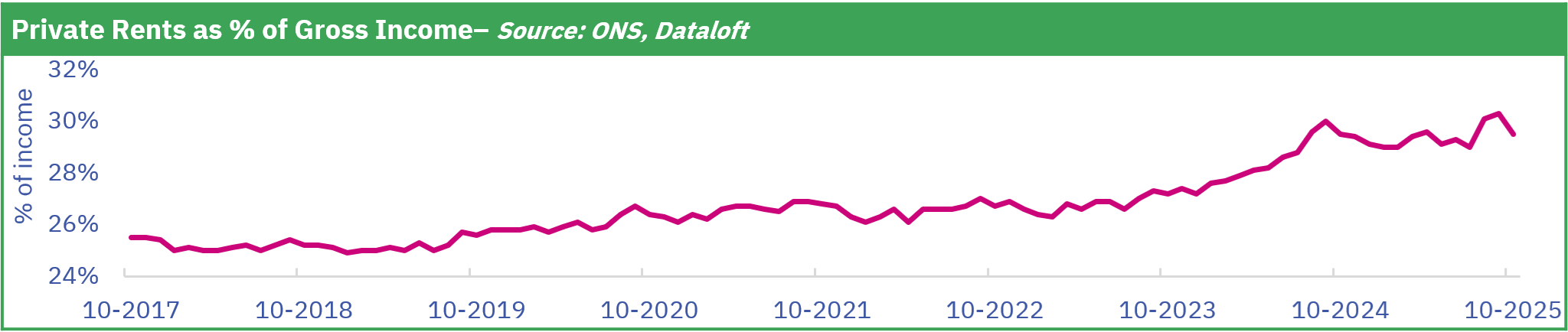
DATA: ONS published Dataloft data on actual rental affordability
The average percentage of gross income spent on rent was 28.9% in August 2026, up slightly from 28.5% the previous month but lower than the 30.1% reported last year.
DATA: Financial Market Expectations For BoE’s Bank Rate
The chart provides a summary for the expected future level of Bank Rate based on daily data. The One Year figure was 4.63% on the 9th Sep, up from 4.55% on the 2nd Sep.
DATA: New Build Energy Performance Certificates, England
This chart provides a summary of the number of EPCs on new build properties, a useful leading indicator for net additions. The 52-week rolling total was 207,832 for the week commencing 31st Aug, lower than the 208,930 total for the previous week.
“It will launch on 15 December 2026, starting in the West Midlands and onto other areas over 12 months” and “All landlords actively letting property will need to have registered by 14 November 2027”.
They will “protect budget holidays by requiring the levy to be charged as a percentage of the cost of accommodation, rather than as a flat fee”, “have the flexibility to offer exemptions – such as for campsites”, and “Temporary accommodation and shelters or refuges would not be subject to the levy”.
REPORT(PDF): RICS published residential market survey for Aug 2026
They report “New buyer enquiries and agreed sales net balances turn less negative, but remain relatively weak” and “Aggregate house prices continue to drift slightly lower, although downward momentum appears to be moderating”.
REPORT: BoE published Agents’ summary of business conditions
On housing, they report “Estate agents continued to report a subdued market, with house prices under more pressure in London and the South East and barely rising elsewhere. Transaction numbers are down on last year, in some areas by double digit percentages, and sales are taking longer to complete. Demand in the new build market is similarly weak, with higher mortgage rates weighing on affordability. House builders are reliant on bulk sales and incentives to support cash flow and there is no expectation of an imminent pickup in supply of new homes.”
REPORT: RE:UK reported on the diversification of living sector returns
The report “explores diversification of investment returns across the UK living sector” and “considers how returns are generated across different parts of the sector and what this means for investment risk, performance and portfolio construction”.
REPORT: Resolution Foundation reported on the policy landscape in 2026
The report, published with UK in a Changing Europe, includes a chapter on housing and planning but it is compromised by using inaccurate housebuilding statistics and fails to recognise the immediate demand side issues the housebuilding sector is facing while suggesting “we still need radical reform of the planning system”.
REPORT: JRF reported on a minimum income standard (MIS) for the UK
They report “In 2026, members of the public have concluded that social housing is no longer a realistic minimum housing option” and “For the first time, MIS budgets for all household types now assume accommodation in the private rented sector”. As a result: “The move from social housing to private renting has increased the income required to reach MIS for pensioners and households with children”.
REPORT: HBF reported on highways adoption on housing developments
They report “Section 38 agreements, which are signed post planning agreement and after signing off on the technical specification of the road before construction work starts on new housing estate roads took just over four years on average from submission to adoption, with some taking up to 12 years”.
REPORT: Intergenerational Foundation of the cost of loving crisis
The report “argues that younger generations are increasingly being priced out of dating and relationships” as “High housing costs have made it harder to leave the parental home or move in with a partner, while squeezed incomes have made dating and socialising less affordable”.
REPORT: Savills reported on affordable housing need
They “estimate that around 37% of new homes should currently be delivered as some form of affordable tenure” and “This equates to approximately 136,200 homes per year”. They also report “Around three quarters of affordable housing need is concentrated in London and the South, reflecting acute affordability pressures and persistently low levels of delivery”.
They report “Strong rental demand and leasing performance” with “Occupancy high at 96%+” and “Good like-for-like BTR rental growth at 3%, in line with guidance”.
CORPORATE: Harworth Group published Half Year Results
They announced they will focus on “Becoming a pure play powered land and industrial & logistics specialist, exiting the residential sector”.
CORPORATE: Berkeley Group published Trading Update
They report that “While Berkeley is receiving good and stable levels of enquiries, the uncertainty and volatility in the market means that customers without an immediate need to move and readily available liquidity remain more cautious to commit”.
Chart of the Week
Mortgage rates started the year by continuing their downwards trajectory but the war in the Middle East quickly reversed the trend. As the Chart of the Week shows, the Bank of England quoted mortgage rate data shows the average two-year fixed-rate mortgage at 75% loan-to-value hit a low of 3.93% in January (the lowest rate since 2022) but rose quickly in the following months, hitting a recent high of 5.14% in April. Average quoted mortgage rates then settled just below 5% but events of the last week suggest they will be rising rapidly in coming weeks. The two-year OIS forward curve hit 4.84% yesterday (10th September) and it is likely that next week will see a flurry of mortgage repricing.
If mortgages rates do rise and stay elevated, then it kills off any hope of a housing market recovery this year and possibly next. That means bad news for anyone looking to remortgage, move house, or with a business reliant on housing market turnover such as estate agents and housebuilders. It also means the OBR forecast for a planning led boost to the economy, that was due to start this autumn, is looking even less probable.
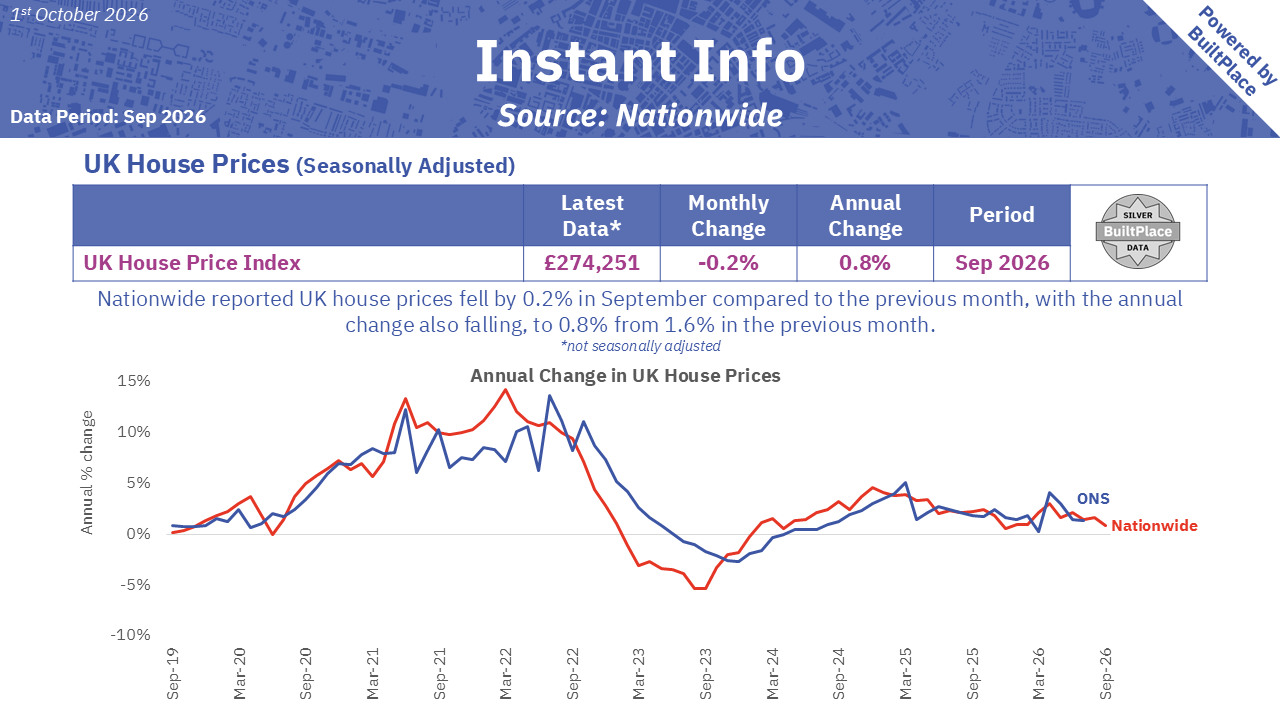
DATA: Nationwide reported UK house prices rose 1.6% in year to Aug 2026
They report a monthly increase of 0.2% but the bigger news was the revision to the previous month’s data – this is the first time I can remember them revising historic data and was “as a result of a system change which led to some cases not being included in the original sample”. As the chart below shows, it had a minimal effect on the annual percentage change trend, reducing the July figure from 1.8% to 1.4%, but has reduced our expectation of year-end growth to 1.6% (based on normal seasonal trends).
DATA: BoE published effective mortgage rate data for Jul 2026
They report the average rate on new advances (purchase and remortgage) increased to 4.46% from 4.36% the previous month. The average rate on outstanding balances was unchanged at 3.97%.
DATA: BoE reported 56,053 approvals for house purchase in Jul 2026
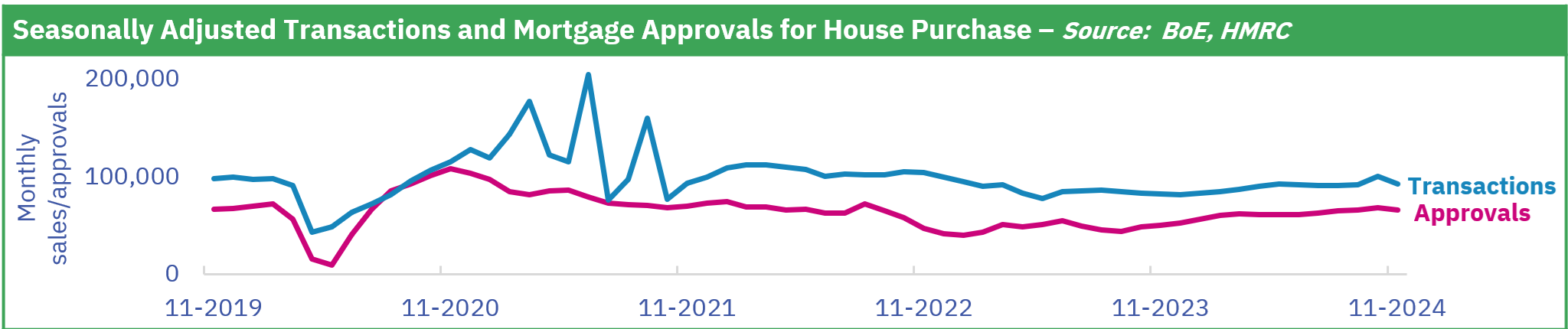
The number of mortgage approvals for house purchase was 3.7% lower than the previous month and 14.9% lower than the same month last year. Approvals for remortgaging were 11.9% lower than last year.
DATA: Financial Market Expectations For BoE’s Bank Rate
The chart provides a summary for the expected future level of Bank Rate based on daily data. The One Year figure was 4.55% on the 2nd Sep, up from 4.36% on the 26th Aug.
DATA: New Build Energy Performance Certificates, England
This chart provides a summary of the number of EPCs on new build properties, a useful leading indicator for net additions. The 52-week rolling total was 208,930 for the week commencing 24th Aug, slightly higher than the 208,071 total for the previous week.
REPORT: UKF published Household Finance Review for Q2 2026
They report “From March onwards, as the mortgages agreed on these the higher rates began to feed through into completions, affordability metrics spiked sharply” and “By June, the typical First-time buyer (FTB) faced mortgage payments equating to 22.6 per cent of their gross income, higher than at any point since the Global Financial Crisis (GFC) took hold”.
REPORT: BoE reported on mortgage refinancing & interest rate shocks
Using the September 2022 budget interest rate shock, they find “a shift toward two-year fixes, even though they priced above five-year mortgages” and “deleveraging, with a 200 basis points rate rise linked to a 2–3 percentage points drop in average loan to value ratios”. They also report “Although the adjustable-rate mortgage share increased, most borrowers still chose the pricier two-year fix, consistent with seeking rate risk protection plus near-term flexibility for equity extraction if rates fall”.
REPORT: FCA reported on a mortgage and open finance policy sprint
They report “Open finance could improve consumers’ mortgage journeys” but “The value depends on data being usable as trusted evidence”.
REPORT: HBF reported on local authority planning department capacity
They report “The data shows that 90% of local planning authorities are operating below full staffing capacity, with planning departments working at an average of just 80% of the staffing levels they say they need” and “On average, councils employ fewer than 36 planning staff despite requiring around 44 to operate at full capacity”.
REPORT: Centre for Cities reported on building homes near stations
They report “Compared to French and Japanese cities, Britain’s 12 largest cities are missing at least 2.4 million homes around stations” and “The average British city built 50 per cent fewer homes near stations compared to peers in France and Japan between 2011 and 2021”. They also report “In some British cities, densities are low because they lack public transport infrastructure”.
REPORT(PDF): CIH reported on shared ownership in England
They report “affordability requirements for shared ownership must be properly focused on sustainable homeownership in the long-term” and “Gaps persist in communication, accessibility, and long-term cost predictability for shared owners, with satisfaction decreasing over time”. They also report that “Whilst many recent reforms have been welcomed for improving shared ownership, there are concerns that these will largely only apply to new shared ownership homes, leaving existing shared owners to live within the existing model”.
REPORT: David Hume Institute reported on Scottish housing associations
The report is a “Call for housing associations to be treated by government as economic infrastructure and for the full economic return on housing investment to be measured”.
REPORT: SMF reported on Council Tax and Social Care Reform
They report “Council tax reform and social care funding are both longstanding, unresolved policy problems” as “Reforming council tax creates visible losers, while the rising cost of old age social care is squeezing local authority budgets” and suggest tackling the two together.
REPORT: Retties reported on Scotland’s LBTT revenues
They report that “Around 70% of sales are over the £145,000 threshold, meaning the vast majority of Scottish house buyers can expect an LBTT bill” and “In 2025/26, Residential LBTT revenue reached a record high in Scotland of c.£760 million, driven by a small increase in house sales and rising prices”.
CORPORATE: Crest Nicholson published Trading Update
They report “Over the last six weeks, the Group achieved a net open market sales rate achieved of 0.35” and “This compares to 0.48 in the first half and 0.55 in the same period last year”. They also report “Pricing pressure has remained particularly evident in bulk sales, where the Group continues to take a disciplined and selective approach to transactions” and “Build cost inflation remains in line with previous guidance of c.3-4%, mostly on materials”.
Chart of the Week
Earlier in the summer (though I’m convinced they back-date the releases online), the FCA published an FOI response on the number of regulated mortgage sales with longer mortgage terms and split by the age of the main borrower. The data goes back to January 2016 but I’ve chosen to just look at the latest financial year available (2025/26).
The chart below shows the distribution of mortgage sales and highlights the sharp drop-off in sales where the mortgage term would take the borrower beyond the age of around 75 years. For example, just 1.0% of mortgage sales with a term of 30 to <35 years, which will mostly be 30 year terms, were to borrowers aged 46 and above. Meanwhile, 97% of mortgage sales with a term of 40 or more years were to borrowers aged under 36.
DATA: ONS estimated monthly GDP rose 1.1% in year to Jun 2026
They report a monthly increase of 0.3% “was because of a rise of 0.4% in services and was partially offset by falls of 0.2% in production, and 0.1% in construction”.
DATA: ONS reported Consumer Price Index rose 2.9% in year to Jul 2026
This was higher than the 2.6% reported the previous month as “Housing and household services, and furniture made the largest upward contributions to the monthly change in both CPIH and CPI annual rates”.
They report “The early estimate of payrolled employees for July 2026 decreased by 94,000 (0.3%) on the year, but was largely unchanged on the month, decreasing by 13,000 (0.0%) to 30.3 million” and “Annual growth in employees’ average earnings in Great Britain was 3.5% for regular earnings (excluding bonuses) and 4.1% for total earnings (including bonuses) in April to June 2026”.
DATA: Rightmove reported asking prices fell 1.0% in year to Aug 2026
They report(PDF) “The number of available homes for sale is at a 12-year high for this time of year” and “Although buying activity is still around 10% below last year’s level, Rightmove has recorded a mini-bounce of +5% in buyer demand since Andy Burnham came to power on the 20th July”.
DATA(PDF): Zoopla reported house prices rose 0.9% in year to Jul 2026
They report “Buyer demand is starting to recover with home searches 7% higher than a year ago and increasing across Britain” but “Sales agreed remain 6% lower than a year ago”. They also report “A steady flow of new listings means the overall stock of homes for sale is 5% higher than a year ago”.
DATA: ONS reported UK house prices rose 2.0% in year to Jun 2026
This was lower than the 3.0% reported the previous month and they report “The North West was the English region with the highest house price inflation, at 4.7%” and “This is the tenth consecutive month where there has been an annual fall in house prices in London”.
DATA: ONS reported private rents rose 3.7% in year to Jul 2026
They report “In England, private rent annual inflation was highest in the North East (6.3%), and lowest in the South East (2.9%), in the 12 months to July 2026”.
DATA: ONS published Dataloft rental affordability data for Jul 2026
The average percentage of gross income spent on rent was 28.8%, unchanged from the previous month (based on seasonally adjusted data).
DATA: HMRC published property rental income stats for 2026
They report “in 2024 to 2025, 2.88 million unincorporated landlords declared income from renting property” and “of these, 99% were individuals declaring property income as part of their Self Assessment tax return” and they “accounted for £49.81 billion in property income”.
DATA: Scottish Gov published Landlord Register data for Jul 2026
The number of registered landlords decreased by 1.0% in the year to July and the number of registered properties was relatively unchanged (up by 157 properties) over the same period.
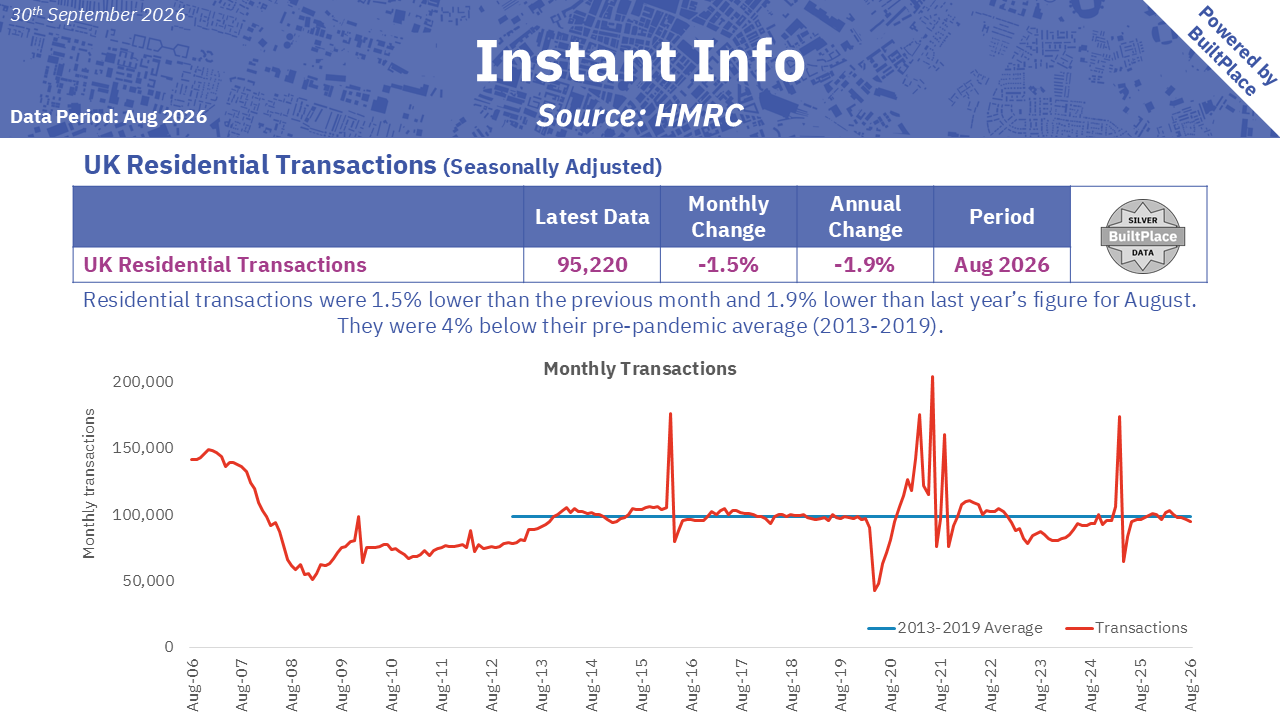
DATA: HMRC reported 96,710 residential transactions in Jul 2026
They report this was “1% lower than July 2025 and 2% lower than June 2026”.
DATA: ONS published construction output stats for Jun 2026
They report “Monthly construction output is estimated to have fallen by 0.8% in May 2026” and “The decrease in monthly output in May 2026 came solely from a decrease in repair and maintenance, which fell by 2.1%, while new work grew by 0.2%”.
DATA: MHCLG published Housing Delivery test results for 2025
DATA: HBF published housing pipeline report for Q1 2026
They report “at 58,814 the number of residential units approved dropped by 9% during the first quarter of 2026, but was 6% up on a year ago”.
DATA: MHCLG published energy efficiency of new dwellings stats
These are “Official statistics in development monitoring Part L of the Building Regulations in England relating to energy efficiency standards of new dwellings”.
DATA: FCA published mortgage product sales data for 2025
The release includes details of “sales channel, advice given, loan purpose, loan-to-value, mortgage term, borrower characteristics, and property characteristics”. Our slide deck will be published next week.
DATA: UKF published mortgage arrears and possessions for Q2 2026
They report “There were 77,940 homeowner mortgages in arrears of 2.5 per cent or more of the outstanding balance in the second quarter of 2026, 1 per cent fewer than in the previous quarter” and “There were 8,390 buy-to-let mortgages in arrears of 2.5 per cent or more of the outstanding balance in the second quarter of 2026, 6 per cent fewer than in the previous quarter”.
DATA: MoJ published mortgage and landlord possessions for Q2 2026
They report “All mortgage actions have decreased” and “Landlord possession claims increased and orders remained stable, while warrant actions and repossessions decreased”.
DATA: UKF published later life mortgage lending for Q2 2026
They report “There were 5,730 new lifetime mortgages advanced in Q2, down 1.7 per cent from the same quarter a year earlier” and “There were 323 retirement interest only mortgages advanced in Q2, up 5.9 per cent year on year”.
DATA: MHCLG published statutory homelessness stats for Q1 2026
They report “Homelessness assessments and duties owed are slightly lower compared to last year” and “Prevention duties increased, while relief duties fell”. They also report “The number of households in temporary accommodation, including both those with children and adults only is at a record high”.
DATA: HMLR published INSPIRE & UPRN lookups for their price paid data
The INSPIRE and UPRN lookup only covers the latest month and will not be backdated.
DATA: Financial Market Expectations For BoE’s Bank Rate
The chart provides a summary for the expected future level of Bank Rate based on daily data. The One Year figure was 4.36% on the 26th Jul, similar to the 4.37% on the 19th Aug.
DATA: New Build Energy Performance Certificates, England
This chart provides a summary of the number of EPCs on new build properties, a useful leading indicator for net additions. The 52-week rolling total was 208,071 for the week commencing 17th Aug, the lowest level since December last year.
POLICY: MHCLG published new National Planning Policy Framework
It includes “a default ‘yes’ for homes within reasonable walking distance of well-connected stations, alongside new minimum expectations for how much housing should be built in these areas”. This policy paper summarises their reforms.
POLICY: MHCLG published Rough Sleeping Programme guidance
“Under a boosted £442 million package, areas with the greatest need will receive the largest share of support, to get people out of the cold this winter and give people facing long-term homelessness a settled home and the support to keep it”.
POLICY: Government announced ‘call in’ powers for Mayors
“Under proposals to be published next week, a mayor will now be able to take over key planning applications which impact on local growth, and direct a council to take it forward or refuse it”. The consultation is now available.
POLICY: Government announced first wave of SAHP funding
The first wave of funding from the Social and Affordable Homes Programme has been announced, with £9.58 billion allocated to 33 Strategic Partners outside of London. Homes England published details of the partners but not the projects.
REPORT(PDF): RICS published residential market survey for Jul 2026
They report “Key activity metrics remain subdued across the board” and “House prices continue to see modest downward pressure, although the aggregate metric is turning marginally less negative”. They also report “Short-term activity expectations [are] fractionally less pessimistic but yet to signal a meaningful recovery”.
They conclude “The evidence suggests that, unless UK housing markets differ substantially from those in the countries that have implemented them, rent controls would be a costly way to alleviate pressure on housing costs and support renters”.
REPORT: Autonomy reported on designing feasible rent controls
They suggest their report “demonstrates that well-designed rent controls are a viable option for the government, as part of a strategy to tackle problems in the private rental sector”.
REPORT: Uni of Warwick on housing searches and demand
They suggest “property prices are an incomplete guide to people’s true location preferences – and that housing search data offer a much clearer picture of what households actually want”.
The report “calls for shared ownership to be governed, delivered and evaluated across the full housing Lifecycle, rather than considered only as a point-of-sale route into homeownership”.
REPORT: IPPR reported on the path to a better tax system
Their proposals include “Replacing stamp duty and council tax with a new proportional property tax” and suggest “A rate of around 0.65 per cent would be required to compensate for the revenues of both the abolished taxes”.
REPORT: Shelter reported on removing Housing Revenue Account debt
They find that “cancelling HRA debt is broadly fiscally neutral” and “Combining this with the necessary public investment for councils to build 284,000 social rent homes over 10 years” will pay “for itself within 20 years and generates a net benefit of £141.5 billion to the economy over 60 years”.
REPORT(PDF): Savills and LPDF reported on barriers to housebuilding
They report reduced demand and squeezed financial viability “is causing housebuilding numbers to fall and reducing appetite for new development opportunities”. They also reported(PDF) on the potential for discounted market sale to support housebuilding.
REPORT: Savills reported on the impact of the New Rent Settlement
Their “analysis of Housing Association (HA) rents suggests that this would leave general needs rents slightly below their 2015/16 level on an inflation-adjusted basis, but would go some way to rebuilding HA finances following below-inflation rent caps in five of the past ten years”.
REPORT: Knight Frank published residential development land index
They report “Residential development land values continued to decline during Q2 as higher borrowing costs, elevated build costs and weaker sales rates weighed on scheme viability”.
REPORT: JLL published big six residential development report
They report “New build apartment prices across the six cities rose 2.2% annually in the first half of 2026, while rental growth moderated to 1.8%” and “The market is characterised by underlying demand, tightening rental supply and ongoing development viability challenges”.
They report “The private reservation rate per outlet per week, including bulk sales, was 0.55 (2025 – 0.57)” and “excluding bulk sales was 0.49 (2025 – 0.52)”, while “the cancellation rate remained low at 12% (2025 – 13%)”.
They report “The UK, the Group’s core residential market, which accounted for 61% of the Group’s Residential Transaction Advisory revenue in the period, saw revenue decline by 9% to £80.0m (H1 25: £87.7m)” and “New Homes sales revenue declined during the period, reflecting the continuing viability challenges affecting UK residential development and the consequent reduction in the number of new developments being brought to market”.
They report “the Group has been engaged with investors on a small number of transactions with the potential to conclude in Q4” but “Whilst investor engagement in each of these schemes remains active, the Board has concluded that it is now unlikely that all of these transactions will be finalised by the year end”.
They report “The early estimate of payrolled employees for June 2026 decreased by 71,000 (0.2%) on the year” and “Annual growth in employees’ average earnings in Great Britain was 3.4% for regular earnings (excluding bonuses)”.
DATA: Rightmove reported asking prices fell 0.4% in year to Jul 2026
They report(PDF) “the first heatwave in May caused a temporary 8% drop in buyer demand before rebounding, while June’s heatwave caused a similar temporary decline of 6%, followed by a 4% dip during the current July heatwave” and “The number of sales agreed in the first half of the year was 6% lower than the same period in 2025”.
DATA: Nationwide reported house prices rose 1.8% in year to Jul 2026
They report annual growth eased slightly, from 2.2% the previous month.
DATA: Lloyds reported house prices rose 0.1% in year to Jul 2026
They report(PDF) “Annual growth of +0.1% is the slowest rate of house price inflation since November 2023” and “Northern Ireland continues to record the UK’s strongest annual growth at +7.4%”.
DATA(PDF): Zoopla reported house prices rose 1.3% in year to Jun 2026
They report “Sales agreed are down 9% on last year and the weakest reading of 2026 so far as more buyers adopt a wait-and-see approach to buying a home”. They also report “The North East is the only region with sales agreed ahead of last year, up around 4%, cushioned by lower average prices” and “the stock of homes for sale is rising in eight of 11 regions”.
DATA: ONS reported UK house prices rose 2.7% in year to May 2026
They report “The North East was the English region with the highest house price inflation, at 5.9%” and “Annual house price inflation was lowest in London” where “Prices fell by 3.7% in the 12 months to May 2026”.
DATA: BoE published quoted mortgage rate data for Jul 2026
The data shows the average two-year fixed-rate mortgage at 75% loan-to-value fell slightly compared to the previous month, from 4.81% to 4.79%. The two-year variable rate increased slightly, from 4.14% to 4.16%.
DATA: BoE published effective mortgage rate data for Jun 2026
The data shows the average rate on new advances (purchase and remortgage) increased to 4.36% from 4.23% the previous month. The average rate on outstanding balances increased from 3.92% to 3.97%.
DATA: BoE reported 58,200 mortgage approvals for purchase in Jun 2026
This seasonally adjusted figure was 2.9% higher than the previous month but 10% lower than the same month last year. The number of approvals for remortgaging was 19% lower than last year.
DATA: HMRC reported 98,700 residential transactions in Jun 2026
This seasonally adjusted data was 0.2% higher than the previous month and 2.5% higher than June last year.
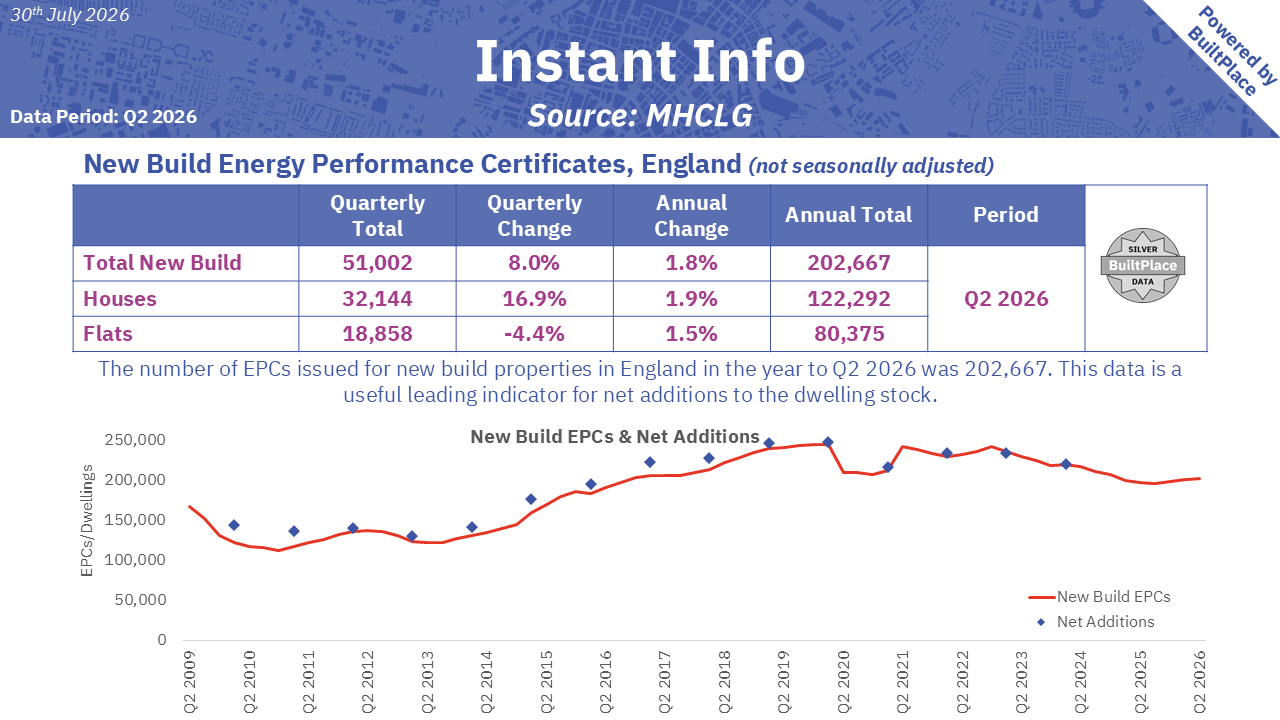
DATA: MHCLG reported 202,667 new build EPCs in year to Q2 2026
The number of new build Energy Performance Certificates (EPCs) is useful leading indicator for net additions in England. The figure here is lower than the weekly data below and previous releases as it has been cleaned of duplicates.
DATA: NHBC published new home registration data for Q2 2026
They report there were “29,162 new homes registered in Q2 2026, 4% down on Q2 2025” and “32,973 new homes completed in Q2 2026, 1% up on Q2 2025”. This data substantially undercounts new housing delivery.
DATA: MHCLG Right to Buy sales and replacement data for 2025/26
The data shows “Local authorities reported 14,275 eligible sales in 2025-26 (i.e. the financial year ending in March 2026), an increase of 90% compared with 2024-25” and “This increase follows the rise in Right to Buy applications ahead of the reduction in discounts on 21 November 2024”.
DATA: ONS published England & Wales population estimates for 2025
DATA: ONS published Dataloft rental affordability data for Jun 2026
The average percentage of gross income spent on rent was 28.7% in June 2026, down from 29.3% in June last year.
DATA: ONS published Rightmove listings data for Jun 2026
The data shows the seasonally adjusted number of new listings for sales across the UK was 5.0% lower than one year ago and the seasonally adjusted average time on the market was 68.1 days, up from 65.9 last year.
DATA: Scottish Gov published Landlord Register data for Jun 2026
The number of registered landlords was 1.1% lower than one year ago while the number of registered properties was 0.2% lower.
DATA: UKF published largest mortgage lender data for 2025
The largest lender in terms of gross lending was Lloyds Banking Group with £52.2bn of lending in 2025. However, their net increase in outstanding balances was only £6.6bn and the largest lender in terms in net lending was Nationwide with a £13.5bn increase.
DATA: Financial Market Expectations For BoE’s Bank Rate
The chart provides a summary for the expected future level of Bank Rate based on daily data. The One-Year figure was 4.20% on the 4th Aug, down from 4.30% on the 28th Jul.
DATA: New Build Energy Performance Certificates, England
This chart provides a summary of the number of EPCs on new build properties, a useful leading indicator for net additions. The 52-week rolling total was 209,771 for the week commencing 27th Jul, slightly lower than the 209,993 total for the previous week.
It is “the biggest transfer of power from Westminster in a generation, giving communities greater control over the decisions that shape jobs, transport, housing and public services in their area” and “mayors will receive a share of income tax revenues for the first time”.
POLICY: Welsh Gov extended Help to Buy Wales to Mar 2027
It will “support up to 400 additional households across Wales into home ownership”.
POLICY: BoE MPC voted to maintain Bank Rate at 3.75%
“At its meeting ending on 29 July 2026, the Monetary Policy Committee (MPC) voted by a majority of 6–3 to maintain Bank Rate at 3.75%. Three members voted to increase Bank Rate by 0.25 percentage points, to 4%.”
They report “For the typical owner-occupier mortgagor rolling off a fixed rate in the next two years, monthly mortgage repayments are projected to increase by approximately £45 more than anticipated prior to the conflict” in the Middle East.
REPORT: BoE published Agents’ summary of business conditions
“In the housing market, confidence is fragile among buyers and sellers with transactions taking longer to complete. House prices are flat in most areas and falling in others, with the top end of the market particularly weak. Contacts consider a pick-up in H2 is dependent on reduced uncertainty and improved confidence, which would be aided by a reduction in mortgage rates.”
REPORT: Resolution Foundation published Housing Outlook
They report on how the Prime Minister’s council housebuilding ambition could be delivered. They “estimate if all of the Government’s £39 billion grant programme was ring-fenced for social rent, just under 25,000 affordable homes annually could be delivered compared to the current target of 30,000”.
They suggest “the Exchequer has so far benefitted from around £1.74bn of ‘profit’” and call for the Government to publish their evaluation of the scheme.
REPORT: RE:UK published Build-to-Rent report for Q2 2026
They report “pressures on future delivery are intensifying: annual starts fell by 79% to 3,455, while the number of homes under construction declined by 21% year on year”.
They report “Half of over-65s (49.45%) see Stamp Duty Land Tax as a reason not to move, despite 58% considering moving to a smaller property in the future” and recommend a “later-life rebate on Stamp Duty” for older buyers.
REPORT: Housing Forum reported on practical insights
The report “sets out the key ways that policymakers and the housing sector can work together to deliver on our ambition of a quality home for all”.
REPORT: Bevan Foundation reported on holiday homes in Wales
They argue that “second homes and holiday lets are now a national driver of pressure on housing supply, and national action is needed”.
BLOG: James Gleeson on London/Manchester housebuilding comparisons
Reports that Manchester City built more homes than across the whole of Greater London was based on incomplete data.
CORPORATE: Henry Boot published Half Year Trading Update
They report “A number of home builders have changed their land strategy, slowing acquisition activity, which has resulted in delays to transactions and an increased use of deferred payment terms” and “Given current market dynamics, we expect 2026 plot sales to be materially below the prior year”.
They report “Continued sales momentum with Unite Students portfolio 89% reserved for 2026/27 (2025/26: LfL 87%)” and the “Sales progress supports 0-2% like-for-like income growth for 2026/27”.
They report “Lettings revenue flat, reflecting growth in Build to Rent and ancillary landlord and tenant services” and “Sales revenue down 13%, against a comparator period which benefitted from stamp duty deadline tailwinds”.
CORPORATE: Rightmove published Half Year Financial Report
They report “New Homes growth remains subdued with a 6% reduction of new-build developments from a year ago, resulting in 2026 Group revenue growth guidance of +6-8% (previously +8-10%)”.
CORPORATE: Taylor Wimpey published Half Year Results
They report “In the four weeks to 26 July 2026, our net private sales rate was 0.55 per outlet per week (2025 equivalent period: 0.59), or 0.53 excluding bulk deals (2025 equivalent period: 0.56)”. They also report “The cancellation rate for the same period was 18% (2025 equivalent period: 19%)” and “While underlying pricing has been broadly stable in recent weeks, it remains on average approximately 2% below prior year levels”.
CORPORATE: Travis Perkins published Half Year Results
They report “the UK construction sector remains subdued with activity levels remaining depressed during the first half. In addition, given wider geopolitical and macroeconomic events, building materials price inflation remains hard to forecast.”
They report a “Statutory loss before tax of £27 million (2025: £8 million profit before tax) reflects a challenging backdrop as well as margin headwinds coupled with an impairment charge taken on mothballed facilities as market conditions delay market recovery”.
They report “In the five weeks since 30 June 2026, our net private sales rate increased 6% to 0.72 per week (2025: 0.68)” and “In line with the broader market, open market sales have softened slightly in recent weeks and, excluding bulk, net private sales rates were 0.59 (2025: 0.61)”. They also report they “continue to target growth in the Build to Rent (‘BTR’) market and are actively pursuing opportunities that meet our returns criteria”.
DATA: ONS estimated monthly GDP rose 1.3% in year to May 2026
They report a monthly increase of 0.1% “was because of a rise of 0.3% in services and was partially offset by falls of 0.5% in production, and 0.8% in construction”.
DATA: ONS published construction output stats for May 2026
They report “Monthly construction output is estimated to have fallen by 0.8% in May 2026” and “The decrease in monthly output in May 2026 came solely from a decrease in repair and maintenance, which fell by 2.1%, while new work grew by 0.2%”.
DATA(PDF): Rightmove published rental trends tracker for Q2 2026
They report “The average advertised rent of homes outside London has risen by 1.9% this quarter to a new record of £1,397 per calendar month” and “In Q2 2026, the number of available rental homes dropped below the previous year’s level for the first time since 2022, and the number of homes available to rent nationally is now 1% below this time in 2025”.
DATA: UKF published buy-to-let lending stats for Q1 2026
They report “The average interest rate across all new buy-to-let loans in the UK was 4.71 per cent in Q1 2026” and “The average gross buy-to-let rental yield for the UK in Q1 2026 was 7.21 per cent, compared with 6.93 per cent in the same quarter a year previously”.
DATA: Financial Market Expectations For BoE’s Bank Rate
The chart provides a summary for the expected future level of Bank Rate based on daily data. The One Year figure was 4.28% on the 15th Jul, slightly up from 4.25% on the 8th Jul.
DATA: New Build Energy Performance Certificates, England
This chart provides a summary of the number of EPCs on new build properties, a useful leading indicator for net additions. The 52-week rolling total was 209,847 for the week commencing 6th Jul, slightly higher than the 209,464 total for the previous week.
POLICY: Andy Burnham became leader of the Labour Party
He is due to become Prime Minister on Monday.
POLICY: MHCLG published details on the second phase of Awab’s Law
“More hazards that pose an immediate danger to social housing tenants must be investigated and made safe within 24 hours, under strict new rules that will come into force on 30 November 2026”. They also published a guide for the social rented sector, an impact assessment of phase 2, and research on the implementation of phase 1.
POLICY: Government launched numerous consultations
MoJ launched a consultation on NSIP judicial review reforms, MHCLG launched one on time-limited relief from CIL in London, MHCLG launched one on leasehold enfranchisement valuation rates and another on the process costs, and HMT launched one on reforming land remediation relief.
POLICY: Welsh Gov review of the Warm Homes Programme
They published a report and response to it, with plans to “inject a further £17 million of funding into housing retrofit schemes”. They also committed to an additional 20,000 social homes by 2030.
“The draft London Plan sets out proposals for how London could develop over the next 20-25 years. It covers housing, transport, the environment, economic development, design and other key issues.”
REPORT: MHCLG published Levelling Up Missions annual report
It “fulfils the statutory requirement under Part 1 of the Levelling-up and Regeneration Act 2023 to report on progress against the 12 levelling up missions established by the previous administration”.
They report “At this early stage of the construction skills package, the government needs to manage significant risks to achieve its aspiration for up to 60,000 more construction workers by the end of this Parliament”.
REPORT: HoC CMS Committee reported on protecting built heritage
They report “Nearly half of the government’s 1.5million home building target could be met by giving a new lease of life to historic buildings currently lying vacant or under-used”.
REPORT: HoC PAC reported on unlocking land for housing
They conclude “Neither the Ministry of Housing, Communities & Local Government (the Department) nor Homes England have set out how they will judge whether the National Housing Delivery Fund (NHDF) has been successful, or how many homes they expect will be built on land unlocked by the NHDF, or by when” and “We remain unconvinced that the Department and Homes England have a strategic approach to allocating the NHDF to ensure a balanced portfolio of projects in a range of locations which support the objectives of the NHDF”.
The report, started before the formation of More Homes Scotland, contributes to “critical questions about the functions, form and design of the powers and mission of the agency”.
REPORT: IPPR reported on housing-led approaches to homelessness
They report “The most meaningful progress has instead come from places where local leaders have made homelessness a priority, driving improvements in both the provision and delivery of homelessness services” and define a housing-led approach.
They report “The buy-to-let lending market is holding up well despite the pressure from higher mortgage rates. The sector continues to benefit from excess tenant demand and rising rents, supporting house purchase lending, which was 7% higher in March/April than the monthly average for 2025”.
REPORT(PDF): Molior published London residential development report
They report “People Are Not Buying New Homes In London” and “52% Of Absorption Is Build To Rent + Other Block Deals” but “The block deals are often ‘Plan B’ – not an exit route developers would choose”. They also report “There are 4,629 homes complete but unsold, this is the highest level we have ever seen”.
REPORT(PDF): BusinessLDN reported on Opportunity Areas (OAs)
The report “provides insights into how OA policy in the London Plan should evolve” and finds that “OAs have accommodated 227,618 homes since their designation” but “the capacity of many OAs is becoming increasingly constrained.
REPORT: RTPI & TCPA on local plans and the climate crisis
The report “provides a snapshot of local plan practice in addressing a range of climate change policy issues in England and presents the findings from a policy review of local plans in England”.
REPORT: Chris Beech on travelling wave dynamics in housing markets
The report, based on data for 1995-2026, documents “a travelling wave: relative growth leadership, independent of aggregate growth rates, begins in the highest-priced segments and propagates monotonically towards the lowest over multi-year cycles, robust across geographic and quantile representations”.
They “make the clear case on why rent controls, over the long term, lead to higher rents and reduced housing supply, while doing nothing to alleviate the core issue driving rent increases – a shortage of supply”.
REPORT: Propertymark reported on living in leasehold
They report that “despite legislative change and years of political commitment, many leaseholders remain unable to sell their homes, face rising costs and have limited ability to challenge charges, creating consequences for both consumers and the wider housing market”.
REPORT: Savills reported on the residential development land market
They report “Greenfield land values decreased by -1.2% this quarter, bringing annual falls to -3.3%” and “The South East experienced the greatest value fall in the quarter of -2.2%”.
REPORT: Knight Frank reported on the Single Family Housing rental sector
They report “There are now 26,407 operational SFH homes across the UK, with a further 12,378 under construction”.
REPORT: Twenty Ci published Property & Homemover report for Q2 2026
They report “New property listings increased by 2.7% in the year-to-date 2026 compared to year-to-date 2025” and “Buyer demand has declined 5.0% year-to-date 2026 versus the same period in 2025”. They also report “The average time to exchange in year-to-date 2026 was 130 days”.
They report “the pace of landlord sales has slowed in recent months, following a spike in activity in the run-up to the implementation of the Renters’ Rights Act”.
BLOG: Bank Underground on mortgage borrower segmentation
Using k-means clustering “Three clusters emerge: one with low leverage, and two with high leverage but notably different income profiles” and find that “Lending composition has shifted gradually” as “High leverage, high-income borrowers now account for a larger market share, and first-time buyers increasingly fall into more leveraged segments”.
They report “H1 2026 sales remained resilient, closely tracking the strong start achieved in 2025, while lettings held up well and were not unduly impacted by the Renters Rights Act, which came into effect on 1 May 2026”.
CORPORATE: Barratt Redrow published Trading Update
They report the “Net private reservation rate improved to 0.64 compared to 0.63A (0.64R) for FY25, including a 0.08 contribution from private rental sector and other multi-unit sales” and “we anticipate minimal house price inflation and total build cost inflation could be c. 3% to 4%”. They also report “Part-exchange, which provides customers with a smoother home move experience and greater certainty, has also been a powerful sales tool, accounting for 21% of private reservations in the year (FY25: 14%)”.
CORPORATE: Crest Nicholson published Interim Results
They report “During the period, we reduced land buying, continued to market non-core land for disposal, moderated the pace of new site starts and aligned work in progress with revised sales expectations for FY26 and FY27” and “The Group continues to manage build cost inflation of c. 3-4% on average, mostly on materials, through disciplined procurement”.
They report “Since the Group’s Q1 trading update on 23 April 2026, trading has been adversely impacted by the prolonged downturn in the sales market, as well as short-term volatility in the lettings market following the introduction of the Renters’ Rights Act (“RRA”) in May”. On lettings, they report “Following the introduction of the RRA, which abolished fixed tenancy terms and increased tenant flexibility to terminate tenancies, the Group experienced elevated levels of tenancy terminations during May and June, particularly in student rentals. This resulted in the reversal of approximately £3m of previously recognised revenue that had been contractually due.”
Chart of the Week
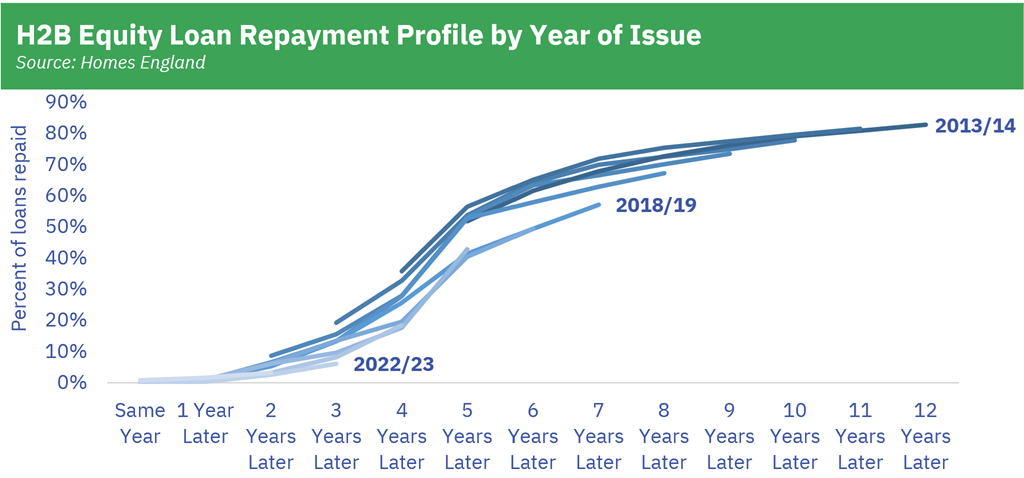
The Homes England annual report provides useful data on the repayment of Help-to-Buy equity loans by the year they were issued. For those issued in the first year of the scheme (2013/14) 83% had been repaid by 2025/26 while for those issued in the last year of the scheme (2022/23) just 3.2% have been repaid. The profile shows a rush to repay ahead of the interest payments starting in year 6 but the overall proportion paying off their loan has fallen for loans issued in 2018/19 and later when compared to earlier vintages.
DATA: Lloyds reported UK house prices rose 0.6% in year to Jun 2026
They report(PDF) the rebranded Halifax index was 0.2% higher than the previous month and the annual rate increased slightly, from 0.5% to 0.6%. They also report “Northern Ireland continues to record the UK’s strongest annual growth at +7.4%” while “the East led declines, with prices down -2.0 % year -on -year to £ 381,654”.
DATA: BoE published quoted mortgage rates for Jun 2026
They report the average rate on a two-year fixed-rate mortgage at 75% loan-to-value fell slightly to 4.81% in June, from 4.92% the previous month. The two-year variable rate and revert-to-rate rates were unchanged, at 4.14% and 6.60% respectively.
DATA: Financial Market Expectations For BoE’s Bank Rate
The chart provides a summary for the expected future level of Bank Rate based on daily data. The One Year figure was 4.25% on the 8th Jul, up from 4.00% on the 1st Jul.
DATA: New Build Energy Performance Certificates, England
This chart provides a summary of the number of EPCs on new build properties, a useful leading indicator for net additions. The 52-week rolling total was 209,464 for the week commencing 29th Jun, slightly lower than the 209,719 total for the previous week.
POLICY: MHCLG expanded cladding funding to lower-rise buildings
“The new funding for under 11 metre buildings will be part of the existing Cladding Safety Scheme, with support prioritised for those facing the greatest risk.”
“People illegally subletting social housing will be identified and may be removed from the property, following a new, innovative data-sharing partnership between the Cabinet Office and Airbnb”. They also report “It is estimated that 5,800 social homes are suspected of being illegally sublet on short-term rental platforms in England”.
They are seeking views “on plans to introduce two new council tax bands for properties worth more than £1 million and £2 million respectively” based on 1st April 2026 values.
They report “A little over 5 million households are projected to see their repayments increase by the end of 2028, compared to nearly 4 million at the time of the December FSR” and “Nearly 750,000 households that are paying less than 3% interest will be rolling off fixes in 2026 and will see an average increase of £170 per month in repayments”. See Chart of the Week for more on their analysis of high loan-to-income multiple lending.
REPORT(PDF): RICS published Residential Market Survey for Jun 2026
They report “Measures of buyer demand and newly agreed sales still negative, albeit marginally less so than before” and “Headline house price indicator largely stable in recent months, although this remains consistent with a modest degree of downward pressure”, while “Near-term sales expectations turn somewhat less negative, but are yet to signal a genuine turnaround”.
REPORT: MHCLG published English Housing Survey report & factsheets
They include “perceptions and impacts of housing quality”, “weather resilience in housing – fact sheet”, “housing and place – fact sheet”, “homelessness, hidden households and temporary accommodation – fact sheet”, and “shared owners – fact sheet”.
REPORT: MHCLG on their remediation programme insurance survey
They report “The average premium rate was 0.14% for buildings where cladding or other external defects were still present (992 buildings), compared with 0.09% where cladding or other external defects were not present, or where information on their presence was unavailable (1,037 buildings)”.
REPORT: London Assembly published Affordable Housing Monitor 2026
They report “The AHP 2021-26 achieved 14,335 affordable home starts by March 2026, against a target of 17,800 to 19,000” and “73 per cent of homes funded by the AHP 2016-23 have been completed” which “leaves 32,081 homes that have been started but not yet completed”.
REPORT: Shelter and Savills on reducing Housing Revenue Account debt
They report “HRA debt has risen to approximately £31.8bn, significantly inhibiting the ability of authorities to invest in both existing stock and new homes” and “Debt reduction could unlock significant new supply of social rent homes” as “Per £1bn of debt written off, around 8,900 new social rent homes could be delivered”.
REPORT(PDF): Crisis reported on LHA rates and homelessness
They report that Local Housing Allowance (LHA) “now covers the rent on fewer than 2% of privately advertised homes across Great Britain” and the freeze in LHA “is forcing households to cut back and go without essentials”, “driving people into homelessness”, and “trapping people in temporary accommodation”.
They report the “commitment to spending £39bn on new social housing will add to the taxpayer’s burden and may only deliver between 14,335 and 15,494 homes per year”.
REPORT: Savills reported on the affordable housing investment market
They report “Registered Providers are feeling more positive in 2026, despite challenging market conditions” and “Section 106 demand has improved, with some major RPs re-entering the market over the last year” but “challenges remain across both funding and development”.
REPORT: Public First on restoring the housing ladder
The report for Yorkshire Building Society finds “Britain still believes in the housing ladder” but “the housing ladder has become not only harder to get onto, but more difficult to move through”. Their priorities include “Unlocking transactions and strengthening chains”, “Expanding the supply of suitable homes”, and “Building stronger foundations for a more responsive market”.
REPORT: Fabians reported on homeownership & first-time buyers
The report provides a poor evidence base including undercounting data on first-time buyers to suggest “a targeted deposit loan scheme for first-time buyers”, changes to shared ownership and improvements to “new home quality and consumer outcomes”.
“Drawing on lessons from Canada, this paper highlights the importance of evaluating and learning from the impacts policy and public spending have” when asking “How will we know if More Homes Scotland is working?”.
They report “a structural crisis in the housing market is quietly eroding that foundation, pricing out the very workforce that keeps the city running” and suggest “Site viability reform”, “Professionalising the HMO sector”, and “Compact studio models” to “unlock genuinely affordable rental supply for the squeezed middle”.
The report proposes “A costed, fully-funded, five-year programme that sequences welfare and tax reforms to reduce the cost of living and offset increases in taxation” including phasing in “a new Property Tax, at 1% of the value of the property, over three years, while Council Tax and Stamp Duty are phased out over the same time frame”.
REPORT: LPDF & Lichfields on needing a more efficient planning process
They report “the planning process has become increasingly unwieldy for applicants and overly contentious” and suggest “Measuring what matters”, “Getting the culture right”, and “Applying the principle of proportionality”.
BLOG: Bank Underground on credit constraints and housing market access
On deposit constraints and homeownership, they “previously demonstrated that this easing of deposit constraints generated a clear increase in local spending” and “In a recent paper, we show that lowering this constraint increases FTB home purchases, particularly among households without access to external financial support for their deposit”.
They warn “An estimated 32,000 new affordable homes, and half of all new affordable homes in rural areas could be lost over the next decade, if new proposed changes to planning rules are brought into effect”.
NEWS: Rightmove reported on new build development listings
They report “the number of new build housing developments coming to market is at its lowest level since January 2017”.
They report “Our sales rate for H1 was 1.03, similar to last year’s 1.01 and the average level of discounting from book price on private sales was 7.1% (H1 25: 1.4%)”. They also report “New land acquisition continued in Q1 but was significantly scaled back in Q2, with only limited deals on a selected number of schemes that were of high quality and in strategically important locations” and “we are reducing levels of work in progress by tightly controlling site starts and pace of build of private units on certain sites to more closely align our WIP investment to our sales rates”.
They report “86% of Unite beds reserved for 2026/27 sales cycle (2025/26: 85%)”, “On track for 0-2% like-for-like income growth for 2026/27 academic year”, and “Expect 94-96% occupancy and 1-2% rental growth for 2026/27 academic year”. They also report “71% of Empiric beds reserved for 2026/27 (2025/26: 61%)”.
For Gleeson Homes, they report “Net reservation rates over the last six months averaged 0.80 per site per week (H2 FY2025: 0.88)” and “Excluding multi-unit agreements, net reservation rates were 0.53 per site per week (H2 FY2025: 0.64)”. They also report “The impact on build cost inflation arising from the conflict in the Middle East has been less severe than anticipated” but “we expect that inflationary pressure will continue, compounding the effect of the myriad of regulatory and tax burdens recently imposed on residential development”.
Chart of the Week
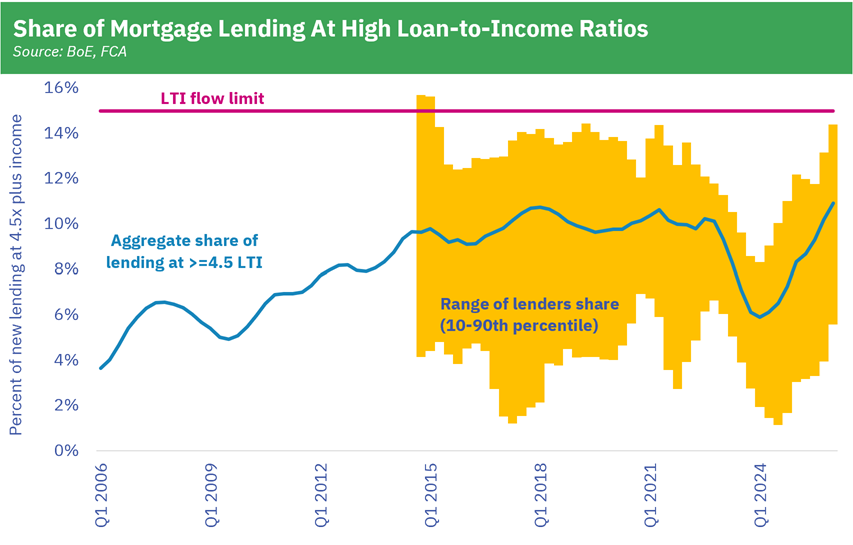
The BoE’s latest Financial Stability Report provides an update on mortgage lending at and above 4.5 times income. They report “Following the FPC’s updated Recommendation in 2025 Q2, the share of high LTI lending increased to 13.2% in 2026 Q1, up from 11.8% in 2025 Q4” and “This leaves the four-quarter rolling average at 10.8%, below the 15% limit” as per their chart below.
They also report “This increase in high LTI lending is supported by a number of factors, including strong credit supply and competition among lenders, the FCA’s clarification regarding its Mortgage Conduct of Business rules on the rates borrowers are stressed against to test affordability, and a number of lenders taking up the Prudential Regulation Authority’s (PRA’s) Modification by Consent to disapply their individual LTI flow limit”.
For context, a 4.5 times income mortgage would suggest repayments as a % of gross income of around 29% based on a 4.8% mortgage rate and 30-year term or 26% of income based on a 40-year term. Meanwhile, UK Finance reported the average repayments as % of income for first-time buyers was 21.9% in 2025, up from 16.7% in 2020.
DATA: Nationwide reported UK house prices rose 2.2% in year to Jun 2026
They report this was higher than the 1.7% annual increase reported the previous month though seasonally adjusted prices were unchanged month on month. They also report “Northern Ireland remained best performing region, with prices up 8.6% year on year in Q2 2026” and “Outer South East [was the] weakest performing region, with 0.1% annual rise”.
DATA(PDF): Zoopla reported house prices rose 1.4% in year to May 2026
They report “Sales agreed over June are running 7% below with buyer enquiries 15% lower, a consistent trend this year” and “Sales agreed are down 3-6% in northern England and Scotland, where there are fewer homes for sale and the cash increase in mortgage costs is smaller, but down more than 10% in Wales, the South West, the East of England and the East Midlands”.
DATA: BoE published effective mortgage rates for May 2026
They report the average rate on new advances, covering purchase and remortgage rose to 4.23% from 4.08% the previous month. The average rate on outstanding balances fell slightly, to 3.92% from 3.93% the previous month.
DATA: BoE reported 56,205 mortgage approvals for purchase in May 2026
They report the seasonally adjusted number of mortgage approvals for house purchase was 15% lower than the previous month and 11% lower than the same month last year. The number of approvals for remortgaging was 35% lower than the previous month.
DATA: HMRC reported 98,450 residential transactions in May 2026
They report the seasonally adjusted number of transactions was 2% lower than the previous month but 17% higher than last year’s post-SDLT holiday affected figure.
DATA: BoE published Credit Conditions Survey for Q2 2026
They report “Lenders reported that the availability of secured credit to households was unchanged in the three months to end-May 2026 (Q2)” and “It was expected to increase over the next three months to end-August 2026 (Q3)”. They also report “Lenders reported that demand for secured lending for house purchase increased in Q2, and was expected to decrease in Q3”.
DATA: DfBT published construction building materials stats for Jun 2026
They report “the material price index for ‘All work’ increased by 5.4% in May 2026 compared with May 2025” and “deliveries of bricks decreased by 4.4% in May 2026 compared with May 2025”.
DATA: Scottish Gov published housebuilding stats for 2025/26
They report “There were 17,268 new homes built and 14,955 new builds started across the social and private sector in 2025-26” and “In 2025-26, the Scottish Governments AHSP delivered 6,787 approvals, 7,421 starts, and 6,832 completions”.
DATA: Scottish Gov published Landlord Register data for May 2026
The number of registered landlords fell by 1.7% compared to the same month last year while the number of registered properties fell by 0.8% over the same period.
DATA: Financial Market Expectations For BoE’s Bank Rate
The chart provides a summary for the expected future level of Bank Rate based on daily data. The One Year figure was 4.00% on the 2nd Jul unchanged from the 25th Jun.
DATA: New Build Energy Performance Certificates, England
This chart provides a summary of the number of EPCs on new build properties, a useful leading indicator for net additions. The 52-week rolling total was 209,719 for the week commencing 22nd Jun, similar to the 209,778 total for the previous week.
POLICY: Andy Burnham delivered speech
On housing, he suggested “greater public control” and “the biggest council house building programme since the post-war period” using public land.
It brought “an end to nearly two centuries of legislation that has criminalised rough sleeping and begging”.
POLICY: MHCLG on cutting pre-application time for infrastructure
They “will scrap mandatory pre-application consultation requirements for Nationally Significant Infrastructure Projects (NSIPs)” and “In their place, developers will receive earlier technical support and meaningful advice from the Planning Inspectorate before applications are submitted”.
REPORT: HCLG Committee reported on PRS housing conditions
They report “Overall, our view is that the Renters’ Rights Act and other reforms to raise standards constitute a proportionate package of measures that are likely to improve housing conditions for tenants” but “the effectiveness of these measures depends largely on how well they are implemented and enforced”.
REPORT: BoE on developing a house price-at-risk framework for the UK
The model “captures risks to financial stability by estimating both the median and the tail of the nominal house price growth distribution, for the case of UK and its sub-national markets” and the “main findings are that since the 1970s, the most important predictors for the tail of the distribution have been transaction growth, changes in mortgage rate, credit to GDP gap, and financial stress”.
REPORT: JRF on rebuilding living standards and economic security
They recommend policies to “Control the growth of private rents and re-link Local Housing Allowance (LHA) to the 30th percentile” and “Introduce an affordable energy guarantee that provides a portion of cheaper energy to all households designed to cover a typical household’s basic energy use”.
REPORT: CaCHE reported on affordable housing solutions
The report “undertakes an extended literature review of academic and policy literature across four themes that each covers a core grouping for housing policy instruments” and explores how they “are used by the 27 EU member states and the UK to make housing more affordable”.
REPORT: Housing Europe on social and public housing in the EU & UK
“Commissioned by the Irish Department of Housing, the report maps public, cooperative, and social housing systems across the EU and the UK, comparing how they are financed, governed, allocated, and linked to wider social policy.”
They report “there has been a marked deterioration in confidence among SME home builders since the first quarter of 2026” as “expectations for land purchasing, housing starts and housing market conditions have all weakened”. They also report “Development viability was the most frequently cited supply-side constraint facing SME developers, overtaking planning delays, while weak buyer confidence and affordability pressures continue to weigh on development activity”.
REPORT: Savills reported on the build-to-rent market in Q2 2026
They report “The second quarter of 2026 saw £2.2 billion deployed, the strongest Q2 on record” and “This already puts 2026 ahead of the end-of-Q3 totals for 2023, 2024 and 2025, with two quarters remaining”.
REPORT: CPS/Onward reported on Fixing London Housing
The report suggests “that most of the necessary policy levers already exist within current legislation” but “What has been missing is the political will to use them”. It recommends two new development corporations, estate regeneration, the release of Strategic Industrial Land, better use of public land , and a presumption in favour of brownfield development.
REPORT: Fabians reported on housebuilding quick wins
The report provides a poor evidence base using undercounting housebuilding data to suggest “We need both a more effective planning system and an active state involved in unlocking thousands of homes” and “More social and affordable homes must be central to this package to cut housing costs for families”. Using the misleading data, they suggest “these reforms could deliver an extra 87,000 dwellings a year”.
They suggest “current carbon standards are factually wrong for brick buildings” and “Over realistic lifespans, brick performs better on whole-life carbon”.
REPORT: Homes for Scotland reported on development viability
The report calls for “a stronger, shared understanding of development viability and its critical role in delivering the homes Scotland needs” and “highlights how rising costs, infrastructure requirements, planning obligations, policy expectations and market conditions can all affect whether sites are capable of being delivered”.
REPORT: ISPA on redesigning the PRS through lived experience
The Intersectional Stigma of Place-Based Ageing project reported on “how everyday letting processes such as property listings, viewings, permissions for adaptations, landlord decision-making, shape the experiences of disabled renters”.
Chart of the Week
The week’s chart is taken from my latest Financial Times article. It shows the cumulative number of new build Energy Performance Certificates (EPCs) for the per each Prime Minister was in power (for Starmer it is based on data up to last week). It highlights how despite different policy approaches, the trend for every Prime Minister has been broadly similar with the exception of Cameron during the coalition government when the market was recovering from the financial crisis. Starmer is currently trending below May and Johnson and was below Sunak for the comparable period – and nowhere near the trend needed for 300,000 net additions per year.
It’s worth noting that although EPCs are a useful leading indicator for net additions and are very timely, it can take time for policy changes to feed through into actual delivery and so it might not be entirely fair to compare them on this basis. But I suspect any other measure of planning and housing delivery would show a similar (or worse) result for Starmer.
DATA: Homes England published housebuilding stats for 2025/26
They report “Housing programmes delivered by Homes England resulted in 42,433 new homes starting on site and 40,332 new homes completed between 1 April 2025 and 31 March 2026” and “This represents an increase in both starts (by 11%) and completions (by 9%) compared to the same period the previous year”.
DATA: MHCLG revised and updated various affordable housing tables
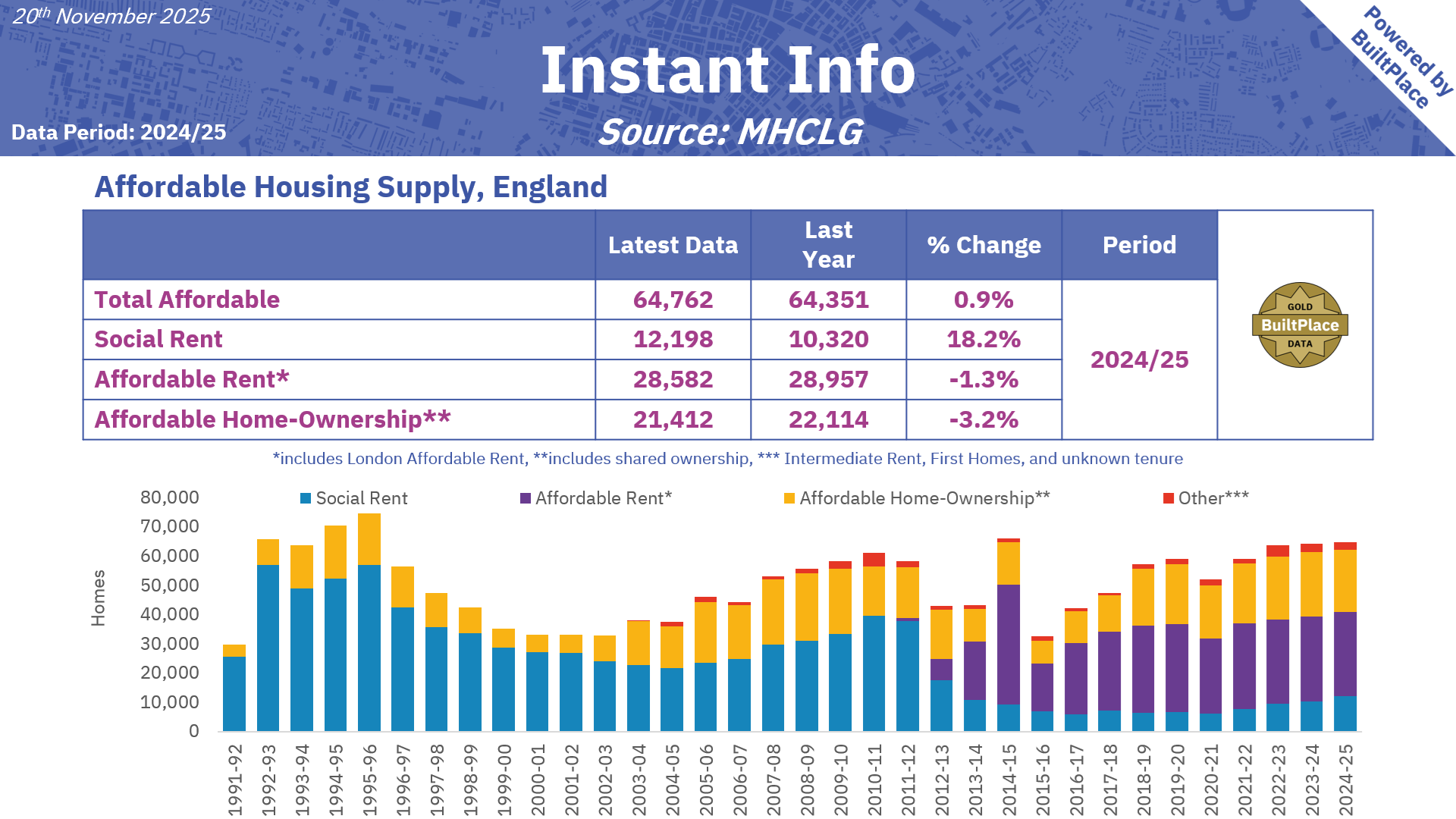
They have revised data for 2024/25 in several tables and updated table 1012 with data for 2025/26. See Chart of the Week for more detail.
They report “There was an 11.5% increase in guest nights in 2025 from the previous 12-month period, January to December 2024”. They also report “International guests were estimated to have contributed 32.1 million guest nights to the UK in 2025. This was a small increase of 2.1% in international guest nights compared with 2024 (31.5 million guest nights). Domestic visitors contributed 67.8 million guest nights, a large increase from 2024 of 16.7%.”
DATA: MHCLG published EHS local authority housing stock modelling
The English Housing Survey based analysis provides “modelled estimates of the number and proportion of occupied homes that are deemed non-decent according to the Decent Homes Standard, have Category 1 hazards, or have a problem with damp in each local authority, by tenure and dwelling type”. They report “Across both rented tenures, the highest rates of non-decency were in homes in local authorities in the South West, coastal areas of the South East, the Midlands and Yorkshire and the Humber” while “Failing the Decent Homes Standard on multiple criteria was less common in London than other regions”.
DATA: Financial Market Expectations For BoE’s Bank Rate
The chart provides a summary for the expected future level of Bank Rate based on daily data. The One Year figure was 4.07% on the 24th Jun compared to 4.10% on the 17th Jun.
DATA: New Build Energy Performance Certificates, England
This chart provides a summary of the number of EPCs on new build properties, a useful leading indicator for net additions. The 52-week rolling total was 209,778 for the week commencing 15th Jun, similar to the 209,999 total for the previous week.
POLICY: Sir Kier Starmer resigns as Labour Party leader
He will remain prime minister until the leadership contest ends. Andy Burnham, former mayor of Greater Manchester, is likely to replace him.
POLICY: Housing Health and Safety Rating System came into force
“New power now in force in the Renters’ Rights Act so councils can take stronger action where landlords fail to fix problems, alongside existing enforcement powers” and “Landlords who don’t fix dangerous problems like damp and mould now face fines of up to £7,000”.
POLICY: HMT launched First Time Buyer ISA consultation
They are consulting on “the implementation of a new, simpler ISA product to support first time buyers to buy a home” that “will be offered in place of the Lifetime ISA”.
POLICY: HMRC & HMT launched consultation on VAT zero rate for land
They are consulting on “introducing a new VAT zero rate for land intended for the construction of social housing across the UK”.
“London’s first ever heat plan – sets out new vision to protect the capital from extreme heat” and on housing it recommends “Retrofitting the highest-risk homes to reduce the risk of indoor overheating – via, for example, shutters, insulation and ventilation, and air conditioning”.
REPORT: HoL Built Environment Committee reported on young people
The policy letter suggests “Early and meaningful engagement with children and young people can reduce commercial risk to developers by minimising delays and building trust in the community” and “allow developers to gather valuable feedback to inform decision making and ultimately create better places”. The committee also “believes that the built environment sector and educators should seek to embrace video games as a tool for connecting to the younger generation to the built environment”.
REPORT: NAO reported on the service family accommodation estate
They report “The MoD’s repurchase of its SFA estate represents value for money when compared with the option of continuing its arrangements with Annington to lease back the estate” but they “estimate that by the time of the December 2024 repurchase of the estate, the MoD was £14.5 billion worse off than it would have been had it not entered into the deal with Annington”.
REPORT: Centre for Cities published Big Cities Outlook 2026
The report “highlights and expands on the economic performance of the UK’s largest cities to understand how they contribute to raising living standards across the country”. It recommends Government should “build its delivery of the Industrial Strategy around place, focusing on barriers to innovation such as commercial space and growth finance”, “deliver greater powers for metro mayors to plan and deliver integrated transport networks”, and “accelerate planning reform and prioritise densification in big cities where housing demand is strongest”.
REPORT: RF reported on younger Millennial and Gen Z living standards
They report “Nearly two-thirds (63 per cent) of people in their early 20s now remain ‘at home’, up 12 percentage points since 2011” and “Household incomes, after housing costs, at ages 20-26 for those born in 1996-2001 are nearly a fifth higher than for those born in 1986-1991 at the same age” but “exactly half of the apparent progress for the very youngest comes from income from other household members”.
REPORT: Loughborough University onflooding and property values
They report “flooded properties typically lose around 3% of their value immediately after a flood, with the loss rising to around 10% after 15 years” and “the median length of home ownership was four years in areas unexposed to flooding, compared with 15 years in places that had experienced at least one flood event, and 22 years in the worst flood-affected areas”.
REPORT: Public First reported on flooding & housing development
They “modelled how flooding during construction could affect developers financially and whether relatively low-cost property-level flood resilience (PFR) measures could help reduce some of those impacts” and finds “developers could save around £2.27 in avoided losses for every £1 invested in PFR measures”.
REPORT(PDF): LPDF reported on small and medium development sites
They report “the number of units granted planning permission on developments of 10-49 dwellings has fallen by 61% over 10 years, from 69,702 units to 26,909 units in 10 years” and “the proportion of appeals dismissed on developments of 10-49 dwellings has averaged 64% over the past decade” compared to “only 43% of appeals being dismissed over the past decade on proposals for 50+ units”.
REPORT: ARCO reported on integrated retirement communities
They report “More than half of UK homeowners would consider moving into specialist housing in later life – but a shortage of local options is holding back demand” and suggests “stepping-stone proposals for government to build on the lessons of New Zealand”.
REPORT: Savills published housing completions forecast
They “think that new homes completions in England will average 167,500 per year over the five years to 2029/30, well below the Government’s target of 300,000 per year, but roughly on par with the 20-year average for delivery”.
REPORT: EDRC reported on the drivers of air conditioning use in England
They report: “Although national AC use in England remains low at 4.3%, approximately 1.06 million homes, AC use among some societal groups is much higher. An estimated 39.7% of households living in modern 21st-century detached homes in London, who are among the 20% highest income earners, with a child under five, with a person who has a long-term illness or disability, and with someone working from home two or more days per week, use AC to stay cool in summer.”
REPORT: Create Streets on “Stopping Britain baking”
They suggest six policy changes to “help Britain keep cool in the heat”.
Using English Housing Survey data, they estimate “More than 70,000 babies in England – equivalent to one in every six – are living in overheated homes” and “These infants are among the 1.6 million children currently living in overheated homes”.
They report “The New Year then began with a degree of optimism, in widespread anticipation of interest rates cuts and gradual economic recovery” but “the wider ramifications of the Middle East conflict brought the fragility of the nascent recovery into context and the market has returned to being characterised by caution and lacking in urgency”. They also report “forward sales have reduced to £1,006 million (31 October 2025: £1,137 million and 30 April 2025: £1,403 million) as the value of sales reservations secured in the year was around 15% below the run-rate of the previous two years”.
Chart of the Week
The release of the latest Homes England housebuilding data and update of MHCLG’s table 1012 gives us an early indication for overall affordable housing completions in 2025/26 across England, with table 1000 due to be updated in November. The relationship isn’t perfect anymore given the wider range of funding sources for affordable housing delivery as table 1012 only covers Homes England and GLA funding. The data suggests a further rise in the number of social rented homes completed and a possible rise in the overall total number of affordable homes completed – though this is less certain. We’ll have to wait till November to know for sure.
This was unchanged from the previous month. They report “Transport made the largest upward contribution to the monthly change in both CPIH and CPI annual rates; food and non-alcoholic beverages made the largest, partially offsetting, downward contribution”.
They report “The early estimate of payrolled employees for May 2026 decreased by 119,000 (0.4%) on the year, but was largely unchanged on the month, increasing by just 2,000 (0.0%) to 30.3 million” and “Annual growth in employees’ average earnings in Great Britain was 3.4% for regular earnings (excluding bonuses), and 4.4% for total earnings (including bonuses) in February to April 2026”.
DATA: Rightmove reported asking prices fell 0.5% in year to Jun 2026
They report(PDF) “the biggest June fall in fourteen years, as sellers look to entice summer buyers” and “Buyer demand across the month of May is down by 10%, however our real-time data indicates that this was amplified by the unusual heatwave during the half-term week, which temporarily reduced some mover activity levels”. They also report “The number of newly listed homes coming to market is down 5% compared with this time last year, but is 6% up on 2024 and 12% up on 2023”.
DATA: ONS reported UK house prices rose 3.8% in year to Apr 2026
This is a large increase on the 0% change reported for the previous month but as explained by ONS, is due to a base effect: “this is because average UK prices rose moderately between March and April 2026, while decreasing sharply in the same period a year ago, following Stamp Duty Land Tax changes in England and Northern Ireland on 1 April 2025”.
DATA: ONS reported private rents rose 3.3% in year to May 2026
They report this was down from 3.5% for the previous month and “In England, private rent annual inflation was highest in the North East (5.9%), and lowest in London (2.0%)”.
DATA: ONS reported £1.2bn of SDLT receipts in May 2026
The total value of Stamp Duty Land Tax receipts (covering both residential and commercial property) was 14.6% higher than the same month last year.
DATA: MHCLG published planning applications in England data for Q1 2026
They “received 79,600 applications for planning permission, down 10% from the same quarter a year earlier”, “decided 68,400 applications for planning permission, down 4% from the same quarter a year earlier”, and “granted 59,400 decisions, down 3% from the same quarter a year earlier”. They have added more detail on planning applications including the number of homes – see Chart of the Week for more detail.
DATA: MHCLG published indicators of new supply stats for Q1 2026
They report the number of building control based housing starts was 18% higher than last year while the number of completions was 3% higher. However, this largely reflects a growing number of starts and completions reported by the Building Safety Regulator. They also “estimate that 199,500 net additional homes have been delivered in England between 1 April 2025 and 31 March 2026” and “that 392,400 net additional homes have been delivered in England between the start of Parliament, on 9 July 2024, and 14 June 2026”.
DATA: UKF reported on interest-only mortgages in 2025
They report “There were 445,000 pure interest-only homeowner mortgages outstanding at the end of 2025, 17.7 per cent fewer than in 2024” and “In addition there were 156,000 partial interest-only (part and part) homeowner mortgages outstanding at the end of 2025, 10.3 per cent fewer than in 2024”.
DATA: Financial Market Expectations For BoE’s Bank Rate
The chart provides a summary for the expected future level of Bank Rate based on daily data. The One Year figure was 4.10% on the 17th Jun compared to 4.39% on the 10th Jun.
DATA: New Build Energy Performance Certificates, England
This chart provides a summary of the number of EPCs on new build properties, a useful leading indicator for net additions. The 52-week rolling total was 209,999 for the week commencing 8th Jun, similar to the 210,017 total for the previous week.
“At its meeting ending on 17 June 2026, the Monetary Policy Committee (MPC) voted by a majority of 7–2 to maintain Bank Rate at 3.75%. Two members voted to increase Bank Rate by 0.25 percentage points, to 4%.”
POLICY: MHCLG published home buying and selling reform roadmap
The roadmap includes: “Later this year: a Code of Practice to set out minimum standards for property agents and guidance to improve the quality of information in property listings”, “From 2027: consultation on estate agent qualifications and expanded digital tools”, and “By the end of Parliament: comprehensive legislation to require sales packs, binding contracts, and digital systems that support the efficient sharing of trusted digital property information”.
The first tool is a “new AI prototype that aims to halve the time it takes to process householder planning applications – down from 8, to 4 weeks in an average case” in the hope it frees up planning officers for more complex applications. The second tool is Extract, which is now available across England and “uses AI to help planning officers convert decades-old planning documents and maps, sometimes with handwritten notes, into readily useable data in minutes”. Meanwhile, Manchester City Council just changed their planning register website and there is no longer the ability to search by map!
It suggests “Later life lending has the potential to become the fourth pillar in retirement, but there is work to do to deliver on that ambition” but “To deepen consumer trust and deliver good outcomes, a joined-up approach across product design, advice, and support is needed” and “The FCA will support a better-functioning market, but industry must take the lead”.
They report “Changes to the National Planning Policy Framework (NPPF) in 2024 and as anticipated this year are beginning to impact how local authorities are planning for growth, reflected in their most recent land supply positions and our modelled projection of Housing Delivery Test results” but “The full impact remains limited and uneven, with no immediate effect on the pipeline of deliverable sites gaining consent, despite high volumes of applications progressing through the system”.
REPORT: Strategic Land Group reported on planning decision times
They report “In 2010, the median planning application took 107 days to be determined, at just over 15 weeks this was only marginally longer than the statutory determination deadline of 13 weeks. By 2025, however, the median decision was taking more than three times as long at 349 days”.
REPORT: HBF on the social and economic impact of home building in Wales
The report provides “An overview of the economic growth and community investment generated by the home building industry in Wales”.
REPORT: Savills reported on residential development in Scotland
They report “Scotland’s residential development market is facing its toughest operating environment since the Global Financial Crisis” and “non-allocated sites continue to face barriers in obtaining planning permission, even in areas where there is a critical need to boost housing supply”.
REPORT: Propertymark published Housing Insight report for Apr 2026
They report “Despite wider economic uncertainty and inflation remaining above target, the housing market continues to demonstrate resilience” and “Within the rental market, demand continues to significantly outstrip available supply”.
CORPORATE: Mountview Estates published Preliminary Results
They report “Turnover is down by less than one half of one percent but Cost of Sales is up by more than eleven percent thus Gross Profit is down by more than eight and a half percent”.
Chart of the Week
The latest MHCLG planning release introduced a new set of data this quarter. Using Glenigan data, they have published details on planning applications by number of homes.
As the first chart shows, there was an increase in the number of homes applied for in outline applications was 206,000 in 2025, a 54% increase on the previous year, and the number applied for in detailed applications was 303,000, a 19% increase. This data, as probably intended, shows a clear turnaround in the number of homes contained in planning applications after three and perhaps more years of decline – the data only starts in 2022.
The second chart provides a breakdown of the number of homes in planning applications by region. The South East is top of the list with 37,300 homes in outline applications and 79,100 homes in detailed applications. The numbers in London are lower, with just 5,800 homes in outline applications and 40,800 homes in detailed applications. I couldn’t find any historic data by region but have emailed MHCLG to check.
DATA: ONS estimated monthly GDP rose 1.2% in year to Apr 2026
They report this was unchanged from the previous month’s estimate despite a 0.1% fall on the previous month thanks to “a 0.2% fall in services, which was partially offset by a 0.1% rise in construction”. This data will be revised in the future.
DATA: ONS reported construction output rose 0.1% in Apr 2026
They report “The increase in monthly output in April 2026 came solely from an increase in repair and maintenance, which grew by 0.6%, while new work fell by 0.3%”.
DATA: ONS published national balance sheet preliminary estimates, 2026
They report “Non-produced assets accounted for a negative 0.1 percentage-point contribution to the growth of the UK’s net worth, falling by 0.2% to £6.9 trillion” and “This was largely attributed to a fall of 0.2% in the value of land underlying buildings and structures”.
DATA: ONS published family spending data for 2024-25
The release provides “Average weekly household expenditure on goods and services in the UK, by age, income, economic status, socio-economic class, household composition and region”. See Chart of the Week for more.
DATA: BoE published Mortgage Lenders & Administrators stats for Q1 2026
The release provides lots of useful data on the UK mortgage market. We cover it in a Digging Deeper slide deck and the data is also published by the FCA but they haven’t updated the main table from last quarter.
They report “In Q1 2026, 499,223 mortgages locked into a new deal up to 6 months ahead of maturity; this compares to 361,216 mortgages in the previous quarter, Q4 2025”.
DATA: BoE published inflation attitudes survey for May 2026
They report that when “Asked to give the current rate of inflation, respondents gave a median answer of 5%, up from 4.6% in February 2026”.
DATA: Registers of Scotland published annual property market report
They report that for 2025-26: “The median price of a residential property in Scotland was £198,000, an increase of 4% from £190,000 in 2024-25” and “The total number of residential property sales in Scotland was 104,408, an increase of 5% on 2024-25”.
DATA(PDF): Zoopla reported asking rents rose 2.1% in year to Apr 2026
They report “Rents are rising at 5%+ in affordable areas, with rents below £750 pcm” while “Those with rents over £1,250 pcm are rising at or below the UK average”. They also report “London is the only region with rising rental demand (+6%), driven by higher mortgage rates keeping renters in the market”.
DATA: ONS published dwelling stock by tenure for the UK, 2024
Please note that this data appears to be based on the data that undercounts dwellings in Wales.
DATA: Financial Market Expectations For BoE’s Bank Rate
The chart provides a summary for the expected future level of Bank Rate based on daily data. The One Year figure was 4.39% on the 10th Jun compared to 4.36% on the 3rd Jun.
DATA: New Build Energy Performance Certificates, England
This chart provides a summary of the number of EPCs on new build properties, a useful leading indicator for net additions. The 52-week rolling total was 210,017 for the week commencing 1st Jun, similar to the 210,033 total for the previous week.
Proposed rule changes include: “Reducing barriers for lenders to offer flexible repayments for people with variable income, like the self-employed, and lend to those paid in foreign currency.”, “Encouraging lenders to assess affordability based on a person’s full and current situation, rather than automatically excluding people because of minor or past credit history issues.”, “Making it easier for older homeowners to unlock wealth built up in their property by updating affordability guidance for retirement interest-only mortgages.”, and “Updating rules on interest-only (or part interest-only) mortgages to give lenders more flexibility, while ensuring most borrowers have a clear plan to repay (unless they’re borrowing a smaller amount).”
POLICY: Regulator of Social Housing call for evidence
They will consult on revised economic standards next year but they state: “Before we do that, we want to start a conversation with our stakeholders about the changes, challenges and tensions that exist in the social housing sector” and “This document sets out for wider discussion our early thinking about how we could future proof our economic regulation to help the sector deliver more and better social homes”.
REPORT: HCLG Committee reported on the affordability of home ownership
They conclude “The affordability of home ownership is a complicated and multivariant problem, with no easy or straightforward solutions. Demand-side solutions cannot work in isolation (as they often counterproductively increase house prices as a secondary effect), but supply-side solutions also are not sufficient (homebuilding cannot happen at the necessary speed to have a significant effect).”
REPORT: BoE published Agents’ summary of business conditions
On housing, they report “A more pronounced regional picture for house sales is developing, with London much weaker than other regions, especially the devolved nations where demand has fared better. At the higher end of the housing market, price reductions are necessary to achieve sales. In general, buyers are taking longer to commit and cancellations have picked up.”. They also report “Demand is weaker in the new build market than in the secondary market, but the same regional picture applies, and development has all but stalled in London. House builders are offering fewer incentives as margins are under more pressure owing to rising build costs.”
REPORT(PDF): RICS published residential market survey for May 2026
They report “Sales activity indicators still clearly negative, but some measures are showing signs of stabilisation” that suggest “the pace of deterioration is no longer intensifying”. They also report “House prices continue to inch lower at the aggregate level” and “Near-term sentiment remains cautious, while the twelve-month outlook sees marginal improvement”.
REPORT: SMF reported on a state alternative to the Bank of Mum and Dad
They suggest “The Citizens Advance is a radical policy proposal that gives younger people the choice to receive the first year of their state pension early as a lump sum” which would be “in exchange for postponing the point at which they start receiving their state pension”.
REPORT: IPPR reported on immigration status and homelessness
They report “Around a quarter of people rough sleeping are non-UK nationals” and “The number of refugee households owed a homelessness duty has increased sevenfold since 2018/19”. The report “outlines how the challenges they face play out in practice”.
REPORT: NHC reported on unlocking 500,000 homes in the north
They suggest “Housing-led regeneration can unlock at least 500,000 good quality homes across the North of England” by “reviving struggling high streets with over 100,000, new homes in town and city centres, building 320,000 homes on brownfield land and renewing or replacing 100,000 social homes in need of regeneration”.
REPORT: Housing Forum reported on procurement processes
They report “councils and housing associations are paying more than private developers to build new homes due to slow and overly complex procurement processes”. They suggest organisations should “Standardise procurement processes”, “Shift mindsets from risk transfer to risk management”, and “Speed up procurement”.
REPORT: RCOT reported on building health into homes
The Royal College of Occupational Therapists report “Poor housing is driving avoidable pressure across health and social care services and damaging people’s health” and “sets out how housing must be recognised and used as a core part of health and care”.
REPORT(PDF): IMLA reported on “How lenders fund fixed rate mortgage”
The report explains why mortgage rates are closely linked to interest rate swaps and not Bank Rate. They have also published a shorter version of the report(PDF).
REPORT: Shelter reported on the slow pace of social rent delivery
They report “Building social homes at current speed will take 119 years to clear housing waiting lists” and suggest “Nothing short of a revolution in social housebuilding is required, including a radical increase in the delivery of social rent homes by local authorities”.
NEWS: Rightmove on first-time buyer house price “hotspots”
They report “All the fastest-growing areas for price remain below £170,000, as demand continues to be high for more affordable homes” – the geographic distribution of house price growth continues to reflect alate housing market cycle pattern.
They report “Trading in the early part of the spring selling season showed a marked improvement compared to autumn 2025, however we have seen a moderation in customer demand in April and May in response to the recent rise in mortgage rates” and “Current reservation rates generally remain above the levels in the first half of the financial year, with incentive usage averaging around 5%”. They also report “The private reservation rate decreased by 6.2% to an average of 151 per week (2025 – 161). In line with our strategy, there was a good contribution from bulk sales and the private reservation rate per outlet per week was 0.65 (2025 – 0.67). The private reservation rate excluding bulk sales was 0.58 (2025 – 0.61).”
CORPORATE: MJ Gleeson published Update on Gleeson Land
They report “Gleeson Land has been extensively engaged in the sale of a site which would account for approximately 50% of the total forecast plots to be sold in FY2026” and “Whilst significant progress has been made in respect of this site, the transaction is unlikely to complete in the current financial year”.
Chart of the Week
The latest ONS family spending data provides a wealth of information, including for mortgage lenders who use it to calibrate their affordability models. For this week’s chart, I’ve taken the family spending data by tenure (table A32) and presented it on a per-person rather than per-household basis. It’s still not directly comparable given the differences in household incomes across the different tenures but provides a useful comparison of relative spending than per household. The most immediate finding from the chart is the unsurprising fact that private renters spend a lot more on housing, fuel and power even when housing benefit etc is accounted for. This then leaves them with less available for spending on recreation & culture, restaurants & hotels, and other miscellaneous goods & services. Meanwhile, outright owners spend the most on food per person – maybe they should cut back on avocados.
DATA: Nationwide reported UK house prices rose 1.7% in year to May 2026
They report this was lower than the 3.0% annual increase reported for April thanks to a 0.6% seasonally adjusted monthly fall – “the first monthly decline so far this year”.
DATA: Halifax reported UK house prices rose 0.5% in year to May 2026
They report(PDF) another -0.1% monthly fall while the annual rate increased from 0.4% the previous month. They also report “Northern Ireland continues to record the UK’s strongest annual growth at +7.8%” while prices fell 2.1% in the South East and 1.5% in London.
DATA(PDF): Zoopla reported house prices rose 1.5% in year to Apr 2026
They report “Sales agreed 1% ahead of last year despite buyer demand being down 10%, as committed home movers support sales” and “There are 6% fewer first-time buyer enquiries” while “those active are targeting homes worth £10,000 more than last year”.
DATA: BoE published quoted mortgage rate data for May 2026
The average quoted mortgage rate for a two-year fixed-rate mortgage at 75% loan-to-value fell from 5.14% in April to 4.92% in May, though this was still much higher than the 3.93% recorded in January. The average revert-to-rate was unchanged at 6.60%.
DATA: BoE published effective mortgage rate data for Apr 2026
They report the average rate on new advances (covering both purchase and remortgage) was 4.08%, up slightly from the 4.04% reported the previous month. The average rate on outstanding balances was unchanged at 3.93%.
DATA: BoE reported 65,945 approvals for purchase in Apr 2026
They report the number of mortgage approvals for house purchase was 3.1% higher than the previous month and 9.0% higher than the same month last year. Remortgage approvals were 46% higher in April when compared to the same month last year.
DATA: HMRC reported 101,030 residential transactions in Apr 2026
They report the number of transactions was 2.8% lower than the previous month but 53% higher than last year – though this is due to the post-stamp duty holiday lull last year.
DATA: HMRC published local level Stock of Properties data for 2025
The tables provide useful local level information on the council tax band, property type, and number of bedrooms. However, it still appears to affected by the lag in new homes being registered and therefore should not be used for calculating the change in dwelling stock.
DATA: UK Finance published later life mortgage lending data for Q1 2026
They report “There were 36,050 new loans advanced to older borrowers in Q1, down 4.8 per cent year on year” and “There were 5,300 new lifetime mortgages advanced in Q1, down 8 per cent from the same quarter a year earlier”.
DATA(PDF): IMLA published Intermediary Mortgage Market Tracker
They report “The average number of DIPs [Decision in Principle] is stable since the end of last year (-1)” but “The conversion rate from DIP to completion is slightly lower (-3) – out of 26 DIPs, 10 go through to completion”.
DATA: Scottish Gov published Housing Statistics 2025
They report “19,779 new homes were added to the housing stock in 2024–25” and “This was 628 fewer homes (a 3% decrease) than in 2023–24”. They also report “Nearly all the new housing supply came from new build homes (97%)”.
DATA: Scottish Gov published SHCS local authority level data
The release provides local authority level data from the Scottish House Condition Survey.
DATA: Scottish Gov published Landlord Register data for Apr 2026
The number of registered landlords fell by 2.3% and the number of registered properties fell by 1.3% with a sharp fall from the previous month.
DATA: Financial Market Expectations For BoE’s Bank Rate
The chart provides a summary for the expected future level of Bank Rate based on daily data. The One Year figure was 4.36% on the 3rd Jun compared to 4.23% on the 27th May.
DATA: New Build Energy Performance Certificates, England
This chart provides a summary of the number of EPCs on new build properties, a useful leading indicator for net additions. The 52-week rolling total was 210,033 for the week commencing 25th May, slightly higher than the 209,709 total for the previous week.
POLICY: Scottish Gov announced start of First Homes Fund
They announced “The first round of applications for a First Homes Fund will open by the end of June, providing first-time buyers with a £10,000 contribution towards a deposit on their first home” and “It is expected the first phase of the fund will support 2,000 households over the first 100 days of this Government and 50,000 over the course of this Parliament”.
REPORT: HCLG Committee published pre-legislative scrutiny report
The Housing, Communities and Local Government Committee published pre-legislative scrutiny of the draft Commonhold and Leasehold Reform Bill.
REPORT: UK Finance published Household Finance Review
They report “In total, the provisional value of lending in 2026 through to May suggests activity is down about seven per cent, compared with the same period in 2025” and “Affordability pressures eased a little in Q1, but impact of conflict yet to feed through”.
REPORT: Resolution Foundation published Housing Outlook
They report “The growth of the PRS is a crucial part of Britain’s living standards story: it is the most expensive, least secure, and worst quality of the mainstream tenures. Private renters pay more per square metre for their housing and face a higher housing cost burden than mortgagors or social renters. But the impact on living standards extends beyond household finances, private renters are more likely than owners or social renters to live in damp and energy-inefficient homes, and one-in-six (16 per cent) say their housing situation stops them confidently planning for the future.”
REPORT: CaCHE reported on the private rented sector landlord conveyor
The “graphic article explores how landlords move into, through and out of the PRS over time, highlighting that landlord participation is often more dynamic and responsive to changing conditions than policy debates suggest”.
The report introduces the Non-Decent Index, which “is a publicly available index designed to identify areas in England with a high number of private rented sector homes that fail the Decent Homes Standard”.
REPORT: HACT published Social Value in Social Housing report
They report “that more than £1.19 billion of social value was delivered by UK housing associations in 2025, supporting over 179,000 individual beneficiaries”.
REPORT: HBF reported on council tax for incomplete homes
They find “There is considerable inconsistency between local authorities in determining when a new build home is deemed complete for council tax purposes” and “Limited availability of empty property discounts”. As a result “Council tax liability is having a direct and widespread impact on SME home builders” and “The number of appeals to the Valuation Tribunal Service relating to Completion Notices has increased significantly in recent years”.
REPORT(PDF): LPDF & Turley published updated housing need calculations
The calculation of local authority housing need based on updated affordability and dwelling stock data using the standard method shows “All but three of England’s 296 local authorities receive a higher housing need figure”.
REPORT: GLA published London Housing Market Report
The report “summarises key trends and patterns in London’s housing market” and “covers topics including house prices, rents, sales and new supply”.
REPORT: JLL reported on fixing London’s new build market
They report “While supply-side challenges around viability, regulatory delays and higher finance costs are well documented, our latest research identifies a critical factor: weakening demand” and suggests “targeted stamp duty relief for new homes that could materially improve sales rates and unlock stalled developments across the capital”.
REPORT(PDF): BusinessLDN published Who Lives in Build-To-Rent London
The report “provides a snapshot in time of residents living in Build-to-Rent schemes in London, examining resident demographics including age, profession and average income, benchmarked against residents living in the private rented sector”. The most noticeable difference is the much higher proportion of students living in build-to-rent – around one-third of residents – while they account for under 10% of private rented sector residents.
REPORT: NAO reported on Royal Family residential property arrangements
The report “sets out the arrangements for residential accommodation for members of the Royal Family provided by [The Crown Estate] and the [Royal] Household.
NEWS: Savills revised house price forecasts for 2026
They revised their forecast for UK house prices from +2% to -2%.
CORPORATE: Watkin Jones published Half Year Results
They report “While market conditions remain challenging and continue to impact the pace of recovery, the long-term fundamentals of our end markets remain attractive”.
CORPORATE: Springfield Properties published Trading Update
The Scottish housebuilder reports “In private housing, there was strong growth in the second half of the year compared with the first half reflecting normal seasonality, an increase in average selling price and the changing housing mix, resulting in year-on-year growth in private housing revenue”.
Chart of the Week
Market expectations for Bank Rate fell back slightly in May, with quoted fixed-rate mortgage interest rates also falling in response. Bank of England data shows the average two-year fixed-rate fell back below 5%, down to 4.92% in May. However, the situation in the Middle East is volatile and it appears likely that rates will remain well above the sub-4% levels we saw at the beginning of the year. That raises the question of when we’ll start to see these higher quoted rates hit the actual rates on new advances. The latest data shows an increase in the average effective rate on new advances in April, but only to 4.08%. It may be a couple more months till we start seeing effective rates rising and that suggests a tough start to the autumn selling-season if mortgage rates stay elevated.
DATA: ONS reported CPI rose by 2.8% in year to Apr 2026
This was lower than the 3.3% reported the previous month as “Housing and household services made the largest downward contribution to the monthly change in both CPIH and CPI annual rates” while “an upward contribution from a large increase in motor fuel prices was counteracted by downward effects from other categories in the transport division”.
They report “The early estimate of payrolled employees for April 2026 decreased by 210,000 (0.7%) on the year, and by 100,000 (0.3%) on the month, to 30.2 million” while “Annual growth in employees’ average earnings in Great Britain was 3.4% for regular earnings (excluding bonuses), and 4.1% for total earnings (including bonuses) in January to March 2026”. On vacancies, they report “Early estimates for February to April 2026 suggest a decrease of 28,000 (3.9%), to 705,000, compared with November to January 2026, the lowest level of vacancies since February to April 2021”.
DATA: Rightmove reported UK asking prices fell 0.3% in year to May 2026
They report(PDF) “Buyer choice is at its highest for this time of year since 2015, and with 32% of existing homes for sale seeing a price reduction, new sellers need to price more competitively, as over-optimistic initial pricing is leading to longer selling times”. They also report “The housing market remains confident overall despite global uncertainty and resulting cost-of-living pressures, with the number of sales agreed just 4% below last year when mortgage rates were significantly lower, yet still up 2% on the same period in 2024”.
DATA: ONS reported UK house prices were unchanged in year to Mar 2026
This was a fall from 1.7% annual growth the previous month. However, it mostly reflects the impact of last year’s stamp duty holiday on prices. The growth rate is likely to rise to around 3% next month. They also report “The East Midlands was the English region with the highest house price inflation, at 0.7%, in the 12 months to March 2026” and lowest in London where “Prices fell by 2.1% in the 12 months to March 2026”.
DATA: ONS reported private rents rose 3.5% in year to Apr 2026
They report “In England, private rents annual inflation was highest in the North East (6.5%), and lowest in London (2.0%), in the 12 months to April 2026”.
DATA: ONS reported £1.55bn SDLT receipts in Apr 2026
The total value of Stamp Duty Land Tax receipts, covering both residential and commercial property, was 0.8% lower than the same month last year.
DATA: MHCLG published English dwelling stock estimates for 2025
They report “There were 25.8 million dwellings in England as of 31 March 2025, an increase of 208,600 dwellings or 0.81% on the previous year”. See Chart of the Week for more detail on the tenure breakdown.
DATA: MHCLG published leasehold dwellings stats for 2024/25
They report “In 2024-25, there were an estimated 4.90 million leasehold dwellings in England” and “This equates to 20% of the English housing stock”. They also report “The total number of leasehold dwellings has not increased or decreased significantly in the past 5 years”.
DATA: MHCLG published leasehold term remaining factsheet
They report “There were 4.8 million individual leases registered against just over 4 million households in England in 2023 to 2024” and “The average length remaining on all leases was 480 years”. They also report “There were a total of 412,000 households living in properties with 80 years or less remaining on the lease” and “Of these, 204,000 households were owner occupied”.
DATA: Homes England published housing delivery stats for 2025/26
They report that they “enabled the completion of more than 40,200 homes, up 9% on 2024/25 (36,900)” and “facilitated the start of construction for an additional 42,400 homes, up 11% on 2024/25 (38,300)”.
DATA: UKF published regional mortgage market factsheets for Q1 2026
The factsheets for the countries of the UK and regions of England cover key mortgage market information on first-time buyers and home movers.
DATA: MoJ published mortgage & landlord possessions stats for Q1 2026
They report “Compared to the same quarter in 2025 there were decreases in mortgage possession claims from 6,767 to 5,181 (23%), orders from 4,602 to 3,749 (19%), and warrants from 3,552 to 3,420 (4%)”. They also report “Landlord possession claims, orders, warrants and repossessions have decreased”.
DATA: ONS published long-term international migration stats for 2025
“At 171,000, long-term international net migration for year ending (YE) December 2025 has nearly halved from YE December 2024 (updated to 331,000); this level was last seen when the new immigration system was introduced in early 2021, and the coronavirus (COVID-19) pandemic travel restrictions were still in place.”
DATA: Financial Market Expectations For BoE’s Bank Rate
The chart provides a summary for the expected future level of Bank Rate based on daily data. The One Year figure was 4.37% on the 20th May compared to 4.50% on the 13th May.
DATA: New Build Energy Performance Certificates, England
This chart provides a summary of the number of EPCs on new build properties, a useful leading indicator for net additions. The 52-week rolling total was 209,037 for the week commencing 11th May, slightly higher than the 208,869 total for the previous week.
POLICY: MHCLG launched High Value Council Tax Surcharge consultation
They are “seeking views on the design and delivery of the High Value Council Tax Surcharge (HVCTS), a new charge on residential properties worth £2 million and above in England”.
POLICY: MHCLG published private rented sector data collection strategy
The strategy sets out “A long-term plan to improve data on private renting, helping understand renter experiences and assess the impact of the Renters’ Rights Act 2025”.
REPORT: Centre for London reported on the capital’s housing crisis
They report “London has experienced a deepening crisis of housing distribution as much as one of supply”. They report “If London’s housing stock had grown by an additional 1% annually since 2002, house prices would be around a third lower, and affordability would be more in line with the rest of the country” but “this would have required London to build more than twice as many houses every year for the past two decades – equivalent to adding the entire housing stock of Birmingham twice over”. They also report “A winner-takes-all’ housing market” means that “how stock is distributed is not only determined by overall availability”.
REPORT: PIC reported on flood risk and institutional investment
They “examine how to reduce flood risk and boost institutional investment in housing and infrastructure”.
REPORT: Centre for Cities reported on the geography of urban deprivation
They report “Two-thirds of the most deprived neighbourhoods in the UK are in cities, even though cities and non-urban areas each account for roughly half of all neighbourhoods” and “Within cities, deprivation concentrates in urban cores and affluence in suburbs”, while “The national fall in urban core deprivation since 2010 has been driven overwhelmingly by a small number of large cities”.
REPORT: Manchester Social Housing Commission published final report
The report had three objectives: “To set out the substantive case for an acceleration of building sustainable homes for social rent”, “To present our key recommendations and assess progress achieved to date”, and “To reflect on the process we have followed, in support of more and better public participation in policymaking”.
REPORT: COPNI reported on older renters in Northern Ireland
They report “Older people renting privately in Northern Ireland are facing a combination of insecurity, rising costs and unsuitable housing that risks becoming a major social issue in the years ahead” and “Currently around 17,600 people aged 65 and over in Northern Ireland are private renters, but the report warns this number is growing and could increase significantly by 2040”.
REPORT: Savills reported on build-to-rent viability
They report “The Living sector continues to face sustained viability pressures, despite ongoing depth of investor appetite” and include a hypothetical example.
They report “We are starting to see some supply-chain cost inflation as a result of the war in the Middle East – largely from higher fuel costs affecting civils and material production” and are still “Progressing residential land sales despite market conditions remaining challenging”.
CORPORATE: Crest Nicholson delayed half year results
They report “As outlined in the 21 April 2026 trading update, the Group is in discussion with lenders in relation to seeking a temporary covenant relaxation” and “the publication of the Group’s half year results will be delayed to allow sufficient time for the orderly completion of the covenant reset process and for the Group’s auditors to complete their review processes”.
CORPORATE: Henry Boot published AGM Trading Update
They report “Demand remains resilient for our high quality residential land, prime industrial developments and premium homes” and, for Stonebridge Homes “the overall net private reservation rate remains in line with last year at 0.41 for the 18 weeks to 17 May 2026 (2025: 0.41)”.
Chart of the Week
This week MHCLG published their dwelling stock estimates for England as of the 31st March 2025. The release includes a breakdown by housing tenure and they report 16.6 million were owner occupied, 5.0 million were private rented, and 4.2 million were social and affordable rented homes. However, it’s more interesting to look at how those figures have changed over the years. As the Chart of the Week below shows, the 2000s and early 2010s saw nearly all of the net increase in the dwelling stock end up in the private rented sector. But, by 2015 this had flipped with most net additional homes ending up owner occupied. However, recent years have seen this shrink again, with both the private rented sector and social rented sector growing – including previous years that have seen the number of private rented homes revised upwards, with the total number of private rented dwellings now above five million for the first time since the 1950s.
DATA: ONS estimated UK monthly GDP rose 1.2% in year to Mar 2026
They report that, compared to the previous month, “Services and construction output both grew, by 0.3% and 1.5%, respectively – these growths were partially offset by a 0.2% fall in production”. This data will undoubtedly be revised in the future.
DATA: UKF published mortgage arrears & possessions data for Q1 2026
They report “There were 79,110 homeowner mortgages in arrears of 2.5 per cent or more of the outstanding balance in the first quarter of 2026, 2 per cent fewer than in the previous quarter” and “There were 8,960 buy-to-let mortgages in arrears of 2.5 per cent or more of the outstanding balance in the first quarter of 2026, 6 per cent fewer than in the previous quarter”.
DATA: ONS published construction output data for Mar 2026
They report “Monthly construction output is estimated to have grown by 1.5% in March 2026, this follows an increase of 0.5%, (revised from 1.0%) in February 2026, and an increase of 0.7%, (revised from 0.5%) in January 2026” and “anecdotal evidence from businesses suggested notable financial year-end pushes increased output”.
DATA: NHBC published new home registrations data for Q1 2026
The data, which massively undercounts actual housebuilding activity, shows “26,959 new homes registered in Q1 2026, 6% down on Q1 2025” and “26,196 new homes completed in Q1 2026, on par with Q1 2025”.
DATA: ONS reported on socio-economic trends in towns
The analysis includes “Population growth, demographic changes, house price growth and visitor to resident ratios for towns in England and Wales by deprivation, job density, relative access and town size”.
DATA: Financial Market Expectations For BoE’s Bank Rate
The chart provides a summary for the expected future level of Bank Rate based on daily data. The One Year figure was 4.50% on the 13th May compared to 4.36% on the 6th May.
DATA: New Build Energy Performance Certificates, England
This chart provides a summary of the number of EPCs on new build properties, a useful leading indicator for net additions. The 52-week rolling total was 208,869 for the week commencing 4th May, slightly lower than the 209,922 total for the previous week.
The King’s Speech included “a Bill to speed up remediation for people living in homes with unsafe cladding [Remediation Bill]”, “legislation to increase long-term investment in social housing [Social Housing Renewal Bill]” and to “reform the leasehold system, including the capping of ground rents [Commonhold and Leasehold Reform Bill]”. There’s more detail in the background briefing notes and detail from MHCLG on the Social Housing Bill which seeks to “protect existing social housing stock and incentivise the building of more social homes”, “protect social tenants who are victims of domestic abuse by providing greater housing security and stability”, and “clarify the statute book and reduce unnecessary bureaucracy, so providers can invest in new and existing homes with confidence”.
REPORT: MHCLG published English Housing Survey reports
The reports include age cohorts and “focuses on housing across the life course”, a home insulation fact sheet, and a pre-Renters’ Rights Act overview of the private rented sector.
REPORT(PDF): RICS published Residential Market Survey for April 2026
They report “Higher mortgage rates continue to dampen buyer demand” as “Sales market activity indicators remain firmly negative” and “Headline house prices continue to see moderate downward pressure”, while “Forward-looking sentiment points to a subdued picture over the months ahead”.
REPORT: IPPR reported on unaffordable rents in the private rented sector
They report “2.4 million households renting privately have unaffordable rents, an additional 250,000 since 2023” and suggest that without further intervention “By the end of this decade, an additional 340,000 households will be spending more than 30 per cent of their income on rent”. They recommend “The government should act to limit rent increases in line with inflation and wage growth, for existing and new tenancies”.
REPORT: NEF reported on making private renting affordable
They suggest “Immediately implement an emergency brake on annual rent rises for PRS tenants”, “Extend the scope of the new PRS database created by the Renters’ Rights Act 2025 so it collects a wider range of data on properties”, “Create and delegate new powers to local leaders to declare fair rents pilots”, “Learning from fair rents pilots, design and implement a national fair rents system”, “Exempt new-build properties for a period”, and to “Keep the nationwide emergency brake in place until the end of the testing period and the national implementation of a fair rents system”.
REPORT: Autonomy reported on landlord profits in England
They report “Being a landlord in the English private rental sector has been the best investment available to individuals over the past decade, combining some of the highest returns with relatively low risks” and “It is incredibly rare for landlords in the private rental sector to see a negative post-tax return”. They also find “There was a downward turn in private rental returns in 2024 from a very high level, but being a landlord is still very likely to offer returns greater than a ‘standard’ lower-risk benchmark for investment within the UK economy.”
REPORT: JRF reported on tax reform and rent controls
Building on the above Autonomy report, they “argue that the high level of returns generally available to landlords warrant intervention on rents — both to make rents more affordable for renters, and to curb the excessive returns landlords are currently able to make and the distortive effects they have on the housing market and wider economy — at least while supply catches up”. Their “modelling shows that by reinstating mortgage interest relief, and applying National Insurance Contributions (NICs) to rental income, the impact of a rent control on landlords who are squeezed by their mortgages can be effectively mitigated”.
REPORT: CaCHE reported on governing multi-occupancy buildings
“This report is an evidence review into the international evidence on the governance of multi-occupancy buildings (blocks of flats)” and “The aim is to learn lessons about the challenges across the life of buildings, with a view to informing policy in this area as England moves towards a stronger role for Commonhold models of building management”.
REPORT: RE:UK on market rent valuation for build-to-rent
The note serves “as a description of the market context, valuation structures, and differentiating factors present for BTR properties, for use by interested parties as part of the Section 13 process”.
REPORT: Resolution Foundation on resetting Britain’s economic policy
Their recommendations include tax reform that rebalances “burdens away from work and onto wealth, and asking more of older cohorts”, a “Move towards a proportional property tax based on up-to-date valuations to replace Council Tax”, “Boost housing supply through a London-specific delivery package and streamlining of the new Building Safety Regulator as well as funding for building more”, “Restore the link between Local Housing Allowance and 30th percentile rent”, and “introducing a Starter Deposit equity loan scheme”.
REPORT: Lichfields reported on viability assessments in planning
The second edition of the report, first published in 2021, gives an “overview of the way in which viability assessments are conducted to inform local plan preparation” and suggests “Viability testing has never been more important, and it is essential to get it right”.
REPORT: Public First reported on public support for new homes
They suggest “New homes can be framed not just as a long-term necessity, but a response to the public’s number one priority, which is the cost of living” and find that “The public are open to the argument that building more homes improves affordability and can reduce the cost of living, but only when that case is made clearly, credibly, and in ways that people can recognise in their own lives”.
NEWS: Zoopla reported “Half of UK homes listed never sell”
They report “44% of UK homes listed in the past three years failed to sell” and “Pricing, and the seller’s commitment to selling at a realistic price, is the biggest factor”.
They report “The year-to-date Open Market sales rate remains around 30% higher than the prior year, despite some moderation in recent weeks reflecting uncertainty arising from the Middle East conflict” and “The use of increased incentives and discounts has been more significant on low margin sites and developments that are nearing completion”. They also report “The events in the Middle East have started to create some upward pressure on material and, to a lesser extent, labour prices which we expect to continue into H2”.
They report “In Savills Residential Transactional Advisory business, within our key UK market, after two strong opening months we have seen greater caution among both buyers and sellers since the onset of the Middle East conflict” and “This has resulted in longer completion timeframes, although there has been no corresponding rise in fall-through rates”.
CORPORATE: Grainger published Half Year Financial Results
They report “+3.1% total like-for-like rental growth (FY25: +3.6%) with BTR rental growth +2.9% (new lets +2.0% and renewals +3.3%)”, “Strong demand; achieved high occupancy at 95.9% (FY25: 98.0%)”, and “Customer affordability remains healthy, marginally improving to a rent-to-income ratio of 27%”.
They report “Across the Unite Students’ portfolio, 79% of beds are now reserved for the 2026/27 academic year (2025/26: 80%)” and “Our sales progress for the 2026/27 academic year remains in line with the guidance provided at our Preliminary results for an outturn at the lower end of 93-96% occupancy and 2-3% rental growth (2025/26: 95.2% and 4.0%)”.
CORPORATE: LSL Property Services published AGM Trading Update
They report “Despite a backdrop of uncertainty in the financial markets, UK housing transactions continue to remain stable” and “The short-term pull-forward of refinancing activity, seen in March and April following product repricing, has now moderated”.
Chart of the Week
As part of UK Finance’s arrears and possessions release, they publish the number of outstanding mortgages. The latest release shows there were 8.71m owner-occupier and 1.92m buy-to-let mortgages at the end of Q1 2026, unchanged from the previous quarter. While currently stable, their numbers have fallen in recent years, with a 2% fall in the number of owner-occupier mortgages since Q4 2022 and a 6% fall in the number of buy-to-let mortgages over the same period. However, the fall in the number of owner-occupier mortgages has been more severe over the longer term. They peaked at over 11m in 2002 and have fallen by 21% since then, reflecting both the decline in first-time buyers and the ageing population over the period. More households have owned their homes outright than those owning it with a mortgage since 2013-14 according to the English Housing Survey.
DATA: Halifax reported UK house prices rose 0.4% in year to Apr 2026
They report(PDF) “Annual growth slowed to +0.4%, from +0.8% in March” and “Northern Ireland continues to record the strongest annual growth at +7.6%”. They also report “the southern markets continue to see prices fall” as “The South East led declines, with prices down -2.0% year‑on‑year to £383,044, while London saw average values fall by -1.4% to £536,051”.
DATA: BoE published quoted mortgage rate data for Apr 2026
The latest data shows the average quoted mortgage rate for a two-year fixed-rate at 75% loan-to-value was 5.14%, up from 4.45% the previous month and 3.92% in January. The revert-to-rate (standard variable rate) was unchanged at 6.60%.
DATA: DfBT published construction building materials stats for Mar 2026
They report “deliveries of bricks decreased by 3.6% in March 2026 compared with March 2025” and “the material price index for ‘All Work’ increased by 2.6% in March 2026 compared with March 2025”.
DATA: MHCLG published energy efficiency of new dwellings
They report “The proportion of all new dwellings built to the Part L 2021 Standard in March 2026 was 74%, up from 50% in March 2025” and “By property type in March 2026: Bungalows 83%, Flats 58% and Houses 85%”.
DATA: Financial Market Expectations For BoE’s Bank Rate
The chart provides a summary for the expected future level of Bank Rate based on daily data. The One Year figure was 4.36% on the 6th May compared to 4.58% on the 29th Apr.
DATA: New Build Energy Performance Certificates, England
This chart provides a summary of the number of EPCs on new build properties, a useful leading indicator for net additions. The 52-week rolling total was 209,922 for the week commencing 27th Apr, slightly lower than the 210,169 total for the previous week.
REPORT: UKF published Lending Where We Live report
Based on lending data for 2025, they report “Affordability pressures highest in East Anglia and the London commuter belt” and “Buy‑to‑let returns strongest in Scotland”. The report provides some local authority data, see Chart of the Week for more detail.
They report “£76,000 has been added to the cost of building a home since 2020”. This is made up of: “More than £7,000 in taxes and levies, including £2,000 in Landfill Tax, £2,320 from the forthcoming Building Safety Levy, £2,055 in other taxes and £985 from inflationary increases on existing charges such as Section 106 agreements”, “Over £23,000 in regulatory costs, including £7,770 for building regulations, £5,700 for Biodiversity Net Gain (BNG) and £10,200 in costs linked to the Future Homes Standard”, “£37,000 in increased material and labour costs due to high levels of inflation”, and “£7,000 in additional potential site-specific costs like nutrient mitigation requirements”.
REPORT: Fabians reported on the built environment skills crisis
They report the workforce and skills crisis in the construction and built environment sector is “escalating, with the number of skills shortage vacancies increasing fivefold (419 per cent) since 2011” and will worsen as the workforce is ageing and demand is increasing. They recommend the government should “develop a cross-department workforce and skills strategy for construction and the built environment”.
REPORT: IFS reported on energy efficiency info and house values
They report on “the housing market response to a national disclosure policy that mandated the prominent display of energy efficiency information at listing” and “Using the near-universe of housing transactions in England and Wales with a flexible generalized difference-in-differences specification, we estimate willingness-to-pay premiums for more energy-efficient properties of 1–3% nationally and up to 6.5% in London”. They also report “Information salience is a key channel: buyers respond to the efficiency rating made prominent at listing, but not to detailed energy information in the same certificate, equally available before and after”.
REPORT: English Rural reported on the costs of rural affordable housing
They report that while building rural affordable homes costs more, the running costs are the same as or less than those from comparable providers.
BLOG: Bank Underground on flood insurance protection gaps
They “built a model to estimate potential protection gaps, finding that – under conservative assumptions – the share of UK mortgagors uninsured could increase from 5% today to around 7%–10% in 2050, or up to 16% following a severe flood event”. They report the “results suggest they may not threaten banking system resilience, they could have a range of negative consequences for affected households, as well as lenders exposed to high-risk areas, and wider economic growth”
NEWS: Construction Products Association published spring forecasts
They report “Construction output is now expected to fall by 2.5% in 2026 and although output is still expected to rise by 1.2% in 2027, the risks remain heavily on the downside” and “This is a sharp, unprecedented downward revision to the CPA’s forecasts since the Winter forecasts, driven by the potential impact of global events”. They also report “Overall, private housing output is forecast to fall by 7.0% in 2026, from an already low level, and remain flat in 2027”.
They report “Core Membership has increased since year-end, supporting our ongoing expectation of c.1% membership growth across Estate Agency and New Homes in 2026” and “We expect growth in Agency to offset New Homes developments, which continue to see subdued build rates”.
Chart of the Week
The latest UK Finance report provides some useful data on house purchase and buy-to-let lending at a local authority level. They warn that “Mortgage affordability [is] at [its] tightest level since 2008, with significant regional differences” as the “Average borrower spends 21.3 per cent of gross income on repayments”. As the map of their data below shows, this varies from over 25% in North Norfolk and Hillingdon to just 17% in East Ayrshire and Inverclyde in Scotland.
The most expensive areas in terms of repayment affordability are generally found in outer London and the relatively cheaper parts of the South East (e.g. Luton and Slough), perhaps reflecting a higher proportion of first-time buyers in these markets, who tend to have much higher repayments than mortgaged movers. Unfortunately, there’s no data available on just first-time buyers so it’s not possible to identify how much of more local spatial patterns reflect differences in affordability or differences in the mix of mortgaged buyers.
DATA: Nationwide reported UK house prices rose 3.0% in year to Apr 2026
They report this “somewhat surprising” figure was higher than the 2.2% reported last month. Their index is following a similar trajectory to the start of 2020 and, for the time being, is on track to end the year up around 5% – based on usual seasonal patterns.
DATA(PDF): Zoopla reported UK house prices rose 1.3% in year to Mar 2026
They report “Homes are selling as fast as last year across more than half of UK regions, despite higher mortgage rates” and “Buyer demand rebounds after Easter to its highest level since the Middle East conflict began”.
DATA: BoE published effective mortgage rate data for Mar 2026
The data, covering both purchases and remortgages, shows the average rate on new advances was 4.0% in March, down from 4.11% the previous month and at its lowest since January 2023. The average rate on outstanding balances fell slightly, down to 3.93% from 3.95% the previous month.
DATA: BoE reported 63,531 approvals for house purchase in Mar 2026
The number of mortgage approvals for house purchase was 0.8% lower than last year while approvals for remortgaging were 52% higher than the same month last year.
DATA: HMRC reported 104,070 residential transactions in Mar 2026
The seasonally adjusted figure was 41% lower than last year – when there was a spike in transactions marking the end of the stamp duty holiday – but 5% above the pre-pandemic average for 2013-2019.
DATA: MHCLG published statutory homelessness stats for England
The data for Q4 2025 shows “On 31 December 2025, 134,210 households were in temporary accommodation, which is an increase of 5.0% from 31 December 2024” and “There were 85,800 households with children in temporary accommodation, an increase of 5.9% from last year”.
DATA: Scottish Gov published Landlord Register data for Mar 2026
The number of registered landlords fell by 6,228 (-2.6%) in the year to March but the number of registered properties increased by 216 (+0.1%).
DATA: ONS London private rental market data for 2025/26
The “statistics show the count of rents, mean, median, lower quartile and upper quartile”.
DATA: ONS published 2024-based national population projections
See Chart of the Week.
DATA: Financial Market Expectations For BoE’s Bank Rate
The chart provides a summary for the expected future level of Bank Rate based on daily data. The One Year figure was 4.58% on the 29th Apr compared to 4.28% on the 22nd Apr.
DATA: New Build Energy Performance Certificates, England
This chart provides a summary of the number of EPCs on new build properties, a useful leading indicator for net additions. The 52-week rolling total was 210,169 for the week commencing 20th Apr, slightly higher than the 209,777 total for the previous week.
POLICY: Renters’ Rights Act comes into force today
The changes include “the ban on Section 21 no fault evictions, and new rules on pets and rent increases”, and they have published an overview for landlords and tenants.
POLICY: MHCLG confirmed further Right to Buy reforms
The reforms include “Increasing the minimum eligibility period from three to ten years before tenants can apply to buy their home”, “Amending discount rules so that discounts start at 5% of the property value and increase by 1% each year up to the maximum discount of 15% of the property value or the cash cap (whichever is lower)”, and “A 35-year new build exemption period so new social homes cannot be sold under Right to Buy for 35 years after they are built”.
POLICY: Housing Minister speech on leasehold reform
He committed to the government’s leasehold reforms, promising “to dismantle this archaic and iniquitous system” but it would take time as it can’t be done quickly: “Not overnight. Not in a single piece of legislation. Not recklessly. But decisively, and for good.”
“At its meeting ending on 29 April 2026, the Monetary Policy Committee (MPC) voted by a majority of 8–1 to maintain Bank Rate at 3.75%. One member voted to increase Bank Rate by 0.25 percentage points, to 4%.”
They report “Household consumption growth remains subdued and real income growth is projected to fall in the near term” and “Low-income households are more exposed to cost increases than high-income households”.
REPORT: NLA published London Tall Buildings Survey 2026
“This year’s survey highlights a changing development landscape. While planning applications have seen a modest dip, the pipeline remains strong, with activity concentrated in central locations and a new generation of very tall schemes coming forward. At the same time, delivery continues to be challenged by viability pressures, funding constraints and wider market conditions.”
REPORT: L&G launched a partnership model for affordable housing
“Partnership RPs are joint ventures between a Housing Association and an institutional investor. Under the model, a Housing Association sells homes to the joint venture and uses capital from the sale to build new affordable homes and upgrade existing stock. All homes remain within the regulated social housing sector, with rents and resident protections unchanged and the condition of the homes improved.”. They suggest “If adopted widely, new affordable home delivery could reach up to 800,000 in a decade – without expanding the Government’s grant programme”.
REPORT: Lichfields reported on the Scottish planning system
The report “focuses on the conditions contributing to the recent decline in planning consents, and particularly the role of recent changes in worsening the conditions for housebuilding”. They also report “Without an alternative route to permission, an insufficient flow and range of allocated sites has the inevitable effect of slowing housebuilding, below its already critical levels” and “This is exacerbated by the allocations that are made being disproportionately in weaker market areas with viability challenges”.
They suggest “questions remain about whether planning and development policy is doing enough to help deliver the homes Scotland needs” and “There is reason for cautious optimism in the new homes sales market, with rising site visitors and stable sales rates. But applications and completions of new homes have fallen two years in a row, and many local authorities are now behind schedule for adopting new local plans.”
REPORT: Knight Frank reported on development land values
They report “Residential development land values weakened in early 2026 as renewed geopolitical uncertainty and persistent viability pressures weighed on demand”.
REPORT: Knight Frank reported on the build to rent market
They report “Just shy of £700 million was invested in the UK BTR market in the first three months of 2026 across 12 transactions, marking the slowest Q1 since 2018”.
CORPORATE: Travis Perkins published First Quarter Trading Update
They report “In the Merchanting segment revenue was down (2.3)% on a like-for-like basis as construction activity levels remain subdued” and “Against this market backdrop these businesses are making progress in passing through manufacturer price increases and delivering further procurement benefits, whilst continuing to maintain market share”.
CORPORATE: Taylor Wimpey published Trading Statement
They report “Our net private sales rate for the year to 26 April 2026 was 0.74 per outlet per week (2025: 0.77), with a cancellation rate of 14% (2025: 16%)” and “Excluding bulk sales, our net private sales rate for the year to 26 April 2026 was 0.72 per outlet per week (2025: 0.76)”. They also report “As a result of rising energy costs, build cost inflation is now expected to be low to mid single digit for 2026, with cost pressure and surcharges starting to come through from our supply chain”.
CORPORATE: Watkin Jones published HY 2026 Trading Update
They report “Whilst the adverse movement in the UK interest rate outlook since early March has created greater uncertainty with regards to future transactional liquidity conditions, the Group will continue to be agile in optimising its pipeline whilst continuing to diversify its revenue streams”.
CORPORATE: Persimmon published AGM Trading Statement
They report “net private sales per outlet per week excluding bulk sales up 3% to 0.67 (2025: 0.65)” and “Our private forward sales have increased by 7% to £1.80bn with a private average selling price of c.£306,900, up 5% compared to the same point last year”. They also report “While enquires have softened slightly in the last few weeks, sales have remained resilient” and “There are early signs of increased inflation in the supply chain, driven by higher energy costs, which are likely to impact the second half of 2026 and into 2027”.
They report “Net reservation rates for the 11 weeks to 24 April were 0.88 per site per week (0.59 excluding bulk reservations) compared to 0.86 per site per week (0.64 excluding bulk reservations) during the same period last year” and “There has been modest build cost inflation since the start of the calendar year whilst underlying selling prices on open-market and partnership sales have been broadly stable”.
Chart of the Week
This week ONS published their 2024-based population projections. The updated projections feature slower population growth, with the UK population hitting 71million in 2034 compared to 72.2million in the 2022-based projections. With negative natural change (more deaths than births) over the projection period, they note that “Net migration remains the only source of expected population growth, though at a lower level than in our previous projections”. However, even these figures may be optimistic as the scenario is based on the scenario that “net migration will reach the long‑term assumption of 230,000 a year from mid-2027 onwards” and it’s possible that we’ll see negative net migration in coming years (if not already).
It’s always useful to put population projections in the context of previous versions and the actual outcome in population. While some projections have ended up looking prescient for a period (e.g. the 1975-based ones), it’s quite often because the errors in the constituent components cancelled each other out. ONS also note that the current projections suggest the old-age-dependency ratio will “increase from 280 in mid-2024 to 310 in mid-2034, and reach 329 by mid-2049”.
DATA: ONS reported CPI rose 3.3% in year to Mar 2026
The annual rate increased from 3.0% the previous month. They report “Motor fuels made the largest upward contribution to the monthly change in both CPIH and CPI annual rates; clothing made the largest, partially offsetting, downward contribution”.
They report “The early estimate of payrolled employees for March 2026 decreased by 65,000 (0.2%) on the year, and by 11,000 (0.0%) on the month, to 30.3 million” and “Annual growth in employees’ average earnings in Great Britain was 3.6% for regular earnings (excluding bonuses) and 3.8% for total earnings (including bonuses) in December 2025 to February 2026”.
DATA: Rightmove reported asking prices fell 0.9% in year to Apr 2026
They report(PDF) “Increased mortgage rates and stiff competition to find a buyer are limiting new seller asking price growth this spring, with the number of homes for sale still at an eleven-year high for the time of year. They also report “The latest real-time market snapshot shows that new buyer demand for April to date is 7% below this time last year but consistent with this year’s trend of lagging behind 2025” and “The number of sales agreed is also resilient, currently at just 3% behind this time last year”. See Chart of the Week for more on seasonal pricing patterns.
DATA: ONS reported UK house prices rose 1.2% in the year to Feb 2026
This was unchanged from the revised 1.2% rise reported for the previous month. They report “Yorkshire and the Humber was the English region with the highest house price inflation, at 3.9%, in the 12 months to February 2026” and lowest in London where “Prices fell by 3.3% in the 12 months to February 2026”. This was “the seventh consecutive month where London has seen an annual fall in house prices”.
DATA: ONS reported UK private rents rose 3.4% in the year to Mar 2026
They report “In England, private rents annual inflation was highest in the North East (6.5%), and lowest in London (1.7%), in the 12 months to March 2026”.
DATA: MHCLG published Energy Performance Certificates for Q1 2026
The release includes new build EPCs, which are a leading indicator for net additions. They show the number of new build EPCs across England in the year to Q1 2026 was 204,456, up 1.9% from last year. This data is slightly lower than the weekly data published below due to it being cleaner with duplicates etc removed.
DATA: ONS published indicators of housing building for the UK
This data should be ignored as it undercounts actual delivery.
DATA: Financial Market Expectations For BoE’s Bank Rate
The chart provides a summary for the expected future level of Bank Rate based on daily data. The One Year figure was 4.28% on the 22nd Apr compared to 4.14% on the 15th Apr.
DATA: New Build Energy Performance Certificates, England
This chart provides a summary of the number of EPCs on new build properties, a useful leading indicator for net additions. The 52-week rolling total was 209,777 for the week commencing 13th Apr, higher than the 208,595 total for the previous week.
REPORT: BoE published Agents’ summary of business conditions
“First time buyers continue to generate some momentum at the lower end of the market, while sales at the top end of the market continue to be subdued. The Middle East conflict has led to higher mortgage rates and many mortgage products being withdrawn. While there is some evidence this is leading to activity levels falling and buyers withdrawing from transactions, the full impact of higher mortgage rates is likely to be felt from Q2. Contacts now judge that the uplift in the housing market that had been expected for 2026 H2, supported by expectations of lower interest rates, is now much less likely to materialise.”
REPORT(PDF): HCLG Committee on temporary accommodation conditions
“Much of the evidence we received supports the conclusion that temporary accommodation is often so poor as to be unfit for human habitation. However, the absence of official statistics on the physical condition and quality of temporary accommodation means it is not possible to establish the prevalence and severity of poor conditions across England.”
REPORT: Centre for Cities on densifying British cities
They report “Post-war neighbourhoods explain why the urban cores of the largest big cities such as Manchester, Liverpool and Birmingham are unusually low density” and “Recent development within cities has barely exceeded the density of pre-existing neighbourhoods”. They recommend “the Government needs to continue work on planning reform to move towards a more spatial, rules-based planning system, and continue support for regeneration, including of existing residential areas”.
REPORT: Age Irrelevance on Building for the Future
They report “The housing sector faces a critical shortage of age-appropriate homes – a requirement driven by ageing demographics, the desire to age in place and the need to work for longer” and “propose that housing policy, planning decisions and development schemes must pass a simple 100-Year Life Test”.
REPORT: Cushman & Wakefield reported on the elderly care market
They report “With fees up 8.1% year-on-year and margins improving to 30.7%, the sector has demonstrated a clear capacity to absorb cost pressures and maintain operational performance”.
They report “There is no certainty as to how events in the Middle East will play out and this makes forecasting the likely impact particularly challenging”.
They report “For decades, the finish line of the UK mortgage journey was clear: full homeownership by retirement. Our latest data, however, shows how this boundary is becoming blurred.” and highlight “a future in which more people are borrowing into retirement due to a combination of persistent affordability pressures and longer working lives”.
REPORT: Public First reported on young Londoners leaving the capital
They report “that while the young still come to London, they leave faster than before – and many more expect to follow” and suggest “good work that pays fairly, lower housing costs and streets where they feel safe” are important to keeping them in the city.
REPORT: Knight Frank published The Wealth Report 2026
“This year’s edition reveals how private capital is adapting to a fractured geopolitical landscape, seeking agility, targeting value‑add opportunities and responding to significant shifts in real estate markets.”
REPORT: Savills reported on the development land market in Q1 2026
They report “Weaker sales rates in the South of England are driving caution amongst housebuilders, with the opposite true for those in the North” and the “London land market activity remains subdued” as “Slow sales rates, increased build costs, and tightening building regulations have created a poor environment to deliver at higher densities, and fewer sites are coming forward as a result”.
REPORT: Savills reported on London’s eroded planning pipeline
They report “Across the capital, sites with residential consent, or clear residential potential, are increasingly being repurposed for alternative uses or retained in their existing form” and “The reason is simple: in many locations, non‑residential uses now generate stronger, more certain returns than housing”.
CORPORATE: Crest Nicholson published Trading Update
They report “Overall, the Group is not currently experiencing materially higher levels of discounting and has not seen an increase in the use of incentives or cancellations, but there has been a reduction in new enquiries and visitor levels” but “in recent weeks there has been a marked softening in sentiment among prospective land purchasers” as “Buyers have become more cautious in the face of the uncertain outlook, resulting in reduced engagement in bidding processes and an increased reluctance to transact at market values”. They also report that “as a consequence of lower expected profitability, [they are] in the early stages of seeking temporary banking covenant relaxation”.
CORPORATE: Foxtons published Q1 2026 Trading Update
They report “New buyer activity during the period was lower than initially expected, impacted by elevated levels of uncertainty stemming from recent geopolitical developments and subsequent increases in mortgage rates and lower mortgage product availability” and “To reflect these headwinds, the Group is taking action to reposition the Sales business to current market conditions”.
Chart of the Week
The Rightmove asking price index(PDF) is a useful indicator for home seller sentiment and house prices. However, it has a couple of issues including that it is not seasonally adjusted and is overly weighted towards the top end of the market. The lack of seasonal adjustment can lead to misunderstandings when it comes to the monthly percentage change figures while the weighting to the top end of the market adds extra volatility to the aggregate index.
Our chart of the week highlights this volatility in their index by showing the percentage change in each sector, indexed at October 2022. It shows how the “top of the ladder” sector, which includes all 5+ bedroom homes and 4 bedroom detached homes is much more volatile than the sectors covering smaller property types. The seasonality of this market is also very clear, with the average price of new listings typically rising through the spring before peaking in May and then falling back during the autumn and winter. The volatility in this sector contributes to greater volatility in the overall index covering all sectors and should probably have a smaller weighting than it currently does. It would also be interesting to see how the price of existing listings has been changing for the different sectors over this period.
DATA: ONS estimated monthly GDP rose 1.0% in year to Feb 2026
They report “The largest contribution to the three-month on three-month growth came from an increase of 0.5% in services output”.
DATA: Nationwide reported UK house prices rose 2.2% in year to Mar 2026
This was higher than the 1.0% reported for the previous month. They also report “Northern Ireland [was the] best performing area in Q1 2026, with prices up 9.5% year-on-year” while “Outer South East [was the] weakest performing region, with prices down 0.7% compared with Q1 2025”.
DATA: Halifax reported UK house prices rose 0.8% in the year to Mar 2026
This was lower than the revised 1.2% rise reported for the previous month. They report (PDF) “The recent slowdown in the housing market reflects the wide uncertainty regarding the conflict in the Middle East”.
DATA(PDF): Zoopla reported UK house prices rose 1.3% in year to Feb 2026
They report “Sales agreed holding steady in March, supported by committed movers with mortgages agreed and pressing on with sales” but “Buyer demand weakens in March, now 13% below last year, as more early-stage movers adopt a ‘wait and see’ approach”.
DATA: BoE published quoted mortgage rate data for Mar 2026
They report the average rate for a two-year fixed-rate mortgage at 75% loan-to-value rose sharply from 3.97% in Feb to 4.45%.
DATA: BoE published effective mortgage rate data for Feb 2026
They report the average rate on new advances (both purchase and remortgage increased slightly, from 4.10% the previous month to 4.11%. The average rate on outstanding balances increased from 3.91% to 3.95%.
DATA: BoE published Credit Conditions Survey for Q1 2026
They report “the availability of secured credit to households increased in the three months to end-February 2026 (Q1)” and “was expected to increase over the next three months to end-May 2026 (Q2)”. They also report “demand for secured lending for house purchase was unchanged in Q1, and was expected to increase in Q2”.
DATA: BoE reported 63,584 mortgage approvals for purchase in Feb 2026
The seasonally adjusted number of mortgage approvals for house purchase was 3.9% higher than the previous month but 3.9% lower than the same month last year. The number of approvals for remortgage was 28% higher than last year.
DATA: HMRC reported 102,410 residential transactions in Feb 2026
The seasonally adjusted number was 5.6% higher than the previous month but 5.6% below the same month last year (which was affected by the stamp duty holiday).
DATA: ONS published construction output data for Feb 2026
They report “Total construction output is estimated to have fallen by 2.0% in the three months to February 2026; this is the fifth consecutive fall in the three-monthly series”.
DATA: Scottish Gov published housebuilding data for 2025
They report “There were 17,336 new homes built and 14,999 new builds started” during the year, with a 6% fall in starts and 13% fall in completions compared to 2024. Given issues with housebuilding data in England and Wales, it is quite possible that these figures undercount actual housebuilding activity.
DATA: UKF published buy-to-let mortgage data for Q4 2025
They report “In Q4 2025 there were 59,489 new buy-to-let loans advanced in the UK, worth £11.2 billion. This was up quite significantly compared with the same quarter in the previous year, 18.2 per cent by number (21.3 per cent by value), with the growth largely concentrated in remortgage activity.”
DATA: Scottish Gov published Landlord Register data for Feb 2026
The data shows there were 5,450 fewer registered landlords than the same month last year but the number of registered properties increased by 88 over the same period.
DATA: MHCLG published statutory homelessness ad hoc analysis
The release includes several different tables.
DATA: ONS published Families and households in the UK for 2025
They report there were 29.0m households in the UK in 2025.
DATA: Financial Market Expectations For BoE’s Bank Rate
The chart provides a summary for the expected future level of Bank Rate based on daily data. The One Year figure was 4.14% on the 15th Apr compared to 4.08% on the 8th Apr.
DATA: New Build Energy Performance Certificates, England
This chart provides a summary of the number of EPCs on new build properties, a useful leading indicator for net additions. The 52-week rolling total was 208,595 for the week commencing 6th Apr, lower than the 209,404 total for the previous week.
POLICY: Gov launched £165m Growth and Housing Accelerator Fund
It “will target sites where progress has stalled due to funding constraints, delivering the transport improvements and links needed to get building started”.
POLICY: Gov launched National Housing Bank and NHDF
The National Housing Bank will “invest up to £16 billion through debt, equity, and guarantee products” for housing delivery. The National Housing Delivery Fund provides “£5 billion of capital grant funding for infrastructure and land from 2026 to 2030” to provide loans, equity and guarantees via the Housing Bank and grant funding to increase “housing supply on otherwise unviable large and complex sites, and supporting land assembly, remediation and up-front infrastructure delivery on projects such as utilities and schools”.
POLICY: MHCLG announced further housing polices
They include more time and support for vulnerable people paying council tax bills, funding for local authorities to enforce the Renters’ Rights Act, and funding for the “installation of common fire alarms in buildings waiting for remediation works to be completed”.
REPORT: BoE published Financial Policy Committee Record
They report “Based on current OIS rates, around 5.2 million (58%) mortgagors could face increases in mortgage repayments by 2028 Q4” but “typical increases in mortgage payments would remain modest in comparison to those experienced in recent years, as most mortgagors were already on higher rates”.
REPORT(PDF): RICS published residential market survey for Mar 2026
They report “Rising borrowing costs knock buyer demand and sales volumes” and “Aggregate house prices seen softening, with near-term expectations pointing to further modest declines in the months ahead”. They also report the “Twelve-month outlook for activity and prices turns from positive to broadly flat”.
REPORT: UKF on “What global tensions could mean for your mortgage”
They report “In a year where 1.8 million fixed rate mortgages are set to come to the end of their deal period”, they “that the vast majority of customers will still have a good degree of wiggle room after they refinance” but “the scale of the challenge is very different, depending on when customers took out their previous loan, with those who last borrowed in 2021 facing by far the greatest payment shock”.
REPORT: MHCLG published English Housing Survey market value survey
They report “The mean market value of a dwelling on 1st July 2024 was £348,000 and the median market value was £275,000”.
REPORT: RF on the distributional impact of mortgage lending rules
They “find that a blanket loosening of regulation risks being counterproductive, as research shows expanding mortgage credit in a context of inelastic housing supply mainly raises prices rather than homeownership” and suggest “A Starter Deposit equity loan scheme could provide first-time buyers with a 5 per cent deposit on a starter home”.
REPORT: IFS reported on who benefits from Help to Buy
They “find that affordability gains from the schemes were concentrated among higher-income individuals, and that the mortgage guarantee scheme had limited effect on affordability for most non-homeowners”.
They “argue that targeted measures to increase the financial capacity of housing associations and councils, thereby enabling them to build a greater number of new homes, should be a key plank of a plan to get housebuilding going again”.
REPORT: JRF reported on affordability for private renters
They “look at different dimensions of rent-affordability pressure faced by tenants in the private rented sector”.
REPORT: Shelter on the “Roadmap to the future of council homes”
Their “briefing sets out 5 key changes the government must make to unleash a council housing revolution, knocking down the barriers to councils building social rent homes at scale once again”.
REPORT(PDF): PFC on delivering social and affordable housing at scale
The Purposeful Finance Commission report on a “widening viability gap in the social and affordable housing sector” and “sets out practical recommendations that could meaningfully boost the supply of good quality social and affordable homes”.
“The report argues that land value capture manages and holds together the structural flaws of the existing land, housing and development settlement without resolving them. Rather, it helps to prevent the worst excesses of injustice and inefficiency that would pertain if the distribution of development value was entirely unregulated, while helping to secure the ongoing legitimacy of a system that has failed to produce politically, socially, environmentally or economically acceptable outcomes.”
Their report “argues that Section 106 (S106) obligations are constraining housing supply rather than supporting it” and “proposes abolishing the housing component of S106, replacing it with a flat grant model via Homes England”.
REPORT(PDF): Hometrack reported on new build sales rates
They report “The top performing postcode areas in 2025 were defined by three criteria: inventory discipline (supply less than 18% above 5-year average), aspirational positioning (pricing in the 80th percentile of the resale market to leverage the new build premium), and attainable entry points (sub £380,000 pricing where more than 15% of local buyers are priced in with a 20% deposit and a 4.5 LTI).
REPORT(PDF): Molior on London residential development in Q1 2026
They report “Sales In Q1 2026 Are Up 30% But Still Awful” and mostly to companies. They also report “The Sold v Unsold Numbers Are Surprisingly Good” but “Many Projects Complete Soon, This Means Scarcity Is Imminent”.
They suggest “Even if they deliver very little, the cost of allowing street votes is minimal because no homes would be built without local support”.
OTHER NEWS
TwentyCi published their property and homemover report for Q1 2026, Propertymark published their housing insight report for Feb 2026, and Moneyfacts reported “the average shelf-life of a mortgage has fallen to a record-low, product choice has shrunk to a two-year low and fixed mortgage rates rose by notable margins”.
CORPORATE: Berkeley published Strategy and Trading Update
They report “In this environment, Berkeley does not believe it can make its required rate of return on investment in new land acquisitions” and “Construction phasing will continue to be matched to market demand and the pace of Building Safety Regulator approvals”.
CORPORATE: Unite Students published Trading Update
They report “74% of beds reserved for 2026/27 sales cycle (2025/26: 76%)” and “Guidance reiterated for occupancy and rental growth at lower end of 93-96% and 2-3% ranges for 2026/27 academic year”.
CORPORATE: Barratt Redrow published Third Quarter Trading Update
They report “Net private reservation rate, excluding private rental sector (‘PRS’) and other multi-unit sales (‘MUS’) reservations, 3.2% higher at 0.64 compared to 0.62 in the comparable period” and “Net private reservation rate including PRS and other MUS reservations at 0.67, 6.3% higher compared to 0.63, reflecting additional PRS and MUS activity during this period”.
They report “After a steady start to the year, early 2026 trading across our network has been resilient, with sales applicant registrations and agreed sales broadly in line with recent years”.
DATA: ONS reported CPI rose 3.0% in year to Feb 2026
The annual rate was unchanged from the previous month. They report “Clothing made the largest upward contribution to the monthly change in both CPIH and CPI annual rates” while “motor fuels made the largest, offsetting, downward contribution”.
DATA: ONS reported UK house prices rose 1.3% in the year to Jan 2026
This was lower than the revised 1.9% rise reported for the previous month. They report “The North West was the English region with the highest house price inflation, at 3.1%” and “Annual house price inflation was lowest in London” where “Prices fell by 1.7% in the 12 months to January 2026”. They also report “This is the sixth consecutive month in which London has seen an annual fall in house prices”.
DATA: ONS published housing affordability ratios for 2025
They report “In 2025, the median average home in England, at £300,000, cost 7.6 times the median annual average earnings of a full-time employee (£39,300)” and “Affordability in England and Wales has continued to improve in 2025, after ratios peaked in 2021”.
DATA: ONS reported UK private rents rose 3.5% in the year to Feb 2026
They report “In England, private rents annual inflation was highest in the North East (7.6%), and lowest in London (1.7%), in the 12 months to February 2026”.
DATA: DWP published Family Resources Survey for 2024/25
The release includes data on housing tenure and expenditure across the UK. For example, they report “For repayment mortgages, London had the highest median weekly mortgage payment, at £311 which was £127 per week higher than the UK median mortgage payment of £184 per week”.
DATA: MHCLG published Council Tax levels for 2026/27
They report “The average Band D council tax set by local authorities in England for 2026-27 will be £2,392, which is an increase of £111 or 4.9% on the 2025-26 figure”.
DATA: Financial Market Expectations For BoE’s Bank Rate
The chart provides a summary for the expected future level of Bank Rate based on daily data. The One Year figure was 4.54% on the 26th Mar compared to 3.99% on the 18th Mar.
DATA: New Build Energy Performance Certificates, England
This chart provides a summary of the number of EPCs on new build properties, a useful leading indicator for net additions. The 52-week rolling total was 210,908 for the week commencing 16th Mar, higher than the 210,333 total for the previous week.
POLICY: Chancellor “reaffirmed the Mortgage Charter with lenders”
She also “secured a commitment from lenders present to proactively contact 1.6 million customers whose fixed-rate deals end between now and the end of the year”.
The seven locations, with a clear preference for the urban extensions rather than new settlements of the original twelve, are Tempsford in Bedfordshire, Crews Hill and Chase Park in Enfield, Leeds South Bank, Manchester Victoria North, Thamesmead in Greenwich, Brabazon and the West Innovation Arc in Bristol (technically South Gloucestershire), and Milton Keynes.
POLICY: MHCLG and GLA emergency measures for London housebuilding
The package includes “A new fast-track planning route for sites delivering at least 20 per cent affordable housing”, “Temporary relief from the Community Infrastructure”, and “Removal of targeted Greater London Authority (GLA) guidance that can constrain density”. It doesn’t solve one of the biggest underlying issues which is high interest rates and weak demand at current prices, while viability is already stretched and will be further by current events.
It “will introduce a functional requirement to the Building Regulations that new homes, with some exceptions (including high-rise buildings), are built with on-site renewable electricity generation”. They also published an impact assessment and promised “‘Plug-in’ solar panels to be in shops within months”.
POLICY: MHCLG announced funding for building safety professionals
“New £70 million funding has been announced to address shortages in building safety professions and help build 1.5 million homes.”
POLICY: Mayor of London launched renters support package
The Mayor launched a £400,000 Renters’ Rights Enforcement Fund that will “support renters to defend their new rights, with advice and guidance”.
POLICY: Secretary of State pushed back the long-term housing strategy
In a speech at an HBF conference, he stated that “Between now and the summer, we will roll out the Planning and Infrastructure Act, and the National Planning Policy Framework”, then “We will solve viability gaps, clear the BSR backlog, expand our New Homes Accelerator, and call in decisions which are not pro-growth”, and “Then we will publish our Long-Term Housing Strategy”.
It “covers housing need and supply, quality and standards, affordability and homelessness, highlighting the progress made and the challenges that remain across Wales”.
I’ve been waiting for this report as it has important analysis on the state of housing supply statistics in Wales – more detail in Chart of the Week below.
The evaluation of the Land and Buildings Transaction Tax looks at “arrangements for non‑residential leases”, “considers the impact of the Additional Dwelling Supplement (ADS) where difficult or exceptional circumstances apply”, and “explores the potential for a new LBTT relief for transactions carried out under Community Rights to Buy arrangements”.
REPORT(PDF): HoL Built Environment Committee on New Towns
The second report into the new towns programme “focuses on the fundamentally human issues of what it takes to create thriving communities: vision, placemaking, design, and creating environments that are accessible, age-friendly and safe”.
REPORT: National Audit Office reported on shared ownership
The report finds “Shared owners are well informed about initial affordability, but the longer-term financial risks when buying their initial share may not be obvious” while “Service charge increases can create affordability pressures over time for shared owners, as they can for any leaseholder” and “There are transaction costs that apply each time shared owners want to buy a bigger portion of their property”. They also find “leasehold issues and shared ownership issues often overlap” and “The redress process for shared ownership is complex, and shared owners may not know all the routes of redress and advice available to them”.
REPORT: Resolution Foundation reported on mortgage lending rules
The report “considers the distributional impact of the post-financial-crisis tightening of Britain’s mortgage lending rules on aspiring homeowners and assesses how policy could respond to help poorer families unable to get on the housing ladder today”.
REPORT: Centre for London reported on hollowing out London
They report “London is not becoming a city without families with children, but it is becoming a place where the realities that families with children face are increasingly unequal”.
REPORT: Fabians reported on increasing housebuilding in Scotland
They report that “Scottish government policy has held back housebuilding, causing the housing emergency, and that the public want the Scottish government to act”.
REPORT: Public First reported on climate change and property insurance
They report that “of the eight million homes at risk of flooding by 2050, around 430,000 mortgaged properties face the highest risk” and “These homes could become uninsurable or be prohibitively expensive to insure, consequently making them hard to mortgage and sell, which risks creating climate ‘mortgage prisoners’”.
REPORT(PDF): Enfield Council published reforms for first-time buyers
The report provides a series of articles highlighting a large number of possible reforms to help first-time buyers but is a bit light on actual analysis.
REPORT(PDF): Co-Operative party reported on community-led housing
The report “makes the case for why community-led housing must be part of the solution to the housing crisis”.
REPORT(PDF): HBF reported on new build customer satisfaction
They report “90% of customers were satisfied with the quality of their home whilst 92% of respondents said they would buy a new build again, 88% from the same builder.”
They report “The private reservation rate per outlet per week, including bulk sales, was 0.47 (2025 – 0.51)” and “The private reservation rate excluding bulk sales was 0.46 (2025 – 0.45)” for the half year to end of January. More recently, “In the six weeks since 1 February, the private reservation rate per outlet per week, including bulk sales, was 0.70 (1 February to 16 March 2025 – 0.76)” and “The private reservation rate excluding bulk sales was 0.66 (2025 – 0.66)”. They also report “At this stage, the situation in the Middle East has not had a material impact on trading”.
They report “Positive changes to the National Planning Policy Framework (NPPF) resulted in a focus to materially accelerate planning applications, with c.11,000 plots submitted in 2025 (2024: 4,447 plots), with a similar level to be submitted over the next 12 months”. They also report a “Net private weekly reservation rate at 0.37 in the year (2024: 0.45)” for Stonebridge Homes.
CORPORATE: Crest Nicholson published AGM Trading Update
They report “Following the weak trading conditions in the second half of the 2025 calendar year, the Group has seen a sustained improvement in the sales rate since the middle of January, supported by encouraging levels of customer enquiries. In the 10-week period to 20 March, the open market sales rate (excluding bulk) was 0.64 (FY25 0.61) and guidance for the year remains unchanged.”. They also report “The Group is yet to see any material trading impact from the wider macroeconomic shock of recent weeks”.
Chart of the Week
We’ve known for a long time about the issues with the housebuilding statistics in England but this week’s Welsh Housing Monitor report shows that there are also issues with housing supply data in Wales. In England it is relatively easy to identify the issue given the availability of the better-quality housebuilding completions published in the Net Additions release. However, we don’t have an alternative source of new build completions in Wales so need to look at the net change in dwelling stock.
Historically, there has been a decent correlation between the net change in dwellings as recorded by StatsWales, the VOA council tax based data, and the number of new build Energy Performance Certificates (the last two are proven lead indicators for net additions in England subject to recent VOA I.T. issues). However, the StatsWales net change collapsed during the pandemic and has since tracked below their measure of new build completions. It looks like they’ve become reliant on the building control based completions data, which we know undercounts delivery in England, as their main determinate for the net change in dwelling stock. It appears the StatsWales figures for the net change in dwelling is missing about 35-40% of actual new housing supply. We don’t know if this is simply due to undercounting new build completions or a combination of factors including more conversions and changes of use. What is clear is that the Welsh Government need to urgently improve their housing supply data – it looks like it would be in their interests!
They report “The early estimate of payrolled employees for February 2026 decreased by 49,000 (0.2%) on the year, but increased by 20,000 (0.1%) on the month, to 30.3 million” and “Annual growth in employees” average earnings in Great Britain was 3.8% for regular earnings (excluding bonuses)”.
DATA: Rightmove reported UK asking prices fell 0.2% in year to Mar 2026
They report(PDF) “The latest real-time snapshot of daily market activity shows that the number of sales being agreed is only 2% behind the strong market of this time last year, and 5% ahead of 2024” and “The number of new listings coming to market over the same period is just 3% behind last year, and 7% above 2024”.
DATA: ONS reported £1.1bn in SDLT receipts in Feb 2026
The total value of Stamp Duty Land Tax receipts covers both residential and commercial property, and was 3.4% lower than the same month last year. This data tends to be a useful lead indicator for transactions but the end of the SDLT holiday last year may cause some issues with year-on-year comparisons in coming months.
DATA: MHCLG published planning applications in England for Q4 2025
They report “9,600 decisions were made on applications for residential developments, of which 7,300 (75%) were granted” and “The number of residential decisions made was down 2% from the same quarter a year earlier, with the number granted down 1% from the same quarter a year earlier”. Data on the number of homes granted permission, based on data from Glenigan and similar to the HBF stats, was not published this quarter due to the need for further quality assurance.
DATA: MHCLG published indicators of new supply for Q4 2025
The quarterly building control data (starts and completions) now includes data from the Building Safety Regulator (see Chart of the Week). They also “estimate that 342,100 net additional homes have been delivered in England between the start of Parliament, on 9 July 2024, and 15 March 2026”.
DATA: ONS published data on clustering local authorities
The release provides the “Dataset and methodology information for our clustering and statistical nearest neighbours analysis, which groups UK local authorities with similar characteristics and outcomes”.
DATA: MHCLG published land value estimates for policy appraisal 2023
The “generic land values have been developed for use in economic appraisal for projects, programmes and policies” and, based on previous versions, care should be taken when using the data in specific locations or for other uses.
DATA: Financial Market Expectations For BoE’s Bank Rate
The chart provides a summary for the expected future level of Bank Rate based on daily data. The One Year figure was 3.99% on the 18th Mar compared to 3.87% on the 11th Mar.
DATA: New Build Energy Performance Certificates, England
This chart provides a summary of the number of EPCs on new build properties, a useful leading indicator for net additions. The 52-week rolling total was 210,333 for the week commencing 9th Mar, slightly lower than the 210,898 total for the previous week.
POLICY: DEFRA published first Land Use Framework for England
They will “Work with HM Land Registry this year to provide access to free, spatial land ownership data for larger properties covering the vast majority of England and Wales, excluding almost all homeowners”, though the footnote “Subject to impact assessment, including the rights and freedoms of citizens, commercial sensitivities or matters of national security” leaves them a lot of wriggle room.
POLICY: Scottish Gov published fourth Land Use Strategy evidence pack
“It draws on published materials to provide a baseline understanding of land in Scotland, and aims to increase awareness of the interplay between landscape, land use and ecosystem services.”
POLICY: Scottish Gov passed Building Safety Levy Bill
It “will see a tax charged on the construction of certain new residential properties from April 2028”.
POLICY: GLA and councils published London Infrastructure Framework
It “sets out a pipeline of 51 priority projects across transport, energy, waste, water, flood risk and digital connectivity sectors”.
POLICY: FCA launched Later Life Mortgages Market Study
The study will “examine whether change is needed to enable the lifetime and retirement interest only (RIO) mortgage sector to meet consumers’ changing needs, driven by effective competition in the market”.
“At its meeting ending on 18 March 2026, the Monetary Policy Committee (MPC) voted unanimously to maintain Bank Rate at 3.75%”.
REPORT: BoE published Agents’ summary of business conditions
On housing: “Demand is strongest among first-time buyers and at the lower end of the market, supported by rising real wages and relaxed loan-to-income rules, though overall sentiment remains fragile. Secondary market supply is tight, with limited choice and slightly slower selling times, while the new-build sector remains very weak due to poor viability, high costs and slow sales, leading builders to cut starts or build to order”.
The report investigates “how national planning policy and guidance informs decisions about the demolition or the retrofit of buildings” and “reveals a lack of clarity in both national and local planning policy when determining whether to demolish and redevelop or retrofit buildings”.
REPORT: Generation Rent on energy efficiency in the private rented sector
It “explores the impact of cold, damp homes and high energy bills on the wellbeing of private renters, alongside detailed analysis of the government’s plans to improve the energy efficiency and policy recommendations to make sure energy efficiency improvements mean renters are able to enjoy the benefits of their new warmer home and cheaper bills”.
REPORT: APPG reported on creating intergenerational communities
The All-Party Parliamentary Group on Housing and Care for Older People report “makes 50 specific recommendations to help create the conditions to support placemaking intergenerationally”.
REPORT: Onward with a proposal for land readjustment
“Land readjustment means that multiple owners, working with a developer, can pool their plots so that their land is developed as a whole” and “After development, that land is redistributed back to owners in smaller but more valuable plots”.
REPORT: Labour Together reported on local government funding reform
“The solution is a big bang package that combines nationalising the funding of adult social care with the reform of council tax and stamp duty into a unified proportional property tax system.”
REPORT: HBF published SME Developer sentiment survey
The survey shows “that the vast majority (70%) of small- and medium-sized home builders say that market conditions are limiting their appetite to invest in new sites, with developers in London the most pessimistic”.
REPORT: Homes for Scotland published land supply analysis
They report “Of the estimated 164,000 consented all-tenure homes referred to by the Scottish Government, rigorous analysis by HFS has found that 113,879 (69%) are in the control of home builders. Broken down further, 85,836 of those 113,879 homes have detailed or approval of matters specified in condition consent. 64,532 of the 85,836 are already under construction.”
REPORT(PDF): TYI on a loan-to-own scheme for first-time buyers
The YIMBY Initiative and Weston Homes propose a 20% equity loan scheme that could lead to “an extra 14,003 First Time Buyers” (that extra 3 people isn’t our typo!).
REPORT: Savills reported on the single-family build-to-rent market
They report “Appetite amongst housebuilders to sell homes to SFH investors has increased, and our survey of major housebuilders shows that, for many, this is now a long-term strategy”.
REPORT: Future of London on spatial justice in cities
They propose “a practical framework for advancing spatial justice through five rights: to a healthy city, to a home, to care, to difference and to a voice” and suggest diversifying housing delivery models.
REPORT: BusinessLDN’s growth commission published recommendations
The “key cross-cutting recommendations” include “Actions on tax”, “Speeding up housebuilding”, and “Winning the narrative that London is a safe city”.
CORPORATE: The Property Franchise Group published Final Results
They report their “Managed portfolio of 149,000 properties” was lower than the 153,000 for the previous year “reflecting landlord caution ahead of the Renters’ Rights Act and a more measured pace of portfolio acquisitions” and the “Sales pipeline remained steady at £33.0m (2024: £33.4m)”.
They report “The impact of macro uncertainty, increased regulatory costs, and a slower sales market resulted in Residential Major Development valuations reducing at the end of the year. Looking ahead, there remains a short supply of high quality consented serviced land and the potential for demand-side stimulus to have a positive impact on the housing market.”
CORPORATE: Travis Perkins published 2025 Results Announcement
They report “The Group delivered revenue of £4,565m, down 0.9% versus the prior year” and “The decline in revenue was driven by the Merchanting segment with activity across the majority of end markets remaining subdued throughout the year”. They also report “The trading environment since the start of the year has remained subdued and this reflects a continuation of the weak UK construction activity figures reported for the final quarter of 2025”.
CORPORATE: LSL Property Services published Full Year Results
They report “The macroeconomic and geopolitical environment remains uncertain, with renewed concerns around inflation and interest rate expectations contributing to near-term uncertainty. We have not seen any adverse impact on trading across the Group in recent weeks, with front-end metrics remaining stable. We have seen some short-term strength in mortgage activity driven by changes to product pricing.”
Chart of the Week
This week MHCLG published the latest quarterly housebuilding starts and completions for Q4 2025. We’ve highlighted the undercount issue regularly in the past – don’t use this data for absolute housebuilding numbers but it has been a decent leading indicator for the more comprehensive net additions completions since 2016. However, the latest release raises another issue: it now includes data from the Building Safety Regulator (BSR) and this made a significant difference to the latest quarter’s data. It increased the number of starts from 25,011 (dotted pink line) to 32,100 (solid pink line). In theory this is great news as it improves the accuracy of the building control data – especially in urban areas where it tends to undercount. However, the only real use for the building control data is as a leading indicator where the trend matters but we now have a break in the data where it is no longer comparable to earlier periods. On that basis, I’m no longer confident in it as a leading indicator and we’ll have to wait till November for the net additions release to check it.
DATA: ONS estimated monthly GDP rose 0.8% in year to Jan 2026
The monthly estimate will undoubtedly be revised in the future but the annual growth reported was lower than the 0.9% annual average growth rate recorded since Jan 2020.
DATA: ONS published construction output statistics for Jan 2026
They report “Total construction output is estimated to have fallen by 2.0% in the three months to January 2026” and out of the nine sectors “the main negative contributor to the decrease was private new housing, which fell by 6.3%”.
DATA: FCA published Mortgage Lending and Administration Return data
The data provides a summary of mortgage lending activity. BoE also publish commentary on the data and we produce a Digging Deeper slide deck. This was going to be my chart of the week but the sharp rise in mortgage rates is more important. It shows the rise in the value of gross advances for mortgages with a loan-to-value ratio to over 90% and up to and including 95% in recent quarters. Meanwhile, lending above 95% remains limited.
They report “In the latest 2-month period (November to December 2025) around 232,000 mortgages locked into a new deal up to 6 months ahead of maturity” and “the number of mortgages that, after locking into a new deal up to 6 months before maturity, subsequently locked into an alternative deal, was around 48,000 in November to December 2025”.
DATA(PDF): Zoopla reported UK asking rents rose 1.9% in year to Jan 2026
They report “Competition for homes is easing, with enquiries per property falling to 4.8, the lowest for six years” and “Rent growth has slowed to 1.9%, down from 2.8% last year, as affordability pressures limit further increases”, but “While conditions are improving, rental supply remains 23% below pre-pandemic levels, meaning rents are still expected to rise through 2026”.
DATA: Registers of Scotland published Country of Origin report for 2025
The report “shows where land and property owners and tenants were based at the time of purchase, including locations within Scotland, the rest of the UK, and beyond”.
DATA: BoE published Inflation Attitudes Survey for Feb 2026
They report “32% of respondents said that interest rates on things such as mortgages, bank loans and savings had risen over the past 12 months, down from 38% in November 2025” and “35% of respondents thought that interest rates had fallen over the past 12 months, up from 26% in November 2025”.
DATA: Financial Market Expectations For BoE’s Bank Rate
The chart provides a summary for the expected future level of Bank Rate based on daily data. The One Year figure was 3.87% on the 11th Mar compared to 3.42% on the 4th Mar.
DATA: New Build Energy Performance Certificates, England
This chart provides a summary of the number of EPCs on new build properties, a useful leading indicator for net additions. The 52-week rolling total was 210,898 for the week commencing 2nd Mar, similar to the 210,992 total for the previous week.
POLICY: MHCLG published guidance on recording land agreements
The guidance provides details on the information that should be provided to HM Land Registry on “certain land agreements – such as an option, conditional contract, pre-emption right, or certain rights associated with promotion agreements” in their aim to improve transparency in the land market.
POLICY: FCA warned second charge mortgage firms on standards
Their review found issues including “Affordability assessments that appeared to overlook key living expenses”, “Advice that steered customers towards debt consolidation when it was not clear if it was appropriate”, “Inadequate record keeping”, and “Unclear fees, often added to loans, making comparisons difficult”.
REPORT(PDF): RICS published Residential Market Survey for Feb 2026
They report “Buyer demand dips amid renewed concerns over the interest rate outlook” as “With respect to new buyer enquiries, the headline series posted a net balance of -26% in February, down from -15% last month” and “the agreed sales measure posted a net balance of -12% (marginally weaker than -9% last time) at the aggregate level”.
The report provides details on the benefit including who receives it and how it affects household incomes.
REPORT: CaCHE reported on designinga new housing agency in Scotland
The report “summarises an initial round of interviews with the housing sector, including input from government” and “indicates that there are several design choices and consequences of these decisions, as well as guidance about what government should or should not do when bringing the new agency into being”.
REPORT(PDF): Savills/LPDF reported on “The Case for Demand Support”
They report “Sales rate[s] are lowest in South East, especially for smaller builders, despite this being where housing need is highest” and suggest “A renewed equity loan scheme could support up to 85,000 additional completions by March 2029”. Care should be taken using the NHBC data on due to market share issues – especially amongst smaller housebuilders.
REPORT: End Furniture Poverty reported on its extent in 2026
They report “Around six million individuals continue to live without at least one essential furniture item. Deep furniture poverty—defined as living without three or more items—remains at approximately one million people, unchanged since 2022”. They also report “More than a quarter of people in furniture poverty report very or extremely negative effects on their physical health, and nearly a third report the same for mental health”.
REPORT: Create Streets on improving planning policy
They suggest the NPPF can be “tweaked to support more new homes, more new bedrooms and better places”.
REPORT: Residential Freehold Association on the Leasehold Bill
The report suggests “Capping ground rents on existing leases at £250 would deliver limited benefits to households, while imposing significant economic, distributional and investment costs”.
NEWS: Moneyfacts reported on uncertainty in the mortgage market
On the 11th of March, they reported “In the past 48 hours alone, 472 mortgage products have been withdrawn – roughly equivalent to 6.5% of the total residential market”.
They report “Market conditions have been supportive – including greater mortgage availability and real wage growth – which, when combined with our increasing outlet base, has underpinned growth” and “In the first nine weeks of this year our net private sales rate per outlet per week was 0.73, up 9% compared to the same period last year (2025: 0.67)”.
They report “Residential market conditions were more subdued, with cautious buyer sentiment and ongoing tax-related uncertainty ahead of the Autumn Budget weighing on activity at the prime end of the market” but “That said, the Budget ultimately delivered the least worst outcome for this market, contributing to a significant surge in completions in December”.
CORPORATE: Berkeley Group published Trading Statement
They report “The trading environment over this period has remained constrained by the impact on consumer confidence of geo-political events and macro-economic uncertainty. However, sales enquiries remain good and the value of underlying reservations has been recovering towards the levels seen over the summer prior to the pre-Budget hiatus.”
Chart of the Week
The war in the Middle East has led to a sharp increase in interest rate expectations and hence mortgage rates. On the 11th March, Moneyfacts reported the average two-year fixed-rate rose to over 5%, its highest level since August last year – though their average data tends to be weighted towards higher loan-to-values and hence more expensive. More anecdotally, the two-year fixed-rate that I locked in for my remortgage early last week at 3.94% (no fee) would now cost me 4.42%. Unfortunately, there appears to be limited strategic thinking from the US and it is unclear how long this war will continue to harm not just the global economy but also everyone caught up in it. Hopefully, it concludes quickly but I suspect we’ll be dealing with the ramifications of the last two weeks for years if not decades to come. In the meantime, the prospects for the housing market this year have been severely weakened at the start of what is normally the most active part of the year.
DATA: Nationwide reported UK house prices rose 1.0% in year to Feb 2026
They report seasonally adjusted house prices rose 0.3% compared to the previous month and the annual rate was unchanged at 1%.
DATA: Halifax reported UK house prices rose 1.3% in year to Feb 2026
They report(PDF) the annual rate increased from a revised 1.1% the previous month. They also report “Northern Ireland continues to lead the UK, with average prices up +6.3% over the past year to £218,608” and “The South East led declines, with prices down -2.2% year‑on‑year to £383,834, while London saw average values fall by -1.0% to £538,200”.
DATA: BoE reported 59,999 approvals for house purchase in Jan 2026
The seasonally adjusted number of mortgage approvals for house purchase was 1.7% lower than the previous month and 9.6% lower than the same month last year. This was the lowest figure since January 2024 and further evidence of the slower start to the year.
DATA: BoE published quoted mortgage rate data for Feb 2026
The average quoted rate for two-year fixes at 75% loan-to-value increased from 3.92% to 3.97% compared to the previous month and the average for five-year fixes at the same LTV increased from 3.95% to 4.01%. The average revert-to-rate fell from 6.62% to 6.59%.
DATA: BoE published effective mortgage rate data for Jan 2026
They report the average rate on new advances was 4.10%, the lowest rate since Jan 2023. The average rate on outstanding balances fell slightly to 3.91% (3.92% previously). See Chart of the Week for more detail on this and the OBR forecast for outstanding rates.
DATA: Financial Market Expectations For BoE’s Bank Rate
The chart provides a summary for the expected future level of Bank Rate based on daily data. The One Year figure was 3.42% on the 4th Mar compared to 3.27% on the 25th Feb.
DATA: New Build Energy Performance Certificates, England
This chart provides a summary of the number of EPCs on new build properties, a useful leading indicator for net additions. The 52-week rolling total was 210,992 for the week commencing 23rd Feb, slightly higher than the 210,687 total for the previous week.
POLICY: Chancellor delivered Spring Forecast Speech
On housing, they “expect house price inflation to average just over 2½ per cent over the rest of the forecast period, broadly in line with growth in average incomes” and “expect growth in housing transactions to average around 2½ per cent a year over the forecast. This happens as the housing market turnover rate returns to its assumed medium-term equilibrium and the housing stock continues to grow, boosted by the impact of planning reforms”. See Chart of the Week for more on their housing market forecasts.
REPORT: UK Finance published Household Finance Review for Q4 2025
They “expect a relatively flat picture for house purchase activity through 2026, with modest growth in the value of lending coming largely from higher prices” but “affordability – as measured by initial payments as a proportion of income – is at very stretched levels” and “With affordability metrics already at these very stretched levels and rising, even as rates fall, there is a limit to how much further customers will be able to extend themselves to access mortgage credit”.
REPORT(PDF): IMLA published Intermediary Mortgage Market Tracker
They report “On average, intermediaries dealt with fewer mortgage cases this quarter” and “The average number of DIPs has decreased slightly this quarter”, though the “the conversion rate from DIP to completion sees an uplift”. DIP = decision in principle.
REPORT: BoE reported on interest rates and consumption
They report “A 1 percentage point reduction in mortgage rates raises consumption by 3% in the following six months” and “show that consumption increases mostly because households borrow against higher house prices” while “lower debt service after rate cuts matters less”.
REPORT: HBF reported on unspent developer contributions
They estimate “the total value of developer contributions held unspent by local authorities in England and Wales has increased to £9 billion, a rise of £800 million from mid-2024” and “Almost £3 billion is estimated to have been held for over five years”.
REPORT: Lichfields reported on meeting housing need in Wales
They report “The 2025 based estimates identify the need for 8,700 new homes per year over the next 5 years which is not only significantly above the previous estimates but nearly double the housing completion levels in 2023/24 and 2024/25 respectively”.
REPORT: Regulator of Social Housing published Value for Money report
They report “Reinvestment in new and existing homes by housing associations reached record levels despite mounting costs” as “Changes to the sector’s operating environment, financial challenges arising from higher interest rates and the need to increase investment in existing housing stock continued to put pressure on housing associations”. They also report that “For many landlords this has meant making trade-offs in their investment decisions – leading to a fall in new supply, particularly for non-social housing development, though the development of new social homes remains fairly stable”.
They suggest government “should begin with a targeted expansion of Housing First in England, a new approach to tackling non-UK national rough sleeping, and a stronger commitment to prevention by tackling the root causes of poverty”.
REPORT: Bright Blue reported on reducing costs to raise living standards
On housing, they propose amendments to the Building Safety act, council estate regeneration, upzoning policies, revoking powers of planning authorities, and hiring more planners.
BLOG: IPPR blogged on making housing affordable via planning reform
They suggest “Rather than focussing on one big housing supply target, government should set a clear agenda for what it wants it housing policy to achieve and how it should change people’s everyday lives, then develop the right tools for the job”.
They report “We are cautiously optimistic on the impact of lower interest rates on Open Market conditions, with a good level of interest and enquiries since the first week of January and the conversions from enquiry to appointment have been strong. Our actions to accelerate our Open Market sales have driven a sales rate increase of over 40% in the year to date. The overall Group sales rate, including our Partner Funded sales, of 1.42 (25 March 2025: 0.59) sales per site per week for the year to date is significantly up on the prior year reflecting this action on pricing.”
CORPORATE: Taylor Wimpey published Full Year Results
They report “The Spring selling season has started well, with encouraging levels of customer interest, reflecting our excellent locations, and focus on targeted marketing and high-quality lead generation” and “There continues to be good mortgage availability at competitive rates as lenders remain committed to the UK mortgage market”. They also report “The year to date net private sales rate (w/e 1 March 2026) is 0.74 per outlet per week, (2025 equivalent period: 0.76)” while “Excluding bulk deals the sales rate for the period is 0.73 (2025: 0.76)” and “The cancellation rate is 14% (2025 equivalent period: 16%)”.
They report that this year “Lettings is expected to remain resilient, providing non‑cyclical and recurring income” as “The Renters’ Rights Act, effective from 1 May 2026, is expected to create growth opportunities over the medium-term by driving a flight to quality agents, increasing adoption of high‑margin ancillary services, strengthening the inflation linkage of revenues through annual rent reviews, and accelerating sector consolidation”. They also report “The London sales market remains challenging, with buyer demand in early 2026 continuing to be held back by weak consumer confidence” and “To manage this, the Group is focused on repositioning the Sales business for these lower volume market conditions to accelerate the path to profitability”.
Chart of the Week
This week the OBR published their latest Economic and fiscal outlook. One of the more intriguing parts of their housing market forecast is the one for mortgage rates. They only publish a forecast for the average rate on outstanding balances based on market expectations for interest rates. As per previous forecasts, it again shows a rapid rise in the average outstanding rate, from 3.9% in Q4 2025 to 4.5% in Q3 2027, and then on to 4.7% in five years time. While the disappearance of the final sub 2% mortgage rates may support some of this rise, it does also suggest that the average rate on new advances will increase significantly over the same period. Unfortunately, they don’t publish a forecast for this rate.
Their mortgage rate forecast is looking more plausible than last week thanks to the war in the Middle East but these forecasts were made before then. Something that I struggle to understand is the disconnect between their mortgage rate forecast and their other housing market forecasts. It is highly unlikely that their optimistic forecasts for transactions and new housing supply (rising to 1.3m sales and 306k net additions for the UK in 2030) are compatible with this mortgage rate scenario.
They report “The early estimate of payrolled employees for January 2026 decreased by 134,000 (0.4%) on the year” and “Annual growth in employees’ average earnings in Great Britain was 4.2% for both regular earnings (excluding bonuses) and total earnings (including bonuses) in October to December 2025”.
DATA: Rightmove reported UK asking prices were unchanged in Feb 2026
They report(PDF) the average asking price was unchanged compared to both the previous month and over the last year. They also report “The number of newly listed properties for sale is just below this time last year (-1%) but 11% higher than two years ago” and “the number of sales agreed is 5% below this time in 2025 but is 9% higher than at this time in 2024”.
DATA: ONS/HMLR reported UK house prices rose 2.4% in year to Dec 2025
They report the average price in Northern Ireland rose by 7.5% while in London it fell by 1.0% during the year.
DATA(PDF): Zoopla reported UK house prices rose 1.3% in year to Jan 2026
They report “Sales agreed have increased sharply but remain 3% below the very strong start to 2025” and “February is on track to record the highest monthly number of new listings in a decade” with “6% more homes for sale than a year ago”.
DATA: ONS reported UK private rents rose 3.5% in year to Jan 2026
They report “In England, private rents annual inflation was highest in the North East (8.0%), and lowest in London (1.1%), in the 12 months to January 2026”.
DATA: HMRC reported 94,680 UK residential transactions in Jan 2026
The seasonally adjusted estimate was 5% lower than the previous month and 0.8% lower than the same month last year. See Chart of the Week for more.
DATA: UKF published laterlife mortgage lending data for Q4 2025
They report “There were 5,700 new lifetime mortgages advanced in Q4, unchanged from the same quarter a year earlier” and “There were 388 retirement interest only mortgages advanced in Q4, up 13.1 per cent year on year”.
Please note that these statistics undercount actual housebuilding activity and should not be used as an accurate measure for actual delivery.
DATA: ONS published construction statistics for 2024
They report “The value of construction new work in current prices in Great Britain during 2024 increased by 1.4% to £140,684 million; this increase was driven solely by a rise of 6.7% (£2,592 million) in public sector new work as the private sector fell by 0.7% (£688,000)”.
DATA: MHCLG published statutory homelessness stats for England
They report “On 30 September 2025, 134,760 households were in temporary accommodation, which is an increase of 7.0% from 30 September” and “Households with children increased by 6.5% to 85,730”.
DATA: MHCLG published rough sleeping snapshot for England
They report “The number of people estimated to be sleeping rough on a single night in autumn 2025 is 4,793. This is a new record high, exceeding the previous peak of 4,751 in 2017. This is the fourth annual increase in a row, increasing 3% since 2024, and 171% higher than 2010 when the snapshot approach was introduced.”
DATA: Scottish Gov published landlord register data
The number of registered landlords fell by 5,559 in the year to Jan 2026 while the number of registered properties fell by 173 over the same period.
DATA: Scottish Gov published Scottish Housing Condition Survey 2024
They report “In 2024 an estimated 28.7% (around 732,000 households) of all households were in fuel poverty” and “This is lower than the 2023 fuel poverty rate of 33.9% (around 859,000 households)”.
DATA: Financial Market Expectations For BoE’s Bank Rate
The chart provides a summary for the expected future level of Bank Rate based on daily data. The One Year figure was 3.27% on the 25th Feb compared to 3.26% on the 18th Feb.
DATA: New Build Energy Performance Certificates, England
This chart provides a summary of the number of EPCs on new build properties, a useful leading indicator for net additions. The 52-week rolling total was 210,687 for the week commencing 16th Feb, slightly higher than the 210,092 total for the previous week.
POLICY: Homes England opened bidding on the 2026-36 SAHP
The Social and Affordable Homes Programme provides at least £27billion of funding for registered providers.
POLICY: MHCLG launched two funds to tackle homelessness
REPORT: Regulator of Social Housing published quarterly survey
They report “Outturn and forecast spend on repairs and maintenance continues to increase with total spend on repairs and maintenance in the quarter at £2.4 billion and 12 months spend to December totalling £9.4 billion, seven per cent higher than the previous year”.
REPORT: Shelter reported on “The Case for Need-Led Housing Policy”
The report “sets out why a ‘trickle down’ approach to housing policy – prioritising private supply at the expense of social housing – cannot fix the affordability crisis and will fail to end the housing emergency” and suggest “That’s why the government must adopt a need-led development model that delivers genuinely affordable social homes so that everyone has a safe, affordable and secure place to call home”.
REPORT: Future of London on looking beyond targets to fix housing
They report “Chasing numbers alone will not meet London’s housing demand unless we focus on the types of homes and neighbourhoods needed to match changing lifestyles” and provide “five priorities for long-term solutions”.
REPORT: Policy Exchange reported on the New Town proposals
The report “reviews the Government’s plans, compares them to historic precedents and established best practice and makes targeted recommendations aimed at maximising the programme’s chances of success”.
REPORT: Common Wealth reported on Home Improvement Corporations
The report proposes to “Transform retrofit delivery from a fragmented, market-based model to one led and managed by local government — via thirty Home Improvement Corporations at the county or mayoral/combined authority level”.
REPORT: GLA reported on housing for disabled Londoners
They report “much of London’s housing stock is not designed to be accessible” and “Disabled Londoners also have a narrower range of housing options than non-disabled residents” which “is partly due to lower incomes and higher costs associated with disability, making much of London’s housing financially inaccessible”.
REPORT: Scottish Land Commission published a policy roadmap
The report “outlines practical actions to widen land ownership, strengthen local decision-making and unlock opportunities for homes, jobs and climate investment across the country”.
REPORT: Rettie reported on the Scottish build-to-rent market
They report “There are now over 5,000 Build to Rent (BTR) homes operating in Scotland and there is a clear potential to get this above 20,000 homes in the next few years”.
REPORT: Savills reported on land supply and the NPPF
They report “Revisions to the NPPF have created a more favourable planning environment, resulting in an 44% increase year on year in the number of residential applications submitted, according to Glenigan data”. They also reported on the demand for development land, with a “mixed” appetite in 2025 continuing into 2026.
REPORT: Knight Frank reported on the development land market
They report “UK residential development land values stabilised in Q4 2025, with early signs that pricing may have reached a floor”.
They report “The reservation rate was slightly lower than the first half of the prior year due to a lengthening of the sales cycle in line with the wider housebuilding industry. This led to increased time and cost to complete sites, which impacted gross margin in private housing during the period”.
CORPORATE: Unite Students published Year End Results
They report “4.0% rental growth and 95.2% occupancy for the 2025/26 academic year (2024/25: 8.2% and 97.5%)” and “68% reserved for 2026/27 (2025/26: 71%), reflecting more cautious booking trends”. They also report “Vacancies were concentrated in three regional cities (Leicester, Nottingham and Sheffield)” and “also saw lower occupancy in new buildings or buildings where we delivered large capital projects, which were slower to let in a more competitive leasing environment”.
CORPORATE: Rightmove published Annual Financial Report
They report “Total membership increased marginally, driven by growth in Agency members reflecting both high retention and increased new agent formation” as “Agent formation was the highest on record, as new entrants were encouraged by a more favourable market, aided by lowering interest and mortgage rates” but “New Homes developments’ marginal decrease reflects continued lower levels of new builds coming to market”.
Chart of the Week
The latest HMRC estimate for residential transactions was 5.0% lower in January than the previous month. This follows last month’s Bank of England mortgage approvals for house purchase which were 4.8% lower than the previous month. It remains to be seen whether this is just a temporary effect following the Budget speculation or reflects a weaker underlying housing market than what much of the agent and portal market commentary seems to be suggesting. Monday’s BoE mortgage approval data will be interesting.
DATA: ONS estimated monthly GDP rose 0.7% in year to Dec 2025
The monthly estimate will undoubtedly be revised but was lower than the 0.9% annual average growth rate recorded since December 2019.
DATA: ONS published construction output data for Q4 2025
They report “Total construction output is estimated to have fallen by 2.1% in Quarter 4 (Oct to Dec 2025) compared with Quarter 3 (July to Sept 2025)” and “the main negative contributor to the decrease was private new housing, which fell by 3.6%”.
DATA: UK Finance published mortgage arrears and possession for Q4 2025
They report “There were 80,490 homeowner mortgages in arrears of 2.5 per cent or more of the outstanding balance in the fourth quarter of 2025, 4 per cent fewer than in the previous quarter” and “1,210 homeowner mortgaged properties were taken into possession in the fourth quarter of 2025, 13 per cent fewer than in the previous quarter”.
DATA: MoJ published mortgage and landlord possessions for Q4 2025
They report “Mortgage claims, orders, and warrants have decreased while mortgage possessions have increased” compared to the same quarter in 2024. They also report “Landlord possession claims, orders, and warrant actions have decreased, while repossessions increased” over the same period.
DATA: ONS published subnational estimates of dwellings by tenure
The data provides estimates for the number of dwellings by housing tenure for local authorities in England, covering the years 2022-2024.
DATA: MHCLG published social housing sales and demolitions for 2024/25
The release includes estimates for the net supply of social housing, with a net increase of 23,189 homes across England in 2024/25. See Chart of the Week for more detail.
DATA: Welsh Gov published estimates of additional housing need
They report “There is currently an estimated existing unmet need of 9,400 housing units” and “On average, between 7,800 and 9,300 additional housing units are estimated to be needed annually over the five year period from July 2025 to June 2030, with a central estimate of 8,700 from newly arising need”.
DATA: Financial Market Expectations For BoE’s Bank Rate
The chart provides a summary for the expected future level of Bank Rate based on daily data. The One Year figure was 3.32% on the 11th Feb compared to 3.39% on the 4th Feb.
DATA: New Build Energy Performance Certificates, England
This chart provides a summary of the number of EPCs on new build properties, a useful leading indicator for net additions. The 52-week rolling total was 209,694 for the week commencing 2nd Feb, similar to the 209,904 total for the previous week.
POLICY: MHCLG launched consultation on spatial development strategies
The consultation “seeks views on a series of proposed geographies over which spatial development strategies (SDS) should be produced” and “The geographies proposed in this paper are intended specifically for strategic planning purposes”.
POLICY: London Mayor confirmed £1.5bn fund for housebuilding
The Mayor “announced today that his new City Hall Developer Investment Fund (CHDIF) is making £1.5 billion available in very low-cost interest loans for housing associations, helping to accelerate the construction of new, affordable and social housing across the capital”.
REPORT(PDF): RICS published residential market survey for Jan 2026
They report “Despite subdued activity, tentative signs are emerging that the market may be turning a corner” as “Several indicators have become consistently less downbeat in recent months” and “House prices appear to have stabilised at a national level, although regional disparities are widening”.
REPORT: NAO reported on unlocking land for housing
They report “The Ministry of Housing, Communities & Local Government (MHCLG) has allocated £10.5bn over the last decade to several unlocking land programmes intended to create capacity for 713,000 homes” and “data at September 2025 shows over 33,000 homes have been built on unlocked land, though the lack of comprehensive tracking means it is likely that more may have been built”.
REPORT: HCLG Committee on social rented housing conditions
They report “Most social homes provide tenants with warm, safe and decent places to live. However, progress at bringing social homes up to the Decent Homes Standard has almost ground to a halt, with very little improvement since the pandemic. It is not acceptable that just under 430,000 social homes still fail to meet even this basic standard.”
REPORT: CaCHE reported on private rental landlords’ asset allocation
“The research finds that, while most landlords hold assets beyond the PRS, less than half view these as forming a portfolio, and few apply the structured asset allocation and diversification strategies suggested by normative theory. Instead, many rely on intuitive accumulation, gradually acquiring assets as opportunity and circumstance allow. Portfolio neglect is common, with landlords holding multiple assets but failing to manage them as a unified portfolio. Despite some diversity in investment holdings, many appear to have concentrated exposure to residential property, raising questions about the ability of landlords to withstand housing market shocks and respond to evolving policy and regulatory developments.”
The report “identifies the barriers, tool and cultural shifts for local authorities in maximising their unique role in the housing ecosystem to deliver more much-needed homes”.
REPORT: GLA published London Housing Market Report
“The quarterly London housing market report summarises key trends and patterns in London’s housing market. The analysis covers topics including house prices, rents, sales and new supply.”
The report “examines the profound implications of the UK government’s July 2023 decision to mandate second staircases in all new residential buildings over 18 metres in height” and finds that “While presented as a life safety measure, the analysis reveals that the policy has an exceptionally weak safety case, creates significant market confusion, and will severely constrain the delivery of new homes, particularly in urban areas where density is most needed”.
REPORT: Resolution Foundation published Living Standards Outlook
They recommend “Address unfairness in the tax and benefits system to ensure gains are shared across the income distribution, by linking Local Housing Allowance for private renters to the actual rents faced, and by introducing a system of consistent and stable indexation of social security benefits under which both working-age benefits and the state pension are uprated in line with earnings”.
REPORT: Resolution Foundation published “Unsung Britain”
They report “Besides tax, the other – and for many even bigger – unavoidable monthly bite out of income is housing costs” and “The effects vary wildly: in today’s ageing society, many more Britons in the bottom half for income live in homes that they own outright and so get off lightly. But there has also been a huge ‘swing’ out of homebuying and into costly private rentals”.
Their three reports seek to answer the question: “How can planners and policy makers ensure that the next generation of new towns are adaptable, flexible, and evolve over time to meet communities’ changing needs?”
BLOG: Bank Underground on green mortgage product innovation
We covered the report last month but the blog reiterates that “As energy efficiency became a salient policy priority, lenders began offering mortgages with discounted rates for homes meeting higher standards, embedding this criterion into pricing”.
They report “The private reservation rate per outlet per week, including bulk sales, was 0.47 (2025 – 0.51)” and “The private reservation rate excluding bulk sales was 0.46 (2025 – 0.45)”. They also report “There are clear signs of improving customer demand in the early weeks of the current spring selling season compared to the subdued trading environment through the autumn. While we remain mindful of the sensitivity of customer demand to mortgage affordability and the evolving economic backdrop, we have been encouraged by a pick-up in both reservation rates and leads for our sales teams.”
CORPORATE: MJ Gleeson published Results for the half year
They report “Net reservation rates increased to 0.75 per site per week (0.48 excluding multi-unit orders), compared to 0.55 prior first half year (0.44 excluding multi-unit orders)” and a “Gross margin on home sales of 19.8% (H1 24/25: 20.6%) reflecting increased build costs, additional bulk sales and continued use of sales incentives exceeding selling price increases”.
CORPORATE: Barratt Redrow published Interim Results
They report “Our net private weekly reservation rate from 29 December 2025 to 1 February 2026 was 0.59 (2025: 0.60), with no contribution from private rental sector and other multi-unit sales in either period” and “The out-turn for FY26 remains dependent on sales activity through the Spring selling season, as well as any impacts from both the Spring statement and political uncertainty or volatility created by the local elections in May”.
Chart of the Week
The latest data on the net supply of social housing for rent gives us an insight into the various components that contributed to a net increase of 23,189 homes in 2024/25 across England. As expected, the biggest contributor to gains was new builds, followed by acquisitions – which I understand are quite frequently new build. Along with other gains, the total gross increase was 46,870 homes. On the losses side, it was sales that was the biggest component, followed by change of tenure, demolitions, and other losses – giving total losses of 23,681 and slightly higher than the net change.
DATA: Nationwide reported UK house prices rose 1.0% in year to Jan 2026
This was slightly higher than the 0.6% reported for the previous month thanks to a seasonally adjusted monthly increase of 0.3%.
DATA: Halifax reported UK house prices rose 1.0% in year to Jan 2026
They report(PDF) the “Average property price is now £300,077, rising above £300k for the first time”. They also report “Regional differences in house price performance have become more pronounced” as “In the north, positive momentum has carried over from last year, with demand and inflation remaining robust” while “In contrast, southern regions have seen prices soften”.
DATA: BoE published quoted mortgage rate data for Jan 2026
The average quoted rate for five-year fixed-rate mortgages at 75% loan-to-value fell below 4% (3.95%) for the first time since September 2022 and the average revert-to-rate (standard variable) fell to 6.62%, its lowest level since January 2023.
DATA: Scottish Gov published households by tenure data for 2024
The Scottish Household Survey based data covers “households by tenure, characteristics of households by tenure, housing satisfaction by tenure and the number of households on social housing waiting lists”.
DATA: Scottish Gov published homelessness statistics for Apr-Sep 2025
They report “There were 20,643 applications for homelessness assistance. This is a decrease of 2% (468) compared with the same six-month period in 2024” and “There were 17,291 households assessed as homeless or threatened with homelessness; also a decrease of 2% (379) compared to 2024”.
DATA(PDF): NHBC published annual new home statistics review 2025
They report “115,350 new homes registered in 2025, 11% up on 2024 (103,669)” and “122,012 new homes completed in 2025, 2% down on 2024 (124,272)”. Do note that these figure significantly undercount new build activity, especially in urban markets.
DATA: MHCLG published new dwelling energy efficiency data for Q4 2025
“These statistics are estimates of new dwellings in England and those built to the Part L 2021 Standard, by: property type; type of heating systems; and key energy efficiency characteristics, for example heat pumps and solar photovoltaic (PV) panels”.
DATA: Financial Market Expectations For BoE’s Bank Rate
The chart provides a summary for the expected future level of Bank Rate based on daily data. The One Year figure was 3.39% on the 4th Feb compared to 3.41% on the 28th Jan.
DATA: New Build Energy Performance Certificates, England
This chart provides a summary of the number of EPCs on new build properties, a useful leading indicator for net additions. The 52-week rolling total was 209,904 for the week commencing 26th Jan, similar to the 209,929 total for the previous week.
“At its meeting ending on 4 February 2026, the Monetary Policy Committee voted by a majority of 5–4 to maintain Bank Rate at 3.75%. Four members voted to reduce Bank Rate by 0.25 percentage points, to 3.5%.”
POLICY: MHCLG’s Cambridge development corporation consultation
“Focused on speeding up major development, assembling land, regenerating key sites and bringing in new investment, the Housing Minister today (Wednesday 4 February) has set out the blueprints for a government-established development corporation in Greater Cambridge”. The consultation is here.
The Green Book promises to “support fairer and more balanced public investment decisions” by making “sure that investment decisions are no longer based solely on single metrics such as benefit-cost ratios, and that these metrics are not wrongly used to compare investment choices across different regions or between urban, rural and coastal communities”.
POLICY: Scottish Gov published Accelerating Home Building consultation
The consultation includes measures that “would help accelerate building on sites allocated for development or which have planning permission” and “include fiscal incentives to discourage delays and initiatives to fine tune the system to work better for SME housebuilders”.
POLICY: Welsh Gov announced £60m in funding for housing delivery
It “includes an indicative £50 million for the Transitional Accommodation Capital Programme (TACP) enabling the scheme to re-open for 2026-27” and “This comes alongside an additional £11 million in repayable finance that has been made available for the Land for Housing loan scheme this financial year”.
They report “While further increases in effective mortgage rates are expected to continue to weigh on spending growth, waning effects of past monetary policy restrictiveness are expected to boost consumption growth overall in coming quarters”.
REPORT: BoE published Agents’ summary of business conditions
They report “Estate agents report marginally improved sentiment entering 2026, though there is still little evidence of a pickup in viewings or transactions. The market continues to favour buyers, with supply expected to exceed demand in the near term. Activity remains especially weak in Central London, where higher‑end prices fell sharply last year and remain under pressure, while regions outside the capital expect broadly flat to modest price growth. Rental market inflation continues to moderate, but landlord exits ahead of changes to renters’ rights in England may tighten supply and add to affordability pressures.”
REPORT: Centre for Cities reported on Croydon’s Suburban Design Guide
They report that from 2019 to 2022 “The borough introduced a ‘Suburban Design Guide’ (SDG) which provided clear guidance on allowable development on small sites” and “The effect of making the system more rules-based and less discretionary was the highest level of housebuilding on small sites seen in London since records began”.
REPORT: HBF reported on the energy efficiency of new build homes
They report “New homes, designed and delivered under increasingly robust building regulations such as Part L, Part S and the forthcoming Future Homes Standard, offer substantially lower energy use, reduced running costs, improved comfort and health outcomes, and significantly lower carbon emissions”.
They report “Rental growth and occupancy remain strong and have tracked in line with expectations and prior guidance” with private rented sector like-for-like rental growth year-to-date of 2.8% and occupancy on the 31st January of 96%.
Chart of the Week
I didn’t have room for a chart last week so this one’s based on Bank of England data from last Friday. It’s also of interest to me because my five-year fixed rate mortgage is ending in May and I wanted to see what mortgage products new borrowers were taking. The chart shows the distribution of new loans by rate type (fixed or variable) and fixed rate period.
Five-year fixed rate products had increased in popularity in the years leading up to 2022, hitting a peak of 60% in Q4 2022, but shorter fixed rate periods of two years or less have been the most popular product since then – with a short-term boom in variable rate mortgages in 2023-2024. Looking at the most recent data for Q4 2025 shows that, despite the prospect of falling interest rates, around one-third of borrowers are still taking out a five-year fixed rate mortgage. However, this might reflect the potential to borrow more due to greater flexibility around stress-testing for fixed rate periods of five years or more.
DATA(PDF): Zoopla reported UK house prices rose 1.2% in 2025
They report “Confidence returns after 2025 Autumn Budget uncertainty” and “Buyer demand rebounds as 2026 gets underway – tracking in line with 2024 levels and 9% down on 2025’s strong start” but “Higher stock levels put pricing discipline front and centre for sellers, especially in southern England”.
DATA: BoE published effective mortgage rates for Dec 2025
They report the average rate on new advances, both purchase and remortgage, was 4.16%, down from 4.20% the previous month. Meanwhile, the average rate on outstanding balances increased to 3.92% from 3.91% the previous month.
DATA: BoE reported 61,013 mortgage approvals for purchase in Dec 2025
The number of seasonally adjusted mortgage approvals for house purchase was 4.8% lower than the previous month and 8.4% lower than the same month in 2024. The number of approvals for remortgaging was 24.2% higher than one year ago.
DATA: HMRC reported 100,440 residential transactions in Dec 2025
The estimated number of transactions was similar to the previous month (-0.1%) and 4.7% higher than the same month in 2024.
DATA: MHCLG published Energy Performance Certificate data for Q4 2025
The number of new build EPCs is a good leading indicator for net additions and shows there were 202,803 in 2025. This figure is slightly lower than the numbers recorded in the weekly data used in the chart below as it is better cleaned.
DATA: Scottish Gov published Landlord Register data for Dec 2025
The data shows the number of registered landlords fell by 2.0% (4,807 landlords) during 2025 but the number of registered properties only fell by 0.1% (213 properties).
DATA: Financial Market Expectations For BoE’s Bank Rate
The chart provides a summary for the expected future level of Bank Rate based on daily data. The One Year figure was 3.41% on the 28th Jan compared to 3.32% on the 21st Jan.
DATA: New Build Energy Performance Certificates, England
This chart provides a summary of the number of EPCs on new build properties, a useful leading indicator for net additions. The 52-week rolling total was 209,929 for the week commencing 19th Jan, slightly lower than the 210,227 total for the previous week.
POLICY: MHCLG published draft Commonhold & Leasehold Reform Bill
The Bill will make “it easier for existing leaseholders to convert to commonhold should they wish to do so”, ban “the use of leasehold for most new flats”, cap “ground rents at £250 a year, changing to a peppercorn after 40 years”, “introduce a new, fairer and more proportionate lease enforcement scheme benefitting both leaseholders and landlords”, and “tackle similarly harsh enforcement powers that apply to estate rentcharges on freehold estates”. They launched a consultation on the plans to ban new leasehold flats.
POLICY: MHCLG launched social and affordable housing package
The package includes “Making £2.5 billion in loans available to private registered providers of social housing at just 0.1% interest”, “Allocating an extra £3.5 million through the Council Housebuilding Support Fund”, “Increasing the Housing Revenue Account threshold – a ringfenced account for income and spending on councils’ own housing stock – from 200 to 1,000 homes”, “Extending the discounted borrowing rate for council housebuilding from the government’s lending facility, the Public Works Loan Board”, “Confirming how social rent convergence will be implemented so providers can bring rents that are currently below the government’s formula up to that level over time”, and introducing the new Decent Homes Standard in 2035. They also published “details of emergency measures to get the Section 106 market moving again and prevent the problem recurring by laying the foundations for a simpler, more transparent, and more resilient Section 106 system”.
POLICY: MHCLG launched phase 2 of the New Homes Accelerator
Phase 2 will see support “extended to smaller sites of under 500 homes – with a sharp focus on getting homes built this Parliament and ramping up housebuilding in London”.
REPORT: MHCLG EHS report on housing quality and energy efficiency
The English Housing Survey based report finds that “In 2024-25, 3% of households were overcrowded and 40% were under-occupied” and “There were 4.0 million dwellings (15%) that failed to meet the current Decent Homes Standard in 2024”.
REPORT: MHCLG briefing on “Modelling a new Decent Homes Standard”
They report “The introduction of this new standard would initially increase failure rates from 10% to 45% in the social rented sector (SRS) and from 21% to 48% in the private rented sector (PRS)” and forecast the cost of meeting the standard to be “£26.5 billion in the PRS and £11.3 billion in the SRS, though only £5.4 billion and £1.8 billion of these costs are those above and beyond existing obligations respectively”.
REPORT: MHCLG published a review of delays and barriers in planning
The 2022 report “provides an in-depth look at the barriers and delays experienced during the planning applications process, through interviews with both local planning authorities and applicants”.
REPORT: MHCLG published a 2023 review of previous market downturns
The report “analyses 4 English housing market downturns from 1970 onwards and the associated government responses”. Our pre-existing analysis of housing market downturns has always been available here, though I do need to update it for the latest one.
REPORT: HBF & HFS published competition law industry guidance
The publication follows the CMA investigation into the sharing of competitively sensitive information. The guidance provides some insight into might have been shared and I suspect we’ll see some industry pressure on the Land Registry in the future due to their delays in registering new build homes and making the pricing data publicly available.
REPORT: Centre for Cities published Cities Outlook 2026
This year’s report “considers the variation and performance of disposable incomes and deprivation across the country, and the national and local considerations needed to meet the Government’s economic mission to raising living standards, ‘everywhere, felt by everyone’”.
They report “progress on reducing poverty continued to flatline, continuing the trend which began just before the start of the financial crisis all the way back in 2005/06, with overall poverty being between 20% and 22% in every year since then”.
REPORT: Shelter reported on “Homelessness in the Classroom”
They report “One in 78 schoolchildren in England is homeless in temporary accommodation” and they look “at the effects that being homeless has on their health, wellbeing, education and relationships, as seen through the eyes of their teachers”.
REPORT: GLA published London Plan annual monitoring report 2023/24
They report 33,989 net housing completions in 2023/24, down 8.7% on the previous year.
REPORT: London Assembly on the Mayor’s Affordable Homes Programme
“The report warns that London’s affordable housing system is failing to keep pace with need, despite public investment through the Mayor’s Affordable Homes Programme. Delivery under the current programme has been slow, with 64 per cent of homes still to be started as of September 2025, less than a year before the programme is due to end in March 2026.”
REPORT: BPF and Savills reported on the build-to-rent market in Q4 2025
They report that “between Q4 2024 and Q4 2025, the sector grew by 5% in London and 2% in regional BTR markets” but “The number of units under construction has fallen sharply across the country, albeit more sharply in London (-32%) than in the regions (-7%)”.
REPORT: Lichfields reported on co-living development in London
They report “Twenty-six major co-living applications have been submitted in 2025, totalling over 10,000 co-living homes” and “Schemes vary in size from c.100 to over 800 units”.
REPORT: Savills reported on the residential development land market
They report “Notable disruption in the tail end of the year has driven falls across both greenfield and brownfield land values” as “Greenfield values fell by an average of -1.4% in 2025” and “Urban land values saw even greater adjustments over the course of the year, with Q4 falls of -1.7% bringing the annual change to -4.5%”.
It aims “to assess the identified need for social housing in rural England and make the case for meeting this need to be prioritised within the new government’s planning policies”.
REPORT: Create Streets reported on building Georgian terraced housing
They “explain how government makes Georgian style terraced houses hard to build”.
They report “2026 has seen a positive start to trading, with the refinancing tailwind seen in the second half of 2025 continuing into the new year, supporting both our Financial Services and S&V divisions. There has been evidence that residential property transactions in Prime and Outer Prime London are subdued but LSL’s EAF Division has limited exposure to these markets and continues to see an improving transaction pipeline.”
They report “Across our markets, transaction volumes remain subdued, with deals taking longer to complete, particularly in the second half of the year in the run up to November’s budget” and “House prices and land values across the UK were broadly flat in 2025”.
CORPORATE: Property Franchise Group published FY25 Trading Update
They report “TPFG has started 2026 with a strong sales pipeline within the franchising business of £33.0m (2024: £33.4m), significant given the 2024 comparative included the impending stamp duty change effect”.
CORPORATE: Crest Nicholson published Final Results
They report “Trading conditions at the start of the 2026 financial year mirror the subdued conditions seen in H2 2025, reflecting ongoing consumer caution and the absence of demand side stimulus following the Budget. However, since Boxing Day, forward indicators, including website visits, enquiries and appointment conversion, show early signs of improving activity levels. January sales rates have strengthened, supported by improving customer engagement as interest rates gradually ease, affordability improves and our enhanced customer proposition gains traction.”
DATA: ONS reported CPI rose 3.4% in year to Dec 2025
This was slightly higher than the 3.2% reported for the previous month as “Alcohol and tobacco, and transport made the largest upward contributions to the monthly change”.
They report “The early estimate of payrolled employees for December 2025 decreased by 184,000 (0.6%) on the year” and “Annual growth in employees’ average earnings in Great Britain for regular earnings (excluding bonuses) was 4.5%, and for total earnings (including bonuses), was 4.7% in September to November 2025”.
DATA: Rightmove reported asking prices rose 0.5% in year to Jan 2026
They report(PDF) “the largest ever price increase seen in the month of January, and the largest of any month since June 2015” in their non-seasonally adjusted index. They also report “the number of available homes for sale is the highest it’s been at this time of year since 2014, and with a third of existing homes for sale seeing a price reduction, new sellers should be wary of being too optimistic on price”.
DATA: ONS/HMLR reported UK house prices rose 2.5% in year to Nov 2025
They report “Of the English regions, annual house price inflation was highest in the North East, where prices increased by 6.8% in the 12 months to November 2025. London was the English region with the lowest annual inflation, where prices decreased by 1.2%”.
DATA: ONS reported UK monthly rents increased 4.0% in year to Dec 2025
They report “In England, private rents annual inflation was highest in the North East (7.9%), and lowest in London (2.1%), in the 12 months to December 2025”.
DATA: UK Finance published buy-to-let lending data for Q3 2025
They report the number of new buy-to-let mortgages for house purchase was 4.1% higher than the same quarter in 2024 while the value of those loans was 8.2% higher. They also report “The average gross buy-to-let rental yield for the UK in Q3 2025 was 7.15 per cent, compared with 6.93 per cent in the same quarter in the previous year”.
DATA: Scottish Gov published housing market review for Q4 2025
The report collates “a range of previously published statistics on the latest trends in the Scottish housing market”.
DATA: ONS published Stamp Duty Land Tax receipts for Dec 2025
The ONS data on the total value of stamp duty land tax receipts (for both residential and commercial property) is a good short-term leading indicator for transaction volumes. The latest data for Dec shows a 13% increase compared to the same month in 2024.
DATA: Financial Market Expectations For BoE’s Bank Rate
The chart provides a summary for the expected future level of Bank Rate based on daily data. The One Year figure was 3.32% on the 21st Jan compared to 3.27% on the 14th Jan.
DATA: New Build Energy Performance Certificates, England
This chart provides a summary of the number of EPCs on new build properties, a useful leading indicator for net additions. The 52-week rolling total was 210,227 for the week commencing 12th Jan, similar to the 210,201 total for the previous week.
It “will deliver £15 billion of public investment, roll out upgrades to up to 5 million homes that could save them hundreds on energy bills and help to lift up to a million families out of fuel poverty by 2030”. The plan is “plan for all types of households, with targeted interventions for those on low incomes; upgrades for social housing; new protections for renters; and a universal offer for all households to upgrade homes if and when they want”.
The guidance “sets a clear benchmark for well-designed neighbourhoods, ensuring new developments are well-connected to local shops and services”. The consultation is here.
POLICY: Scottish Government launched More Homes Scotland agency
They intend to “to establish a new national housing agency with a focus on simplicity, scale and speed to enable the delivery of housing of all types” and will focus on “large-scale affordable housing projects; rural and island housing; acquiring, preparing and releasing land; enabling infrastructure work to unlock stalled sites; and closer working with the Scottish National Investment Bank to make best use of private finance”.
The very useful report summarises “key patterns and trends across a wide range of topics relevant to housing in the capital” and they publish the underlying data.
REPORT(PDF): Molior reported on residential development in London
Their analysis, which covers developments with 20+ private homes, finds “Work has stopped on 5,009 homes at 51 development sites”, “Sales rates are weak across every absorption segment”, and “Unsold homes exist across all price points”. See Chart of the Week for more.
They report “The gap between what prospective buyers can realistically afford to borrow and the actual cost of purchasing a home has widened significantly in recent years” and suggest “It is therefore imperative that policymakers develop and implement measures that support the demand side of the market through improved access to mortgage finance and targeted assistance for first-time buyers”.
REPORT: Bank of England reported on green mortgage market innovation
They fund that Energy Performance Certificates “become pricing-relevant in 2018, with lenders starting to offer pricing discounts for loans to buy properties with higher energy efficiency” and “detect considerable green discounts, which reach up to 15 basis points in 2022”.
REPORT: Resolution Foundation on the Government’s growth framework
Unfortunately, their analysis of new housing supply is compromised by using data that undercounts delivery, especially in urban areas. They suggest “Ministers should finalise the National Planning Policy Framework, stabilise the Building Safety Regulator without undermining safety, and establish development corporations with the financial firepower required to deliver new towns”.
REPORT: Labour Together reported on fixing infrastructure planning
The report recommends moving from “an adversarial planning system that incentivises pre-emptive risk aversion” to a “collaborative planning system” where “the state would be able to inform developers what the most serious objections to their plans are likely to be and how they might best be mitigated or eliminated”.
REPORT: Propertymark published housing insight report for Nov 2025
They report “a market that remains resilient but measured, with steady new listings, slightly softer sales, and easing inflation, offering cautious optimism”.
REPORT: Knight Frank published build-to-rent market update for Q4 2025
They report “A strong final quarter pushed annual investment in 2025 past the £4.7 billion mark, down on the record-breaking 2024 but ahead of long-term trends” and “The UK’s BTR stock now stands at 158,205 complete homes, 16% higher than at the end of 2024”.
REPORT: JLL reported on the prime central London market in Q4 2025
They report “average prices down 7.3% at the end of the year, with rents finishing the year marginally higher (+0.3%)” but the “market shows signs of renewed momentum for 2026, with Budget fears and political turmoil subsiding”.
They report “With price growth well below the rate of earnings growth and a steady decline in mortgage rates, affordability constraints have eased somewhat over the past year, helping to underpin buyer demand” though this is based on average earnings. A comparison of average earnings and actual single borrower first-time buyer incomes finds “London stands out as the area with the greatest divergence, with actual first-time buyer earnings (for a single borrower) around 45% higher than average incomes in the capital”. Meanwhile, they have also announced they will lend up to six times income but this is limited to “a minimum annual income of £75,000 for sole applicants, or £100,000 for joint applications”.
NEWS: Zoopla reported “Half of homes increased in value over 2025”
They report increasing values for “half (15.2m) of all UK homes increasing by an average of £9,900” but “A third of UK homes registered falls in value over 2025, largely across Southern England where home values are adjusting to more price sensitive demand”.
CORPORATE: Harworth Group published Year End Trading Update
They report “Headline sales of £52.0m across 1,112 freehold plots at an overall discount to June book values, reflecting prevailing market pressures” and “The well-reported challenges across the residential market persist, with a lack of demand side stimulus and ongoing cost and regulatory pressures”.
Chart of the Week
The GLA’s latest Housing in London report provides a breakdown on the method of sale for large developments in London using Molior data. Unfortunately, it only goes up to Q2 2025 but, fortunately, the latest Molior report(PDF) provides us with the latest data. It shows that, while sales have picked up since the low of Q2 2025 thanks to an increase in build to rent activity, the overall number of sales is below historic levels and well below those required to meet the government’s housebuilding target for the capital. The city continues to struggle with a short-term demand side crisis as lower sales feed through to lower starts and lower planning applications.
DATA: ONS estimated monthly GDP rose 1.4% in year to Nov 2025
They report that in the month to November 2025: “Services grew by 0.3%, production grew by 1.1%, and construction fell by 1.3% in November 2025”.
DATA: BoE published Credit Conditions Survey for Q4 2025
They report “Lenders reported that the availability of secured credit to households increased in the three months to end-November 2025 (Q4) and was expected to increase slightly over the next three months to end-February 2026 (Q1)”. They also report “Lenders reported that demand for secured lending for house purchase decreased in Q4, and was expected to decrease in Q1”.
DATA: ONS published construction output data for Nov 2025
They report “Total construction output is estimated to have fallen by 1.1% in the three months to November 2025; this is the largest fall since March 2023 (1.4% fall)” and “Anecdotal evidence suggests that delays in work and customer spending were affected by economic uncertainty ahead of the autumn budget announcement”.
DATA: MHCLG published building control housebuilding data for Q3 2025
This data undercounts absolute numbers of homes started and completed but is a useful leading indicator for housebuilding. They report the number of seasonally adjusted housebuilding starts was 3% higher than the same quarter in 2024 while the number of completions was 9% lower. They also estimate that “that 309,600 net additional homes have been delivered in England between the start of Parliament, on 9 July 2024, and 11 January 2026”.
DATA(PDF): Rightmove reported asking rents rose 2.2% in year to Q4 2025
The average monthly asking rent outside London was £1,370, 2.2% higher than last year, while in London it was £2,716, 0.8% higher. They report “2025’s average of ten enquiries for every available rental home is higher than the pre-pandemic 2019 average of six, but lower than 2024’s figure of fourteen” and “The number of available homes to rent is 9% higher than last year, but still a third (-33%) lower than ten years ago”.
DATA: ONS published Dataloft data on actual rental affordability
The average percentage of gross income spent on rent was 28.8% in December 2025, down slightly from 29.1% the previous month and the same month last year.
DATA: Financial Market Expectations For BoE’s Bank Rate
The chart provides a summary for the expected future level of Bank Rate based on daily data. The One Year figure was 3.27% on the 14th Jan compared to 3.31% on the 7th Jan.
DATA: New Build Energy Performance Certificates, England
This chart provides a summary of the number of EPCs on new build properties, a useful leading indicator for net additions. The 52-week rolling total was 210,201 for the week commencing 5th Jan, higher than the 209,984 total for the previous week.
It includes “the introduction by April 2028 of two new council tax bands for the most expensive properties in Scotland, those worth more than £1 million, on an up-to-date valuation”. They also “intend to lay regulations later this month which, subject to Parliamentary approval, will remove the existing legislative cap on Council Tax premiums” and this would “enable local authorities to determine the level of Council Tax premium that applies from 01 April 2026 to second homes and long-term empty homes”.
POLICY: MHCLG, HMT & DfT announced Northern Growth Strategy
It includes a commitment to “deliver long-awaited faster and more frequent rail across the North” and “Improving residential housing density in city centres and connectivity within and between city regions”.
REPORT(PDF): RICS published residential market survey for Dec 2025
They report “New buyer enquiries and agreed sales indicators still in slightly negative territory” and “Aggregate house prices continue to display marginally negative momentum” but “Both near-term and twelve-month sales expectations turn significantly more positive”.
REPORT: IFS reported on the 1990s housing boom and social mobility
They find that “children of parents who saw higher wealth gains [during the boom] were not more likely to own, but those that did own owned more valuable homes” and “male children of parents who did better from the property boom were relatively more likely to enter occupations at the top of the earnings distribution (and less likely to be in the middle) than other male children, while for women we find no significant effect”.
REPORT: CaCHE reported on housing quality and health
The report “shows the substantial financial implications of poor housing in Scotland” but also “stresses the necessity for increased investment in research, including ongoing monitoring and evaluation, to enable more precise quantification of the costs associated with inadequate housing in Scotland”.
REPORT(PDF): IMLA published market briefing for Dec 2025
They report “Improving affordability is fuelling growth in buy-to-let lending, which was 22% up on its 2024 monthly average in the year to October. House purchase buy-to-let was a little less buoyant than remortgages but still ahead by 14% over the same period”.
REPORT: Labour Together reported on the Oxford-Cambridge corridor
It suggests that to go big and quick, it needs “A single powerful development corporation that can bypass local politics”, “A parallel regulatory process to speed it up”, and “Be self-funding to free up money for the rest of the country”.
It is correct to question actual housebuilding delivery given the government’s aspirations, but CPS does it using data that is totally unsuited to a critical analysis. The housebuilding starts data they use undercounts activity, especially in urban markets like London. Therefore, this analysis should be ignored.
REPORT: TwentyCi published Property & Homemover 2025 report
They report “During 2025, over 1.7 million properties were listed for sale. This is the highest level in the last 10 years, and a 2.1% increase compared to 2024” and “We have now exceeded 1.25 million properties with a Sale Agreed in 2025”. They also report “The average time to get a sale agreed on a property in 2025 was 77 days. This is the highest time to sell in the last 9 years and 5 days longer than 2024.”
CORPORATE: Persimmon published 2025 Trading Statement
They report “Total completions were up 12% to 11,905 homes (2024: 10,664)” and the “net sales rate per outlet per week excluding bulk sales was up 4% to 0.59 (2024: 0.57). Including bulk sales our net private sales rate per outlet per week was in line with the prior year at 0.70 (2024: 0.70), with some softening seen in the Build to Rent market in Q4 ahead of the Budget.”
They report “Total units were down c. 9% on prior year at c. 15,700 (FY24: 17,225) including c. 3,000 (FY24: 3,216) from JVs”. They also report “Full year Partner Funded units reduced by c. 8% to c. 11,600 (FY24: 12,633) mainly reflecting partners’ funding uncertainty in H1. Additional affordable housing volumes increased by c.30% in the second half compared to the same period last year, benefitting from the increased clarity of future funding following June’s Spending Review. Conversely, during the second half a number of active PRS partners paused delivery while they refinanced which contributed to a c.25% reduction in PRS volumes versus the prior year.”
They report “Following a strong performance in sales during the first half of FY25, and continued growth in lettings, trading conditions softened more than expected in the second half of FY25. This reflected a broader slowdown in market activity ahead of the Autumn Budget, when a number of transactions were deferred.”
CORPORATE: Savills published Year End Trading Update
They report “In the UK, the Group’s largest market, heightened uncertainty surrounding the delayed Autumn Budget had a similar subduing effect, particularly on the prime residential market.”
CORPORATE: Taylor Wimpey published Trading Statement
They report “UK home completions excluding joint ventures were in the middle of our guidance range at 10,614 (2024: 9,972)” and “Our UK net private reservation rate for 2025 was 0.75 homes per outlet per week (2024: 0.75). Excluding the impact of bulk deals, the net private sales rate was 0.65 (2024: 0.67). The full year cancellation rate was 15% (2024: 15%).”
CORPORATE: Foxtonspublished Year End Trading Update
They report “Lettings is expected to remain resilient in 2026, supported by tenant demand and good stock levels, which underpin rental pricing and transaction volumes” and “Sales began 2026 with a lower under-offer pipeline than the previous year, as a result of the significant sales market disruption around the Autumn Budget and a very strong comparative period in Q4 2024”.
They report “Demand for new homes remained subdued but steady through the Period with buyers’ lack of confidence in the current economic environment compounded further by commentary during the run-up to the late Autumn Budget”. They also report “Net reservation rates during the Period increased to 0.75 per site per week (0.48 excluding bulk reservations) from 0.55 per site per week (0.44 excluding bulk reservations) during the same period last year”.
Chart of the Week
The Q3 building control data published by MHCLG this week wasn’t great news for the government’s 1.5million target. However, the weekly number of new build energy performance certificates – a leading indicator for net supply – is looking a bit more positive. The national rolling 52-week total has been slowly increasing since its lows in September, hitting 210,200 last week. There’s still some way to go but at least the number is rising – thought the regional data suggests the recovery might be limited to the north of England.
DATA: Nationwide reported UK house prices rose 0.6% in 2025
They report “Northern Ireland best performing area for third year running, with prices up 9.7% in 2025” and “East Anglia weakest performing region, with prices down 0.8% over the year” . The decline in the annual rate of change was expected as stronger growth towards the end of 2024 fell out of the calculation and there was minimal growth during the year.
DATA: Halifax reported UK house prices rose 0.3% in 2025
They also report(PDF) “Northern Ireland continues as the strongest performing nation or region in the UK, with average property prices rising +7.5% over the past year” while “Property prices in London fell by -1.3% over the course of 2025”.
DATA(PDF): Zoopla reported UK house prices rose 1.1% in year to Nov 2025
They report “Budget speculation reduced levels of housing market activity over the final quarter of 2025 to a greater extent than the usual seasonal slowdown” as “demand for homes has been 12% lower than a year ago, while new sales agreed are down 9%”. They forecast 1.18million transactions in 2026 and house prices to rise by 1.5%.
DATA: BoE reported 64,530 mortgage approvals for purchase in Nov 2025
The number of mortgage approvals for house purchase was 0.7% lower than the previous month and 2.1% lower than the same month one year ago. The number of mortgage approvals for remortgaging was 16% higher than last year.
DATA: HMRC estimated 100,350 residential transactions in Nov 2025
The number of transactions was 7.7% higher than the same month last year and 1% above the pre-pandemic average for 2013 to 2019.
DATA: BoE published quoted mortgage rate data for Dec 2025
The average quoted rate for two-year fixed-rate mortgages fell to 3.97%, the first time it’s been below 4% since August 2022. The average revert-to-rate fell to 6.77%, its lowest rate since January 2023.
DATA: BoE published effective mortgage rate data for Nov 2025
The data shows the average rate on new advances (purchase and remortgage) increased slightly to 4.20%, from 4.18% the previous month while the average rate on outstanding balances also increased slightly to 3.91% (previously 3.89%).
DATA: FCA published FOI mortgage data
They’re dated for earlier in December but I didn’t spot them before. There’s some data on mortgage sales with terms exceeding 35 years by region and some other data on mortgage sales by a number of different variables – see Chart of the Week for more.
DATA: Financial Market Expectations For BoE’s Bank Rate
The chart provides a summary for the expected future level of Bank Rate based on daily data. The One Year figure was 3.31% on the 7th Jan compared to 3.34% on the 31st Dec.
DATA: New Build Energy Performance Certificates, England
This chart provides a summary of the number of EPCs on new build properties, a useful leading indicator for net additions. The 52-week rolling total was 209,984 for the week commencing 29th Dec, higher than the 209,746 total for the previous week.
REPORT: MHCLG reported on the Affordable Homes Programme
The report “includes information on all homes delivered before March 2025 through the Affordable Homes Programme for 2016 to 2023 (AHP 16-23) and the Affordable Homes Programme for 2021 to 2026 (AHP 21-26)”.
REPORT: Resolution Foundation published New Year Outlook
They report “The growth of incomes is set to slow to a crawl” and “2026 may be the start of a new era when deaths outnumber births in the UK”.
REPORT: Policy Exchange reported on building dense and beautiful
Their report “seeks to prove that high-rise does not mean high density and by refusing to explore more traditional mid-rise housing types that are capable of achieving high density more cheaply, more sensitively, more sustainably and less confrontationally than tall buildings, we are not only failing to solve the housing crisis but we are potentially making it worse”.
REPORT: Savills published UK Cross Sector Outlook report
They report “Economic uncertainty and expensive debt have slowed the market, but falling rates and more flexible lending are laying the groundwork for renewed activity” and “Housing targets are opening doors for developers, but land value capture and viability remain obstacles”.
CORPORATE: Unite Students published Trading Update
They report “Having launched our sales cycle in late October, 64% of rooms are now reserved for 2026/27, slightly behind the prior year (2025/26: 67%)” while their “focus on securing income through price adjustments in markets with lower occupancy in 2025/26, including Nottingham, Sheffield and Leicester, has encouragingly led to reservations being slightly ahead of last year in those cities”. They are targeting “93-96% occupancy and rental growth of 2-3% for the 2026/27 academic year”.
Chart of the Week
It’s always interesting seeing what FOI data gets released and today has given us a couple of different datasets from the FCA. The most interesting one provides data on the monthly sales of first charge mortgages by rate type cross-referenced against borrower type and loan-to-value ratio. The chart below shows the proportion of mortgage sales in each month that were for longer fixed-rate periods as a percentage of the total for each borrower type. It’s based on fixed-rate periods of greater than 3 years but in practice that mostly means five years and above. The chart shows that all three borrower groups were broadly similar in their share of longer fixed-rate products but since rates shot up, the proportion of first-time buyers taking out longer fixes has remained elevated while home movers and external remortgages has fallen. The data only goes up to June 2025 and I suspect the first-time buyer share of longer fixes might have increased since then given regulatory changes.
The South Is Still Stagnating & Risk versus Regulation
Deferred Gratification & Decisions Delayed
The Future Is Not In Our Hands
2025 started with a rush of activity as first-time buyers tried to avoid paying more tax and ended in stagnation as potential buyers sat tight amidst fears of higher taxation. During the year, the market continued to recover in more affordable parts of the country, driven by an increase in first-time buyers. However, London and the south of England struggled as mortgage rates stayed stuck above 4%. The Government was busy, with multiple policy announcements and new bills but red hats and Trump-esque slogans did not persuade the housebuilding sector to increase delivery. Looking ahead and the prospects for the housing market (and the current government) in 2026 will be very dependent on what happens to interest rates – with signs they’re heading down.
DATA: ONS reported CPI rose 3.2% in the year to Nov 2025
This was lower than the 3.6% reported for the previous month as “Food and non-alcoholic beverages, and alcohol and tobacco made the largest downward contributions to the monthly change”.
They report “The early estimate of payrolled employees for November 2025 decreased by 171,000 (0.6%) on the year, and by 38,000 (0.1%) on the month, to 30.3 million” while “Annual growth in employees’ average earnings in Great Britain for regular earnings (excluding bonuses) was 4.6%, and for total earnings (including bonuses) was 4.7% in August to October 2025”.
DATA: Rightmove reported asking prices fell 0.6% in the year to Dec 2025
They report(PDF) “The number of new sellers coming to market in the first half of 2025 was 9% ahead of the first half of 2024, which reversed to 4% below 2024 across the second half of this year” and “Buyer demand was 3% ahead of 2024 across the first half of the year, but 6% behind in the second half”. They forecast asking prices to rise 2% next year.
DATA: ONS/HMLR reported UK house prices rose 1.7% in year to Oct 2025
This was lower than the previous month’s revised figure of 2.0%. ONS report “The North East was the English region with the highest house price inflation, at 5.0%, in the 12 months to October 2025” and “Annual house price inflation was lowest in London” where “Prices fell by 2.4% in the 12 months to October 2025.”
DATA: ONS reported UK private rents rose 4.4% in year to Nov 2025
This was lower than the previous month’s figure of 5.0% and they report “In England, private rents annual inflation was highest in the North East (8.4%), and lowest in London (2.8%)”.
DATA: Scottish Gov published housebuilding data for Q3 2025
They report “There were 18,347 homes built (completed) and 14,846 new builds started in the year to the end of September 2025” with completions down 8% and starts down 5%.
DATA: Scottish Gov published second and empty homes data for Q3 2025
They report “20,927 second homes” and “44,453 properties liable for Council Tax that had been empty for more than 6 months” with “An additional 44,989 properties with unoccupied exemptions from Council Tax”.
DATA: MHCLG published planning applications in England for Q3 2025
They report “In July to September 2025, 9,400 decisions were made on applications for residential developments, of which 7,100 (76%) were granted”.
They report the number of homes granted detailed planning approval across England was 204,852 in the year to Q3 2025, down from 243,351 for the same period last year. They report “The further decline in investment in new housing delivery is due to weaknesses in the housing market and a lack of confidence that buyers can be found for new homes, and a viability crisis as increased taxes, levies and policy costs make many areas economically impossible to build in”.
DATA: ONS published national balance sheet estimates for 2025
See Chart of the Week for more detail.
DATA: Financial Market Expectations For BoE’s Bank Rate
The chart provides a summary for the expected future level of Bank Rate based on daily data. The One Year figure was 3.33% on the 17th Dec compared to 3.45% on the 10th Dec.
DATA: New Build Energy Performance Certificates, England
This chart provides a summary of the number of EPCs on new build properties, a useful leading indicator for net additions. The 52-week rolling total was 208,726 for the week commencing 8th Dec, higher than the 208,003 total for the previous week.
POLICY: Planning & Infrastructure Bill received Royal Assent
POLICY: MHCLG consultation on National Planning Policy Framework
The changes include “A default ‘yes’ to suitable homes being built around rail stations, alongside minimum housing density rules”, “Providing the same ‘yes’ to new homes building upwards in towns and cities”, “Making it easier for developers – particularly SME builders – to build higher density housing”, “The new ‘medium site’ category for sites between 10 to 49”, “Streamlining standards on energy efficiency and Biodiversity Net”, and “Encouraging a more diverse mix of housing”.
POLICY: MHCLG announced plans for a single construction regulator
They have published a prospectus and launched a consultation.
POLICY: MHCLG announced stronger protections on “fleecehold” estates
POLICY: FCA set out future mortgage market reforms
The reforms will focus on “First-time buyers & underserved consumers”, “Later-life lending”, “Innovation & disclosure”, and “Protecting vulnerable consumers”.
“At its meeting ending on 17 December 2025, the Monetary Policy Committee voted by a majority of 5–4 to reduce Bank Rate by 0.25 percentage points, to 3.75%. Four members voted to maintain Bank Rate at 4%.”
REPORT: BoE published Agents’ summary of business conditions
On housing they report “Recent months have seen quieter conditions for both sales and new instructions, with prices remaining static compared to last year and, more recently, achieving lower levels relative to asking prices. The north of England is seeing stable to modestly growing prices, while the south faces weaker demand and sharper declines in transaction volumes and prices, particularly at the top end of the market. Most contacts do not expect a material pickup in the market over the next six months.”
REPORT: MHCLG published Oxford Growth Commission interim report
The priorities include “Working with the local authorities and Homes England to accelerate housing delivery and unlock stalled sites including action to target up to 10 schemes that with the right support can begin to deliver new homes in the next eighteen months”.
REPORT: HoC Library reported on on temporary accommodation in England
The briefing “outlines the main issues and what the government is doing to address them”.
REPORT: JRF published cost of living tracker survey
They report “The acute hardship facing low-income families has seen little improvement from previous waves of the survey carried out in May 2025 and October 2024, and it promises to get worse”.
They report “it represents, without doubt, the clearest and most coherent formulation of national policy for decades” and “the impact for housing delivery should be significantly positive (at least in the medium term)”. They also analysed the impact of the changes to land around train stations.
REPORT(PDF): Hometrack reported on new build pricing
They find “the current new build market is catering increasingly less towards mainstream and first-time buyers and more on larger families, affluent households, and home movers”.
REPORT: CPRE & Reading Uni reported on timeline of housing development
The report explores “how time is used in the development pipeline” using “nine case studies, including one showing the entire development pipeline of a project in southern England, from landowner permission to the end of build-out”.
REPORT: Generation Rent reported on the state of renting
Their survey finds “The picture is still dire, but in some respects things are easing, with fewer renters being asked to move out, and the size, if not the prevalence, of rent increases, reducing”.
REPORT: UK Finance published mortgage market forecasts
They forecast “Overall gross lending rise by four per cent to £300 billion”, “10,000 fewer property transactions in 2026 compared to 2025”, and “1.8 million fixed rate mortgages due to come to an end”.
REPORT(PDF): IMLA published housing market forecasts
They forecast “The housing market is set to remain one of the bright spots of the economy in 2026 and 2027 with prices up 3.0% and 3.1% respectively and turnover rising to 1,250,000 and 1,320,000”.
CORPORATE: Watkin Jones published Full Year Results
They report “Going into FY26, we have c.£340 million of forward sold revenue and a total pipeline of £2 billion of development opportunities. The short term outlook for the market remains uncertain but we are well placed to execute those opportunities when it does improve.”
Chart of the Week
The latest ONS National Balance Sheet data for 2024 shows “household net worth grew by £217.7 billion to £10.8 trillion between 2023 and 2024”. For property specific assets, they estimate the value of households’ dwellings increased to £1.96trillion and the value of the underlying land increased to £4.56trillion, accounting for 70% of the total value of property. However, it’s important to understand that this land value is very different to the cost of development land on new homes – which is more like 10-20% of the property value.
DATA: ONS estimated monthly GDP rose 1.1% in year to Oct 2025
The latest data shows monthly GDP was 5.3% above its pre-pandemic peak recorded in January 2020, an annualised growth rate of 0.9% over the period.
DATA: ONS published construction output stats for Oct 2025
They report “Total construction output is estimated to have fallen by 0.3% in the three months to October 2025”.
DATA: ONS published small area income estimates for 2022/23
They report “Of the 50 local areas with the highest incomes, before housing costs, 47 were in the London region” and “Of the 50 local areas with the lowest incomes, before housing costs, 19 were in the North West region and 17 were in the West Midlands region” but “After housing costs, all regions had at least one local area in the top and bottom disposable income deciles”.
DATA: BoE published inflation attitudes survey for Nov 2025
They report that when “Asked to give the current rate of inflation, respondents gave a median answer of 4.7%, down from 4.8% in August 2025” and “Median expectations of the rate of inflation over the coming year were 3.5%, down from 3.6% in August 2025”.
DATA: ONS published admin-based household estimates for 2021
The analysis “presents 2021 estimates of the number of households based on administrative data sources and compares them with Census 2021 and other official statistics”.
DATA: HMRC published Annual Stamp Tax Statistics for 2024/25
The release covers Stamp Duty Land Tax with data “split by transaction type, property type, region, price band and buyer type, including transactions paying the higher rates on additional dwellings (HRAD) and Non Resident Stamp Duty Land Tax (NRSDLT)”. See Chart of the Week for more detail.
DATA: FCA published Q3 2025 Mortgage Lenders & Administrators data
The FCA, BoE and BuiltPlace have published commentary and analysis of this release.
They report “Between July 2023 and October 2025, the monthly payments on around 298,000 mortgages were reduced as people switched to temporarily paying interest-only or extended their mortgage term. This is around 3.4% of regulated mortgage contracts.”
DATA(PDF): Zoopla reported new rents rose 2.2% in year to Oct 2025
They report rental “demand drops 20%, supply up 15%” as a “Sharp decline in migration and more first-time buyers reduce demand for renting”. They also report “Rental supply is higher across the country, but lower in London due to weak landlord economic” and “Homes are taking longer to let, signalling easing market pressure”.
DATA: ONS published Dataloft rental affordability data for Nov 2025
The latest data on the actual cost of private rents as a proportion of the renter’s income decreased to 29.1% in November, down from a record high of 30.3% in September.
DATA: Financial Market Expectations For BoE’s Bank Rate
The chart provides a summary for the expected future level of Bank Rate based on daily data. The One Year figure was 3.45% on the 10th Dec compared to 3.34% on the 3rd Dec.
DATA: New Build Energy Performance Certificates, England
This chart provides a summary of the number of EPCs on new build properties, a useful leading indicator for net additions. The 52-week rolling total was 208,003 for the week commencing 1st Dec, slightly higher than the 207,789 total for the previous week.
POLICY: MHCLG launched National Plan to End Homelessness
The plan includes three pledges: “to halve the number of long-term rough sleepers, end the unlawful use of B&Bs for families and prevent more households from becoming homeless in the first place” and includes an additional £1bn in funding “to support rough sleeping and support services”.
POLICY: Homes England published 2025-30 strategic plan
The plan has six objectives, including increasing new supply, more affordable homes, more institutional investment, boosting local economic growth, and creating a more diverse and sustainable housing sector, while ensuring homes are safe, secure, and decent.
REPORT: MHCLG published reports supporting the homelessness plan
REPORT: Shelter published Homelessness in England 2025 report
They report “382,618 people in England – including 175,025 children – will spend this Christmas without a home” with “350,480 people are homeless in temporary accommodation”, “At least 4,667 people are sleeping rough on any given night”, “An estimated 16,294 additional single people are in hostels or other homeless accommodation”, and “At least 4,031 people are in accommodation provided by social services”.
They report “Across Great Britain, 208,600 households are estimated to be experiencing hidden homelessness – sofa-surfing or sleeping in unconventional accommodation such as cars, vans, sheds, and garages – which has risen by 30% since 2020”.
REPORT: Crisis, Heriot-Watt, and CaCHE on social housing allocation
They report “The legal framework in which housing associations in England are operating also had an impact on the perceived suitability of nominations” and “Affordability issues in England are preventing access to social housing for low-income groups against a wider backdrop of welfare cuts”.
REPORT(PDF): CIH reported on housing allocations and domestic abuse
The report “outlines where housing related debt rules included in allocations policies act to limit a survivor’s ability to find a safe home” as “Debts accrued as a consequence of their abuse can then leave survivors, including children, trapped in temporary accommodation, unable to bid for social housing until arrears and other forms of debt are cleared”.
REPORT: CaCHE reported on priorities for a new Scottish government
“The report sets out four priority areas for the next government to consider: 1) resetting affordable and social supply; 2) governance and structural reform; 3) planning, land and infrastructure; and 4) homelessness prevention and housing support.”
REPORT: RICS published residential market survey for Nov 2025
They report “Buyer demand trends remains downbeat”, “National house prices still reportedly edging lower”, and “Forward-looking sentiment shows little sign of any near-term improvement in sales market activity, although twelve-month expectations are modestly brighter”.
REPORT: GLA published London housing market report
They report “Measures of housebuilding activity in London has fallen to some of its lowest level in a decade” but “Housing completions so far in 2025 tracks close to the trend of 2024 and 2023, two of the lowest performing years in the last five years”.
REPORT: HoL Industry & Regulators Committee on building safety regulator
They report “The BSR has not given clear enough guidance on how applicants are supposed to demonstrate that their buildings are safe”, “Many applications are being rejected or delayed due to basic errors and applicants’ inability to evidence how they are considering elements of fire and structural safety, which reflects poorly on the construction industry”, “Many construction products do not have relevant product standards, leaving them entirely unregulated”, and “Difficulties in local authority funding and the introduction of regulation have left an ageing workforce of building inspectors who are struggling to meet demand”.
They “find no evidence that individuals extrapolate from realized local house prices. Rather, individuals rely on their – often incorrect – perceptions of local house prices, and on observable measures of local economic conditions.”
REPORT: JRF reported on ethnicity and homeownership
They report “enduring inequalities are experienced among certain minoritised groups in the UK with respect to accessing homeownership, securing mortgage financing, amassing housing wealth, and buying and maintaining a home of adequate quality” but “not all groups are equally disadvantaged and there is considerable diversity between and within groups”.
REPORT: University of York on criminality in the private rented sector
They have published four reports “covering enforcement, illegal eviction, landlord-perpetrated tenant abuse and criminality in the rental market” and find that “current laws and enforcement systems leave vulnerable tenants exposed while repeat offenders operate with little fear of repercussions”.
CORPORATE: Berkeley Group published Half-Year Financial Report
They report “sales in the remaining two months of the period were more subdued, due to the uncertainty leading up to the Budget, and as a consequence, the value of sales reservations secured in the first six months as a whole is around 4% lower than the equivalent period last year; still some 30% down over the last two years.”
Chart of the Week
HMRC published their latest Annual Stamp Tax Statistics data for 2024/25. It provides lots of useful data on transactions and Stamp Duty Land Tax (SDLT). It’s useful for sub-national data because it doesn’t suffer from the undercount and lag that afflicts the Land Registry price paid data – especially at the top end of the housing market. The latest data for 2024/25 shows that residential transactions bounced back from the previous financial year. The data also shows that transactions for properties worth more than £2m accounted for 0.6% of sales in England, 8.3% of total property value transacted, and 22.0% of SDLT receipts.
DATA: Nationwide reported UK house prices rose 1.8% in year to Nov 2025
They report the annual rate slowed from 2.4% the previous month as faster growth towards the end of last year falls out of the twelve-month period.
DATA: Halifax reported UK house prices rose 0.7% in year to Nov 2025
They report(PDF) house prices were unchanged in November and the annual rate slowed from 1.9% the previous month. As with the Nationwide index, they also report “Slower rate of annual inflation largely reflects the impact of stronger growth a year ago”.
DATA: BoE reported 65,018 approvals for purchase in Oct 2025
The number of mortgage approvals for house purchase were 1.0% lower than the previous month and 4.9% lower than the same month last year. They were just 2% lower than the pre-pandemic average. Approvals for remortgaging were 2.5% higher than last year.
DATA: BoE published quoted mortgage rate data for Nov 2025
The data for quoted mortgage products shows the average two-year fixed-rate at 75% loan-to-value fell to 4.06%, from 4.20% the previous month. The revert-to-rate was unchanged at 6.81%.
DATA: BoE published effective mortgage rate data for Oct 2025
They report the average rate on new advances (both purchase and remortgage) was 4.18%, down slightly from the 4.20% the previous month. The average rate on outstanding balances was 3.89%, again slightly lower than the 3.90% the previous month.
DATA: Homes England published housebuilding stats for Apr-Sep 2025
They report “In the 6-month period 1 April to 30 September 2025 15,581 housing starts on site and 13,500 housing completions were delivered through programmes managed by Homes England in England”. These figures exclude London. The number of starts were 3.2% lower than the same period last year while completions were 8.3% lower.
DATA: Financial Market Expectations For BoE’s Bank Rate
The chart provides a summary for the expected future level of Bank Rate based on daily data. The One Year figure was 3.34% on the 3rd Dec compared to 3.35% on the 26th Nov.
DATA: New Build Energy Performance Certificates, England
This chart provides a summary of the number of EPCs on new build properties, a useful leading indicator for net additions. The 52-week rolling total was 207,789 for the week commencing 24th Nov, lower than the 208,217 total for the previous week.
POLICY: Government launched Child Poverty Strategy
The strategy aims to “lift 550,000 children out of poverty by 2030” including ending the “unlawful placement of families in Bed and Breakfasts beyond the six-week limit” and “A new legal duty will also be introduced for councils to notify schools, health visitors, and GPs when a child is placed in temporary accommodation, so no child is left without support”.
POLICY: MHCLG announced 30-year funding package for mayoral areas
They report “Six regions set to get their own mayors through devolution will share almost £200 million every year for three decades” and “Ministers are also considering moving some inaugural elections to 2028 so areas can finish reorganising their councils and help mayors hit the ground running”.
POLICY: Scottish Government launched empty homes portal
The online portal is intended to bring empty homes “together with prospective buyers or developers with the aim of facilitating more properties to be used as homes again”. There were no properties available when I checked earlier.
REPORT: BoE published Financial Stability Report Dec 2025
They report “Lenders have been adjusting their behaviours following the clarification of the FCA Mortgage Conduct of Business (MCOB) rules and the changes in the FPC recommendation for the loan to income flow limit, but the full impact of these policy changes is still passing through to the mortgage market”. They also report “The share of high LTI lending increased to 9.5% in Q3, in line with Q1 and up from 7.6% in Q2, which was depressed by the end of the stamp duty land tax holiday”.
REPORT: MHCLG published English Housing Survey 2024/25 report
The headline report provides “headline findings on household demographics and resilience” though there are some concerns about the quality of the survey since the pandemic. See Chart of the Week for more detail.
REPORT: MHCLG reported on private landlord business models
The research, based on the 2024 Private Landlord Survey “report[s] on the practices, portfolios and interests of private landlords in England, and how these differ based on landlords’ business models”. They report “Corporate landlords (82%) and moderate-scale business and investor landlords (81%) reported aligning the rent in their most recent tenancy with market rates more often than some of the smaller landlords (small-scale retired 67%, small-scale investor for retirement 69%)”.
REPORT: MHCLG reported on private rented tenants’ experiences
They report “most private renters (57%) reported positive experiences in the rental sector, while fewer (18%) reported negative experiences”. They also report “A substantial majority of renters (77%) reported at least one issue with their current property, with damp or mould being most common (44%). Despite high reporting rates to landlords and agents of issues (77-94% depending on issue type), satisfaction with resolutions was typically low. Fear of repercussions was the primary barrier to raising complaints, with 27% concerned about rent increases and 22% worried about eviction.”
REPORT: UK Finance published Household Finance Review
They report “Affordability has levelled off but remains very tight” for mortgage repayments and “Refinancing [is] finally showing growth”.
REPORT: London Assembly reported on data centres delaying housing
The report “highlights the increasing pressure on London’s electricity grid, and the need to plan for both digital infrastructure and new homes, particularly in areas like West London where capacity has been stretched to its limits”.
REPORT: Demos reported on new towns and the citizenship opportunity
They suggest the new towns programme offers an opportunity to “Not only to accelerate housing supply and support economic growth, but to redefine the relationship between people and place”.
REPORT: Centre for Cities reported on London’s suburban high streets
They report “London’s suburban high streets tend to perform relatively well and have fewer empty shops than most of the UK’s city centres” but “Some of London’s suburban high streets may require a targeted intervention to reduce their vacancy rates”.
REPORT: JRF published Poverty in Northern Ireland 2025
They report progress in reducing poverty over the last fifteen years but report 17% of the population and 24% of children living in poverty. They also report that “Northern Ireland remains especially vulnerable to poverty because of lower incomes and limited financial resilience”.
REPORT: IFS reported on demographic change and schools
They report “The number of children in the UK is expected to decline by about 7% or 800,000 between 2025 and 2035” and “ Policymakers could use this as an opportunity to make savings in the education budget, or they could use existing resources more intensively over a smaller population, through smaller class sizes for example”.
CORPORATE: The Property Franchise Group published Trading Update
They report “Current trading remains strong” and “Whilst the increased property taxes on landlords in the Government’s budget were disappointing, we anticipate this to have a limited impact on the business going forward with the changes likely to drive further rental inflation as landlords pass these costs on to tenants”.
Chart of the Week
This week MHCLG published the first of their 2024/25 English Housing Survey (EHS) reports – the headline findings on demographics and household resilience. It’s always a welcome report given the wealth of data it provides on the state of England’s housing market. Unfortunately, much like other surveys, it appears to be struggling since the pandemic.
The most obvious sign is in the average household size data which peaked at 2.38 people per household in 2019/20 then fell to 2.17 the following year. It has since recovered to 2.22 but that’s still well below previous levels. This doesn’t appear correct given other survey results and the underlying population growth we’ve seen recently – we’d expect the ratio to be rising. To highlight the issue, we’ve used the average household size and number of households to create an implied household population from the EHS. We’ve then compared it to the broader ONS population estimates as per the chart below. We’d expect the implied EHS data to be consistently lower than the ONS data due to different definitions (household population vs. total) but following a similar trend – as seen prior to the pandemic. However, since then, the EHS data shows a sharp population drop and a minimal recovery – despite the ONS population estimates rising rapidly. Something doesn’t look right and it potentially has all sorts of implications on other EHS outputs such as household types, overcrowding, and even trends in tenure. Interestingly, it doesn’t appear to be a sample size issue – the 2024/25 sample is the largest it’s been since 2010/11.
DATA: ONS published long-term international migration stats for Jun 2025
They report “At 204,000, long-term international net migration for the year ending (YE) June 2025 was around two-thirds lower than a year earlier (649,000 in YE June 2024)”.
DATA: ONS published UK population estimate for mid 2025
They estimate “the population of the UK on 30 June 2025 is 69.5 million people” thanks to “Estimated long-term net migration was 204,000, while there were an estimated 653,000 births and 651,000 deaths in the year ending 30 June 2025”. This is a 0.3% increase on last year’s population estimate.
DATA: Zoopla reported UK house prices rose 1.3% in year to Oct 2025
They report “House prices across southern England have begun to edge down for the first time in 18 months” and “The number of homes for sale in southern regions is now 8 to 15% higher than a year ago”. They also report “The seasonal slowdown has arrived a little earlier this year, with buyer demand sitting 12% below last autumn” but “Sales agreed are only 4% lower than a year ago”.
DATA: HMRC reported 98,450 residential transactions in Oct 2025
The seasonally adjusted figure for the UK was 1.8% higher than the previous month and just 1% below the pre-pandemic average.
DATA: Scottish Gov published Private Sector Rent Statistics
They report the average change in rent in the year to September 2025 by number of bedrooms was +5.5% for shared one beds, +4.0% for one beds, +3.1% for two beds, +1.6% for three beds, and -1.5% for four bed properties.
DATA: Scottish Gov published Landlord Register data for Oct 2025
The latest data shows the number of registered landlords fell by 2.1% in the year to October 2025 while the number of registered properties fell by 0.2%.
DATA: UK Finance published later life lending data for Q3 2025
They report “There were 39,950 new loans advanced to older borrowers in Q3, up 18.4 per cent year on year” and “The value of this lending was £6.5bn, which was up 24.7 per cent compared with the same quarter a year previously”.
DATA: MHCLG published statutory homelessness statistics for 2024/25
The report for England “provides a narrative of the high-level picture of statutory homelessness in England and includes information on statutory homelessness assessments, and activities under different duties to combat homelessness, and use of temporary accommodation”.
DATA: ONS published short-term lets data for year to Jun 2025
They report “From July 2024 to June 2025, there were 93,823,780 guest nights spent in short-term lets in the UK” and “There was a 10.2% increase in the number of guest nights from the previous 12-month period”.
DATA: Financial Market Expectations For BoE’s Bank Rate
The chart provides a summary for the expected future level of Bank Rate based on daily data. The One Year figure was 3.35% on the 26th Nov compared to 3.42% on the 19th Nov.
DATA: New Build Energy Performance Certificates, England
This chart provides a summary of the number of EPCs on new build properties, a useful leading indicator for net additions. The 52-week rolling total was 208,217 for the week commencing 17th Nov, slightly lower than the 208,881 total for the previous week.
The widely leaked High Value Council Tax Surcharge was introduced: “From April 2028, owners of properties identified as being valued at over £2 million will be liable for a recurring annual charge which will be additional to existing Council Tax liability. This measure is estimated to raise £0.4 billion in 2029-30”.
They are also “Creating separate tax rates for property income. From April 2027, the property basic rate will be 22%, the property higher rate will be 42%, and the property additional rate will be 47%.”
They are scrapping plans to transition the Landfill Tax to a single rate by 2030.
The announced “£48 million of additional funding to boost capacity in the planning system” which “includes additional investment to recruit an extra 350 planners in England by expanding the Pathways to Planning Graduate Scheme and creating a new Planning Careers Hub”.
They will “shortly consult on the reform of VAT rules to incentivise the development of land intended for social housing”.
They will “publish a consultation in early 2026 on the implementation of a new, simpler ISA product to support first time buyers to buy a home. Once available, this new product will be offered in place of the Lifetime ISA.”
POLICY: MHCLG/GLA shared commitment to Thamesmead and Beckton
Following the announcement of the DLR extension to Thamesmead, MHCLG and Mayor of London “committed to bringing forward ambitious plans for housing delivery, making sure the unique opportunity at Thamesmead Waterfront and Beckton Riverside”.
REPORT: OBR published (early) their Economic and fiscal outlook report
They predict “Real GDP is forecast to grow by 1.5 per cent on average over the forecast, 0.3 percentage points slower than we projected in March, due to lower underlying productivity growth” and “Greater domestically generated inflation, alongside higher food prices, mean we also expect inflation to stay higher for longer than in March”. See Chart of the Week for more on their housing market forecasts.
REPORT: Resolution Foundation reported on the Autumn Budget 2025
REPORT: MHCLG reported on public attitudes to housing
Based on the 2021 and 2023 British Social Attitudes survey, they report “Around 2 in 5 (40%) of respondents supported more homes being built in their local area, an increase compared to 2021 (33%), but still significantly lower than in 2018 (57%)”. They also report “The proportion of respondents who reported they were likely to consider buying a new build home remained stable between 2023 (29%) and 2021 (29%) but has decreased when compared to 2018 (39%)”.
REPORT: National Audit Office published MHCLG departmental overview
The overview “summarise the key information and insights from our examinations of departments and from their annual report and accounts, and explore departments’ progress against these crucial outcomes, highlighting positive examples and opportunities to improve”.
They report on the need to recruit more people into the construction industry: “Building 1.5 million new homes alone, a manifesto commitment, will require an additional 161,000 workers – rising to over 239,000 once factoring in wider projected demand by 2030. Some forecasters put the true figure at one million.”
Charts of the Week
OBR published their Economic and fiscal outlook on Wednesday (temporarily available before the budget if you changed the month in the link to the previous report). The OBR housing market forecasts are always an intriguing prospect. This time we’re starting with their forecast for Bank Rate and the average outstanding mortgage rate, as per the chart below. They are expecting Bank Rate to fall to 3.6% next year but then rise to 4.1% by the end of the forecast period. On mortgages, the actual data from the Bank of England shows the average rate on new advances has been falling over the last couple of years and the rise in the average outstanding rate as slowed as a result – current at 3.9%. However, the OBR predicts the average outstanding rate will continue to rise, hitting 4.8% in Q4 2027. This suggests a further painful rise in mortgage rates on new advances in coming years (hmm!). Keep reading for more on transactions.
OBR forecasts for transactions tend to be on the optimistic side over the medium term. As the chart below shows, they tend to rise to consistently higher levels than those recorded since the financial crisis outside of stamp duty holidays or the post-pandemic surge. Their latest transaction forecasts will be tough to hit despite the downgrade from March. On net additions, they are forecasting 1.26m for the five years from April 2025. However, this figure is for the UK and accounting for this suggests around 1-1.1m during this parliament. Even this forecast will also be difficult as it relies on a very rapid recovery from 2027.
DATA: ONS reported CPI rose 3.6% in year to Oct 2025
This was slightly lower than the 3.8% reported for the previous month as “Housing and household services made the largest downward contribution to the monthly change in both CPIH and CPI annual rates”
DATA: Rightmove reported asking prices fell 0.5% in year to Nov 2025
They report(PDF) “a larger-than-usual November drop, as the decade-high number of homes for sale and Budget hiatus add to the seasonal slowdown in new seller pricing” and “asking price reductions of homes already on the market are at their highest level since February 2024, as sellers try to tempt bargain-hunting buyers”.
DATA: ONS/HMLR reported UK house prices rose 2.6% in year to Sep 2025
This was lower than the revised 3.1% increase reported for the previous month. They also report London house prices fell by 1.8% over the same period.
DATA: ONS reported UK private rents rose 5.0% in year to Oct 2025
This was lower than the 5.5% rise in September. They also report “In England, private rents annual inflation was highest in the North East (8.9%) and lowest in Yorkshire and The Humber (3.8%), in the 12 months to October 2025”.
DATA: MHCLG reported 208,600 net additions in 2024/25
The data for England shows a 6% decrease on the previous financial year with 190,600 new build completions, 17,710 changes of use, 3,850 conversions, 1,080 other gains and 4,630 demolitions. See Chart of the Week for more.
DATA: MHCLG reported 64,762 affordable completions in 2024/25
The data for England shows a 0.9% increase on the previous financial year with an 18.2% increase in social rented homes, a 1.3% decrease in affordable rented homes, and a 3.2% decrease in affordable home ownership homes. See Chart of the Week for more.
DATA: ONS published revised long-term migration estimates
They report “Our revised net migration estimate has cumulatively decreased by around 97,000 over the four-year period” because the “revised immigration estimate has increased cumulatively by 316,000” and “emigration has increased by 413,000”.
DATA(PDF): IMLA published mortgage market tracker for Q3 2025
They published their latest data on intermediary mortgage landers sentiment and business flows. They report “Intermediary confidence saw a slight fall in Q3” and the “app[lication] to completion conversion remains stable at 62%. It yields a typical pool of 10 client completions out of 17 applications”.
DATA: MHCLG published ad hoc statutory homelessness statistics
DATA: Financial Market Expectations For BoE’s Bank Rate
The chart provides a summary for the expected future level of Bank Rate based on daily data. The One Year figure was 3.39% on the 20th Nov compared to 3.36% on the 13th Nov.
DATA: New Build Energy Performance Certificates, England
This chart provides a summary of the number of EPCs on new build properties, a useful leading indicator for net additions. The 52-week rolling total was 208,881 for the week commencing 10th Nov, slightly lower than the 209,430 total for the previous week.
POLICY: MHCLG on housebuilding around train stations
They report “Housebuilding near well-connected train stations will receive a default “yes” in future if they meet certain rules” and “councils in England will also now be required to tell the government when they intend to reject new housing developments over a certain size, with the Housing Secretary able to have the final say on whether they should go ahead”. A consultation on reforms to the statutory consultee system was launched.
REPORT(PDF): HoC Environment Audit Committee on environmental sustainability & housing growth
The report “challenges the lazy narrative that nature is a blocker to housing delivery, instead arguing that a healthy environment is not a luxury but a necessity for resilient towns and neighbourhoods”. It identifies “A lack of cross-government policy alignment and co-ordination, fragmented data systems, and a dearth of ecological, planning and construction skills”.
REPORT: RTPI published State of the Profession 2025
They report “20% of planners surveyed say they plan to leave the profession in the next three years”, “58% report being overstretched frequently or all of the time in their roles” and “66% of public sector planners say their teams lack the capacity to meet demand”.
REPORT: IFS reported on local housing allowance (LHA)
They report “Freezes to local housing allowances reduce the disposable incomes of low-income private renters” and “LHA rates should be regularly and locally uprated”.
REPORT: Centre for Cities reported on the “urban density gap”
They report “if British cities were built at the density of their French or Japanese peers, they would contain at least 2.3 million additional homes across their urban cores” and “The density gap is greatest in Britain’s big cities outside of London”. They recommend government accelerates national planning reform.
REPORT: Radix Big Tent published Homes without Harm
The report “points out that nearly 9 out of the 10 homes we’ll be living in by 2050 have already been built” and “sets out a number of policy shifts required by the government in order to allow the housing sector to address issues with ‘retrofitting’ existing buildings”.
REPORT: HBF reported on the returns from H2B equity loan
The report, based on stats in the latest Homes England annual report, finds that “During 2024/25, profit on repaid Help to Buy loans passed £1bn – a 10% uplift on original loan values” and “Through a combination of positive returns on equity loans and interest income, the government has now received £1.38 billion in profit from the scheme”.
REPORT: UK Finance reported on demand for green home finance
They report “The core challenge is not convincing homeowners that energy efficiency matters, our data shows that they agree, the challenge is normalising borrowing for green improvements to the same degree as borrowing for cars or kitchens”.
They report “there are currently too many barriers to accessing a suitable home, including a lack of suitable new-build options, the cost of improvements, and inadequate support services” and recommend “The forthcoming housing strategy should set out how owner-occupiers can age well in their own home, with a focus on mainstream housing”.
They report “The pressure is most acute for those on the lowest incomes, with fuel poverty rates remaining stubbornly high. But high energy costs are also placing pressure on household finances much further up the income distribution, with 15% of households on middle incomes reporting that they are struggling to heat their homes”. They assess five ways to reduce energy bills.
REPORT(PDF): Create Streets reported on mansard roof extensions
They report on “Lessons from Tower Hamlets and Redcliffe Road” on allowing mansard roof extensions.
REPORT: Institute for Government published performance tracker 2025
They report “the government has initiated some reforms in its first year and a bit that should address the root causes of at least some of the performance problems outlined in this report” but “progress has been undermined by poor preparation before the general election and lack of co-ordination across government since”.
REPORT: Clarion reported on “a new social contract for housing”
The report “brings together nine essays from a multidisciplinary panel of thinkers across housing, health, technology, economics and design, each offering bold, hopeful ideas for what the future of social housing could look like”.
BLOG: Bank Underground on household debt and rising rates
They warn the share of households with debt servicing ratios (DSRs) “above 30% increased quite sharply during the last monetary policy hiking cycle starting in 2021” and their “results highlight that if the high DSR share grows too large, it increases the aggregate household vulnerability to interest rate shocks”.
CORPORATE: Crest Nicholson published Trading Statement
They report “FY25 open market sales rate at 0.51 (FY24: 0.48), with the sales rate for the last 13 weeks of the financial year at 0.45” and “We are seeing encouraging improvements in the planning environment with 66% of our strategic land bank now allocated or in draft allocation stage (FY24: 50%)”.
CORPORATE: Grainger published Preliminary Full Year Financial Results
They report “+3.4% like-for-like rental growth in our BTR Portfolio” with “+1.8% on new lets (Mar-25: 3.1%)” and “+4.5% on renewals (Mar-25: 4.9%)”. They also report “Strong occupancy of 98.1% in our BTR portfolio (FY24: 97.4%)”.
Chart of the Week
This week saw the release of both the net additions and affordable housing data for 2024/25 across England. While it may be backwards looking, it does provide us with the most accurate data on the state of housebuilding. The data showed 190,600 new build completions which was broadly in line with the 188,300 predicted by extrapolating the previous year’s data with the quarterly building control data. Combing the net additions data with the affordable housing data also provides us with the best estimate for private housebuilding. The chart below also combines it with Help to Buy equity loan data and historic estimates from JRF on the volume of partial grant S106 affordable housing.
They report “The early estimate of payrolled employees for October 2025 decreased by 180,000 (0.6%) on the year” and “The UK unemployment rate for people aged 16 years and over was estimated at 5.0% in July to September 2025”. They also report “Annual growth in employees’ average earnings in Great Britain for regular earnings (excluding bonuses) was 4.6%, and for total earnings (including bonuses) was 4.8% in July to September 2025”.
DATA: BoE published construction output data for Q3 2025
They report “At the sector level, four out of the nine sectors grew in Quarter 3 2025; the main positive contributor to the increase was private housing repair and maintenance, which grew by 2.9%; the main negative contributor was private new housing, which fell by 1.9%”.
DATA: UKF published mortgage arrears and possessions for Q3 2025
They report “The number of homeowner mortgages in arrears fell by four per cent in Q3 2025 compared to the previous quarter” and “The number of buy-to-let (BTL) mortgages in arrears fell by eight per cent compared with the previous quarter”. They also report “1,390 homeowner mortgaged properties were taken into possession in the third quarter of 2025, 4 per cent greater than in the previous quarter” and “900 buy-to-let mortgaged properties were taken into possession in the third quarter of 2025, 14 per cent greater than in the previous quarter”.
DATA: MoJ published mortgage and landlord possessions for Q3 2025
They report “Mortgage claims have decreased while all other mortgage actions have increased” and “Landlord repossessions have increased while all other landlord possession actions have decreased”.
DATA: ONS published Dataloft rental affordability data for Aug 2025
The latest data on the actual cost of private rents as a proportion of the renter’s income decreased to 29.5% in October.
DATA: NHBC published housebuilding activity data for Q3 2025
They report “30,643 new homes registered in Q3 2025, 8% up on Q3 2024” and “26,427 new homes completed in Q3 2025, 6% down on Q3 2024”. Please note that these figures only account for around 60% of actual completions.
DATA: MHCLG published social housing lettings in England, 2024/25
They report “In 2024/25, the North East had the highest rate of churn in England – the proportion of existing social stock that was relet – at 6.6%, whilst London had the lowest at 2.7%” and “The median weekly rent for new social housing lettings in 2024/25 was £113 up from £103 in 2023/24, an increase of 10%”.
DATA: Financial Market Expectations For BoE’s Bank Rate
The chart provides a summary for the expected future level of Bank Rate based on daily data. The One Year figure was 3.33% on the 12th Nov compared to 3.43% on the 5th Nov.
DATA: New Build Energy Performance Certificates, England
This chart provides a summary of the number of EPCs on new build properties, a useful leading indicator for net additions. The 52-week rolling total was 209,430 for the week commencing 3rd Nov, slightly higher than the 209,111 total for the previous week.
POLICY: MHCLG published Renters’ Rights Act 2025 roadmap
From the 1st May 2026, they will: “abolish section 21 ‘no fault’ evictions”, “introduce Assured Periodic Tenancies”, “reform possession grounds”, “limit rent increases to once a year”, “ban rental bidding and rent in advance”, “make it illegal to discriminate against renters who have children or receive benefits”, “require landlords in the PRS to consider tenant requests to rent with a pet” and “strengthen both local council enforcement and rent repayment orders”. Phase 2 in late 2026 will see the rollout of the landlord database and introduction of the PRS Landlord Ombudsman. Phase 3 will introduce a new Decent Homes Standard and it is expected to be brought into force in either 2035 or 2037.
POLICY: FCA CEO speech on mortgage market of tomorrow
He states “The current mortgage market is healthy” and suggests “OpenFinance and AI will transform the mortgage market”.
REPORT: RICS published residential market survey for October 2025
They report “Headline indicators tracking sales market activity remain in negative territory” and “House prices continue to face modest downward pressure at the national level”. They also report the “Subdued backdrop [is] expected to persist over coming months”.
REPORT: Crisis published The Homelessness Monitor: England 2025
They report “The total number of households experiencing the worst forms of homelessness (‘core’ homelessness, which includes rough sleeping, sofa surfing, and staying in hostels, refuges, or unsuitable temporary accommodation) now stands at just under 300,000” and “If current policies continue, core homelessness will continue to rise”.
REPORT: University of Warwick reported on where to build 1.5m homes
Using Rightmove data on searches and listings, they have mapped “where and how these homes should be built to meet actual demand”. They conclude “Great Britain has built too little densification while building too many new “rural developments and urban extensions relative to what is demanded” – though one of their outputs (Gap per km2) looks rather like a population density map.
REPORT: BPF reported on the build-to-rent market in Q3 2025
They report “Nationally, the number of units under construction fell by 13% in Q3 2025 compared to Q3 2024 as the number of starts has failed to keep pace with completions” and “The number of units under construction has fallen sharply across the country, albeit more sharply in London (29%) than in the regions (5%)”.
REPORT: BPF reported on boosting development viability
The report looks at the viability challenges and “examines the combination of market, tax and regulatory pressures driving this issue, including higher interest rates, rising construction costs and delays linked to the Building Safety Regulator”.
REPORT: Construction Plant-hire Association on infrastructure plans
They report “Britain’s construction engine is stalling under the combined strain of skills shortages, weak investment and chronic delivery delays”.
REPORT: Knight Frank published UK student housing outlook
They report “While historic growth has been underpinned by a persistent demand-supply imbalance, forward-looking factors, such as geopolitical risk, affordability and occupancy challenges, and the ‘mid-market’ opportunity will shape performance in the next cycle”.
REPORT: Savills reported on Welsh housing market and supply
They report “Price growth and activity robust in 2025, but development outlook very weak”.
BLOG: Bank Underground on the drivers of house price growth
They report “measures of real household income explain much of their variation over time” and “The rise in mortgage rates during the recent tightening cycle is estimated to have kept house prices nearly 10% lower than had interest rates not moved, with some of this effect offset by real income growth”.
BLOG: IPPR on a fairer and proportional property tax
They recommend the chancellor should “Raise rates on higher council tax bands”, “Lower rates on lower council tax bands”, and “Raise the foreign buyer surcharge”.
CORPORATE: Taylor Wimpey published Trading Statement
They report “Reflecting current uncertainty in the housing market ahead of the November Budget, we continue to experience softer market conditions in the second half of the year to date. As a result, for the period from 30 June to 9 November 2025 the net private sales rate per outlet per week was 0.63 (2024: 0.71), with a cancellation rate of 17% (2024: 17%). Excluding the impact of bulk deals, we achieved a net private sales rate of 0.61 (2024: 0.68) in the period.”
They report “Our sales rate increased to 0.76 net private sales per outlet per week, or 0.63 when excluding bulk sales, representing an increase of 3% on the prior year (2024: 0.61)” and “This progress has been achieved despite some softening in the market since the summer, with consumer confidence affected by ongoing uncertainties including the upcoming Government budget”.
CORPORATE: MJ Gleeson published AGM Trading Update
They report “Gleeson Homes’ open market net reservation rates for the eight weeks to 7 November 2025, increased by 22% to 0.50 per site per week (0.92 including bulk reservations), from the 0.41 per site (0.46 including bulk reservations) during the same period last year” and “Demand for new homes remains subdued, but steady, with buyers lacking confidence in the current economic environment”.
Chart of the Week
There are some signs that new build completions may have hit the bottom – at least for now. Recent MHCLG and NHBC data, despite their flaws, shows an improvement and my tracking of the weekly EPC data has shown small increases in the rolling annual total over the last eight weeks or so. Looking more closely at the regional data below and it appears to be a combination of bigger rebounds in London and the North of England along with a more gradual improvement in the South of England. While there’s a decent probability that the worst of the declines are over, we’re some way off declaring the start of the recovery.
DATA: ONS reported CPI rose 3.8% in year to Sep 2025
They report “Transport made the largest upward contribution to the monthly change in both CPIH and CPI annual rates”.
DATA: Rightmove reported UK asking prices fell 0.1% in year to Oct 2025
They report (PDF) “The number of new buyers contacting estate agents about homes for sale, and the number of new sellers coming to market in the full month of September were both down by 5% compared to a year ago” but “looking at 2025 year to date, new buyer demand is up by 2% compared to the same period in 2024, while the number of new sellers coming to market is up by 5%”.
DATA: Nationwide reported UK house prices rose 2.4% in year to Oct 2025
They report “October saw a slight rise in the rate of annual house price growth to 2.4%, from 2.2% in September”.
DATA: Halifax reported UK house prices rose 1.9% in year to Oct 2025
They report (PDF) “October saw the biggest monthly rise in UK house prices since January this year, with the value of the average UK home increasing by +0.6%” and “Northern Ireland continues to post the strongest rate of annual property price inflation” while “London and the South East saw prices fall slightly in October on an annual basis, by -0.3% and -0.1% respectively”.
DATA: Zoopla report UK house prices rose 1.3% in year to Sep 2025
They report (PDF) “Budget uncertainty is prompting buyers to ‘wait and see’, leading to the first annual decline in sales agreed in two years” and “Buyer demand is down 8% compared to last year and sales agreed are down 3% as activity cools – more notable in higher value markets”.
DATA: HMLR/ONS reported UK house prices rose 3.0% in year to Aug 2025
They report “Average UK house price annual inflation was 3.0% (provisional estimate) in the 12 months to August 2025, down from the revised estimate of 3.2% in the 12 months to July 2025”. They also report “Of the English regions, annual house price inflation was highest in the North East, where prices increased by 6.6% in the 12 months to August 2025. London was the English region with the lowest annual inflation, where prices decreased by 0.3% in the 12 months to August 2025”.
DATA: ONS reported private rents rose 5.5% in year to Sep 2025
They report “In England, private rents annual inflation was highest in the North East (9.1%), and lowest in Yorkshire and The Humber (3.8%)”.
DATA: Rightmove reported asking rents rose 3.1% in year to Q3 2025
They report “The average advertised rent of homes outside of London rises again in Q3 2025 to a new record of £1,385 per calendar month”. They also report “The number of available homes to rent is now 9% higher than this time last year” but this is “still 23% below this time in 2019, it’s the closest to pre-pandemic levels of supply for four years”.
DATA: BoE published quoted mortgage rates for Oct 2025
The average quoted rates at 75% loan-to-value for a two-year fixed-rate mortgage increased slightly to 4.22% from 4.19% the previous month. The average revert-to-rate was unchanged at 6.78%.
DATA: BoE published effective mortgage rates for Sep 2025
The data shows the average rate on new advances (house purchase and remortgage) was 4.20%, down from 4.27% the previous month. The average rate on outstanding balances was unchanged at 3.90%.
DATA: BoE reported 65,944 approvals for house purchase in Sep 2025
The number of seasonally adjusted mortgage approvals was 1.5% higher than the previous month and 0.5% higher than one year ago. They were just 1% lower than the pre-pandemic average. The number of approvals for remortgaging was 19.3% higher than last year.
DATA: HMRC reported 95,980 residential transactions in Sep 2025
This was 1.1% higher than the previous month and 3.7% higher than a year ago.
DATA: MHCLG published Energy Performance Certificates for Q3 2025
The number of new build EPCs is a good leading indicator for net additions. The latest data shows the number of new build EPCs in the year to Q3 2025 was 201,220 – 0.7% higher than the 199,869 recorded for the previous quarter.
DATA: ONS report on the energy efficiency of housing in England & Wales
They report “Homes in England had a median Energy Performance Certificate (EPC) score of 69 (Band C), while homes in Wales had a median EPC score of 68 (Band D)” and “New dwellings are gradually increasing in energy efficiency in England, going from a median score of 82 in the five-year period to March 2013, to 84 in the five-year period to March”.
DATA: MHCLG published English indices of deprivation 2025
They report “Overall, 82% of neighbourhoods that are in the most deprived decile according to the IMD25 were also the most deprived according to the IMD19”.
DATA: MHCLG published Council Taxbase in England 2025
The data, based on the VOA’s 10th Sep 2025 snapshot, shows “there were a total of 25.8 million dwellings as of 10 September 2025, an increase of 142,000”. However, as we’ve previously noted, there are backlogs in new dwellings being registered so this figure is not currently reliable as a net change in housing stock.
DATA: MHCLG published statutory homelessness in England 2023/24
The annual releasee “provides a written narrative of high-level picture of statutory homelessness in England and includes statutory homelessness assessments, and activities under different duties to combat homelessness, and use of temporary accommodation”.
DATA: UKF published buy-to-let lending data for Q2 2025
They report “In Q2 2025 there were 49,590 new buy-to-let loans advanced in the UK, worth £8.8 billion” and “This was relatively flat compared with the same quarter in the previous year, down 2.6 per cent by number”. They also report “The average gross buy-to-let rental yield for the UK in Q2 2025 was 7.26 per cent, compared with 6.9 per cent in the same quarter in the previous year”.
DATA: Scottish Gov published Housing Market Review Q3 2025
The bulletin collates “a range of previously published statistics on the latest trends in the Scottish housing market”.
DATA: Scottish Gov published Landlord Register data for Sep 2025
The number of registered landlords was 2% lower in Sep 2025 when compared to the same month last year while the number of registered properties was 0.3% lower.
DATA: Scottish Gov published Short Term Lets licensing stats
They report “There were at least 38,040 applications for a short-term licence received by local authorities as of end June 2025, of which 36,594 were validated applications”.
DATA: Financial Market Expectations For BoE’s Bank Rate
The chart provides a summary for the expected future level of Bank Rate based on daily data. The One Year figure was 3.43% on the 5th Nov compared to 3.63% on the 6th Oct.
DATA: New Build Energy Performance Certificates, England
This chart provides a summary of the number of EPCs on new build properties, a useful leading indicator for net additions. The 52-week rolling total was 209,111 for the week commencing 27th Oct, higher than the 208,779 the previous week.
“At its meeting ending on 5 November 2025, the Monetary Policy Committee voted by a majority of 5–4 to maintain Bank Rate at 4%. Four members voted to reduce Bank Rate by 0.25 percentage points, to 3.75%.”
POLICY: Renters’ Rights Act received Royal Assent on 27th Oct
“New laws are now in force protecting social housing tenants from emergency hazards and damp and mould” and “The changes are a lasting legacy to Awaab Ishak”.
POLICY: Scottish Parliament passed the Land Reform Bill
It “grants greater protections for tenant farmers and small landholders and safeguarding fair compensation should they be removed from their holding” and “will give Ministers powers to split up landholdings of over 1,000 hectares when being sold, provided that it is in the public interest to do so”.
POLICY: Welsh Government’s Bill to regulate holiday lets
The Development of Tourism and Regulation of Visitor Accommodation (Wales) Bill will provide “the legislative framework for a licensing scheme for visitor accommodation in Wales, starting with self-catering accommodation”.
POLICY: MHCLG announced emergency London housebuilding measures
The “Package for London includes time-limited planning route to get more spades in the ground, temporary levy relief for developers, new powers for the Mayor to review and call-in housing schemes and £322m of initial funding for a City Hall Developer Investment Fund”. MHCLG published a policy note.
POLICY: MHCLG launched Social & Affordable Homes Programme 2026-36
They launched the full details of the programme with the hope it will “give Registered Providers a decade of certainty over the capital funding they will have available to build new, more ambitious housing development projects, and could deliver around 300,000 affordable homes over its lifetime, with around 180,000 for Social Rent”. They also announced Mayors outside of London will be given greater influence over the programme.
Alongside the prospectus, they announced the reopening of the “Cowley Branch railway line will reopen with new stations at Littlemore and Cowley” and funding for affordable homes, infrastructure and business expansion in Cambridge.
They report “Reductions in reference rates have passed through to lending rates, supporting a recovery in borrowing” and “An easing in credit supply conditions has also played a role”.
REPORT: BoE published Agents’ summary of business conditions
They report “Contacts report a flat housing market, and that the upcoming Autumn Budget is weighing on confidence. Any increase in activity is unlikely until well into next year”.
REPORT: BoE reported on credit constraints and housing wealth
Their analysis of Help to Buy found “Lowering the down payment requirement can reduce wealth-based barriers to homeownership, but it also raises the share of high LTV loans and may increase vulnerabilities in a downturn” and “that mortgage market interventions not only expand the number of homeowners but also reshape who enters, shifting the composition of new buyers along wealth and income lines”.
REPORT: BoE reported on borrower-based macroprudential tools
They report “Overall, the evidence from implementing borrower-based measures across countries is that they are effective in breaking the loop between household leverage and house prices” but “they have a stronger impact on some borrowers, particularly lower-income, younger or first-time buyers, who are likely to require higher levels of leverage”. This “has further downstream effects on household choices related to job search, location choice, delayed homeownership and susceptibility to income shocks”.
The strategy outlines “how it will continue working with government, customers and stakeholders to deliver more efficient digital services, expertise and accessible property information to unlock a better, faster and less stressful property market”.
REPORT(PDF): CIH published UK Housing Review autumn briefing paper
The paper “covers twelve different topic areas, several focusing on policy developments under Westminster’s Labour government” and “Three dedicated pages cover specific policy developments in Scotland, Wales and Northern Ireland”.
REPORT: HCLG Committee reported on Land Value Capture
They recommend “The Government must immediately pursue reforms to land value capture”, local authorities should “set a minimum percentage target for affordable housing in their Local Plan”, and “Government must immediately bring forward its [Long-Term Housing] Strategy”. However, I’m not convinced by their opening statement that “Land is typically the largest single expense of any new housing development”.
REPORT: Built Environment Committee reported on New Towns
They have “examined the frameworks and foundations that need to be in place for the Government to be able to begin to deliver this new towns programme: vision and purpose; masterplanning and design; governance and stewardship; and finance and funding”.
REPORT: Scottish Gov and IFS on council tax revaluation and reform
The report “analyses five illustrative reform options, all of which involve properties being revalued based on up-to-date values” and considers the “impacts across different parts of Scotland, on different types of households, and on the rental and sale value of properties”.
REPORT: Scottish Gov and CaCHE on understanding housing affordability
The main recommendation on affordability is that “A maximum of 30% of net income should be accounted for by rent and service charges”, “A minimum residual income should be achieved based on 100% of the After Housing Costs Minimum Income Standard set by Joseph Rowntree Foundation”, and “The household should exceed the UK after housing costs poverty threshold”.
REPORT: Resolution Foundation published Housing Outlook Q4 2025
Looking at Local Housing Allowance (LHA), they report that assuming they will remain frozen until at least 2029-30 is “untenable” and “the LHA freeze looks set to wipe out income gains from other recent policy decisions”. They recommend Government “make LHA uprating in line with local rents annually the rule, rather than the exception”.
REPORT: HBF published State of Play SME housebuilder report
They report 97% of survey respondents thought the Government’s 1.5m target was “either very or somewhat unachievable”. The priorities for action had a “strong emphasis on reducing barriers to entry and improving the operating environment for smaller developers”.
REPORT: Shelter reported on supporting demand for S106
The briefing “calls on government to urgently address the demand-side shortages within the Section 106 (S106) system that are hindering the uptake of social rent homes”.
REPORT: Scottish Land Commission on fairer, greener land taxation
They report contains “lessons from around the world [that] could help Scotland modernise the way it values land and property — strengthening the foundation for fairer taxation to support sustainable public finances, and action on climate change”.
REPORT: Common Wealth launched Green Planning Commission
It is “a multi-year initiative to build the next transatlantic progressive agenda. It will convene leading thinkers and actors in policy and politics to design strategies for fair, rapid decarbonization and solutions to the affordability crisis.”
REPORT: Public First on the value of high qualitySuDS
The report “finds that delivering high-quality Sustainable Drainage Systems (SuDS) for all homes projected to be built by 2029/30 would unlock significant environmental, social, and economic value”.
REPORT: Centre for Homelessness Impact on temporary accommodation
The report “provides an overview of the evidence about how to effectively support households with children living in temporary accommodation”.
REPORT: NHF supported and older persons’ housing development survey
The survey found “respondents were very concerned about funding for supported housing, which may cause schemes to close” and “There are significant barriers to developing more supported and older persons’ housing”.
The Regulator of Social Housing warns that landlords are “spending record amounts to improve the quality of tenants’ existing homes” while “grappling with a weaker housing market, which is impacting on the surpluses that some landlords can generate through the sale of market homes”. This means many are “operating in a low-headroom environment that leaves them very little margin for error”. They also reported on tenant satisfaction.
The report “brings together leading insight and best practice to address one of the capital’s most pressing challenges, the delivery of more public housing” and “outlines six key actions to unlock new capital, streamline planning, empower local authorities, and embed long-term community value”.
REPORT: Localis on balancing risk and opportunity in urban renewal
The report “examines the framework for local investment aimed at driving urban renewal and economic growth in the United Kingdom” and “centres on how local authorities can navigate investment risks and opportunities within a changing policy landscape characterized by a new emphasis on city-regions, empowered mayoral authorities, and a reliance on private finance”.
They recommend Government “Abolish Stamp Duty Land Tax”, “Improve the generosity of investment allowances for new buildings”, “Rebalance council tax and business rates so the burden falls more on the unimproved value of land”, and “Removing all Value Added Tax (VAT) exemptions, and reducing the VAT rate”.
REPORT: Onward published Towering Ambitions report
The report “proposes the creation of a new sui generis (use of its own kind) residential building type for young professionals” to create a more affordable version of co-living.
REPORT(PDF): Community Planning Alliance on Greying the Green Belt
The report “exposes the truth behind the grey belt spin”.
REPORT: Knight Frank reported on development land values
They report “Flat land values underscore fragile sentiment as developers await Budget clarity – limited optimism in greenfield locations contrasts with deepening urban stagnation”. They also published reports on student housing and build to rent.
REPORT: Savills reported on development land values
They report “UK greenfield land values remained flat this quarter, bringing annual growth to 0.3%” while “Urban land is under greater pressure, with continuing viability challenges coupled with a drop in developer demand leading to price adjustments across the country, with falls most heavily concentrated in London”.
NEWS: Savills published 2026-2030 house price forecasts
They predict UK house prices will rise 2% next year and 22% over the next five years.
CORPORATE: Watkin Jones published FY25 Trading Update
They report “While market conditions remain challenging and we see timetables being extended on certain transactions, we enter FY26 with a strong pipeline of opportunities” and “Looking ahead to the medium term, the end markets in which the Group operates remain attractive, supported by a structural shortage of rental and student properties and enduring investor appetite. We continue, therefore, to selectively add to our pipeline with good quality assets in undersupplied markets”.
CORPORATE: Foxtons published Q3 2025 Trading Update
They report “Q3 buyer activity in London was slower year-on-year, impacted by deals pulled forward to Q1 ahead of the stamp duty deadline, limited interest rate reductions, and uncertainty around the delayed Autumn Budget”. They also report “Lettings is expected to trade broadly in line with year-to-date trends for the rest of the year” and “Sales is likely to remain subdued for the rest of the year, in particular in the run up to the delayed Autumn Budget which is creating additional market uncertainty and making it more challenging than usual to accurately predict Q4 Sales revenue”.
CORPORATE: ESP published Business and Trading Update
They report “The booking cycle for the academic year 2025/26 has continued to moderate compared to the record levels of recent years, with occupancy standing at 89 per cent (October 2024: 95 per cent)” while “Like-for-like rental growth, representing rooms sold for both the current and prior academic years, is in line with guidance at 4.5 per cent”. They also report “In this year’s booking cycle we have experienced a reduction in the number of Chinese students staying with us and some localised supply and demand imbalances in three cities, being Nottingham, Sheffield and Glasgow, where available rooms account for over five percentage points of lost occupancy”.
CORPORATE: Barratt Redrow published AGM Trading Update
They report “from 30 June 2025 to 26 October 2025” the “net private reservation rate per week in the period was 0.572 (FY25: 0.59), however there was no contribution from sales to the private rental sector and other multi-unit sales (FY25: 0.04)”. They also report “Based on the solid reservation activity we have experienced since the start of the new financial year, our FY26 guidance for total home completions remains unchanged at between 17,200 and 17,800 homes”.
They report “Demand from Registered Providers and Local Authorities has continued to strengthen over the period” and “We have seen a small improvement in Open Market sales rates since the summer, broadly in line with historical trends”. They also report “The Group’s overall sales rate since 1 July is up 11% compared to the same period last year at 0.81 (2024: 0.73), reflecting continued momentum in the second half and strengthening partner demand, with a year-to-date sales rate of 0.85 (2024: 1.02)” and “To support Open Market sales, the Group continues to utilise targeted incentives of up to c. 6% of open market price”.
CORPORATE: Rightmove published Trading and Investor Update
They reaffirmed their guidance for 2025 with “Revenue growth of approximately 9%” and a “70% underlying operating margin”. For 2026 they are expecting “Revenue growth of 8-10%” and “Underlying operating profit growth of 3-5%”.
They report “The early estimate of payrolled employees for September 2025 decreased by 100,000 (0.3%) on the year, and by 10,000 (0.0%) on the month, to 30.3 million” and “The estimated number of vacancies in the UK fell by 9,000 (1.3%) on the quarter, to 717,000, in July to September 2025”. They also report “Annual growth in employees’ average earnings in Great Britain for regular earnings (excluding bonuses) was 4.7%, and for total earnings (including bonuses) was 5.0% in June to August 2025”.
DATA: ONS published construction output data for Aug 2025
They report “Total construction output is estimated to have grown by 0.3% in the three months to August 2025” and “Over the three-month period, new work fell by 0.4%, and repair and maintenance grew by 1.3%”.
DATA: BoE published credit conditions survey for Q3 2025
The survey shows “Lenders reported that the availability of secured credit to households increased in the three months to end-August 2025 (Q3) and was also expected to increase over the next three months to end-November 2025 (Q4)”. It also shows “Lenders reported that demand for secured lending for house purchase was unchanged in Q3, and was also expected to be unchanged in Q4” while “Demand for secured lending for remortgaging increased in Q3, and was also expected to increase in Q4”.
DATA: ONS population estimates by marital status and living arrangements
They report “Married or civil partnered remained the most common legal partnership status among the population aged 16 years and over in England and Wales” but “this proportion has decreased from 51.5% in 2014 to 49.5% in 2024”.
DATA: MHCLG published statutory homelessness stats for Q2 2025
The data for England shows “86,370 households had an initial assessment, down 6.7% from April to June 2024”. It also shows “36,160 households were assessed as being threatened with homelessness and therefore owed a prevention duty which is down 4.6% from the same quarter last year” and “42,470 households were initially assessed as homeless and therefore owed a relief duty, down 9.4% from the same quarter last year”.
DATA: Financial Market Expectations For BoE’s Bank Rate
The chart provides a summary for the expected future level of Bank Rate based on daily data. The One Year figure was 3.51% on the 15th Oct compared to 3.64% on the 8th Oct.
DATA: New Build Energy Performance Certificates, England
This chart provides a summary of the number of EPCs on new build properties, a useful leading indicator for net additions. The 52-week rolling total was 207,464 for the week commencing 6th Oct, similar to the 207,118 the previous week.
POLICY: HMT/MHCLG additions to Planning & Infrastructure Bill
The proposed changes include “Ministers will be able to issue ‘holding directions’ to stop councils refusing planning permission whilst they consider using their ‘call-in’ powers”, “Stopping planning permissions from being timed out for approved major housing schemes facing lengthy judicial reviews”, and “Allowing Natural England to streamline its role by freeing it up to make sensible choices on when to provide advice to local authorities”.
REPORT(PDF): Molior reported on residential development in London
They report “Sales rates are weak across all local markets and at every price point” while “Low sales rates are directly contributing to fewer construction starts”. They suggest “The loss of off-plan investors over the past decade has been a major factor in London’s residential development decline”. See Chart of the Week for more on their market coverage.
They report “the capital is building at less than a quarter of the per capita rate of the rest of England” but the analysis is compromised by the use of the MHCLG housebuilding data that undercounts starts and completions in London by around half.
REPORT(PDF): LPDF and Savills on the need for a new equity loan scheme
They report “Sales rates over the summer of 2025 have reached their lowest levels since the Global Financial Crisis (GFC)” and suggest “The introduction of a financial support scheme for buyers of new homes could have a significant impact both on new housing delivery and on homeownership”.
REPORT: Key Cities reported on housebuilding in cities and urban areas
“The report examines the main barriers to delivery, such as financing challenges, planning constraints, and the acute shortage of affordable and social housing. It also highlights practical, replicable solutions already being implemented by Key Cities members, alongside collective recommendations to ensure that future housing delivery is not only swift but also viable, high-quality, and inclusive.”
They report “The profile of buy-to-let lending this year mirrors that of the wider market, with a strong recovery of house purchase lending since the lull following the end of the stamp duty concession and rising remortgage activity”.
REPORT: Cushman Wakefield reported on the student housing market
They report “University rental growth (4.44%) outstrips private sector (1.16%) for first time in seven years” and “Rental growth in the lowest quality stock outstrips that of the highest quality (lowest quality +4.14%, highest quality -0.98%)”. Sign up is required to download.
REPORT: TwentyCi published property and homemover report for Q3 2025
They report “During 2025, over 1.4 million properties have been listed for sale. This is 3.7% higher than 2024.” and “We have now exceeded 1 million properties with a Sale Agreed in 2025. This is 5.1% greater than 2024.”. Sign up is required to download.
REPORT(PDF): Age UK on the shortage of housing for an ageing population
They report “Larger numbers of older people are moving than sometimes assumed” but “Getting more to do so will be challenging, and many will age in homes they move to when younger”. They warn “There is a huge shortage of suitable housing for an ageing population” and “some groups are affected disproportionately”.
REPORT: Centre for Ageing Better on “Unequal access, unsafe homes”
They report “We are facing a later life housing crisis” with “Over 2.3 million people aged 55 and over live in homes that are cold, damp, or unsafe” and “Within this, evidence shows that racially minoritised communities are disproportionately affected”.
REPORT: HoC Library reported on children and the built environment
They report “In England one in eight children (one in five children in London) live in a household with no access to a private or shared garden” and “there is a substantial difference in the numbers of children regularly spending time outside between the most affluent and most deprived areas of the country”.
REPORT: Centre for Cities reported on productivity in the UK’s big cities
They report “While the big cities outside the capital are outpacing the rest of the country, London’s productivity is stagnating” and even after adjusting for data issues, it “still shows strong productivity growth in some of the big cities and convergence between London and other big cities”.
REPORT: Savills reported on prime London house prices
They report house prices in “prime central London” have fallen 4.7% in the year to Q3 2025 and “The most discretionary market, above £10 million, has seen more significant price falls”.
REPORT: JLL reported on prime central London house prices
They report house prices in “prime central London” have fallen 7.8% in the year to Q3 2025.
They report “The private reservation rate per outlet per week, including bulk sales, of 0.57 was 11.8% higher than the prior year (2024 – 0.51)” and “The private reservation rate excluding bulk sales increased by 6.1% to 0.52 (2024 – 0.49)”. They also report “In the ten weeks since 1 August, the private reservation rate per outlet per week excluding bulk sales was 0.48 (1 August to 6 October 2024 – 0.49)” and “The private reservation rate including bulk sales was 0.51 (1 August to 6 October 2024 – 0.60)”.
CORPORATE: Travis Perkins published Q3 Trading Update
They report “like-for-like sales up 1.8% as actions taken to sharpen the competitive proposition in the Merchanting segment have improved sales performance, notably in the General Merchant business” but “Trading in the Specialist Merchants’ markets remains subdued”.
Chart of the Week
This week’s chart of the week is not one of mine but it’s an important one that I’ve used a lot this week. You’ll have to open the GLA’s PDF at the link below (or here) and go to chart 6 on slide 7. The chart in question compares the Molior data on housing starts, sales, and completions to the number of new build Energy Performance Certificates (EPCs) in London. The Molior data only covers schemes with at least 20 private homes while the EPC data is much more comprehensive but also includes conversions etc. The chart in question shows that Molior only covers about half the London housebuilding market. This suggests that Molior data is very useful for highlighting trends and issues in the market but care should be taken when using their absolute numbers due to this undercount.
DATA: Halifax reported UK house price rose 1.3% in year to Sep 2025
This result(PDF) was lower than the 2.0% reported the previous month thanks to a 0.3% monthly fall. They also report “Northern Ireland once again led the fastest annual property price inflation, with average property values up +6.5% over the past year” while “The South West saw a second consecutive price fall by -0.2% over the past year”.
DATA: BoE published quoted mortgage rates for Sep 2025
They report the average quoted mortgage rate for a two-year fixed-rate mortgage at 75% loan-to-value was 4.19%, slightly higher than the 4.13% the previous month. Meanwhile, the average revert-to-rate fell to 6.78%, from 6.86% the previous month.
DATA: ONS published Dataloft rental affordability data for Aug 2025
The latest data on the actual cost of private rents as a proportion of the renter’s income increased to 30.3% in September – another record high since the series began in 2017.
DATA: MHCLG published Green Belt statistics for England in 2024/25
See Chart of the Week for more detail.
DATA: Financial Market Expectations For BoE’s Bank Rate
The chart provides a summary for the expected future level of Bank Rate based on daily data. The One Year figure was 3.64% on the 8th Oct compared to 3.62% on the 1st Oct.
DATA: New Build Energy Performance Certificates, England
This chart provides a summary of the number of EPCs on new build properties, a useful leading indicator for net additions. The 52-week rolling total was 207,118 for the week commencing 29th Sep, similar to the 207,084 the previous week.
POLICY: MHCLG announced home buying and selling reforms
The proposed reforms for England and Wales include mandatory upfront information, the option to sign binding agreements, deploying digital tools, mandatory qualifications and a “Code of Practice” for estate agents. The consultation is available here.
POLICY: DEFRA announced housing development to resume in Arun Valley
“In 2021, Natural England issued a water neutrality position statement in relation to the Arun Valley” and “As a result, new housing developments in parts of Horsham, Crawley and Chichester were paused”. Under the new agreement “Southern Water, the water company will change its water abstraction permits to limit the amount of water taken from local rivers and wetlands, as well as provide funding to restore habitats”.
POLICY: Scottish Gov budgeted £99m in Discretionary Housing Payments
“The Scottish Government has budgeted a record £99 million in 2025-26 to deliver the payments, which are primarily used to help people affected by the UK Government’s under-occupancy charge (‘bedroom tax’) and benefit cap”.
POLICY: MHCLG announced £84m in funding for homelessness
The funding includes “Nearly £70 million for the Rough Sleeping Prevention and Recovery Grant” and “Nearly £11 million to help families with children living in temporary accommodation access basic facilities”.
REPORT: MoH report 1,611 people experiencing homelessness died in 2024
The Museum of Homelessness report this was a 9% increase on the previous year. They also report “Our investigation found that eleven children died whilst experiencing homelessness – but we also know that this is an undercount”.
REPORT: BoE FPC reported on risks to financial stability
They report “The outlook for households was gradually improving as the share of households expected to refix at higher rates was falling”. They also report “Lenders had changed their behaviour following the Financial Conduct Authority (FCA) statement on mortgage stress rates in March” and “A number of lenders had recently taken up the Prudential Regulatory Authority’s (PRA) option to modify their loan-to-income (LTI) flow limit, following the FPC’s updated Recommendation in Q2”.
REPORT(PDF): RICS published residential market survey for Sep 2025
They report “New buyer enquiries and agreed sales metrics both remain in negative territory” and “House prices still seen creeping lower at the aggregate level” while “Forward-looking sentiment suggests the market backdrop is unlikely to change materially over the coming months”.
REPORT: CaCHE reported on designing an effective housing strategy
The report “examines the key components of preparing, designing and implementing an effective housing strategy, and distinguishes between the politics, polity and policy dimensions of the strategy process”.
REPORT: CaCHE reported on housing and home on an eroding coastline
“The report addresses a number of key themes relating to housing and home in the context of coastal erosion as an environmental process that necessitates adaptation and change.”
REPORT: Resolution Foundationreported on household wealth
They report “The absolute real wealth gap between average family wealth per adult in the top wealth decile and those in the middle (fifth decile) reached £1.3 million in 2020-22, up from £1 million in 2006-08”. They also report “Larger wealth gaps make it harder for those lower down to climb the wealth ladder: in 2006-08, the gap in average wealth per adult between the top and middle decile was equivalent to around 38 times typical full-time earnings. By 2020-22, this had risen to 52 times.”
REPORT: CIOB reported on construction industry capacity
They warn that to meet the government’s aspirations, the construction “industry and related industries that deliver the built environment will need to rapidly increase capacity in many areas if it is to meet the challenges so far outlined”. It also “discusses five areas where improvements might be made that should reduce capacity constraints within the construction sector”.
The report investigates the time it takes for small sites to get planning permission and the costs involved. They provide recommendations to speed up the planning process.
REPORT: Savills reported on delivering Section 106 housing
They report “Appetite for S106 homes is growing, but challenges persist, from financial constraints and mismatched product standards to delivery risks and regional disparities”.
REPORT: 1.5m New Homes reported on the local government challenge
The report “highlighted the obstacles that slow delivery, but more importantly, it has revealed the determination, ingenuity and commitment of councils across the country to tackle those challenges”.
They report “Like-for-like rental growth over the year was c.9% on stabilised sites (2024: c.12%)” and “Affordability (average rent as a proportion of gross household income) was strong at 24% as at 30 June 2025 (2024: 23%)”.
CORPORATE: Unite Students published Trading Update
They report “95.2% of beds sold for the 2025/26 academic year (2024/25: 97.5%)” and “Sales to date deliver 4.0% rental growth for 2025/26 (2024/25 8.2%)”. They also report “Direct-let sales to international students are in line with 2024/25, with fewer rooms sold to UK students and higher vacancy in a small number of regional cities as they take time to adjust to new supply”.
CORPORATE: Grainger published Post-Close Trading Update
They report “Occupancy high at 98.1%” and “Good like-for-like rental growth at 3.6%”.
Chart of the Week
This week MHCLG published their latest Green Belt statistics for England, covering the 2024/25 period. It shows that “as at 31 March 2025 was estimated at 1,633,220 hectares, around 12.5% of the land area of England”. This was a decrease of 660 hectares over the year as six local authorities adopted new boundaries with York (-510 hectares) and Mole Valley (-120 hectares) the biggest contributors to the national fall. The chart below shows the proportion of land that is protected by Green Belt and other designations including SSSIs, National Parks, National Landscapes (formerly AONBs), and other categories.
The housing market recovery is still showing a north versus south split, with proposed tax reforms adding further uncertainty. We have estimated what mortgage rates it would take to see a sustained recovery in the south of England and created a new estimate for the number of homeowner mortgages secured against new build.
DATA: Nationwide reported UK house price rose 2.2% in year to Sep 2025
This was slightly higher than the 2.1% reported last month thanks to a 0.5% monthly increase. However, the annual rate is likely to fall towards the end of the year as last year’s unseasonally strong November and December fall out of the data.
DATA(PDF): Zoopla reported UK house prices rose 1.4% in year to Aug 2025
They also report “Pre-Budget tax speculation hits activity for higher-value homes – demand down 11% for homes priced at £1m+ and fewer new listings over £500,000” as the “North/south divide in price inflation and activity widens – weaker southern England and stronger rest of UK”.
DATA: BoE reported 64,680 approvals for house purchase in Aug 2025
This was 0.7% lower than the previous month and 0.5% lower than last year but is just 2% lower than the pre-pandemic average. The number of approvals for remortgage were 36% higher than last year.
DATA: HMRC reported 93,630 residential transactions in Aug 2025
This was 1.7% lower than the previous month but 1.7% higher than the same month last year. The figure is 6% below the pre-pandemic average for 2013 to 2019.
DATA: BoE published effective mortgage rate data for Aug 2025
They report the average rate on new advances (both purchase and remortgage) was 4.27%, slightly lower than the 4.28% the previous month. The average rate on outstanding balances increased slightly, from 3.89% to 3.90%.
DATA: FCA published mortgage product sales data for 2024
The tables and dashboards are available at the above link and we have updated our slide deck. However, there is an important note about the regional data that is covered in the Chart of the Week below.
DATA: Scottish Gov published quarterly housebuilding data for Q2 2025
They report “There were 18,869 homes built (completed) and 15,202 new builds started in the year to the end of June 2025” and “ Completions (-1,203; -6%) and starts (-545; -3%) were lower than the previous year”.
DATA: DfBT published construction building materials data for Aug 2025
They report “Deliveries of bricks decreased by 5.2% in August 2025 compared with August 2024”.
DATA: VOA published local reference rents for Sep 2025
The release provides “Local reference rent (LRR) levels in broad rental market areas (BRMA), residential property in England, by number of rooms”.
DATA: Scottish Gov published Scottish Landlord Register data for Aug 2025
The number of registered properties has fallen by 0.9% since March 2025 – a recent peak – while the number of registered landlords has fallen by 1.8% over the same period – continuing the falls recorded since early 2024.
DATA: Financial Market Expectations For BoE’s Bank Rate
The chart provides a summary for the expected future level of Bank Rate based on daily data. The One Year figure was 3.62% on the 1st Oct compared to 3.59% on the 24th Sep.
DATA: New Build Energy Performance Certificates, England
This chart provides a summary of the number of EPCs on new build properties, a useful leading indicator for net additions. The 52-week rolling total was 207,084 for the week commencing 22nd Sep, up from 206,970 the previous week.
POLICY: MHCLG published New Towns Taskforce report
The report provides a list of 12 locations, including existing urban areas and expansions, for the new “towns”, along with 44 recommendations.
POLICY: Scottish Parliament passed Housing (Scotland) Bill
It contains “Legislation to transform homelessness prevention and improve standards in rented housing”, including “giving Ministers the power to implement a system of long-term rent controls”.
POLICY: Welsh Gov set out Rent and Service Charge Standard 2026-2036
They report that “By setting out a 10-year rent and service charge policy, we are providing a clear and predictable framework that supports long-term planning and financial resilience across the sector”.
REPORT: Resolution Foundation reported on housebuilding
They report “Delivering 1.5 million new homes by the end of Parliament would be a genuine step-change in housebuilding in England – but not game-changing when it comes to housing per person levels. In fact, building at this rate across the Parliament would take housing per person levels back to just 2021 levels.”
REPORT: Zoopla reported on housebuilding viability
They report “Building homes is not currently financially viable across 48% of England and deemed challenging across almost two-thirds of it (64%)” while there is “an inverse relationship between viability and affordability for home buyers – in affordable areas it’s harder to build homes; where development is viable it is harder to buy”.
REPORT: HBF reported on uncontracted S106 affordable homes
They estimate that “There are approximately 900 completed Section 106 Affordable Housing units that remain unsold due to the absence of a contract with a Registered Provider” and “There are around 8,500 Section 106 Affordable Housing units that are either under construction or due to commence construction within the next 12 months and are not currently under contract with a Registered provider”.
REPORT: Housing Forum reported on barriers to housing delivery
The report “has highlighted a series of recurring barriers that continue to slow or prevent the delivery of new homes at scale” and “Solutions and potential improvements noted by respondents and participants have been collated and presented, aligned against the barriers identified”.
REPORT: CaCHE reported on housing support in Scotland
The report “highlights the crucial role of housing support in Scotland, showing that these services deliver exceptional value for money and life-changing benefits for individuals”.
REPORT: David Hume Institute on Scotland’s Housing Polycrisis
The report “argues that housing has been wrongly treated as a narrow social issue, and advocates for an urgent shift in understanding, recognising that housing is critical economic infrastructure shaping jobs, wealth, climate progress, and wellbeing”.
REPORT: NEF reported on housing as a universal basic service
The report “considers how to meet the human need for housing while at the same time minimising existential threats to human wellbeing posed by accelerating climate change and depletion of natural resources”.
Their proposals include “apply NICS to rental income”, “match CGT rates with income tax and introduce an allowance for investment”, “end the ‘uplift’ in capital gains on inherited assets”, “introduce a proportional property tax on high value properties”, and “apply a 200% council tax premium for second homes owned by non-UK residents”.
CORPORATE: Taylor Wimpey published Investor and Analyst Update
They report “In the nine weeks to 28 September 2025, our net private sales rate was 0.65 per outlet per week (2024 equivalent period: 0.70), and 0.64 excluding bulk deals (2024 equivalent period: 0.68). Pricing remained broadly flat with a cancellation rate of 16% (2024 equivalent period: 16%).” They also report “Our sales rate for the year to date is 0.74 per outlet per week (2024 equivalent period: 0.72), and 0.69 excluding bulk deals (2024 equivalent period: 0.68). The cancellation rate for the year to date is 16% (2024 equivalent period: 15%).”.
Chart of the Week
The FCA’s mortgage product sales data is always a welcome (though delayed) addition to our understanding of the mortgage market. This is especially so because it provides us with regional data on the market. Unfortunately, this year’s release has an issue that means the latest regional data is definitely not comparable with previous releases. For this year’s release, the FCA has used the ONS Postcode Directory to assign sales to the relevant country/region while for previous years it has used the Royal Mail Postcode Address File. Comparing the total number of sales by region/country during the overlapping 2020-2023 period in this year’s release to last year’s release shows some minor changes in numbers for most regions – as to be expected. However, there is a significant difference in the South East, where the number has increased by 52%, and the South West where it has decreased by 30%. London has also decreased by 8%. I’m not clear why there should be such a big difference but, given the relative sizes of the two regions, it looks like they’ve fixed an old issue. It would be nice if they also published fixed historical data.
DATA: ONS published UK population estimates for mid-2024
They report “The population of the UK continued to grow in the year to mid-2024, reaching an estimated 69.3 million people (69,281,400). The size of the population increased by 755,300 (1.1%) from mid-2023. The population grew faster in England (1.2%) than in Scotland (0.7%), Wales (0.6%) or Northern Ireland (0.4%).”
DATA: ONS reported on the private rented sector across the UK
The report provides “A summary of private rented sector statistics from across the UK to assess their comparability and limitations, and improve statistical coherence”.
DATA: VOA published Council Tax: stock of properties data
The useful guide to the housing stock and net additions is limited by the lack of detailed tables due to underlying system changes. The detailed data is promised for the future but the headline data is covered in the Chart of the Week below.
DATA: DfC NI published Northern Ireland Housing Statistics 2024/25
The report covers “supply; energy; social renting demand; private renting demand; owner occupier demand and household characteristics”.
DATA: Financial Market Expectations For BoE’s Bank Rate
The chart provides a summary for the expected future level of Bank Rate based on daily data. The One Year figure was 3.59% on the 24th Sep compared to 3.63% on the 17th Sep.
DATA: New Build Energy Performance Certificates, England
This chart provides a summary of the number of EPCs on new build properties, a useful leading indicator for net additions. The 52-week rolling total was 206,970 for the week commencing 15th Sep, up from 205,692 the previous week.
POLICY: PM and MHCLG launched Pride in Place programme
The programme will “help build stronger communities, create thriving places and empower local people” as “Communities will be handed new powers to seize boarded up shops, save their treasured local pubs or libraries and clean up the eyesores in their area”.
POLICY: Scottish Gov consultation on compulsory purchase reform
They are “consulting on proposals to modernise the law on compulsory purchase, to make it easier and simpler to improve land and buildings”.
POLICY: Scottish Gov call for evidence on housing infrastructure finance
They are asking for evidence “of any site where finance for infrastructure costs is preventing homes from being built”.
REPORT: Homes England reported on brownfield development land
The research “examines the added value of Homes England’s interventions and how brownfield projects impact overall societal welfare”.
REPORT: Shelter reported on the impact of moving into a social rent home
The interim “longitudinal research project in partnership with IKEA has highlighted the immediate benefits of moving into a social rent home”. The full longitudinal report by HACT is available here and they also published supplementary research by CEBR on the cost of not delivering social housing.
REPORT: HACT published a roadmap for social housing innovation
It provides a “roadmap for the future of collaborative innovation in social housing over the next 3 – 5 years around these themes: Customers, Workforce, Procurement, Asset management, Smaller Housing Associations, [and] Data and Digital”.
REPORT: Housing Ombudsman published Annual Complaint Review
They “made 7,082 determinations – decisions following the investigation of a complaint – between 1 April 2024 and 31 March 2025. This is a 30% increase from 2023-24.”. They also “upheld 71% of complaints” and “found 120 landlords had a maladministration rate of over 75%”.
They report “Household disposable incomes have not yet recovered to pre-pandemic levels and families are already struggling, but latest economic data and projections imply the worst is yet to come.”
REPORT: CaCHE published affordable housing need in Scotland
It “calls for a minimum of 15,693 affordable homes every year in order to reduce affordable housing need”. The executive summary of this report was published a few weeks ago.
REPORT: Public First reported on London housebuilding
The report finds that “meeting London’s target of building 88,000 new homes a year would deliver a step change in economic growth – boosting productivity in the capital by 5.6% in the long term and raising the average Londoner’s take-home pay by £3,700.”. Unfortunately, the analysis uses the undercounting building control data as a baseline, which misses about half the market in London, and suggests this analysis is flawed.
REPORT: CPRE reported on the State of Brownfield 2025
They report “there is enough brownfield land to build 1.48 million homes in England, based on data from Local Planning Authorities’ most updated brownfield land registers up to 2024” and “More than half (55%) of these sites already have planning permission (either outline permission or better) meaning over 800,000 new homes could be built rapidly”.
The analysis by Oxford Economics looks more realistic than the first version they published but I’m still not convinced by the geography of the findings. Apparently, it’s more affordable to buy in Hertfordshire than Herefordshire.
They report “While the government’s amendments to the NPPF have improved the process for securing outline consents, including an uptick in success at appeal, the same progress has not been seen for obtaining detailed consents. Many local planning authorities remain under resourced, which has extended the timeframe for decisions and subsequently delayed the opening of new outlets across the home building industry”.
Chart of the Week
This week the VOA published their Council Tax: stock of properties data. Usually this is a really useful source of data for the council tax band, age, size, and type of the housing stock at a local level. Unfortunately, the VOA are upgrading their system which means there’s a very limited selection of data available and even that looks flawed. For example, as per the chart below, the net change in the council tax data is usually a good leading indicator for the net additions data. However, in the most recent data – covering both March and September 2025 – the data is not consistent with other data sources such as the number of new build Energy Performance Certificates and the latest release shows a net increase in stock of just 141,710 homes in the year to September 2025. This is almost certainly wrong and the VOA informed me that “We are currently upgrading the system we use for Council Tax, which has led to a backlog of new properties to be registered. This means there is a higher number of outstanding new properties that have yet to be included in the Council Tax list than in previous years”. I’m not convinced they should’ve published the data in its current state.
DATA: ONS reported CPI rose by 3.8% in year to Aug 2025
This was unchanged from last month. They report “Air fares made the largest downward contribution to the monthly change in both CPIH and CPI annual rates; restaurants and hotels, and motor fuels made large, partially offsetting, upward contributions”.
DATA: Rightmove reported asking prices fell 0.1% in year to Sep 2025
They report(PDF) “The dip in annual prices is driven by London and the south, as the south underperforms the rest of Great Britain” and “The number of homes for sale in the south is up by 9% on 2024, compared with 2% elsewhere, and it takes an average of five days longer to find a buyer”. The Rightmove index also appears to be slightly more weighted to larger properties than the housing stock as a whole.
DATA: ONS/HMLR reported UK house prices rose 2.8% in year to Jul 2025
They report this was lower than the revised estimate of 3.6% in the previous month with a seasonally-adjusted 0.7% monthly fall. They also report house prices in the North East rose by 7.9% over the year while in London they rose just 0.7%. See Chart of the Week for more.
DATA: ONS reported private rents rose 5.7% in year to Aug 2025
They report “In England, private rents annual inflation was highest in the North East (9.2%) and lowest in Yorkshire and The Humber (3.4%)”.
DATA(PDF): Zoopla reported asking rents rose 2.4% in year to Jul 2025
They report “Rental market conditions are the softest for 5 years” as “Demand is 24% lower than last year on the back of lower migration levels and improved mortgage availability for first-time buyers” while the “Number of homes for rent has expanded by almost a fifth as new investment increases and some homes for sale are listed as rentals”.
DATA: ONS published Housing Purchase Affordability for the UK in 2024
They report “The median house price to disposable household income affordability ratios were 7.9 in England, 5.4 in Wales, 5.3 in Scotland and 4.6 in Northern Ireland in Financial Year Ending (FYE) 2024” and “In Wales and Scotland, a median-priced home was affordable for the highest-income 40% of households, compared with the 10% highest in England”.
DATA: ONS reported £1.4billion in SDLT receipts in Aug 2025
The total value of stamp duty land tax receipts (for both residential and commercial) was 18% higher than the same month last year.
DATA: Scottish Gov published Vacant and Derelict Land Stats for 2024
They report “The amount of derelict and urban vacant land fell by 3% (253 hectares) from 9,111 hectares in 2023 to 8,858 hectares in 2024” and “more sites were brought back into use for residential purposes than any other use (192 of the 335 reused sites)”.
DATA: MHCLG published planning applications for England, Q2 2025
They report “In April to June 2025, 9,300 decisions were made on applications for residential developments[footnote 4], of which 7,000 (76%) were granted” and “The number of residential decisions made was down 13% from the same quarter a year earlier, with the number granted down 8% from the same quarter a year earlier”.
DATA: MHCLG published building control housebuilding data for Q2 2025
They report the number of seasonally adjusted housebuilding starts in Q2 2025 was 16% higher than the same quarter last year but the number of completions was 19% lower. They also estimate that there were 196,500 net additions in the 2024/25 financial year, well below the levels required to hit 1.5 million this parliament.
DATA: Scottish Gov published Homelessness Statistics for 2024-25
They report “A decrease in homelessness applications for the first time in four years” with “total of 40,688 applications, 366 (1%) less than 2023-24”. They also report “There were 34,067 households assessed as homeless or threatened with homelessness” which as “An increase of 112 (less than 0.5%) compared to 2023-24, and the highest since 2011-12”.
DATA: Financial Market Expectations For BoE’s Bank Rate
The chart provides a summary for the expected future level of Bank Rate based on daily data. The One Year figure was 3.63% on the 17th Sep compared to 3.60% on the 10th Sep.
DATA: New Build Energy Performance Certificates, England
This chart provides a summary of the number of EPCs on new build properties, a useful leading indicator for net additions. The 52-week rolling total was 205,692 for the week commencing 8th Sep, up slightly from the low of 205,181 the previous week.
They reported “At its meeting ending on 17 September 2025, the MPC voted by a majority of 7–2 to maintain Bank Rate at 4%. Two members voted to reduce Bank Rate by 0.25 percentage points, to 3.75%.”
REPORT: BoE published Agents’ summary of business conditions
They report “Contacts report a subdued housing market, in which demand has weakened and supply improved in part due to landlords exiting the rental market. Most report very limited price movement, with an increasing share of contacts reporting price reductions, and offers are generally below asking prices.”
REPORT: NLA reported on The Built Environment Sector
They report “the core professions and services in this sector collectively contribute 24% of Great Britain’s total GVA (£568 billion) and employ 12% of the workforce, approximately 3.8 million people” and call for government to define it as a “high-growth sector”.
REPORT: HBF reported on housing supply and affordability in London
They report “The capital is also experiencing a sharper drop in both housing completions and planning permissions approvals than the rest of the country” and “outlines a series of recommendations to get London building again”.
They report “Providing Housing First to everyone sleeping rough in England would cost ~£75 million in its first year and fall to ~£45 million going forward. Over five years, savings from lower service demand would generate nearly £200 million in net fiscal benefits.”
REPORT: Regulator of Social Housing published quarterly survey
They report “Landlords continue to invest significantly in existing homes, spending £9.1 billion on repairs and maintenance over the 12 months till June 2025” and the “12-month development spend dropped slightly from £14.2 billion (in the year to June 2024) to £13.6 billion (in the year to June 2025)”.
REPORT: Rettie reported on Scotland’s Land & Buildings Transaction Tax
They report “70% of Scottish house sales are now over the minimum £145,000 threshold on which LBTT must be paid” and “Revenue generated by the Additional Dwelling Supplement (ADS) on second homes (including buy to let purchases) now accounts for 35% of Residential LBTT revenue”.
REPORT: Santander reported on the homebuying process
They report “Over half a million failed transactions a year cause £950m hit to the wider economy, and cost UK consumers £560m directly” and call for “significant reform to rectify the antiquated housing system, including disincentivising gazumping and gazundering, implementing better upfront information from sellers, and expediting digitisation across all stakeholders”.
CORPORATE: MJ Gleeson published audited full-year results
They report “Reservation rates for the year averaged 0.71 per site per week, up 37% (2024: 0.52)” and “Excluding multi-unit sales, net reservation rates were up 20% at 0.53 per site per week (2024: 0.44)”. They also report a “Gross profit margin on homes sold of 20.7% (2024: 24.1%)”.
They report “We are seeing sustained demand for our residential serviced land, although costs to deliver increased in some instances impacting valuations and the market seems to be softer, an outlook we consider may continue to 2026, particularly with uncertainty around the UK Budget and the timing of further rate cuts”.
CORPORATE: Springfield Properties published Final Results
They report “Private housing reservation rates remained stable, but a lengthening of the sales cycle reflected more cautious spending, prolonged decision-making by homebuyers and slower processing by conveyancing lawyers”.
They report “the Group has seen a flow of sales of ‘let only’ rental investments, with up to 10% of the rented-only property portfolio being offered for sale”. In the short term, some of this rental stock is likely to return to the market as a result of vendors not achieving their anticipated price levels and choosing to relet properties pending a market improvement.”
They report “July was the strongest refinancing month of the year so far, as we expected” and “Mortgage pipelines are above historic norms, underpinning an expected uplift in refinancing activity across the rest of the year”.
CORPORATE: Barratt Redrow published Full Year Results
They report “Net private weekly reservation rate ahead by 16.4% at 0.64 compared to 0.55 aggregated performance for Barratt and Redrow in the comparable period (FY24: 0.58)” and “Our net private weekly reservation rate from 30 June 2025 to 24 August 2025 was 0.55 (2024: 0.56), with no private rental sector or other multi-unit sales (2024: 0.03) in the period”.
Chart of the Week
A consistent theme across the various house price indices and other measures of sub-national housing market activity has been the north-south split in performance. As shown by the ONS/HMLR regional house price indices below, the north and midlands of England have recovered from the impact of higher mortgage rates – with the recovery strongest in the North East. However, prices across the south of England have not recovered and are still sitting below their previous nominal price peaks. This result is not surprising given the expected impact of higher rates but the corresponding growth in homes listed for sale in the south of England could widen this gap further over the next year or two.
DATA: ONS estimated monthly GDP rose 1.4% in year to Jul 2025
The data shows monthly GDP was 4.3% above its pre-pandemic peak in January 2020.
DATA: ONS published construction output data for Jul 2025
They report “Total construction output is estimated to have grown by 0.6% in the three months to July 2025” and “the main contributors to the increase were private housing repair and maintenance, and infrastructure new work, which grew by 3.8% and 2.1%, respectively”.
DATA: ONS published family spending data for 2023/24
They report “Average weekly household expenditure was £623.30, a nominal increase of £55.60 (10%) from the previous year; after accounting for inflation there was a real-terms increase of £15.40 (3%)”. It’s my understanding that this data is used by mortgage lenders to calibrate affordability testing.
DATA: ONS published monthly direct debit failure rates and values
The data from Pay.UK and Vocalink shows the average direct debit failure rate for mortgages was 0.98% in August 2025, similar to the rates seen over the last two years. The average mortgage direct debit value increased to £1,002, the first time it’s been over the £1k threshold and 5.6% higher than last year.
DATA: ONS published Dataloft rental affordability data for Aug 2025
The latest data on the actual cost of private rents as a proportion of the renter’s income increased to 30.1% in August – the highest reading since the series began in 2017.
DATA: UK Finance published data on later life mortgage lending
The latest data, for Q2 2025, shows “There were 33,130 new loans advanced to older borrowers in Q2, up 0.49 per cent year on year” and “The value of this lending was £5.2bn, which was up 3 per cent compared with the same quarter a year previously”.
DATA: HBF published housing pipeline report for Q2 2025
The data on the number of planning permissions is covered in Chart of the Week below.
DATA: FCA published mortgage lenders and administrators return data
Commentary on the data for Q2 2025 is available from the FCA, BoE and our Digging Deeper slide deck.
They report “In the latest 3-month period (May to July 2025) around 489,000 mortgages locked into a new deal up to 6 months ahead of maturity; this compares to around 341,000 mortgages in the previous 3-month period (February to April 2025)”.
DATA: Financial Market Expectations For BoE’s Bank Rate
The chart provides a summary for the expected future level of Bank Rate based on daily data. The One Year figure was 3.59% on the 11th Sep compared to 3.61% on the 4th Sep.
DATA: New Build Energy Performance Certificates, England
This chart provides a summary of the number of EPCs on new build properties, a useful leading indicator for net additions. The 52-week rolling total was 205,181 for the week commencing 1st Sep, down from 206,530 the previous week.
POLICY: Steve Reed appointed Secretary of State for MCHLG
He has promised to “build baby build”. Best of luck to him in light of the above data.
REPORT(PDF): RICS published residential market survey for Aug 2025
They report “New buyer enquiries fell for the second consecutive month, with a net balance of -17%, compared with -7% in July” and “Agreed sales slipped more sharply, with a net balance of -24% (down from -17% last month)” while “Respondents expect sales to remain largely stagnant over the coming quarter”. They also report “Overall house price gauge dropped to -19%, extending the downward trend”.
REPORT: JRF reported on rebalancing the market through tax reform
They report “fiscal reform has successfully dampened demand from private landlords, driving down home purchases into the PRS and flatlining the size of the sector” while “reduced demand from private landlord purchases has benefited residential buyers, particularly FTBs – there are now around 1 million more owner-occupiers than if the trend which preceded the 2016 reforms had been followed”.
REPORT: RF on the finances of low-to-middle income families
They report “that while some households are managing to save more and carry less debt, many remain just one setback away from difficulty” and “Savings levels are worryingly low”.
REPORT(PDF): GLA published London Housing Market Report
They report “Growth in average private rents across all tenancies has been falling through 2025, as growth in rents for new tenancies slowed markedly (and by some measures turned negative)” and “Measures of housebuilding activity in London has fallen to its lowest level in a decade”.
REPORT: Knight Frank published The Residence Report
The report explores “the growth of the global luxury residential sector, the rise of purpose-led brands and the art of curating community”.
REPORT: Savills reported on affordable housebuilding at scale
The report “focuses on identifying where the need for sub-market housing is greatest, which tenures are highlighted as effective in meeting local housing needs, and how delivery might be balanced to ensure it is future-proofed against changing conditions over housing market cycles”. They also reported on the London development market.
REPORT(PDF): HFI reported on boosting housing delivery
They suggest “tackling environmental red tape, supporting owner occupier buyers, firing up affordable housing, sorting out the building safety backlog along with targeted funding and investment for local areas” could increase housebuilding.
CORPORATE: Unite Students published Trading Update
They report “Across our operational portfolio 94% of rooms have been sold for the 2025/26 academic year as at 7 September 2025” and “Our sales to date support rental growth of 4-5% and we continue to target occupancy of at least 97%”.
CORPORATE: Empiric Student Property published Trading Update
They report “Occupancy for the academic year 2025/26, as at 7 September 2025, was 84 per cent., an increase of 7 percentage points since the 77 per cent. occupancy reported in Empiric’s interim results on 14 August 2025” and “like for like rental growth continues to track around 4 per cent for the academic year 2025/26”.
They report “Total completions of 6,889 (H1 24: 7,792) units, 12% down on the prior year, reflecting the expected lower level of partner demand in the first half” and “The Group’s sales rate averaged 1.023(H1 24: 1.21) with total average selling price increasing by 4% to £283k (H1 24: £273k) reflecting changes in mix”.
CORPORATE: The Property Franchise Group published Interim Results
They report “lettings growth was modest given landlord caution ahead of the proposed Renters Rights Bill” and “sales and financial services both benefitted from improved transaction levels, supported by reduced mortgage rates and changes to stamp duty thresholds”.
Chart of the Week
HBF published their latest Housing Pipeline report, showing the number of homes granted planning permission in Q2 2025 was the lowest quarterly figure since 2012 and the total number per year has fallen to just 222,000 across England. Meanwhile, the latest weekly new build EPC data shows net additions are probably around 200,000 per year – well below the levels required to hit the government’s target. In their commentary, the HBF suggest “Ministers need to look beyond tweaks to the planning system and take a proper look at the market fundamentals that ultimately determine how many homes can be built”. As we wrote last week, there is a short-term crisis in demand that is not being tackled by policy.
DATA: ONS reported CPI rose by 3.8% in year to Jul 2025
This was higher than the 3.6% reported the previous month. They report “Transport, particularly air fares, made the largest upward contribution to the monthly change”.
DATA: Rightmove reported asking prices rose 0.3% in year to Aug 2025
They report(PDF) “The number of sales being agreed is now 8% ahead of this time last year as serious buyers and sellers lock in deals” and “The number of homes for sale is now 10% up on this time last year muting the annual price increase to just 0.3%”.
DATA: Nationwide reported UK house prices rose 2.1% in year to Aug 2025
They report this was slightly lower than last month’s figure of 2.4%. Our analysis of previous house price seasonality suggests the Nationwide index is on track for year-end price growth of just 0.5% if current trends continue.
DATA: Halifax reported UK house prices rose 2.2% in year to Aug 2025
They report(PDF) this was slightly lower than last month’s figure of 2.5% but house prices still hit a new record high of £299,331.
DATA(PDF): Zoopla reported UK house prices rose 1.3% in year to Jul 2025
They report a “Stronger buyers’ market southern England is keeping price inflation in check while price inflation [is] higher in northern England” and “ Homes are selling fastest in northern England (27 days) but taking longer to sell across southern England (39 days)”.
DATA: ONS/HMLR reported UK house prices rose 3.7% in year to Jun 2025
They report house prices rose fastest in the North East, with an annual change of 7.8%, and slowest in London, with a rate of just 0.8%. The index is still seeing large revisions.
DATA: BoE reported 65,352 approvals for house purchase in Jul 2025
The number of mortgage approvals was 4.6% higher than the same month last year and was similar to the pre-pandemic average (2014-19). Remortgaging approvals were 54% higher than last year.
DATA: HMRC reported 95,580 residential transactions in Jul 2025
The number of transactions was 4.3% higher than the same month last year and was just 4% below the pre-pandemic average.
DATA: ONS reported £1.55bn in SDLT receipts in Jul 2025
The total value of stamp duty land tax receipts (covering both residential and commercial property) was 19% higher than the same month last year.
DATA: BoE published quoted mortgage rates for Aug 2025
The average rate (based on a 75% loan-to-value) fell across all fixed rate period mortgages while variable rates also fell. The average revert-to-rate was at its lowest since Jan 2023.
DATA: BoE published average effective mortgage rates for Jul 2025
The average rate on new advances (purchase & remortgage) fell to 4.28% from 4.34% the previous month while the average rate on outstanding balances was unchanged at 3.89%.
DATA: ONS reported UK private rents rose 5.9% in year to Jul 2025
This was lower than the 6.7% for the previous month and they also report “In England, private rents annual inflation was highest in the North East (8.9%) and lowest in Yorkshire and The Humber (3.5%)”.
DATA: ONS published private rental affordability data for 2024
They estimate “Private renters on a median household income could expect to spend 36.3% of their income on an average-priced rented home in England, compared with 25.9% in Wales and 25.3% in Northern Ireland in 2024”.
DATA: HMT published Mortgage Guarantee Scheme stats for Mar 2025
They report the 56,389 scheme completions “represents 1.4% of all residential mortgage completions in the UK from the beginning of April 2021 to the end of March 2025”.
DATA: MHCLG published Right to Buy sales and replacements stats
They report “In 2024-25, Local Authorities reported 7,494 eligible sales, an increase of 7% compared to 2023-24” and “3,593 replacements were funded in 2024-25 through receipts from eligible sales, an increase of 4% compared with 2023-24”.
DATA: Financial Market Expectations For BoE’s Bank Rate
The chart provides a summary for the expected future level of Bank Rate based on daily data. The One Year figure was 3.63% on the 3rd Sep compared to 3.64% on the 27th Aug.
DATA: New Build Energy Performance Certificates, England
This chart provides a summary of the number of EPCs on new build properties, a useful leading indicator for net additions. The 52-week rolling total was 206,530 for the week commencing 25th Aug, up slightly from 206,516 the previous week.
POLICY: Rayner Resigns As Secretary of State
Angela Rayner has resigned as Secretary of State for Housing, Communities and Local Government, and as Deputy Prime Minister.
POLICY: Scottish Government on Tackling the Housing Emergency
The three key objectives are “Ending children living in unsuitable accommodation – as a vital part of the Scottish Government’s determination to eradicate child poverty”, “Supporting the housing needs of vulnerable communities” and “Building our Future – maximising investment in Scotland’s housing sector”.
REPORT: Shelter reported on the next generation of new towns
The report “argues the government must reinvigorate the publicly-led Development Corporation model to place social housebuilding at the centre of its plans and achieve the social and economic objectives we believe should be at the heart of the new programme”.
REPORT: Centre for Cities reported on the role of universities
They report “Many universities may be small in national terms, but they are central to their local economies, particularly outside the UK’s strongest cities” and “National reforms that weaken the sector risk cutting across the Government’s ambitions for delivering growth everywhere”.
REPORT: SFHA published Affordable Housing Need in Scotland summary
The main report is due out later this month but they summarise “The projected gross affordable housing requirement for Scotland 2026-31 is 15,693 homes annually”.
REPORT: NEF reported on temporary accommodation and children
They report “Children in TA face significant health, developmental, and psychological harms” and “Poor housing conditions, overcrowding, frequent moves, and instability undermine their social-emotional functioning and educational outcomes”.
REPORT: UKF published Household Finance Review for Q2 2025
They report their “analysis suggests that a modest increase in lending, enabled by lower stress rates, could improve access to mortgages—especially for first-time buyers—without significantly raising arrears”.
REPORT: HBF reported on delays due to wastewater infrastructure
They report “almost 30,000 homes are currently blocked” due to concerns about inadequate wastewater infrastructure”.
REPORT: JRF reported on social rent setting in Wales
They report past rent frameworks have “had consequences for affordability (at least at the margins) and led to a convergence between social and market rents” and suggest a more nuanced approach.
They suggest the Welsh Government should “make urgent interventions to address the main causes of undersupply and to create a more favourable policy environment for investment in home building in Wales”. I suspect the housebuilding figures they have used undercount actual delivery.
REPORT: NHBC reported on quality in the designing & building 1.5m homes
The report “summarises the round table discussion, identifying key recommendations and findings” on maintaining quality in the design and construction of 1.5 million homes.
REPORT(PDF): APPG For England Homelessness call for action
The report “sets out a clear actionable path to end homelessness for good, built on a framework of three key pillars that must underpin a sustainable and inclusive approach to ending homelessness”.
REPORT: Public First reported on public opinions towards development
They report the “research indicates there is a quiet majority in favour of development, they just aren’t making their views heard” and “propose that councils should routinely engage a representative sample of local people”. They also published a follow-up with interviews “to test whether quantitative polling can be relied upon when assessing whether people will support development”.
REPORT: Common Wealth reported on restoring Right to Buy homes
They recommend “a national “Right To Buy Back” scheme for England, modelled on the Greater London Authority’s programme, in which grants are allocated to local authorities to fund buyouts of council homes at social rents”.
The report “sets out the case for a radical restructure of the Government’s housing and regeneration system, replacing Homes England with locally-led institutions”.
REPORT: Propertymark published housing insight report for Jul 2025
They report “steady sales with stronger appraisals, but affordability remains stretched amid high inflation and static interest rates” and “Rental demand continues to outpace supply, keeping competition intense despite slight stock growth”.
REPORT(PDF): JLL published Big Six residential development report
The report “compares activity, prices, and rents across six UK cities outside London: Birmingham, Bristol, Edinburgh, Glasgow, Leeds and Manchester”.
CORPORATE: Berkeley Group published Trading Statement
They report “Trading has been stable for Berkeley over the first four months of the year, following a similar pattern to last year”.
Housing market activity has returned to more normal levels but, despite a downward trend, mortgage rates are still high. As a result, buyers are having to stretch themselves to purchase in the current market. Meanwhile, the government is focussed on a crisis of supply when the more immediate problem is a lack of market demand.
They report “The early estimate of payrolled employees for July 2025 decreased by 164,000 (0.5%) on the year, and by 8,000 (0.0%) on the month, to 30.3 million” and “The estimated number of vacancies in the UK fell by 44,000 (5.8%) on the quarter, to 718,000, in May to July 2025”. They also report “This is the 37th consecutive period where vacancy numbers have dropped compared with the previous three months, with vacancies decreasing in 16 of the 18 industry sectors”.
DATA: Nationwide reported UK house prices rose 2.4% in year to Jul 2025
They report the annual rate of change increased from 2.1% the previous month and “UK house price to earnings ratio at lowest level in over a decade at c.5.75”.
DATA: Halifax reported UK house prices rose 2.4% in year to Jul 2025
They report(PDF) this was lower than the 2.7% reported the previous month and “Northern Ireland continues to be the strongest performing nation or region in the UK – house prices here increased by +9.3% over the past year”.
DATA(PDF): Zoopla reported UK house prices rose 1.3% in year to Jun2025
They report “Buyer demand 11% higher than a year ago with 8% more sales agreed” with the market “On track for 5% more sales in 2025, but price rises to remain low”.
DATA: BoE published quoted mortgage rate data for Jul 2025
Average quoted mortgage rates decreased for fixed rate products compared to the previous month while they were unchanged for variable rate products.
DATA: BoE published effective mortgage rate data for Jun 2025
The latest release shows average rate on new advances (both purchase and remortgage) was 4.3%, down from 4.48% the previous month. The average rate on outstanding balances increased slightly, from 3.87% to 3.89%.
DATA: BoE reported 64,167 approvals for house purchase in Jun 2025
The number of mortgage approvals was 1.4% higher than the previous month and 5.6% higher than the same month last year but 3% below the pre-pandemic average.
DATA: HMRC reported 93,530 residential transactions in Jun 2025
The figure was 13.4% higher than the previous month as the market bounced back from the post-stamp duty holiday lull and was 1.3% higher than the same month last year.
DATA: MHCLG reported 201,049 new build EPCs in year to Q2 2025
The number of Energy Performance Certificates on new builds is a good leading indicator for net supply. The total number of EPCs in the quarter was 1.9% lower than the same quarter last year, with the number of houses up 2.1% and number of flats down 8.0%. This data is slightly lower than the weekly EPC data published below as it has been cleaned better.
DATA(PDF): NHBC published new home statistics for Q2 2025
They report “30,405 new homes registered in Q2 2025, 4% up on Q2 2024” and “32,434 new homes completed in Q2 2025, 5% down on Q2 2024”. NHBC data has had a declining market share for the last decade so is not necessarily reflective of the wider market.
DATA: UKF published mortgage arrears and possessions for Q2 2025
They report “There were 87,380 homeowner mortgages in arrears of 2.5 per cent or more of the outstanding balance in the second quarter of 2025, 3 per cent fewer than in the previous quarter” and “1,340 homeowner mortgaged properties were taken into possession in the second quarter of 2025, 10 per cent greater than in the previous quarter”.
DATA: MoJ published mortgage and landlord possession stats for Q2 2025
They report “All mortgage actions have increased” and “All landlord possession actions have decreased” when compared to the same quarter last year.
DATA: Scottish Gov published Landlord Register data for Jun 2025
The number of registered landlords was 1.9% lower than the same month last year and the number of registered properties was 0.1% higher over the same period.
DATA(PDF): Rightmove reported asking rents rose 3.9% in year to Q2 2025
This was lower than the 4.5% reported last quarter as “The number of available properties to rent is now 15% higher than at this time last year” and “The number of prospective tenants looking to move is 10% lower than the same period last year”.
DATA: Population estimates published for mid-2024
ONS published estimates for England and Wales, with the population hitting 61.8million people, up 1.2% from the previous year. The Scottish Government also published mid-2024 estimates, with a population of 5.5million and up 0.7% compared to the previous year.
DATA: Financial Market Expectations For BoE’s Bank Rate
The chart provides a summary for the expected future level of Bank Rate based on daily data. The One Year figure was 3.53% on the 13th Aug compared to 3.47% on the 6th Aug.
DATA: New Build Energy Performance Certificates, England
This chart provides a summary of the number of EPCs on new build properties, a useful leading indicator for net additions. The 52-week rolling total was 206,970 for the week commencing 4th Aug, down from 207,618 the previous week.
“At its meeting ending on 6 August 2025, the MPC voted by a majority of 5–4 to reduce Bank Rate by 0.25 percentage points, to 4%, rather than maintaining it at 4.25%”.
They report “The August baseline forecast includes a small near-term boost to activity from recent changes in mortgage market regulation” as “Lenders have already started to use lower stress test rates in borrower affordability tests following the March statement from the Financial Conduct Authority (FCA) on its mortgage rules” and the flexibility around individual lender’s LTI flow limit will “increase the availability of credit for some households over coming quarters”.
REPORT: PRA published mortgage market discussion paper
“The Prudential Regulation Authority has unveiled a series of possible options to make it easier for mid-sized firms to scale-up and compete in the residential mortgage market, and is now opening a wide discussion with industry on how best to do so.”
REPORT: Homes England reported on affordability and productivity
The report “focuses on the relationship between housing affordability and economic productivity” and “presents the outputs from 2 interrelated studies that have sought to explore the role of housing in improving productivity”.
REPORT(PDF): RICS published residential market survey for Jul 2025
They report “Sales market conditions remain challenging with previous signs of recovery faltering somewhat” as “Buyer demand and agreed sales measures fall back into negative territory” and “House prices edge lower at the national level”.
REPORT: Resolution Foundation reported on the Warm Homes Plan
They report the need to “prioritise to achieve as much as possible given limited resources” and “Eligibility for grant funding should be tightly targeted, using incomes and assets instead of welfare or postcode eligibility, to ensure a focus on low-to-middle income households”. They also estimate “Low-income households in poorly insulated homes could see their energy bills fall by £230 per year, every year – equivalent to 14 per cent of energy bills or 2 per cent of disposable incomes”.
REPORT: Centre for Cities reported on international planning systems
They suggest the Government should “Make the planning system more spatial and rules based to frontload decision-making as much as possible and help make the current system more predictable and less wasteful”, “Make it easier for public sector to intervene in large-scale and complex development to ensure projects the private sector would be unlikely to take on come forward for development”, and “Expand strategic planning across England to provide guidance for local planning and make it easier to overcome the local politics of housebuilding”.
REPORT: CaCHE on the policy and politics of the private rented sector
The report “argues that there is benefit in thinking more expansively about the practical policy interventions available to address the problem of standards” and “presents a framework for doing so which has currency in thinking about policy design and effectiveness beyond PRS standards”.
REPORT: Centre for Homelessness Impact on voluntary out-of-area moves
The report on Homefinder UK (HFUK) which “is a national housing mobility scheme designed to help individuals and families who are at risk of homelessness—or already experiencing it—voluntarily move out of high-cost, high-demand areas (like London) to lower-cost, lower-demand areas across the UK” found that “very few participants actually relocated during the trial” and “Most participants assigned to the intervention group reported receiving limited support from HFUK”.
REPORT: Nationwide Foundation launched Private Renting Knowledge Hub
The hub will “Deliver new and vital research, funded and led by the Nationwide Foundation, into areas where greater understanding is most needed” and “Be a central source of knowledge and expertise on the PRS, bringing together evidence from across the sector”.
REPORT: RTPI published interim report on futureproofing new towns
The project looks at how to make sure new towns are “adaptable, flexible, and evolve over time to meet communities’ changing needs in an uncertain age” with the interim report highlighting “key themes in the research literature and emerging lessons from the project’s six international case studies”.
REPORT: ISPA reported on what’s next for home adaptations
The report finds that “the current system for accessing adaptations is complex, underfunded, and often inconsistent – shaped by where people live, what tenure they’re in, and how easily they can navigate the process”.
REPORT: Housing Forum on rents in social rents and affordability
They report “Social rents have fallen in real terms over the last ten years” and “The proportion of income paid in rent by social renters has fallen from 29.2% to 26.4% since 2014-15”. As a result: “The proportion of social tenants who reported that they find it difficult to afford their housing costs fell from 41% in 2013/14 to 28% in 2023/24”.
They report that “If ambitiously implemented, this new system could transform the enforcement landscape by driving up transparency, enabling accountability, and giving local authorities the tools and funding they need to uphold standards” and their “Modelling shows that even assuming 65% compliance, a modest annual per-property fee could lead to a +233% uplift in PRS enforcement-related staffing nationally”.
REPORT: Common Wealth reported on the Right to Buy discount
They report “The 1.9 million council homes sold in England through Right To Buy since 1980 have since soared in price, with a combined market value today of £430 billion”. They also report the “discounts meant that councils earned capital receipts of only £51 billion in cash terms, or £104 billion when adjusted for 2024 purchasing power” but “If sold at full market value, councils would have received £91 billion in cash terms, or £186 billion in today’s money”.
REPORT: HBF on the Home Building Sector Skills Plan
They report that “Despite the Government’s welcome ambition, the industry still faces a range of constraints that hamper its ability to increase housing supply” and this “prevents companies from recruiting and training the people that will be needed should those constraints be removed and supply subsequently increase to a rate that matches the Government’s ambition”.
REPORT: Good Growth Foundation reported on rapid planning reforms
They recommend extending delegated planning decisions, a fast track for development with National Development Management Policies, lifting “the 500-home limit on housing consents linked to Nationally Significant Infrastructure Projects”, and “Street Votes for Local Projects”.
REPORT: Policy Exchange reported on building beautiful council houses
The report “recommends the construction of a new generation of 100,000 beautiful, high-quality council homes in England and Wales a year” and “offers a 35-Point design blueprint for how Britain’s council housing stock can be replenished”.
REPORT: Savills reported on affordable housing stock rationalisation
They report that registered providers “involved in actively trading social housing built more new homes than were sold” and suggest that “stock sales and rationalisation of portfolios can unlock more delivery capacity elsewhere”.
REPORT: Savills reported on the build to rent market
They report “The first half of 2025 saw slightly higher levels of investment than at the same point in 2024”. They also report “The UK’s BTR stock now stands at over 132,000 completed homes, up by 12% nationally compared to Q2 2024” and “There are a further 51,000 homes under construction as well as 110,000 homes in the planning pipeline, including those in the pre-application stage”.
REPORT: Knight Frank reported on the development land market
They report “UK residential development land values dropped in the second quarter as housebuilders grappled with planning delays, viability challenges, skills shortages and weak demand from purchasers”. They also reported “47% of respondents to our quarterly survey cited adding 12 months or more to project timelines for Gateway 2 checks”.
REPORT: Knight Frank reported on the student housing market
They report “Robust investment figures for H1 comes as the latest data paints a cautiously upbeat picture on the outlook for UK and international student numbers”.
REPORT: Lichfields reported on London’s student housing potential
They conclude “London has witnessed a substantial uptick in planning permissions for PBSA in recent years and this trend looks set to continue with a healthy current pipeline of live planning applications for PBSA” while “There remains though considerable unmet need for PBSA across the capital”.
REPORT: Propertymark published housing insight report for Jun 2025
They report activity is stable “with buyer registrations holding at 74 per member branch and sales agreed rising modestly” and “Stock levels static at 38 per member branch” while “new instructions and appraisals edging downwards”.
They report “Like-for-like income growth of 7%, reflecting strong occupancy and rental growth” and “Building sales momentum with portfolio 88% sold for 2025/26 (2024/25: 94%)” while “Targeting rental growth of 4-5% and occupancy of at least 97% for 2025/26”.
They report “Lettings trading in line with expectations in July, benefiting from the seasonal uplift in activity during the summer market” and “Looking ahead to the rest of H2, market conditions are expected to remain broadly consistent with the first half, with reasonable stock levels, robust tenant demand and inflation-linked rent increases”. On sales, they report “growth is more subdued than anticipated at the beginning of the year, primarily driven by borrowing costs not reducing at the pace initially forecast” and “In addition, weaker consumer confidence, concerns over the UK’s economic outlook and uncertainty ahead of the Autumn Statement are also weighing on demand”.
CORPORATE: Taylor Wimpey published Half Year Results
They report “H1 net private sales rate of 0.79 per outlet per week (H1 2024: 0.75), 0.73 excluding bulk deals (H1 2024: 0.69 excluding bulk deals)” and “Total UK average selling price (ASP) on completions decreased by 1.3% to £313k (H1 2024: £317k)”. They also report “In the four weeks to 27 July 2025 our net private sales rate was 0.59 per outlet per week (2024 equivalent period: 0.64), and this was 0.56 excluding bulk deals (2024 equivalent period: 0.64)” and “The cancellation rate for the same period was 19% (2024 equivalent period: 19%)”.
CORPORATE: The Property Franchise Group published Half Year Update
They report “H1 saw a strong upturn in sales activity, particularly in Q1 as buyers looked to avoid the change in stamp duty in March 2025” and “The combination of further anticipated interest rate cuts and a strong sales pipeline of £43.5m (Dec 2024: £33.4m), balanced by a softening on new instructions provides confidence in delivering planned income in H2”.
They report “the length of time to conclude transactions remains elongated, pushing out the timing of value gains” and “The current challenges across residential markets have also been well reported”.
CORPORATE: Travis Perkins published Half-Year Report
They report “The decline in revenue was driven by the Merchanting segment with activity across the majority of end markets remaining subdued” while looking ahead, the “end market demand remains subdued and the timing of a recovery in the UK construction sector is uncertain”.
They report “The private reservation rate per outlet per week, including bulk sales, of 0.57 was 11.8% higher than the prior year (2024 – 0.51)” and “The private reservation rate excluding bulk sales increased by 6.1% to 0.52 (2024 – 0.49)”. They also report “Customer demand was supported by good availability of mortgage finance and relative stability in mortgage interest rates during the year and overall, headline pricing and the level of targeted incentives have remained stable across our regions” and “Build cost inflation was in the low single digits throughout the year and there are presently good levels of building materials and subcontractor availability across the Group”.
They report “Net private sales rate excluding bulk in the period up 5% at 0.62 (2024: 0.59). Total net private sales rate of 0.70 per outlet per week (2024: 0.71), representing 191 sales per week up 3% compared to H1 2024” and “Private average sales price on completions up 7% reflecting a higher proportion of Charles Church and robust pricing”. See Chart of the Week for more on Persimmon.
They report “In the UK, the impact of actual and potential fiscal change (forthcoming October Budget) had a dampening effect on corporate and private investor activity through Q2 resulting in a 13% reduction in real estate market investment volumes period-on-period” and “revenue in re-sales agency reduced by 8% as a result of the impact of actual and potential tax changes on sentiment” while “volumes exchanged were down 1% driven by a reduction of 7% in prime London (1% up outside London)”.
Chart of the Week
Persimmon publish data on their underlying trading per plot in their annual and half-year presentations (appendix 2 in the latest release) and it provides a fascinating look at the changing financial dynamics in the housebuilding market. From 2010 to 2020, the key trend was a rising average selling price (the total of all bars in the chart below) which was captured in profit thanks to both land and build costs being tightly controlled (perhaps too much so given the build quality fallout). The average selling price has continued to rise since then but this has been more than offset by a rise in build and other direct costs. As a result, and also thanks to a rise in operating expenses, the average operating profit has fallen sharply since then. It’s also notable that the average land cost per plot is still below the levels reported in during the early years of the chart – this may reflect geographical changes in activity but raises questions about what has actually happened to land prices in the opaque development land market.
DATA: Rightmove reported UK asking prices rose 0.1% in year to Jul 2025
They report(PDF) that “While there’s usually a seasonal dip in prices in July, this is the largest monthly price drop at this time of year recorded by Rightmove over more than twenty years of data”. They also report “the number of available homes still at a decade-high level” but “The number of sales being agreed is 5% higher than at this time last year”. They have also reduced their house price forecast for the year from +4% to +2%.
DATA: ONS reported £1.17bn of SDLT receipts in Jun 2025
Total Stamp Duty Land Tax receipts, covering both residential and commercial property, were 5.2% higher than the same month last year. This data provides an early insight into next week’s HMRC residential transactions data.
DATA: UK Finance published buy-to-let lending insight for Q1 2025
They report “The average gross buy-to-let rental yield for the UK in Q1 2025 was 6.94 per cent, compared with 6.88 per cent in the same quarter in the previous year” and “The average interest rate across all new buy-to-let loans in the UK was 4.99 per cent in Q1 2025”.
DATA: UK Finance published largest mortgage lenders data for 2024
See Chart of the Week for more detail.
DATA: ONS published families and households in the UK data for 2024
They report “There were 28.6 million households in the UK in 2024” and “More people lived alone in 2024 (8.4 million) than in 2014 (7.6 million), and a larger proportion of them were aged 65 years or over”. They also reported “One third (33.7%) of men aged between 20 and 34 years lived with their parent(s) in 2024, compared with less than a quarter (22.1%) of women”.
DATA: ONS subnational dwelling and household tenure estimates
They report “Castle Point and Rochford, both in the East of England, had the highest percentage of owner-occupied dwellings (80.6%), and Tower Hamlets, in Inner London, had the lowest (27.5%)”.
They report “for the 2024 to 2025 tax year, 163,000 taxpayers have filed 176,000 returns through the service, reporting 183,000 residential property disposals” and “This represents increases from the 2023 to 2024 tax year of 25% for number of taxpayers, 26% for number of returns, and 28% for number of disposals”.
DATA: MHCLG published statutory homelessness for Q1 2025
The data for England shows “37,610 households were assessed as being threatened with homelessness, and therefore owed a prevention duty which is down 4.5% from the same quarter last year” and “45,840 households were initially assessed as homeless and therefore owed a relief duty, down 7.1% from the same quarter last year”.
DATA: Financial Market Expectations For BoE’s Bank Rate
The chart provides a summary for the expected future level of Bank Rate based on daily data. The One Year figure was 3.47% on the 22nd Jul compared to 3.45% on the 15th Jul.
DATA: New Build Energy Performance Certificates, England
This chart provides a summary of the number of EPCs on new build properties, a useful leading indicator for net additions. The 52-week rolling total was 207,612 for the week commencing 14th Jul, down slightly from 208,013 the previous week.
POLICY: MHCLG published annual report and accounts for 2024/25
The NAO report on the accounts has some interesting details on the Help to Buy equity loan portfolio valuation model.
REPORT: CSJ reported on scaling up Housing First in England
They “make the case for a targeted expansion of Housing First in England, to deliver 5,571 places by 2029/30”.
REPORT(PDF): BPF reported on who lives in build-to-rent
They report 30% of their sample’s residents are students compared to 8% across the private rented sector. They do note that “It does vary across schemes; in some, students are a low single-digit representation, and in others, it is closer to 50%”.
REPORT: Savills reported on the development land market
They report “Savills development agents have reported an uptick in the number of sites coming onto the market since the start of the year” and “UK greenfield land values have been broadly flat, softening slightly by -0.2% in Q2 2025, taking annual growth to 0.6%”.
BLOG: Bank Underground on mortgage flexibility and monetary policy
Their analysis finds “during periods of rising interest rates, about one-in-three households rely on additional borrowing and on extending loan repayment terms, in order to smooth the impact of higher monthly mortgage repayments” while “Those not exploiting these flexibility measures when refinancing, reduced their spending materially when faced with a rise in borrowing costs”.
NEWS: Savills published new UK house price forecasts
They have reduced their forecast for the annual change in national house prices this year from 4.0% (published last November), to 1%. Their five-year total is slightly higher at 24.5% (previously 23.4%).
They have reduced their forecast for the annual change in rents across Great Britain this year from 4.5% to 1.0%.
CORPORATE: PRS REIT published Fourth Quarter Update
They report “Rent collection in the period was 99% (Q4 2024: 100%) and physical occupancy at 30 June 2025 was 96%” while “Like-for-like rental growth on stabilised sites over the year to 30 June 2025 was 9.6% (year to 30 June 2024: 11.7%)” and “Affordability (which is average rent as a proportion of gross household income) continues to be favourable at c.24%”.
They report “Average Revenue per Advertiser (“ARPA”) grew by £112, predominantly product-led, with particular strength in New Homes” while membership increased as “Agent formation returned to levels not seen since 2020, as the market is more conducive to new entrants” but “New Homes’ marginal increase reflects continued low levels of new build developments coming to market”.
Chart of the Week
A quiet week for housing data and reports means I’ve got plenty of room for this week’s chart. It shows the top 25 mortgage lenders based on the total value of gross lending in 2024 based on data published by UK Finance. It also shows the net change in outstanding balances for each lender from 2023 to 2024.
Lloyds Banking Group remains the largest lender in terms of both gross lending and balances outstanding, but Nationwide’s purchase of Virgin Money has seen it overtake NatWest in the gross lending charts and it’s not far behind Lloyds. Nationwide also had the biggest increase in net lending from 2023 to 2024. Meanwhile, both Barclays and Santander remain significant in terms of gross lending but both saw a net decrease in outstanding balances from 2023 to 2024.
DATA: ONS reported CPI rose by 3.6% in year to Jun 2025
This was higher than the 3.4% reported last month. They report “Transport, particularly motor fuels, made the largest upward contribution to the monthly change in both CPIH and CPI annual rates”.
They report “The early estimate of payrolled employees for June 2025 decreased by 178,000 (0.6%) on the year” and “In March to May 2025, annual growth in employees’ average earnings in Great Britain for both regular earnings (excluding bonuses) and total earnings (including bonuses) was 5.0%”.
DATA: ONS/HMLR reported UK house prices rose 3.9% in year to May 2025
They report this was slightly higher than last month’s figure of 3.6% and “Of the English regions, annual house price inflation was highest in the North East, where prices increased by 6.3% in the 12 months to May 2025. South West was the English region with the lowest annual inflation, where prices increased by 1.9% in the 12 months to May 2025”.
DATA: ONS reported UK private rents rose by 6.7% in year to Jun 2025
They report “In England, private rents annual inflation was highest in the North East (9.7%) and lowest in Yorkshire and The Humber (3.5%)”.
DATA: ONS published Dataloft rental affordability data for Feb 2025
The latest release shows the average rental spend as a percentage of gross income was 29.3% in June 2025. This was up from 29.1% the previous month but still lower than the peak of 30.0% recorded in September 2024.
DATA: ONS published London private rental market data
The data covers “the private rental market in London covering July 2024 to June 2025 by region, borough and postcode district” with “the count of rents, mean, median, lower quartile and upper quartile”.
DATA: Scottish Gov published Scottish Housing Market Review
They report “Registers of Scotland data recorded the fourth consecutive quarter of annual growth in residential transactions in Q1 2015 (7.0%), which meant that across financial year 2024-25 transactions grew by 7.1%”.
They report “9% of mortgage valuations for flats between October and December 2024 required an EWS1 form or equivalent, up from 8% in the previous quarter (July to September 2024)” and “47% of valuations for flats in buildings seven storeys and above required an EWS1 form, up from 46% in the previous quarter”.
DATA: HMRC published non-domiciled taxpayer data for 2023/24
They estimate “a combined total of at least 83,000 non-domiciled and deemed domiciled taxpayers as indicated in Self Assessment tax returns in the year ending 2024, with the overwhelming majority being non-domiciles, this represents a marginal decline (1%) from 83,900 taxpayers in the previous year”.
DATA: Financial Market Expectations For BoE’s Bank Rate
The chart provides a summary for the expected future level of Bank Rate based on daily data. The One Year figure was 3.46% on the 16th Jul compared to 3.47% on the 9th Jul.
DATA: New Build Energy Performance Certificates, England
This chart provides a summary of the number of EPCs on new build properties, a useful leading indicator for net additions. The 52-week rolling total was 208,013 for the week commencing 7th Jul, down slightly from 208,393 the previous week.
POLICY: Chancellor set out Leeds Reforms and Mansion House speech
The reforms will “tear down the barriers to attracting investment in the finance sector by reintroducing informed risk-taking into the system, cutting unnecessary red tape, driving more finance into public markets and actively helping international companies to set up in the UK”. Details of the 2024 Mortgage Guarantee Scheme were also published.
They published the “Joint plan to accelerate remediation of social housing” and an update on the Remediation Acceleration Plan. The update includes revised estimates for the number of 11m+ residential buildings in need of cladding and not yet brought into a remediation programme of 500 to 3,400.
POLICY: HCLG committee on the affordability of home ownership inquiry
The inquiry “considers the challenges faced by first-time buyers and those on lower incomes to getting, and staying, on the housing ladder, as well as ways that interventions such as financial products and Government policies can help people overcome those challenges”.
POLICY: Government confirmed a whole-population census in 2031
REPORT: MHCLG published English Housing Survey reports
The reports include “drivers and impacts of housing quality”, “rented sectors”, and “understanding housing circumstances – a multivariate analysis”, along with fact sheets on the “leasehold experience” and “climate resilient homes” and updated data tables.
The report “examines the ways in which housing can impact upon other areas of society and the economy” and “provides an overview of the diverse interconnections between housing and broader social and economic systems and then discusses in more depth a selection of the key connections”.
REPORT: Shelter reported on racism in the access to social housing
The research investigates “How racism and discrimination affect Black and Black Mixed heritage people’s access to social homes in England”. Further analysis looks at time spent in temporary accommodation and finds “Black and Black Mixed heritage (B/BMH)-headed households are more likely to be stuck in TA for a very long time than households as a whole”.
REPORT: IPPR reported on how regional inequality affects young people
They report that “While these challenges impact young people across the country, this is especially true in many areas of the north of England, where young people are often further disadvantaged by our country’s deep and persistent regional inequalities”.
REPORT: Policy Exchange on repairing the intergenerational contract
They report young peoples’ “primary concerns are material: homes they can afford, the cost of living, taxation, student loan repayments and the quality of public services”.
REPORT: IPPR on transport challenges for low-income households
The report “warns that the UK’s transport system is deepening poverty and social exclusion, leaving low-income households cut off from jobs, services and opportunity”.
REPORT: RSH reported on understanding social landlords’ stock condition
“Having a detailed and up to date knowledge of stock condition is the starting point in ensuring that tenants’ homes are safe and well maintained. Where this is lacking, tenants are at greater risk of living in unsafe conditions and landlords are at greater risk of increased costs through not having a strategic approach to planned investment in their homes.”
They report “The recovery in buy-to-let lending has continued. Average monthly remortgage lending so far this year is 16% above the figure for 2024 while house purchase lending is ahead by 19%. But there was still a 26,000 fall in the number of buy-to-let mortgages in the year to April”.
REPORT(PDF): BPF published Build-to-Rent summary for Q2 2025
They report “Nationally, the number of units under construction fell by -11% in Q2 2025 compared to Q2 2024 as the number of starts has failed to keep pace with completions” and “The number of units under construction has fallen sharply across the country, albeit more sharply in London (-19%) than in the regions (-5%)”.
REPORT: SMC on “a local perspective on social mobility”
The report for the Social Mobility Commission by Public First found that “Traditional measures of upward social mobility – higher income and career advancement – were consistently ranked by participants in both areas as less important than stability, personal happiness, work–life balance and community connections”.
CORPORATE: Barratt Redrow published Trading Update
They report “Our net private reservation rate per active outlet per week in FY25 increased by 16.4% to 0.64 when compared with the aggregated performance of 0.55 for Barratt and Redrow in the comparable period” and “This included a contribution of 0.08 from reservations into the private rental sector and other multi-unit sales”. They also report “We experienced broadly flat build cost inflation in FY25, in line with our guidance at the start of the year and we currently estimate build cost inflation of between 1% and 2% in FY26”.
They report “While Q1 2025 sales benefited from an acceleration of activity prior to the reduction in the stamp duty exemption threshold for first time buyers as of April 2025, interest remained buoyant in Q2 2025” but “lettings activity was more subdued, with network management and letting revenue up by approximately 3% over the period”.
Chart of the Week
This week saw Homes England publish their Annual Report and Accounts for 2024/25. It contains a useful table on Help to Buy Equity Loan repayments (page 86) showing the total original cost of all loans repaid was £8.33 billion and the receipts from repaid loans was £9.04 billion. While the overall scheme has delivered a profit, we know that there are a significant number of loans that were repaid at a loss. It’s been a while, but this week also saw a flurry of Requests for Information responses published, covering the last year. Amongst the more recent ones is RFI5206(PDF) which provides us with interesting data on the proportion of redemptions that were below the initial purchase price – as per the chart below – by property type. While the average difference between the redemption price and purchase price was +2.76% for flats (+13.25% for houses), it’s clear that large proportions of redemptions for flats have been for less than the purchase price: 45% of redemptions in 2024/25, with a further 5% at the same price as the initial purchase price. Meanwhile, just 3% of redemptions for houses in 2024/25 were for a loss. Don’t buy a new build flat!
DATA: ONS estimated monthly GDP rose 0.7% in year to May 2025
The was lower than the 1.1% reported last month thanks to a 0.1% monthly fall. They report “The production sector was the main contributor to the 0.1% fall”.
DATA: Halifax reported UK house prices rose 2.5% in year to Jun 2025
They report(PDF) this was slightly lower than the revised 2.6% figure for the previous month. They also report “Northern Ireland once again recorded the fastest pace of annual property price inflation in the UK, up by +9.6% over the past year” while “The South West and London continue to see more subdued growth, with prices rising by just +0.5% and +0.6% respectively”.
DATA: BoE published quoted mortgage rate data for Jun 2025
The average quoted mortgage rate for two-year fixed-rate mortgages at 75% loan-to-value increased slightly in June, up to 4.32% from the 4.19% the previous month. Meanwhile, the average quoted revert-to-rate continued to fall, down to 6.98% – the first time it’s been below 7% since February 2023.
DATA: Mayor of London launched Data for London Library
“The Library aims to be the definitive catalogue of place data for London – including environment, buildings, and demographics”. It will replace the London Datastore.
DATA: Financial Market Expectations For BoE’s Bank Rate
The chart provides a summary for the expected future level of Bank Rate based on daily data. The One Year figure was 3.47% on the 9th Jul compared to 3.48% on the 2nd Jul.
DATA: New Build Energy Performance Certificates, England
This chart provides a summary of the number of EPCs on new build properties, a useful leading indicator for net additions. The 52-week rolling total was 208,393 for the week commencing 30th Jun, up slightly from 207,716 the previous week.
POLICY: MHCLG’s English Devolution and Community Empowerment Bill
It “delivers on manifesto commitment to de-centralise power and ignite regional growth with powers for mayors”.
POLICY: MHCLG launched consultation on leaseholder protections
The consultation is on implementing measures to increase transparency of service charges and building insurance polices, and litigation costs.
POLICY: CMA announced commitments following data sharing probe
Seven housebuilders offered a package of commitments including a £100m payment for affordable housing, working with the HBF and HFS to “develop industry-wide guidance on information sharing”, and they “Agree not to share certain types of information with other housebuilders”. This follows an investigation following concerns that housebuilders “exchanged details about sales including pricing, number of property viewings and incentives offered to buyers such as upgraded kitchens or stamp duty contributions”. The CMA is consulting on whether to accept the commitments.
POLICY: PRA announced review of loan-to-income (LTI) flow limit
“The FPC recommended the PRA and the Financial Conduct Authority (FCA) amend implementation of its LTI flow limit to allow individual lenders to increase their share of lending at high LTIs while aiming to ensure the aggregate flow remained consistent with the limit of 15%” and “While this review is ongoing the PRA is offering a modification by consent that will allow lenders to disapply the 15% limit with immediate effect”. See Chart of the Week for more on current high loan-to-income lending volumes.
They report “Overall, mortgage borrowers are expected to remain resilient even as they remortgage at higher rates” and “The FPC judges that, in aggregate, households are likely to remain broadly resilient. And it would take significant falls in household incomes and rises in interest rates for the aggregate debt servicing burden to rise materially”. See Chart of the Week for more on the loan-to-income flow limit.
REPORT(PDF): RICS published residential market survey for Jun 2025
They report “Indicators on buyer enquiries and agreed sales turn from negative to neutral” and “House prices still display a flat/marginally negative trend at the aggregate level”.
REPORT: Resolution Foundation published Housing Outlook Q2 2025
The report launches twelve indicators “of how housing is affecting living standards in the UK” and “highlights five important housing trends that deserve greater attention”.
REPORT: Centre for Cities reported on high street vacancy rates
It finds “City-centre retail vacancy rates in Newport and Bradford are more than double those in London and Cambridge” and suggests places “with high vacancy rates must reduce retail space to revive their high streets”.
REPORT: TCPA reported on development taxes since 1945
The project “sets out what we know about previous development taxes – their origins, objectives and effects, and the cause of their eventual demise” and identifies “key principles for successful policy design and proposes a range of evolutionary and revolutionary options for broadening the amount of value that is captured”.
REPORT: Stonewater reported on unlocking affordable rural housing
The report “identifies five systemic barriers to rural housing delivery – land acquisition, planning constraints, funding gaps, community resistance and institutional fragmentation – and proposes a comprehensive plan to overcome them”.
REPORT: Heriot Watt reported on race, ethnicity and homelessness
They report “Minoritised communities face highly disproportionate risks of homelessness. For example, Black people are almost four times as likely to face statutory homelessness as White people”.
REPORT: Savills reported on increasing outlets to boost housing delivery
They report “The housebuilding sector needs to tap into a broader range of buyers and markets. This will require more outlets, and thus more sites to gain planning permission, particularly those which are suitable for small and medium-sized developers”.
REPORT: TwentyCi published Property & Homemover report for Q2 2025
They report “New Instructions in Q2 2025 increased by 5.6% compared to Q2 2024” and “The supply of properties newly for sale is at its highest point in the last 7 years”.
REPORT: MHCLG published Social Housing resident panel report
The report on anti-social behaviour (ASB) found “Experiences of ASB were common among panel members, with 85% of panel members having experienced ASB at any time” and “ASB was experienced at different levels of intensity, from noise from children playing to neighbours threatening them and being abusive”.
They report “Continuing momentum in 2025/26 sales with 85% of beds sold (2024/25:94%)” and “Our sales to date support rental growth of 4-5% for the 2025/26 academic year and we continue to target occupancy of 97-98%”.
CORPORATE: Springfield Properties published Trading Update
They report “In private housing, as previously noted, sales during the year continued to be impacted by subdued market conditions and reservation rates remained stable compared with the second half of FY 2024. The Group experienced a lengthening of the sales cycle, particularly from existing homeowner buyers. Therefore, while reservation rates have remained steady, private housing completions have been slightly lower than anticipated.”
They report “During the first half, the Group delivered c. 6,800 completions (H1 24: 7,792), with c. 73% (H1 24: 76%) Partner Funded and c. 27% (H1 24: 24%) Open Market”. They also report “The Group’s sales rate averaged 1.022 (H1 24: 1.21) with average selling prices remaining firm”.
Chart of the Week
This week’s chart is from the BoE’s Financial Stability Report (Chart B). It shows the share of new mortgage lending at 4.5 times income and above, in relation to the flow limit of 15%. The aggregate quarterly share peaked at 10.5% in Q2 2021 but fell to 4.9% in Q4 2023/Q1 2024 as higher mortgage rates limited the affordability of these larger mortgages. However, the share of higher loan-to-income mortgages has increased in recent quarters, reaching 9.7% in Q1 2025. This is despite mortgage rates still being much higher than back in 2021, suggesting that borrowers are paying much more per month for the privilege of borrowing more. The chart also shows the range of individual lender’s share of higher LTI lending, based on a four-quarter rolling average, and highlights a wide divergence in appetite.
DATA: Nationwide reported UK house prices rose 2.1% in year to Jun 2025
They report a seasonally adjusted 0.8% fall on the previous month, with the annual rate slowing to 2.1% compared to 3.5% the previous month. They also report “Northern Ireland remained the strongest performer by a wide margin, though it did see a slowing in annual price growth to 9.7%, from 13.5% in Q1” and “East Anglia was the weakest performer with annual growth of 1.1%”. See Chart of the Week for more on the Nationwide index.
DATA(PDF): Zoopla reported house prices rose 1.4% in year to May 2025
They report “Sales activity continues to run at the fastest rate for 4 years, with more homes for sale meaning more buyers in the market” but “UK house price inflation slows to 1.4% as 14% more homes for sale boosts buyer choice and limits price growth”. They also report a “Clear link between growth in supply and levels of price inflation” across regions.
DATA: BoE reported 63,032 mortgage approvals for purchase in May 2025
They report the number of mortgage approvals for house purchase increased by 3.9% compared to the previous month and was 3.3% above the same month last year. This was the first monthly increase since December 2024. The number of approvals for remortgage was 42% above last year’s levels.
DATA: BoE published effective mortgage rate data for May 2025
They report the average rate on new advances (both purchase and remortgage) was 4.48%, down slightly from the 4.50% reported the previous month. The average rate on outstanding balances was unchanged at 3.87%.
DATA: BoE published Credit Conditions Survey for Q2 2025.
They report “the availability of secured credit to households increased in the three months to end-May 2025 (Q2) and was expected to increase over the next three months to end-August 2025 (Q3) (Chart 1)”, and “Lenders reported that demand for secured lending for house purchase increased in Q2, and was expected to decrease in Q3”.
DATA: Financial Market Expectations For BoE’s Bank Rate
The chart provides a summary for the expected future level of Bank Rate based on daily data. The One Year figure was 3.48% on the 2nd Jul compared to 3.43% on the 25th Jun.
DATA: New Build Energy Performance Certificates, England
This chart provides a summary of the number of EPCs on new build properties, a useful leading indicator for net additions. The 52-week rolling total was 207,716 for the week commencing 23rd Jun, down slightly from 208,104 the previous week.
POLICY: MHCLG published policy paper on social and affordable housing
The paper “sets in place the foundations for a decade of renewal in social and affordable housing” with a five step plan: “Deliver the biggest boost to grant funding in a generation”, “Rebuild the sector’s capacity to borrow and invest in new and existing homes”, “Establish an effective and stable regulatory regime”, “Reinvigorate council housebuilding”, and “Forge a renewed partnership with the sector to build at scale”.
The ambition for the government’s £39 billion Social and Affordable Homes Programme is for 300,000 homes over ten years, with at least 60% for social rent.
They published presentations from the latest Welsh Gov Housing Information Group seminar on homelessness.
REPORT: MHCLG published briefing on a revised Decent Homes Standard
The briefing looks at “how the condition of the current stock of rental properties compares to the updated and extended Decent Homes Standard that the government is consulting on, and the potential cost of bringing homes up to the revised standard”. It finds “The additional compliance costs associated with moving to a new, higher standard are estimated in 2019 prices at £836 million for the SRS and £2.4 billion in the PRS”.
REPORT: HBF published 2025 Government progress report
They report “the Government’s efforts over the past year have laid some important groundwork for increased housing delivery, particularly in reforms to planning policy” but “Significant barriers remain that must be urgently addressed if the target of 1.5 million new homes is to be met. Chief among these are the growing backlog of uncontracted Section 106 units, the absence of targeted support for first-time buyers, and persistent delays within the planning process. Furthermore, some policy choices made since the General Election, such as build-out transparency proposals and the decision to press ahead with the Building Safety Levy, will undermine progress”.
REPORT: Housing Forum reviews their roadmap to 1.5m new homes
The review, one year on, finds “The Government has done a great deal of work in this first year and has put many of the building blocks in place to enable new housing to be delivered” but “The scale of the challenge in building 1.5 million new homes over a five-year period remains immense”.
REPORT: Centre for Cities report on planning committee reforms
The report “sets out why planning committees should not be able to block development on sites allocated in local plans”.
REPORT(PDF): IMLA reported on the mortgage affordability paradox
The update of their 2021 report finds “a remarkably resilient housing and mortgage market” where “House prices have remained at broadly the same level while mortgage lending has recovered from an initial dip”. They also suggest we have “returned to an economic environment more like the early 2000s, when both earnings growth and mortgage rates were higher than we have been used to over the past decade and a half”.
REPORT(PDF): BPF, L&G, and Savills report on Beyond Buy to Let
The report “summarises the changes taking place in PRS and highlights the importance of encouraging investment into the sector to meet Government housebuilding targets and help replace stock that is being sold by small individual landlords”.
REPORT: CPS reported on the housebuilding shortfall
They suggest “lacklustre housebuilding and recent record migration have left the UK with a shortfall of more than 6.5 million homes”.
REPORT: Propertymark published housing insight report for May 2025
They report “A mixed performance across the UK housing market in May”.
They report Gleeson Homes “completed the sale of 1,793 homes (FY2024: 1,772 homes) of which 205 were sold via multi-unit sales (FY2024: 346)” and “Net reservation rates over the last six months averaged 0.88 per site per week (H2 FY2024: 0.63). Excluding multi-unit agreements, net reservation rates improved significantly to 0.64 per site per week (H2 FY2024: 0.50) net of an improved cancellation rate of 14% (H2 FY2024: 18%).”
Chart of the Week
House price growth tends to be very seasonal. Over the course of a calendar year, the majority of any price growth will usually be recorded during the first six month while the second half tends to see relatively unchanged prices. The chart below shows the change in house prices in the year-to-date (compared to the preceding December figure). For example, the average calendar year price change between 2013 and 2019 was 4.2% but the price growth in the first six months of those years was already 3.7%, with minimal price changes in the second six months. There will inevitably be variations to this, for example we can see that last year closely tracked just below the average for the years prior to the pandemic until the last couple of months, when falling mortgage rates gave the market a boost. The trend for this year has been much weaker, with prices on track for a year-end price change of 2.1%. However, the price fall in June has reduced the projected figure to 1.3%, though there’s still a lot that could change the trajectory over the rest of the year.
There are mixed messages in the latest housing market data, with some metrics pointing to increased activity and others showing prices weakening. We also have more information on the Government’s affordable housing plans.
DATA: HMRC reported 81,470 residential transactions in May 2025
The latest data was 25% higher than the previous month but 12% lower than the same month last year as the post Stamp Duty holiday lull continued.
DATA: ONS published subnational population projections for England
The 2022-based data includes population projections by local authority and health geographies. They report “Tower Hamlets is projected to be the fastest growing local authority between mid-2022 and mid-2032, with a 20.4% projected population increase (excludes the City of London)” and “Gosport, Copeland and Barrow-in-Furness are the only local authorities projected to decline by more than 1% (excludes the Isles of Scilly)”.
ONS also reported on comparisons between subnational projections and estimates.
DATA: NRS reported on households and dwellings in Scotland, 2024
They report “In 2024 the number of households in Scotland was estimated to be 2.55 million” and “This was 301,100 (13%) higher than in 2004”. They also report “Average household size in Scotland has generally decreased in recent decades. In 2024 it was estimated to be 2.08 people per household compared with 2.27 at the time of the 2001 Census”.
DATA: Scottish Gov published housebuilding statistics for year to Mar 2025
They report “There were 19,288 homes built (completed) and 15,053 new builds started in 2024-25” and “Completions (-746; -4%) and starts (-1,906; -11%) were lower than the previous financial year”.
DATA: Scottish Gov published Landlord Register data for May 2025
The latest release shows the number of registered landlords fell by 3,245 (-1.4%) in the year to May 2025 but the number of registered properties increased by 2,333 (0.7%).
DATA: Homes England published housebuilding stats for 2024/25
They report “Housing programmes delivered by Homes England resulted in 38,308 new houses starting on site and 36,872 new homes completed between 1 April 2024 and 31 March 2025. This represents an increase in both starts (by 5%) and completions (by 12%) compared to the same period the previous year.”
DATA: Financial Market Expectations For BoE’s Bank Rate
The chart provides a summary for the expected future level of Bank Rate based on daily data. The One Year figure was 3.43% on the 25th Jun compared to 3.54% on the 18th Jun.
DATA: New Build Energy Performance Certificates, England
This chart provides a summary of the number of EPCs on new build properties, a useful leading indicator for net additions. The 52-week rolling total was 208,104 for the week commencing 16th Jun, up slightly from 207,985 the previous week.
POLICY: MHCLG published draft guidance on Awaab’s Law
The draft guidance for social landlords “includes information in relation to damp and mould hazards that will be in scope for the first phase of Awaab’s Law and will be updated to include other hazards ahead of the coming into force of further phases”. MHCLG also published the government’s response to the consultation and final stage Impact Assessment.
POLICY: MHCLG on a “faster, more efficient planning appeals process”
A “Simplified planning appeal procedures will be rolled out to the majority of planning appeals decided via written representations following a Ministerial decision to change regulation” and “Under the new process the majority of written representation appeals will accept only the evidence put before the local planning authority during application”.
POLICY: FCA launched “public conversation” on mortgage market future
The discussion paper “considers areas where changes may be needed to support sustainable home ownership and economic growth, and where introducing more flexibility could allow firms to tailor their product offerings to consumers’ evolving needs”. This includes: “Potential to revise our responsible lending rules to support wider access to sustainable home ownership”, “Ensuring the regulatory framework and the market are prepared for the likely future increase in demand for later life lending”, “Introducing more flexibility to promote consumer understanding, information needs, and innovation”, and “Rebalancing the collective risk appetite in mortgage lending”.
POLICY: Welsh Gov announced plans to speed up planning decisions
The plans including investment into planning services and new fee regulations. It also includes “comprehensive workforce planning research to develop a clear picture of capacity, resource and skills needs across the public planning sector”.
REPORT: UK Stats Authority published Devereux Review into ONS
The review of the performance and culture of the Office for National Statistics recommended that it “needs a focused and consistent effort to improve core statistics”, “change the way ONS is led”, and to “reflect on the appropriate governance of ONS and of the wider statistical system, and if they conclude that legislation needs to change, to do so well before further appointments are needed”.
REPORT: Resolution Foundation reported on Living Standards Outlook
They “project a strong real income recovery in 2024-25, but despite this, overall, there has been a lost half-decade for income growth after 2019-20” and in their “central case, the typical non-pensioner income rises by just 1 per cent between 2024-25 and 2029-30 after accounting for inflation”, resulting in “zero growth over the whole decade”.
REPORT: Resolution Foundation reported on “The power of place”
They report “Place effects account for one‑third of wage gaps. A full‑time worker moving from low‑pay Dudley to high‑pay Harrogate gains about £1,300 a year, roughly 5 per cent, of earnings purely from where they live.” while “People effects explain one‑quarter of the gap. High‑potential workers earn more wherever they go, but the people effect is smaller than the place effect.”. They also report “Sorting amplifies inequality. The tendency of high‑earning‑potential workers to locate in high‑pay areas explains 42 per cent of the variance in wages.” and “Agglomeration effects are modest. Doubling labour‑market size raises pay by just 3.9 per cent, accounting for only 24 per cent of the place premium.”
REPORT: IFS reported on youth mobility and geographical inequalities
They report “High-skilled people move to high-paying cities at the start of their careers” and “One in eight (13%) young workers in the top 5% of GCSE scores are from London” but “By age 32, one in four (26%) of the very highest GCSE achievers live in London”. They also report “mobility between ages 27 and 32 does not undo sorting from earlier periods, and in fact exacerbates geographical inequalities” and “Nearly 40% of the variation in average pay across places is due to mobility patterns in adulthood”.
REPORT(PDF): PIC reported on accelerating housebuilding
The report, based on a survey, suggests that “Accelerating the development of affordable homes is seen as a key priority across the sector” and “greater strategic planning across wider geographic areas and updated guidance on which types of planning application can be determined by council officers were felt to offer the greatest potential”.
REPORT: Public First on the positive impact of international students
They report “International students contribute positively in aggregate to the UK economy – and they raise living standards of domestic UK residents as against the counterfactual of none or fewer international students. Their analysis finds “that international students raise living standards in every constituency in the country”.
REPORT: Onward reported on net migration and private rents
The approach appears too simplistic to draw sensible conclusions.
The report, by the Northern Health Science Alliance, finds that “People from the South are more likely to retire, while those in the North are more likely to leave the job market due to poor health” and a “range of disadvantages faced by older people living in the North, in areas such as health, life expectancy, housing, nutrition, employment, and social isolation”.
REPORT: UCL on providing affordable homes within environmental limits
The report “outlines the foundational analysis that will guide the next stages of our work, including the framework and metrics we propose to use to evaluate housing policy and practice, and the key areas where we believe change is both necessary and possible” as they seek to “provide affordable homes for all, while protecting and enhancing our environment”.
Chart of the Week
The lag in sales being registered by the Land Registry (“Land Reg Lag”) has been a long-standing issue. I previously wrote about it following the pandemic when the Land Registry was struggling to deal with a combination of home working and a rush in sales. Unfortunately, I was reminded that it continues to be a problem when comparing the Land Registry data (as published in the price paid release) to the figures published by HMRC this week. Over time, the number of sales recorded in the price paid release (ignoring “other” property types) tends to reach around 90% of the HMRC data. The missing 10% is due to differences in definitions in the transactions covered. Now, we’d always expect there to be an undercount in recent months due to the delay but what concerned me most was that the proportion of HMRC sales recorded in the Land Reg data was still only 75% for the whole of 2024. With around 15% of sales still missing from the Land Reg data, that creates issues for the ONS house price index and the analysis I’d hoped to do using this data this week.
DATA: ONS reported CPI rose by 3.4% in year to May 2025
They report “The largest downward contribution to the monthly change in both CPIH and CPI annual rates came from transport; the largest, partially offsetting, upward contributions came from food, and furniture and household goods”. They also note that last month’s figure of 3.5% was overstated due to “an error in the Vehicle Excise Duty (VED) component”.
DATA: Rightmove reported asking prices rose 0.8% in year to Jun 2025
They report(PDF) the unseasonally adjusted 0.3% monthly fall was “an unusual dip for June, as new sellers lower their price expectations amid decade-high competition to secure buyers”. They also report “The higher-priced southern regions and the capital have seen larger price drops this month, being more affected by higher stamp duty charges, and seeing greater increases in available homes for sale”.
DATA: ONS/HMLR reported UK house prices rose 3.5% in year to Apr 2025
The annual rate reported for April was half the 7.0% reported for the previous month following the end of the stamp duty holiday. Across English regions, the ONS report house prices rose fastest in the North East (6.4%) and slowest in the South West (0.9%) in the year to April 2025.
DATA: ONS reported UK private rents rose by 7.0% in year to May 2025
They report “Private rents annual inflation in England was highest in the North East (9.7%) and lowest in Yorkshire and The Humber (3.7%) in the 12 months to May 2025”.
DATA: ONS reported £1.05bn in SDLT receipts in May 2025
Total stamp duty land tax receipts, covering both residential and commercial property, were 30% lower than the previous month (non-seasonally adjusted) and 8% lower than the same month last year as the fall in residential transactions following the end of the stamp duty holiday fed through into lower tax receipts.
DATA: MHCLG published indicators of new supply data for Q1 2025
See Chart of the Week for more detail.
DATA: MHCLG published planning applications in England for Q1 2025
They report in Q1 2025 “9,200 decisions were made on applications for residential developments, of which 7,000 (76%) were granted” and “The number of residential decisions made was down 18% from the same quarter a year earlier, with the number granted down 11% from the same quarter a year earlier”. They also report “The latest provisional figures show that permission for 235,000 homes was given in the year to March 2025” and this was 3% lower than for the year to March 2024.
DATA: UK Statistics Authority recommended a census in 2031
DATA: OSR suspended accreditation for Wealth and Assets Survey
“The decision was prompted after a comprehensive review by OSR found that declining response rates and a lack of investment have significantly impacted the quality of the survey data, which measures the financial wellbeing of households across Great Britain”.
DATA: UK Finance published interest-only mortgage data
They report “There were 541,000 pure interest-only homeowner mortgages outstanding at the end of 2024, 18.5 per cent fewer than in 2023” and “174,000 partial interest-only (part and part) homeowner mortgages outstanding at the end of 2024, 13.0 per cent fewer than in 2023”. FCA data shows non-regulated mortgages are more likely to be interest only.
DATA: Financial Market Expectations For BoE’s Bank Rate
The chart provides a summary for the expected future level of Bank Rate based on daily data. The One Year figure was 3.55% on the 19th Jun compared to 3.51% on the 11th Jun.
DATA: New Build Energy Performance Certificates, England
This chart provides a summary of the number of EPCs on new build properties, a useful leading indicator for net additions. The 52-week rolling total was 207,985 for the week commencing 9th Jun, up slightly from 207,475 the previous week.
POLICY: MHCLG and HMT launched National Housing Bank
“The National Housing Bank, a subsidiary of Homes England, will be publicly owned and backed with £16 billion of financial capacity, on top of £6bn of existing finance to be allocated this Parliament, in order to accelerate housebuilding and leverage in £53 billion of additional private investment, creating jobs and delivering over 500,000 new homes”.
POLICY: MHCLG removed local connection rules for social housing
They announce “Care leavers under 25 and victims of domestic abuse to benefit from removal of local connection rules” when accessing social housing.
“At its meeting ending on 18 June 2025, the MPC voted by a majority of 6–3 to maintain Bank Rate at 4.25%. Three members preferred to reduce Bank Rate by 0.25 percentage points, to 4%”.
REPORT: BoE published Agents’ summary of business conditions
On the housing market, they report “Although buyers are taking longer to make a decision to purchase, demand seems to be firming up and house prices are growing by mid-single digits in percentage terms. The exception is London and the south where market sentiment remains gloomy, demand is weak and there is some evidence of falling prices.”
REPORT: Scottish Gov published Future Trends for Scotland
The report “sets out 60 trends that are likely to be important to Scotland over the next 10-to-20 years”. On housing, they note “Housing affordability is a significant challenge, especially for low-income households renting privately”.
REPORT: OVfM reported on procuring short-term accommodation
The Office for Value for Money concluded that “short termism and competition between different parts of the public sector has pushed up prices, and the lack of coordination and integration has worsened outcomes and has led to inefficient use of existing capacity. The number of people in short-term residential accommodation has risen significantly over recent years, and costs have risen even more”.
REPORT: RSH published stakeholder survey results, 2024-2025
The Regulator of Social Housing found “Over 80% of respondents agree RSH’s new approach to consumer regulation will lead to improved outcomes for tenants, with just 3% disagreeing”.
They report “Despite high levels of activity ‘on the ground’, changes to planning policy will take time to be reflected in Local Plans and the number of consents flowing through the system”. They also report “Clear signals are already being sent through the appeals process, as planning inspectors embrace the revised NPPF” and “Combined with further reform, this has the potential to offer an unprecedented opportunity for acquiring and progressing sites over the next few years”.
REPORT: LSE CASE reported on debt, ethnicity and deprivation in London
They report “The findings reveal stark inequalities in over-indebtedness across London” and “Certain boroughs and ethnic minority groups, particularly in the most deprived areas, face disproportionately higher over-indebtedness risks”.
REPORT: Propertymark published Housing Insight Report for April 2025
They report “The average number of new prospective buyers registered saw a dip to an average of 87 per member branch in April 2025” while “The average number of sales agreed per member branch saw a slight dip to 8 in April 2025”.
They report “The value of underlying net sale reservations for the year was 5% ahead of FY24, weighted slightly to the second half” but “around 30% lower than FY23” and “build costs have remained stable over the course of the year”. They also report “The gross margin percentage is 26.6% (2024: 26.2%)” and “The operating margin is 20.1% (2024: 19.5%)”.
Chart of the Week
Today MHCLG published their latest indicators of new supply for Q1 2025. It includes estimates for net additional dwellings (199,300 for 2024-25) and the latest building control housebuilding data. I’ve regularly highlighted the issues with the building control data undercounting new build completions compared to the more comprehensive data published as part of the Net Additional Dwellings (NAD) release – by 38,200 in 2023/24. However, the building control data is still useful despite this undercount as, thanks to changes in the methodology , it has been a useful leading indicator for the NAD completions data. As we can see from the chart below, projecting the building control data forward from Q1 2017 provides a useful leading indicator for the NAD data. However, the result suggests that new building completions in 2024/25 fell to 189,300 – back to 2017 levels.
DATA: ONS estimated monthly GDP rose 0.9% in year to Apr 2025
This was slightly lower than the 1.1% reported last month and “The largest negative contribution in the services sector in April 2025 came from the professional, scientific and technical activities subsector where output fell by 2.4% in the month”. They report this was mainly driven by legal services following the end of the Stamp Duty holiday. GDP was 3.8% above the pre-pandemic peak of January 2020 but this data will be revised in the future.
They report “The early estimate of payrolled employees for May 2025 decreased by 109,000 (0.4%) on the month and decreased by 274,000 (0.9%) on the year to 30.2 million” and “Annual growth in employees’ average regular earnings excluding bonuses in Great Britain was 5.2% in February to April 2025”.
DATA: ONS published construction output stats for Apr 2025
They report “Monthly construction output is estimated to have grown by 0.9% in April 2025; this is the third consecutive period of positive growth, following an increase of 0.5% in March 2025”.
DATA: ONS published Dataloft rental affordability data for Feb 2025
The latest release shows the average rental spend as a percentage of gross income was 29.1% in May 2025. This was down from 29.6% the previous month and lower than the peak of 30.0% recorded in September 2024.
DATA: Zoopla reported private rents rose 2.8% in year to Apr 2025
They report “The 4-year surge in rents for new tenancies has ended as demand cools and affordability constraints increase” and “Rents are on track for a 3-4% increase over 2025”.
DATA: FCA/BoE published MLAR lending data for Q1 2025
The FCA and BoE publish commentary on the release and BuiltPlace publishes a slide deck. See Chart of the Week for more detail on lending by loan-to-value ratio.
DATA: ONS published first-time buyer sales by local authority for 2024
This release updates the release of data from 2006 to 2023 earlier this year.
DATA: UK Finance published later life mortgage lending for Q1 2025
They report “There were 38,510 new loans advanced to older borrowers in Q1, up 33.5 per cent year on year. The value of this lending was £6.1bn, which was up 42.6 per cent compared with the same quarter a year previously”.
DATA: FCA published Mortgage Charter uptake data for Apr 2025
They report “In the latest 3 month period (February to April 2025) around 341,000 mortgages locked into a new deal up to 6 months ahead of maturity; this compares to around 280,000 mortgages in the previous 3 month period (November 2024 to January”. They also report “Between July 2023 and April 2025, the monthly payments on around 257,000 mortgages were reduced as people switched to temporarily paying interest-only or extended their mortgage term. This is around 2.9% of regulated mortgage contracts”.
DATA: HBF published Housing Pipeline Report for Q1 2025
The latest release, originally published on the 5th but updated on the 9th June, shows the number of homes granted permission across England in Q1 2025 was 45,521. This was 21% lower than the same quarter last year and the annual total for 2024/25 was 233,695.
DATA: ONS published a summary of homelessness statistics across the UK
The release provides “A summary of trends in homelessness statistics across the four UK countries and the cross-UK comparability of the data”. They report “The number of households assessed as homeless and owed settled accommodation from their local authority are at the highest levels recorded in at least the last six years in England, Scotland, and Wales”.
DATA: BoE published Inflation Attitudes Survey for May 2025
They report that when “Asked to give the current rate of inflation, respondents gave a median answer of 4.7%, down from 4.9% in February 2025”.
DATA: Financial Market Expectations For BoE’s Bank Rate
The chart provides a summary for the expected future level of Bank Rate based on daily data. The One Year figure was 3.56% on the 11th Jun compared to 3.64% on the 4th Jun.
DATA: New Build Energy Performance Certificates, England
This chart provides a summary of the number of EPCs on new build properties, a useful leading indicator for net additions. The 52-week rolling total was 207,475 for the week commencing 2nd Jun, down from 208,193 the previous week. This is the lowest number since April 2017.
POLICY: Chancellor presented the Spending Review 2025
On housing, the Chancellor announced: “£39 billion for a successor to the Affordable Homes Programme over 10 years from 2026-27 to 2035-36. Spending will reach £4 billion per year in 2029-30 and rise in line with inflation subsequently”, “a 10-year social housing rent settlement from 2026 at Consumer Price Index + 1%, alongside a consultation to follow shortly on how to implement social rent convergence”, “£2.5 billion of low-interest loans over the SR for social housing providers to further boost their capacity to invest in new development”, “over £1 billion of new investment between 2026-27 and 2029- 30 to accelerate the remediation of social housing, by giving social housing providers equal access to government funding as private building owners”, “additional private investment to further boost house building by confirming £4.8 billion in financial transactions from 26-27 to 29-30. This additional capacity will be managed by Homes England in a manner consistent with the government’s Financial Transactions Control Framework”, “Investing in infrastructure and land remediation to deliver new housing schemes in partnership with the private sector”, “£950 million of investment for the fourth round of the Local Authority Housing Fund”, and “£100 million, including from the Transformation Fund, for early interventions to prevent homelessness”.
POLICY: Government will repeal the Vagrancy Act 1824 by spring 2026
This will “ensure rough sleeping is no longer a criminal offence”.
REPORT: Scottish Gov published Housing Investment Taskforce report
The report “makes a number of recommendations to increase investment across the social, affordable and private housing sectors including: Attracting other funds, in addition to public money, for affordable housing. Creating conditions to support more shared home ownership, Supporting a more entrepreneurial approach from public bodies.”
REPORT(PDF): RICS published residential market survey for May 2025
They report “Sales market momentum remains relatively soft, although sentiment on the near-term outlook turns less downbeat” with “Buyer demand and agreed sales still struggling for momentum” and “House prices largely flat at the headline level”.
REPORT: JRF published Poverty in Wales 2025 report
They report “There has been little progress in reducing poverty in Wales over the past 20 years, with poverty rates consistently hovering around 21–22%” and “In 2020–23, nearly half a million people in Wales lived in deep poverty, with 310,000 in very deep poverty. Poverty has intensified over time, with the proportion of people in very deep poverty rising from 33% in 1994–97 to 47% in 2020–23”.
REPORT: Fabians reported on improving living standards
The report “shows how the government can make people better off in these highly challenging circumstances” and sets out “how policies can be prioritised, coordinated and communicated in practice”.
REPORT: Radix reported on Unblocking the Housing Ecosystem
The report “seeks to shine a torch on where the constraints fall most heavily, identify the most pressing issues ‘blocking’ the system and offer new solutions to help government and industry deliver their shared agenda of building new homes” and offers nine solutions.
They report “The private reservation rate per outlet per week, excluding bulk sales, of 0.61 was in line with the prior year equivalent (2024 – 0.61). The private reservation rate including bulk sales increased by 8.1% to 0.67 (2024 – 0.62)”. They also report “We have been encouraged by the good levels of customer demand in the period and the Group is fully sold for the current financial year. Volume output is now expected to be between 8,600 and 8,700 homes (31 July 2024 – 7,654 homes) and, in line with previous guidance, the underlying operating margin is expected to approach 11.0%3 (31 July 2024 – 10.0%)”.
CORPORATE: Crest Nicholson published Half-Year Report
They report “HY25 open market sales per outlet week at 0.53 (HY24: 0.47) with significant improvement in sales rate since mid January (0.61) as the early benefits of improved sales execution are realised”. They also report “Overall, we are not experiencing any meaningful build cost inflationary pressures, either on the labour or material side and we continue to reinforce operational disciplines to reduce abortive costs. Planning reforms continue to move slowly but positively. As such, we anticipate further stabilisation in the trading environment in the second half of the year”.
Chart of the Week
The latest FCA/BoE MLAR data shows a recovery in lending in Q1 2025, thanks to the rush to complete before the Stamp Duty holiday ended. The total value of gross regulated mortgage advances in Q1 2025 was 51% higher than the same quarter the previous year. However, this figure varies by loan-to-value (LTV) ratio. The value of gross advances for those with an LTV of 75% or less was only 30% higher than last year while the value of lending at an LTV of more than 90% to 95% was 97% higher. It was also the highest value of lending (in nominal terms) for this category of LTVs since Q2 2008. However, the same can’t be said of the highest LTV category: over 95%. Gross advances in this category were up 54% compared to a year earlier but were still 89% lower than Q2 2008, compared to just 3% lower for the 90 to 95% LTV category.
DATA: Nationwide reported UK house prices rose 3.5% in year to May 2025
They report the annual rate rose slightly, from 3.4% the previous month, thanks to a 0.5% monthly rise. They also report “House prices in predominantly rural areas have risen by 23% over the last five years, compared to 18% in more urban areas”.
DATA: Halifax reported UK house prices rose 2.5% in year to May 2025
They report(PDF) the annual rate fell from 3.2% the previous month with a 0.4% monthly fall. They also report “Northern Ireland once again recorded the fastest pace of annual property price inflation, up by +8.6% over the past year” while “London continues to see more subdued growth, with prices rising by just +1.2% year-on-year”
DATA: BoE reported 60,463 mortgage approvals for purchase in Apr 2025
The number of mortgage approvals for house purchase was 4.9% lower than the previous month and 2.1% lower than the same month last year. The number of seasonally adjusted mortgage approvals for house purchase has fallen 11.5% over the last six months.
DATA: BoE published quoted mortgage rate data for May 2025
Average rates across all product types fell in May, with the average two-year fixed-rate mortgage at 75% loan-to-value falling to 4.2% (4.4% previously) and the revert-to-rate falling to 7.1% (7.2% previously).
DATA: BoE published effective mortgage rate data for Apr 2025
They report the average rate on new advances (remortgage and purchase) fell slightly from 4.51% the previous month to 4.50%. The average rate on outstanding balances increased slightly, from 3.85% to 3.87%.
DATA: VOA published local reference rents for May 2025
The release provides rents for residential property in England by broad rental market area and number of rooms.
DATA: Scottish Gov published cladding remediation estimates
They estimate that “around 250 of the residential high-rise (18m+) buildings in Scotland might require work to alleviate external wall system (EWS) life-safety fire risk” and “around 1,020-1,200 of the mid-rise (11-18m) residential buildings in Scotland require work to alleviate external wall system (EWS) life-safety fire risk”.
DATA: Financial Market Expectations For BoE’s Bank Rate
The chart provides a summary for the expected future level of Bank Rate based on daily data. The One Year figure was 3.64% on the 4th Jun compared to 3.75% on the 28th May.
DATA: New Build Energy Performance Certificates, England
This chart provides a summary of the number of EPCs on new build properties, a useful leading indicator for net additions. The 52-week rolling total was 208,193 for the week commencing 26th May, down from 208,279 the previous week.
POLICY: Chancellor announced regional transport funding
These are the “first investment announcements from the Spending Review, with £15.6 billion of funding for local transport projects in England’s city regions – including South Yorkshire, the North East, the East Midlands and Tees Valley”.
POLICY: Gov confirms new builds to have solar panels by default
“Ministers are publishing the Future Homes Standard this autumn and have confirmed today (Friday 6 June) that solar panels will be included, leading to installation on the vast majority of new build homes”.
POLICY: Scottish Gov published Building Safety Levy Bill
It “seeks to raise around £30 million per year to help fund work to fix residential buildings with unsafe cladding which have no linked developer”.
REPORT: UK Finance published Household Finance Review for Q1 2025
They report “For the quarter as a whole, first-time buyer completions increased 62 per cent year-on-year and homemover completions increased by 74 per cent”. They also report “Despite this surge, affordability remains stretched. Borrowers continue to take longer mortgage terms to help manage affordability pressures, especially first-time buyers. The average first-time buyer mortgage term is now 31 years as of March, compared with 28 years in March 2015” and “The amount spent by first time buyers on mortgage payments relative to their income is also high. Even as interest rates have come down, this measure of affordability has not eased significantly, with rising house prices largely offsetting any lowering of payments through falling rates”. The full document is here(PDF).
REPORT: Bank Underground on mortgage supply and homeownership
Their “results suggest that policy actions aiming to increase aggregate mortgage supply might not necessarily increase home ownership, unless they are accompanied by parallel efforts to increase the responsiveness of housing supply”.
“The code is made up of seven overarching principles and addresses each aspect of customer experience. It has been designed to incorporate existing legislation and policies as well as drive best practice”.
REPORT: UK Finance on unlocking demand for green home finance
They report “The financial services sector has built up nearly two decades of experience supporting homeowners to finance green home improvements. But uptake remains low and will not scale until demand ramps up” and set out “nine actions to inspire action, improve the pay-back and redefine standards for homeowners to make green improvements to their properties”.
They report “Developer contributions support the delivery of vital new infrastructure and affordable housing for local areas, but they have significant limitations. Current policy is not reliably delivering the infrastructure funding required for new developments, even where it may be financially viable to do so” and “Additionally LPAs are stretched, both in terms of finances and skills, meaning they are often unable to effectively challenge developers. The number of planners leaving the public sector and the resulting vacancies make these challenges more acute”. They conclude “Asymmetries of skills and resources between LPAs and larger developers, the complexity of financial viability assessments, and a lack of coordinated support from central government, all need to be addressed for these challenges to be overcome. Until they are, we cannot conclude that the current approach represents value for money”.
REPORT: HBF reported on infrastructure agreements and planning
They report that “Responses to a Freedom of Information request to Local Planning Authorities (LPAs) reveal that the average time to finalise S106 agreements has increased by 20% over two years, from 425 days in 2022/23 to 515 days in 2024/25”.
REPORT: Regulator of Social Housing published quarterly survey
They report “Providers continued to build and acquire much-needed new social homes, spending £13.6bn in the 12 months to March 2025. This compares to £14.4 billion in the year to March 2024”.
They report “The pace of the housing market recovery has not been sufficient to offset the cumulative impact on Gleeson Homes’ gross margin of a number of headwinds through the year. These include increased build costs, flat selling prices, the continued use of incentives and several bulk sale transactions. Consequently, Gleeson Homes gross margin for the year will be circa 1% lower than previously expected”.
CORPORATE: Empiric Student Property published Trading Update
They report “Following the return to a more normalised sales pattern, wherein recent years bookings cycles have progressed significantly faster than the long-term average, reservations remain behind those achieved for the 2024/25 academic year at 65 per cent”. However, they “continue to anticipate achieving an occupancy rate of 97 per cent or better with the delivery of like for like rental growth comfortably in excess of inflation at between four and five per cent”.
Chart of the Week
While we’ve been regularly tracking the national number of new build Energy Performance Certificates (EPCs), it has been a while since we checked in on the regional patterns. The chart below, grouping English regions into broader areas highlights the decline in delivery across all regions over the last couple of years. The fall has been most severe in the South of England but there are now signs that it has stabilised – albeit around annual rates last seen during the depths of the housing market shutdown during the pandemic. Meanwhile, the fall, although it started later than the South, continues in the North of England and Midlands. Annual rates of new build EPCs are now well below 2020 levels and are not yet showing any signs of stabilisation. Delivery is also falling in the Midlands but has not fallen as far as it did during the pandemic. Meanwhile, London continues to stagnate at levels last seen in 2015. The state of regional new supply is not looking pretty but there are possible signs for some optimism in the future.
Buyer demand has recovered from the end of the stamp duty holiday thanks in part to the availability of mortgages around 4%. Meanwhile, stock available to buy is rising but many sellers’ price expectations are still rooted in the previous sub 2% rate housing market. The end of the holiday has also affected the ONS price index.
DATA: ONS reported Consumer Prices Index rose 3.5% in year to Apr 2025
This was higher than the 2.6% reported for the previous month and “The largest upward contributions to the monthly change in both CPIH and CPI annual rates came from housing and household services, transport, and recreation and culture”.
DATA: ONS published Household Cost Indices for Q1 2025
They report “private renter households had the highest annual inflation rate of 3.6% in March 2025, reflecting rising private rental payments; this was followed by social and other renter households, which had a 3.0% inflation rate in the year to March 2025” and “Outright owner occupiers experienced the lowest annual inflation rate of all tenure types, at 1.8% in the year to March 2025; mortgagor households had the next lowest (2.8%)”.
DATA: Rightmove reported asking prices rose 1.2% in year to May 2025
They report the monthly rise was “the lowest at this time of year since 2016, as the decade-high number of homes for sale limits price growth”. They also report “the number of sales being agreed in the last month is 5% higher than at this time last year” and “The number of new properties coming onto the market for sale is now 14% ahead of this time last year”.
DATA: ONS/HMLR reported UK house prices rose 6.4% in year to Mar 2025
They report the annual change ranged from 14.3% in the North East to 0.8% in London. However, these figures appear to be affected by the end of the SDLT holiday and are more volatile than usual. It is also likely that next month’s figures over-correct for this effect.
DATA(PDF): Zoopla reported UK house prices rose 1.6% in year to Apr 2025
They report the “Highest level of sales agreed in May for 4 years” thanks to a rebound in sales after Easter. They also report “13% more homes for sale than last year”.
DATA: ONS reported UK private rents rose 7.4% in year to Apr 2025
This was slightly lower than the 7.7% the previous month and, across England, “private rents annual inflation was highest in the North East (9.4%) and lowest in Yorkshire and The Humber (4.0%)”.
DATA: ONS reported £1.486bn in SDLT receipts in Apr 2025
The total value of Stamp Duty Land Tax receipts (covering both residential and commercial) was 0.8% lower than the previous month and 30.8% higher than the same month last year.
DATA: HMRC reported 64,680 residential transactions in Apr 2025
The estimate was 64% lower than the previous month and 28% lower than the same month last year as it was the first month following the end of the SDLT holiday and transactions had been brought forward into March to avoid the increased stamp duty payable.
DATA: ONS published long-term international migration data for 2024
They report “The number of people immigrating minus the number of people emigrating is provisionally estimated to be 431,000 in year ending (YE) December 2024, compared with 860,000 a year earlier”.
DATA: ONS published online short-term lets data for 2024
They report “From January to December 2024, there were 90.1 million guest nights spent in short-term lets in the UK” and “guest nights were concentrated in relatively few local authorities; about a quarter (26%) of all UK guest nights were in 10 local authorities”.
DATA: HMT published Mortgage Guarantee Scheme statistics for Q4 2024
They report “There were 53,261 mortgage completions from scheme launch on 19 April 2021 to the end of December 2024, which represents 1.4% of all residential mortgage completions in the UK”.
DATA: MHCLG published dwelling stock estimates for England, Mar 2025
See Chart of the Week for more detail.
DATA: MHCLG published leasehold dwelling estimates for 2023/24
They report “In 2023-24, there were an estimated 4.83 million leasehold dwellings in England. This equates to 19% of the English housing stock. Of these, 2.59 million dwellings (54%) were in the owner occupied sector and 1.96 million (41%) were privately owned and let in the private rented sector. The remaining 277,000 (6%) were dwellings owned by social landlords and let in the social rented sector”.
DATA(PDF): IMLA published Intermediary Market Tracker for Q1 2025
The survey of mortgage market activity reports “The average number of DIPs in the last 3 months increases to 33” and the “Conversion from DIP to completion sees a good improvement of +7%, now at 42%”. DIP = decision in principle.
DATA: Financial Market Expectations For BoE’s Bank Rate
The chart provides a summary for the expected future level of Bank Rate based on daily data. The One Year figure was 3.75% on the 28th May compared to 3.74% on the 21st May.
DATA: New Build Energy Performance Certificates, England
This chart provides a summary of the number of EPCs on new build properties, a useful leading indicator for net additions. The 52-week rolling total was 208,279 for the week commencing 19th May, slightly down from 208,441 the previous week.
POLICY: MHCLG announced plans to speed up build out
They announced “New housebuilding timeframes must be set before planning permission is granted” and “Developers who repeatedly fail to build out or use planning permissions to trade land speculatively could face new ‘Delayed Homes Penalty’ or be locked out of future permissions by councils”. More detail on these along with mixed tenure thresholds, CPOs, and the Delayed Homes Penalty can be found in the Working Paper.
POLICY: MHCLG announced plans to support SME housebuilders
They announced “Faster decisions for small sites”, “A new ‘medium site’ category”, “More land and financing options for SMEs”, and “A new pilot to unlock small sites for SMEs”. More detail is in the Working Paper. MHCLG also launched a technical consultation on the reform of planning committees.
REPORT: MHCLG published EHS local authority housing stock conditions
The release “provides sub-regional estimates of housing stock condition”.
REPORT: Centre for Cities reported on Build to Rent
They report “Although BtR accounts for a small share of England’s total housing stock, it is making a significant contribution to housing delivery in urban areas. It could serve as a helpful tool in these places where private sector has long struggled to build, and help the Government meet its targets”.
REPORT: NEF reported on the Brownfield Housing Fund in the North East
They report “While brownfield developments offer a solution to some challenges, this report reveals significant issues with the financing and delivery of housing on such sites. These include high remediation costs coupled with low land values, which result in developments that fail to meet affordable housing targets due to private sector developers citing a lack of return on investment”.
REPORT(PDF): Lichfields reported on timescales for outline planning
They report “since 2014 the volume of applications has been reducing, and determination times have more than doubled” and “Current reforms will help but more is needed across key areas of policy, process, practice and performance”.
REPORT: Public First reported on first-time buyers
“To boost rates of home ownership, housebuilding and economic growth, the report says the Government should help more young people to own their home by introducing a new equity loan scheme that is part-funded by industry, available for new homes and that lowers the deposit and affordability barriers to home ownership”.
REPORT: IF reported on two decades of intergenerational unfairness
They report “Out of the eight policy areas examined, young people have fallen behind in seven of them over the past two decades. Meanwhile, in too many policy areas, government spending continues to be disproportionately skewed towards older age groups”.
REPORT: CaCHE reported on social housing decarbonisation
The report “explores the financial and strategic context of decarbonisation in social housing, identifying the challenges and opportunities faced by landlords and the strategies they are adopting in response”.
They estimate “that in 42% of local authorities in England, so-called affordable rent is in fact unaffordable. This contrasts to social rent, which is affordable in virtually all local authorities (98%) in the country”.
REPORT: Transparency International reported on property trusts
They “found over 170 properties, worth £2.5 billion, bought using suspicious wealth and owned via complex trust structures”.
REPORT: GLA published London Housing Market Report for May 2025
The publication summarises the latest data on the London housing market.
REPORT: Knight Frank published UK Seniors Housing Market Update
They report “Some 6,380 new seniors housing units were added to supply in 2024, across 119 schemes – representing a 4% increase on the previous year’s output”.
REPORT: Savills published English housing completions forecast
They “think there will be roughly 840,000 new homes completions in the five years to 2028/29, well short of the Government target of 1.5 million”.
They report “Housebuilders remain cautiously and selectively active in the land market and we are seeing a return to more stable reservation rates after March’s surge following the budget stamp duty changes coming into force”.
CORPORATE: Henry Boot published AGM Trading Update
They report “There are also clear signs, following changes to the National Planning Policy Framework, that the planning system has improved, and our early move to resource Hallam to allow a fourfold increase in plot applications this year is already paying off”.
CORPORATE: Watkin Jones published Half Year Results
They report “Operationally the Group’s businesses have continued to perform well, with our developments on site progressing in line with expectations. The decrease in revenues reflects the continued lower level of transactional activity as well as the contribution from the forward sale of our Gas Lane PBSA scheme in Bristol in the HY24 comparator”.
Chart of the Week
The latest MHCLG dwelling stock estimates for March 2024 show that the number of owner-occupied homes increased by 175,000 in 2023/24 while the number of private rented homes increased by 15,000. The number of homes in the social sector increased by 31,000 over the same period and the overall net increase was 221,000 dwellings.
They report “Estimates for payrolled employees in the UK decreased by 47,000 (0.2%) between February and March 2025 and fell by 63,000 (0.2%) between March 2024 and March 2025” and “Annual growth in employees’ average regular earnings excluding bonuses in Great Britain was 5.6% in January to March 2025, and annual growth in total earnings including bonuses was 5.5%”.
DATA: ONS published construction output stats for Mar 2025
They report “Monthly construction output is estimated to have grown by 0.5% in March 2025” and “Anecdotal evidence from survey returns noted the positive effects of warmer and milder weather”.
DATA: UK Finance published mortgage arrears & possessions for Q1 2025
They report “In the first quarter of 2025, there were 90,140 homeowner mortgages in arrears. This was a two per cent decrease compared with Q4 2024” and “The number of BTL mortgages in arrears also fell, down six per cent compared with the previous quarter, to 11,830”.
DATA: MoJ published mortgage & landlord possessions for Q1 2025
“Compared to the same quarter in 2024 there were increases in mortgage possession claims from 5,182 to 6,765 (31%), orders from 3,013 to 4,624 (53%), warrants from 2,919 to 3,517 (20%) and repossessions by county court bailiffs from 769 to 1,092 (42%)”.
DATA: MHCLG published English Housing Survey 2023/24 data and reports
The releases include a report on the housing crisis (see Chart of the Week for more), a fact sheet on health and housing, a fact sheet on low carbon technologies, data on parking, mains gas, and EV chargepoints, and data on leaseholders.
DATA: Scottish Gov published Housing Statistics 2024
They report “As of 31st March 2023, there were 2.7 million dwellings estimated in Scotland. Of these, 60% were owner-occupied, 3.7% were vacant or second homes, 13.2% were privately rented or lived in rent-free, and 23% were social rented properties”. They also report “New housing supply was 20,364 in 2023-24, a decrease of 3,984 homes (-16.4%) since 2022-23. The majority of new housing supply in 2023-24 was new build (97.9%), with small proportions of rehabilitations (0.3%) and net conversions (1.8%)”.
DATA: NHBC published housebuilding stats for Q1 2025
They report “New home registrations up 36% in Q1 2025 vs. Q1 2024” and “Private sector registrations up 62% in Q1 2025 vs. Q1 2024”. Please note that these figures only account for around 60% of the market and are more representative of the volume housebuilder market than city centres.
DATA: Financial Market Expectations For BoE’s Bank Rate
The chart provides a summary for the expected future level of Bank Rate based on daily data. The One Year figure was 3.71% on the 14th May compared to 3.42% on the 7th May.
DATA: New Build Energy Performance Certificates, England
This chart provides a summary of the number of EPCs on new build properties, a useful leading indicator for net additions. The 52-week rolling total was 208,549 for the week commencing 5th May, up slightly from 208,482 the previous week.
REPORT: Welsh Gov published Affordable Housing Taskforce report
The report contains several recommendations to “unblock sites in the 20k programme that are at risk of delay and explore opportunities to utilise viable public sector sites for meanwhile use” and “Making system changes to streamline the delivery of more homes for social rent”.
REPORT: IfG reported on prioritising homelessness prevention
The report, by IfG and Centre for Homelessness Impact, suggests “A fundamental shift is needed to focus on preventing homelessness both within homelessness services and as a shared responsibility across all public services, from education and healthcare to social care and employment support”. They recommend “The Government should create a £100m strategic investment fund, the Preventing Homelessness Endowment, to drive innovation, scale prevention, build capacity, and ensure effective performance management”.
REPORT: Centre for Cities reported on the urban housebuilding market
They suggest reforms around five “anti-supply measures” to increase city centre delivery. The five areas are “Minimum space standards for one-bed flats”, “Dual aspect and overheating regulations”, “Dual staircases in residential building at 18 metres”, “The Building Safety Regulator”, and “Biodiversity Net Gain”.
They report “67% of the public are ‘MIMBYs’ – Maybe In My Backyard – open to new homes in their area under the right circumstances” and “argues for a shift in government strategy towards involving the unheard ‘MIMBY majority’”.
REPORT: Localis reported on the Local Government Pension Scheme
The report suggests that “by creating appropriate investment vehicles and funding principles, and providing clear government incentives and support, the LGPS can become a significant source of patient capital for addressing the UK’s chronic under-investment in genuinely affordable and social housing”.
NEWS: Knight Frank published house price forecasts
Compared to their forecasts last November, they have “revised up our estimate for UK prices to 3.5% from 2.5% this year due to the improving rate landscape. The figures have also risen slightly over the following three years, taking the cumulative five-year total to 22.8% from 19.3%”.
They report “The Group’s sales rate for the year to date has increased since our March announcement to 0.91 (2024: 0.94) from 0.59 and averaged 1.32 (2024: 1.17) in the last eight weeks”. They also report “In the Open Market, we have seen an improvement in our sales rate over the past eight weeks and we expect this trend to continue” and “We are seeing strengthening demand from the PRS market and are particularly encouraged by the momentum of investment funds being raised in this sub-sector of the market”.
They report “Most prime residential markets have remained resilient through Q1 with the UK performing better than last year in advance of the increase in Stamp Duty” and “the uncertainty created by recent macro-economic and geopolitical events has resulted in a short term slow-down in global transaction activity”.
CORPORATE: Grainger published Half Year Financial Results
They report “4.4% like-for-like rental growth (FY24: 6.3%) with BTR rental growth 4.2% (new lets 3.1% and renewals 4.9%), whilst regulated tenancy rental growth was 7.0%” and they “achieved high occupancy at 96.0% (FY24: 97.4%)”.
Chart of the Week
This week MHCLG published an English Housing Survey report looking at experiences of the housing crisis and one of the topics covered is concealed households. The survey identified approximately 1.5million households with a concealed household – an adult who can’t afford to rent or buy elsewhere. This figure was slightly higher than the 1.4million identified in 2013/14. These 1.5million households contained approximately 1.8million concealed adults, with the majority of them aged under 34 (see chart below), sons or daughters of the household reference person, and living in an owner occupied home. London and the South East had the highest rate of concealed households (7.8% and 7.4% of total households respectively), while the North East had the lowest rate, at 3.6%.
DATA: Halifax reported UK house prices rose 3.2% in year to Apr 2025
They report(PDF) the annual rate increased from 2.9% the previous month thanks to a 0.3% monthly rise. They also report since the end of the stamp duty holiday: “While the market has cooled slightly since this rush, buyer activity remains strong in comparison to recent years”
DATA: BoE published quoted mortgage rate data for Apr 2025
The average quoted rate for two-year fixed-rate mortgages at 75% loan-to-value fell to 4.43% in April, from 4.54% the previous month. The average revert-to-rate was relatively unchanged compared to the previous month at 7.21% (7.23% previously).
DATA: DfBT published construction building materials stats for Mar 2025
The number of seasonally adjusted brick deliveries was 8.8% higher in March 2025 compared to the same month last year but was 11.6% lower than the previous month.
DATA: Financial Market Expectations For BoE’s Bank Rate
The chart provides a summary for the expected future level of Bank Rate based on daily data. The One Year figure was 3.42% on the 7th May compared to 3.39% on the 30th Apr.
DATA: New Build Energy Performance Certificates, England
This chart provides a summary of the number of EPCs on new build properties, a useful leading indicator for net additions. The 52-week rolling total was 208,482 for the week commencing 28th Apr, down from 208,955 the previous week.
POLICY: FCA launched consultation on mortgage reforms
The proposed reforms include making it “quicker and easier for consumers to discuss options with a firm”, “easier for consumers to reduce their mortgage term”, and “easier for consumers to access cheaper products when remortgaging”.
POLICY: London Mayor announced plans to release green belt land
The mayor announced “City Hall’s new position will be to actively explore the release of parts of London’s green belt for development” with the launch of a consultation on the next London Plan.
“At its meeting ending on 7 May 2025, the MPC voted by a majority of 5–4 to reduce Bank Rate by 0.25 percentage points, to 4.25%. Two members preferred to reduce Bank Rate by 0.5 percentage points, to 4%. Two members preferred to maintain Bank Rate at 4.5%.”
REPORT: BoE published Monetary Policy Report for May 2025
They report “Housing market activity has continued to strengthen, although housing investment growth remains weak” and warn that “Despite falling quoted rates on mortgages, many households continue to face higher rates when they come to refinance”.
REPORT: MHCLG’s Planning and Infrastructure Bill impact assessment
“The analysis includes higher, central and lower estimates for how much money the Bill could add to the economy over 10 years. The highest estimate was up to £7.5 billion, the central estimate was £3.2 billion and the lower estimate was £1.3 billion.”
REPORT(PDF): RICS published Residential Market Survey for April
They report “Measures of new buyer demand and agreed sales weaken further” while “Recent trend in house prices appears more or less flat at the national level” and “Forward-looking sentiment remains cautious on the near-term outlook”.
REPORT: Shelter reported on Scotland’s rent stabilisation
They report “the only comprehensive research available on the rent stabilisation measures in Scotland finds positive impacts for sitting tenants” and “There is also no strong evidence linking rent stabilisation in Scotland with the claimed negative effects for private renters”.
REPORT: HBF reported on new supply and first-time buyers
They are “urging the Government to consider a replacement equity loan scheme for first-time buyers”. Their scheme would require first-time buyers to have a 5% deposit and “This would be matched in the form of a 15% equity loan from Government, which would include a developer fee from the participating developer, equivalent to 1% of the sales price”.
REPORT: Housing LIN reported on the impact of caring on housing
Their report found “Just over a fifth of carers (21%) said they are struggling to afford their rent or mortgage payments and 38% said they were worried about increases to their rent or mortgage payments, with carers who were renting their home were much more likely to be struggling financially than carers who own their home.”
REPORT(PDF): Central London Forward reported on short term lets
They report “Of the total 117,000 short-term lets listed across London in 2024, 67% were concentrated within the 12 boroughs which make up the central London sub-region” and “Only 1% of hosts own portfolios of more than 21 properties; but almost 25% of total listings are owned by those hosts. So, a significant proportion of hosts are businesses, rather than individuals participating in the sharing economy”.
REPORT: ASI reported on new urban development corporations
They suggest government should create a new “Thames Gateway Urban Development Corporation” and it could “unlock 163,000 new homes”.
They report “Guidance remains unchanged since our 2024 full-year results, and we are reiterating our expectation of 8-10% revenue growth in 2025”.
Chart of the Week
Today UK Finance published some short analysis on the impact of family support for first-time buyers. It shows the typical first-time buyer with family assistance in 2024 had a lower income (£56k vs. £65k), a bigger deposit (£118k vs. £61k), borrowed less (£200k vs. £219k), and bought a more expensive house (£318k vs. £279k) than their peers with no family help. They also managed to buy two years earlier, with an average age of 30.2 compared to 32.5. These findings hold across all regions and countries of the UK.
The end of the SDLT holiday has led to a rush of completions in March but it will probably lead to lower activity in coming months. Meanwhile, new EPC data allows us to update our new supply by population density analysis.
DATA: Nationwide reported UK house prices rose 3.4% in year to Apr 2025
They report the annual rate slowed from 3.9% the previous month thanks to a 0.6% monthly fall. They suggest this was due to the end of the stamp duty holiday.
DATA(PDF): Zoopla reported UK house prices rose 1.6% in year to Mar 2025
They report “Buyer demand 1% higher than last year, tempered by the end of stamp duty relief, seasonal factors, and economic uncertainty” with the “ Supply of homes for sale 12% higher than a year ago as more sellers enter the market” and “Sales agreed 6% higher than last year”. They also suggest the “Relaxation in stress testing of mortgage affordability by lenders could boost buying power by 15-20%, supporting sales volumes”.
DATA: BoE reported 64,309 mortgage approvals for purchase in Mar 2025
The number of mortgage approvals for house purchase was 1.2% lower than the previous month and 3% lower than the pre-pandemic average but 4.5% higher than the same month last year.
DATA: HMRC reported 177,370 transactions in March 2025
The estimate was 62% higher than the previous month and 104% higher than the same month last year as buyers rushed to beat the end of the Stamp Duty Land Tax holiday.
They estimate total net residential receipts in 2024/25 were £10.4bn, 21% higher than the previous financial year. They also report “the estimated amount of SDLT relieved through FTBR increased by 44% from £540m to £779m in 2024 to 2025 when compared to 2023 to 2024”.
DATA: BoE published effective mortgage rate data for Mar 2025
They report the average rate on new advances (remortgage and purchase) fell slightly from 4.54% the previous month to 4.51%. The average rate on outstanding balances also fell slightly, from 3.87% to 3.85%.
DATA: MHCLG published statutory homelessness data for Q4 2024
The data for England shows “17,690 households were accepted as owed a main homelessness duty, up 9.3% compared to October to December 2023” and “On 31 December 2024, 127,890 households were in temporary accommodation, which is an increase of 13.6% from 31 December 2023”.
DATA(PDF): Rightmove reported rents rose 4.5% in year to Q1 2025
They report “This quarter’s increase in rents comes despite a boost in new supply into the rental market” as “The number of new properties coming into the market in March was 11% ahead of the same period last year, and the overall number of rental homes now available is 18% ahead of last year”.
DATA: Scottish Gov published Short Term Lets statistics
They report “the total number of applications received to at least 33,952, of which 93% were validated applications”.
DATA: Scottish Gov published Scottish Landlord Register data
See Chart of the Week for more detail.
DATA: ONS published average household income data for 2023/24
They report “Median household disposable income in the UK did not change statistically significantly from FYE 2023, it had a small increase of 0.8% to £36,700” and “this is in line with pre-coronavirus (COVID-19) pandemic, FYE 2020 levels”.
DATA: ONS published household income inequality for 2023/24
They report “Disposable income inequality decreased to 32.9% in FYE 2024 from 33.1% in FYE 2023, a statistically non-significant change”. They also report “In the 10-year period leading up to FYE 2024 (FYE 2015 to FYE 2024) disposable income inequality decreased by 2.3 percentage points for non-retired households and increased by 0.1 percentage points for retired households”.
DATA: Financial Market Expectations For BoE’s Bank Rate
The chart provides a summary for the expected future level of Bank Rate based on daily data. The One Year figure was 3.39% on the 30th Apr compared to 3.54% on the 23rd Apr.
DATA: New Build Energy Performance Certificates, England
This chart provides a summary of the number of EPCs on new build properties, a useful leading indicator for net additions. The 52-week rolling total was 208,955 for the week commencing 21st Apr, down from 209,796 the previous week.
Government announced “the Valuation Office Agency (VOA) will be brought into our parent department HM Revenue & Customs (HMRC) by April 2026”.
REPORT: BSA published report update on first-time buyers
The update, by Neal, looks at some of the key trends for first-time buyers following last year’s report and identifies the ‘missing millions’ – those households that would have been expected to buy their first home but have failed to do so since the financial crisis.
REPORT: Savills reported on market demand for new homes
They report “even though the volume of private housebuilding is expected to increase over the next five years, there will still be a shortfall of around 95,000 homes per year against England’s annual requirement of 300,000 homes”. They also suggest “Measures addressing affordability barriers and restrictive mortgage regulation would be an effective path to unlock more sales demand” and “Increased grant funding is also needed, and would be the simplest intervention to drive up absorption levels”.
REPORT: Knight Frank reported on development land values
They report “Average values for residential development land declined modestly in the first quarter of 2025, as viability pressures and delivery risks continued to weigh on sentiment”.
REPORT: Centre for Cities on the myth of “left behind”
They report “Prosperous cities do not create ‘left behind’ places. Underperforming cities do”. They suggest “So rather than being left behind, these places — towns and hinterlands — have been let down by their big cities” and “Contrary to exacerbating political divides, investing in these large cities should not worsen them, and likely help narrow them”.
REPORT: Shelter reported on future trends in temporary accommodation
They suggest “The number of children living in temporary accommodation (TA) could increase to over 206,000 by 2029” and “The number of households who are homeless and living in TA could increase to almost 182,000 households by 2029”.
CORPORATE: Watkin Jones published HY25 Trading Update
They report “In what remains a challenging market backdrop, management have continued to focus on delivery, cost management and cash generation” while “We continue to actively market and engage with investors on our development opportunities which are attracting good levels of interest” and “We remain positive on the outlook for our Refresh model and continue to grow this pipeline and that for our development partnerships”.
CORPORATE: Travis Perkins published First Quarter Trading Update
They report “Trading remained challenging in the first quarter with Group revenue down (2.1)% on a like-for-like basis” and “In the Merchanting segment revenue was down (3.2)% on a like-for-like basis with pricing having stabilised and volumes declining modestly”.
CORPORATE: Taylor Wimpey published Trading Statement
They report “Our net private sales rate for the year to 27 April 2025 was 0.77 per outlet per week (2024: 0.74), with a cancellation rate of 16% (2024: 13%)” and “Excluding bulk sales, our net private sales rate for the year to 27 April 2025 was 0.76 per outlet per week (2024: 0.70)”. They also report “In the year to date, we operated from an average of 208 sales outlets (2024: 230) and we are currently operating from 201 outlets (2024: 215), as anticipated” and “In line with our plans, we continue to expect to open more outlets in 2025 than in 2024 with openings weighted towards the end of the year”.
CORPORATE: Persimmon published AGM Trading Statement
They report “The positive momentum seen in the first nine weeks of the year has continued throughout the period and the net private sales rate per outlet per week excluding bulk sales was up 3% to 0.65 (2024: 0.63)” and “We opened 27 new outlets in the period and are currently operating from 275 outlets, up 5% on the prior year (2024: 262)”.
Chart of the Week
This week, the Scottish Government published their Landlord Register data. It updates the data to March 2025 and, when combined with a previous FOI, provides an insight into what has happened to the number of registered landlords and properties over the last twelve years – though it is worth noting several caveats such as the number of properties prior to 2020 being estimates while there was an overcount between 2018 and 2019.
The latest data shows the number of registered landlords declined by 1,853 over the year to March 2025 – contributing to a 12% decline from their peak in 2016. While the number of registered properties had fallen from 2016, it has recovered since 2022. Thanks to an additional 4,338 registered properties in the year to March 2025, the total number is now just 3% lower than its previous peak. This data suggests an ongoing consolidation in the private rental market – with fewer landlords owning a fairly stable number of homes.
DATA: ONS estimated monthly GDP rose 1.4% in the year to Feb 2025
The latest estimate shows that GDP was 3.9% higher than prior to the pandemic.
DATA: ONS reported CPI rose by 2.6% in the year to Mar 2025
This was slightly lower than the 2.8% reported the previous month thanks to “recreation and culture, and motor fuels”.
DATA: Rightmove reported asking prices rose 1.4% in year to Apr 2025
They report(PDF) this was “a larger-than-usual April price increase, despite a decade-high number of homes for sale for the time of year” and “The level of agreed sales falling through remains steady, with most buyers who missed the deadline still proceeding”.
DATA: Halifax reported UK house prices rose 2.8% in year to Mar 2025
They report(PDF) house prices fell 0.5% compared to the previous month but the annual rate was unchanged.
DATA: ONS reported UK house price rose 5.4% in the year to Feb 2025
They report the North West had the fastest growth amongst English regions, up 8.0%, while London had the slowest, at 1.7%.
DATA: BoE published quoted mortgage rate data for Mar 2025
The release shows quoted mortgage rates fell slightly for shorter term fixed-rates.
Stamp duty land tax (SDLT) receipts, covering both residential and commercial property, were £1.5bn in March, 56.5% higher than the same month last year.
DATA: MHCLG published Energy Performance Certificates for Q1 2025
See Chart of the Week for more details.
DATA: BoE published Credit Conditions Survey for Q1 2025
They report “Lenders reported that the availability of secured credit to households slightly increased in the three months to end-February 2025 (Q1) and was expected to increase over the next three months to end-May 2025 (Q2)” while “Lenders reported that demand for secured lending for house purchase increased in Q1, but was expected to be unchanged in Q2”.
DATA: Scottish Gov published Housing Market Review for Q1 2025
The review “collates a range of previously published statistics on the latest trends in the Scottish housing market”.
DATA: Financial Market Expectations For BoE’s Bank Rate
The chart provides a summary for the expected future level of Bank Rate based on daily data. The One Year figure was 3.54% on the 23rd Apr compared to 3.59% on the 16th Apr.
DATA: New Build Energy Performance Certificates, England
This chart provides a summary of the number of EPCs on new build properties, a useful leading indicator for net additions. The 52-week rolling total was 209,796 for the week commencing 14th Apr, down from 210,291 the previous week.
POLICY: Scottish Gov published Housing Bill amendments
The amendments set out how rents will be capped: “Rent increases in control areas would be limited to the CPI annual rate of inflation plus 1%, up to a maximum increase of 6%. If approved, the rent cap will apply both to rent increases during the term of a tenancy, and in between tenancies, in areas where rent control is applied.”
POLICY: Scottish Gov published consultation on rent control
“Tenants, landlords and others in the rented sector are being asked to share their views on possible exemptions to the rent cap, for example in connection with mid-market and Build to Rent properties” and “where rent could be increased above cap”.
REPORT: BoE published Financial Policy Committee Record for Apr 2025
They report “The aggregate share of UK mortgage lending at high loan to income (LTI) ratios had increased to 7.8% in 2024 Q4, from 7% in Q3. But this remained well below the FPC’s flow limit of 15%”.
REPORT(PDF): RICS published Residential Market Survey for Mar 2025
They report “Buyer enquiries and agreed sales indicators move deeper into negative territory” and “House prices largely flat at the headline level”, while “Near-term expectations now consistent with a weaker outlook for activity”. It’s worth noting the RICS survey has tended to be more representative of the top-end of the market.
By calculating “measures of average household consumption for every local authority in Great Britain”, they find that London boroughs “are bottom of the distribution for household consumption after housing costs”.
REPORT: HoC Library reported on Stamp Duty Land Tax
The briefing “explains the current rates of stamp duty land tax and of the property transaction taxes in Scotland and Wales, and proposals for reform”.
REPORT: CaCHE reported on reforming devolved property taxation
The report examines Council Tax and the Land and Buildings Transaction Tax, making the case for reform, and “undertakes econometric modelling to support an automatic valuation approach to regular revaluation, a process by which revaluation for a different property tax or even land value tax might also be based”.
REPORT: Molior published London quarterly development report
They report “Just 1,210 units started on site in London during Q1 2025. Pro-rata, that would be 5.5% of the Government’s annual target of 88,000 homes for the capital. It is also the lowest quarterly total recorded since Q1 2009. Furthermore, 23 of London’s 33 local authorities had zero starts”. Note, the link might not work on mobiles.
REPORT: English Rural reported on Housing First For Rural England
The report “examines how Housing First approaches can be adapted to address the growing emergency of homelessness in our rural communities”.
REPORT(PDF): BPF reported on the Build-to-Rent market in Q1 2025
They report “With completions now outpacing starts on an annual basis there has been a sharp contraction in the number of homes currently under construction, down -14% compared to Q1 2024” and “This contraction has been more substantial in London”.
REPORT: Savills reported on the development land market
They report “The development land market has remained steady over the last quarter, with relatively robust market sentiment, a similar number of parties bidding for sites, and little change in the value of bids”.
REPORT: Propertymark published Housing Insight Report for Feb 2025
They report “On average, there were 10.7 homes placed for sale per member branch in February 2025, up from 10.5 the month previous” and “The average number of sales agreed per member branch in February 2025 remained static, compared to January 2025”.
REPORT: NHF reported on social housing waiting lists
They report “Local authorities in England with the most severe shortage of social housing now have waiting lists exceeding a hundred years for a family sized (3+bed) social home”.
CORPORATE: Unite Students published trading update
They report “Growing momentum in 2025/26 sales with 75% of beds sold (2024/25: 84%), in line with expected later leasing cycle for the current year” and “On track to deliver 4-5% rental growth and 97-98% occupancy for 2025/26”.
CORPORATE: PRS REIT published Third Quarter Update
They report “Rent collection in the period was 101% and physical occupancy at 31 March 2025 was 96%, with 5,204 of the 5,443 completed homes occupied” and “Like-for-like rental growth on stabilised sites over the year to 31 March 2025 was 10% (year to 31 March 2024: 12%)” while “Affordability (which is average rent as a proportion of gross household income) continues to be favourable at 23% (2024: 23%)”.
They report “In 2024, our network sales revenue rose by 18% to £32.7m (2023: £27.6m). London led the way with sales income up by 22% across the city as a whole and, within that, Central London sales revenue increasing by 26%” and “in 2024 we saw a 5% decline in tenants registered compared to 2023”.
CORPORATE: Foxtons published Q1 2025 Trading Update
They report “As expected, the first quarter saw a heightened level of market transactions as first-time buyers in particular were motivated to transact ahead of the 31 March 2025 stamp duty deadline” and “With a large number of completions brought forward to benefit from stamp duty relief, the Sales under-offer pipeline entering the second quarter was around 10% lower than prior year”.
Chart of the Week
The Government might be getting a lot of attention for its focus on New Towns but it needs to urgently tackle new home delivery in existing towns (& cities). The latest Energy Performance Certificate (EPC) data has been adjusted to remove duplicates(PDF), but the overall picture is still relatively unaffected, showing the gradual decline in delivery of new build houses over the last two years has now been matched by a decline in new build flats.
The data shows the total number of new build EPCs across England (a leading indicator for net additions) in the 2024/25 financial year was 204,600. This was 16% lower than in 2022/23. Until now, the decline in delivery has been more evident for houses – where the business model allows housebuilders to more easily start, stop, and shift activity. The delivery of new build flats had continued as you tend to be committed once you start and the greater use of debt financing requires completed homes to pay it off (even if post-completion finance is now more common). However, the impact of higher interest rates has finally hit delivery of flats, with annual completions now down 15% from 2022/23. Looking ahead, the latest data from the BPF and Molior suggests the longer-term impact could be even more substantial than we’ve seen so far, with a shrinking construction pipeline.
DATA: Nationwide reported UK house prices rose 3.9% in year to Mar 2025
They report house prices were unchanged compared to the previous year and “the market is likely to remain a little soft in the coming months since activity will have been brought forward to avoid the additional tax obligations – a pattern typically observed in the wake of the end of stamp duty holidays”. See Chart of the Week for more on the regional trends.
DATA: BoE reported 65,500 approvals for house purchase in Feb 2025
The number of mortgage approvals for house purchase was 0.8% lower than the previous month but 8% higher than the same month last year. Approvals for remortgage were 12% lower than last year.
DATA: BoE published effective mortgage rate data for Feb 2025
They report the average rate on new advances (both purchase and remortgage) was 4.54%, slightly higher than the 4.52% the previous month. The average rate on outstanding balances increased to 3.87% from 3.82% the previous month.
DATA: VOA published local reference rents and shadow list of rents
The releases cover local reference rents by BRMA and property size for March 2025 and the list of rents used to calculate Local Housing Allowance for April 2025.
DATA: UK Finance published quarterly Buy-to-Let lending insight
They report “In Q4 2024 there were 52,648 new buy-to-let loans advanced in the UK, worth £9.6 billion” and “This was up 39.2 per cent by number (47.2 per cent by value) compared with the same quarter in the previous year”, though lending is still below pre-2023 levels. They also report “The average gross buy-to-let rental yield for the UK in Q4 2024 was 7 per cent, compared with 6.74 per cent in the same quarter in the previous year”.
As part of its new strategic business plan, it will prioritise “the highest quality core economic and population statistics and increased work to improve survey response rates”.
DATA: Financial Market Expectations For BoE’s Bank Rate
The chart provides a summary for the expected future level of Bank Rate based on daily data. The One Year figure was 3.89% on the 2nd Apr compared to 3.97% on the 26th Mar.
DATA: New Build Energy Performance Certificates, England
This chart provides a summary of the number of EPCs on new build properties, a useful leading indicator for net additions. The 52-week rolling total was 210,119 for the week commencing 24th Mar, up from 209,101 the previous week.
POLICY: Scottish Gov reopened Open Market Shared Equity Scheme
It is “available to people across Scotland who can’t afford the full price of a home from groups which include social renters, disabled people, people aged 60 and over, members of the armed forces and veterans” and “Applicants can apply for between 60% and 90% of the property’s value without having to purchase it in full, with the Scottish Government owning the remaining share”.
REPORT: HCLG Committee on children in temporary accommodation
They report “in the last five years temporary accommodation has been a contributing factor to the deaths of at least 74 children, of whom 58 were under the age of one”. They also report “Some local authorities are not taking sufficient account of the needs of children and families when making decisions on temporary accommodation placements” and “Many local authorities do not carry out any regular inspections of the conditions in the accommodation they use to house families”. They call for the Government to publish its strategy for ending homelessness before the summer recess.
REPORT: Scottish Gov on housing insecurity and hidden homelessness
“The research highlighted the circumstances and pathways leading to hidden homelessness. Drivers include structural factors such as poverty and inequality, as well as social and interpersonal factors including intergenerational homelessness, weak social networks, challenging family dynamics, poor health and wellbeing, and abuse and exploitation.”
REPORT: Shelter published collection of essays on social housing
The essays “include rigorous analyses of how the housing emergency is damaging our economy and offer unique insights into how social housing stimulates productive investment and an efficient labour market”.
REPORT: Centre for Cities reported on hybrid working and the high street
They report “Workers now do a smaller share of their spending in city centres than they did in 2019” but “this has not led to a boom in local spending”. They also report “Thursday has become the new Friday for the post-work drink in central London”.
They report the main outstanding issues are “Insufficient resources and staffing within local authorities”, “A disproportionate burden on SME home builders”, “Inconsistent application and unclear guidance in certain areas”, “An underdeveloped market for off-site biodiversity units”, “A lack of suitable external ecological expertise for home builders”, and “Disincentives to develop brownfield sites”.
REPORT: IPPR reported on how housing issues vary by region
They report housing challenges in affordability, tenure, and quality vary by region and “To improve housing in England, an understanding of how issues manifest differently across regions is essential”.
REPORT(PDF): Crisis & Health Equals reported on rents and health
They report “Fewer than three in every 100 privately rented properties (2.5%) listed in England are affordable for people on housing benefits (Local Housing Allowance)” and “people on low incomes may be forced to sleep rough or stay in poor quality temporary accommodation due to the growing gap between housing benefit and average rent costs, with devastating effects on their health”.
REPORT: Savills reported on the Single-FamilyBuild-to-Rent market
They report “£2.5 billion was invested into UK SFH in 2024, up from £2.0 billion in 2023” and “There are now 14,000 completed SFH homes, with a further 13,000 under construction”.
REPORT: IFS on housing wealth, marital stability and labour supply
They find that “positive house price shocks, in combination with high pLTI levels (capturing indebtedness of the household relative to the primary earner’s income) increases divorce risk, whilst households with high LTV levels experience null or even slightly decreased effects on their probability to divorce”.
They report “occupancy at 96% (or 97% including homes reserved for applicants who had passed referencing and paid deposits)” and “like-for-like rental growth for the year to 31 December 2024 was 10.8% (31 December 2023: 11.1%) – reflecting renewals at c.10% and lets to new tenants at c.12%”.
CORPORATE: Travis Perkins published Full Year Results
They report “2024 was a challenging year for the Group with revenue of £4,607m down (4.7)% year-on-year, driven by the Merchanting segment through a combination of price deflation, reduced demand across the UK construction market and increased competitive intensity. They also report “The Group has experienced a mixed start to 2025. Trading conditions have continued to be challenging in our Merchanting businesses with pricing now stabilised but volumes in modest decline”.
Chart of the Week
The latest Nationwide house price index continues to highlight the spatial variation in how different parts of the UK have been affected by higher mortgage rates. The immediate impact was broadly similar, with prices falling by around 6% from their peak in 2022. However, the recovery since then has been far more diverse. Northern Ireland has recorded the fastest growth, with house prices now nearly 12% higher than their 2022 peak. Prices in the North (Nationwide use old regional definitions) and the North West are up around 4%. However, house prices in East Anglia and the South West are still 5% below their previous peak, highlighting how more expensive markets were dependent on low mortgage rates.
DATA: Rightmove reported asking prices rose 1.0% in year to Mar 2025
They report(PDF) a “Massive log-jam of 575,000 moves in the legal completion process, with many trying to beat March’s stamp duty deadline” while “The number of sales being agreed is 9% higher than at this time in 2024, a positive sign for the market post-stamp-duty increase, and the number of new sellers is now 8% ahead of this time last year”.
DATA: ONS/HMLR reported UK house prices rose 4.9% in year to Jan 2025
They report the annual price change ranged from 2.3% in London to 9.1% in the North East.
DATA(PDF): Zoopla reported UK house prices rose 1.8% in year to Feb 2025
They report a “North-south divide in supply and demand” because “Supply has increased the most in southern England, as a return to price increases and rising sales has encouraged more sellers to put their homes on the market” but rising buyer demand has failed to keep pace, resulting in lower price growth. Meanwhile, buyer demand is stronger across the rest of the UK and supply has increased at a slower rate.
DATA: ONS published house price to earnings ratios for 2024
The data, covering England and Wales, shows “Affordability in England and Wales in 2024 has returned to its pre-coronavirus (COVID-19) pandemic levels after a sharp increase between 2020 and 2021”.
DATA: ONS reported CPI rose 2.8% in year to Feb 2025
This was lower than the 3.0% reported for the previous month with a large downward contribution from clothing and footwear.
DATA: ONS reported UK private rents rose 8.1% in year to Feb 2025
They report “In England, private rents annual inflation was highest in London (9.9%) and lowest in Yorkshire and The Humber (4.8%), in the 12 months to February 2025”. It should be noted that leading indicators for rents are showing more subdued rises than the ONS.
DATA: HMRC reported 108,250 transactions in Feb 2025
The seasonally adjusted figure was 13% higher than the previous month and 28% higher than the same month last year, clearly marking the start of the Stamp Duty holiday rush.
DATA: HMRC published Annual Tax on Enveloped Dwellings statistics
They report “total ATED receipts in the 2023 to 2024 financial year were £132 million, increasing by 6% (£8 million) compared to the previous year” and “The number of liable ATED declarations remained steady at 5,170 in the 2023 to 2024 financial year, compared to 5,160 in the previous year”.
DATA: ONS published first-time buyer numbers by local authority
The release, based on FCA data, reports “Several London boroughs saw some of the largest falls in the rate of first-time buyer mortgage sales in the UK between 2013 and 2023”. They also report “Similar trends can be seen in other major cities across the UK, with rates of first-time buyer mortgage sales falling or growing more slowly than surrounding areas”.
DATA: MHCLG published English planning applications for Q4 2024
They report planning authorities “granted 7,400 residential applications, down 10% from the same quarter a year earlier” and Glenigan data showed “permission for 241,000 homes was given in the year to December 2024”.
DATA: Scottish Gov published planning applications for Q3 2024
They report “The number of decisions on major developments in the first two quarters of 2024/25 was 93 compared to 57 in the same period in the previous year”.
DATA: MHCLG published Building Control housebuilding data for Q4 2024
The number of starts in England was 52% higher than the same quarter last year while the number of completions was 9% lower. These figures undercount delivery and MHCLG have published an estimate of net additions since the election based on EPCs and demolitions. They estimate 142,800 net new homes between the 9th of July and 23rd of March.
DATA: Scottish Gov published housebuilding data for Q4 2024
They report “In the 12 months ending December 2024, there were 19,797 homes built and 15,050 new builds started” while “All sector completions (-7%) and starts (-9%) were lower than the previous 12 months”.
DATA: DWP published Family Resources Survey for 2023/24
The publication contains a wealth of data on income and tenure amongst other topics.
DATA: Financial Market Expectations For BoE’s Bank Rate
The chart provides a summary for the expected future level of Bank Rate based on daily data. The One Year figure was 3.97% on the 26th Mar compared to 3.93% on the 19th Mar.
DATA: New Build Energy Performance Certificates, England
This chart provides a summary of the number of EPCs on new build properties, a useful leading indicator for net additions. The 52-week rolling total was 209,101 for the week commencing 17th Mar, down from 209,281 the previous week.
POLICY: BoE MPC voted 8-1 to maintain Bank Rate at 4.5%
POLICY: Chancellor presented Spring Statement 2025
The pre-speech announcements included £2bn for the Affordable Homes Programme to act as a bridge in 2026/27 ahead of further funding to be announced at the Spending Review, and £600m investment to train 60,000 more construction workers. It was also pre-announced that the introduction of the Building Safety Levy will be delayed till the 1st of October 2026.
POLICY: MHCLG announced £20m to support community-led housing
The package for community land trusts and housing co-operatives is expected to support the construction of 2,500 homes.
POLICY: HM Treasury announced taskforce to unlock surplus public land
They suggest “Unused land will be identified, developed and released by a cross-government collaboration”. Apparently the “Defence Secretary has identified the long-term opportunity to build over 100,000 homes on surplus defence land” and “a new property company created between Network Rail property and London & Continental Railways, which will attract public and private investment to develop brownfield sites”.
They forecast “real GDP growth of 1.0 per cent this year, half the rate in our October forecast, before it recovers to average around 1¾ per cent over the rest of the decade”. See Chart of the Week for more on their planning reform and net additions forecast.
The executive summary and commentary chapters, covering “trends in UK housing markets and in meeting housing needs, housing provision and public expenditure on housing, the government’s current investment plans, homelessness and social security benefits” are freely available while the full report is available for purchase.
REPORT: CaCHE reported on Scottish private rented sector landlords
The report “summarises the findings of key Scottish private landlord surveys that have emerged sporadically over the last 30 years” and finds that the sector “has become increasingly cottage -like, meaning that it has become dominated by a large number of small-scale, part-time, investor landlords”. It recommends introducing a periodic survey.
REPORT: Registers of Scotland published Country of origin report
The report “shows where land and property owners and tenants were based at the time of purchase, including locations within Scotland, the rest of the UK, and beyond”. It reports the location of owner addresses was: “92.8% Scotland; 5.5% UK outwith Scotland; 1.4% outwith UK; 0.2% Government and Crown”.
They report the “living standards are set to fall across the rest of the decade, with the average family £750 worse off in real terms by April 2029 compared to now” with “Families on the lowest incomes are forecast to see their incomes fall around twice as fast as middle and higher income families”.
REPORT: BoE published Agents summary of business conditions, Q1 2025
They report “Estate agents and home builders report a subdued sales market, where potential buyers are uncertain about the economic environment” and “The increase in stamp duty from April has not had a significant effect on the timing of transactions in England and Northern Ireland”.
REPORT: HBF reported on training in the home building industry
They suggest “To deliver on the Government’s housing targets, home building needs to increase by 80,000 units a year” and set out their recommendations for supporting the training, recruitment, and retention of the home building workforce.
They have a long list including asking the FPC to “ease its existing loan-to-income (LTI) flow limit for new residential mortgages at LTI ratios at or above 4.5 income”.
REPORT: Understanding Society on children in overcrowded households
They report “a relatively flat trend in children living in overcrowded households” and “Overcrowding is significantly associate with poor child mental wellbeing”.
REPORT: NLA published London Tall Buildings Survey 2025
They report “The number of applications including tall buildings has increased from last year, but permissions have decreased significantly”.
They report “Record Residential plot sales of 2,385 at headline sales value of £104.1m” and “Planning approvals secured for 818 Residential plots, growing total consented plots to 4,568 plots (2023: 5,296 plots)”.
CORPORATE: Crest Nicholson published Trading Update
They report “In the 10 week period to 14 March, the open market sales rate (excluding bulk) was 0.61 (FY24 0.50)”.
They report “During the year consents were secured on 2,982 plots (2023: 1,104) increasing the total plots with planning permission to 8,822 (2023: 8,501), all held at cost. A further 13,146 plots await planning determination (2023: 13,468)”. They also intend to “materially increase new applications to c.10,000 plots over the next 12 months (2024: 2,660 plots)” in response to the NPPF changes.
For their first half, they report “Growth in total housing completions of 11.9% to 4,577 homes (2024 – 4,092) at an average selling price of £310,581 (2024 – £309,278)” and “The private reservation rate per outlet per week increased by 18.6% to 0.51 (2024 – 0.43), including a contribution from bulk sales of 0.06 (2024 – 0.03)”.
They report “Total completions increased by 7% to 17,225 units (FY23: 16,118 units) with Partner Funded completions up by 18% to 12,633 units (FY23: 10,722 units) and Open Market completions down by 15% to 4,592 units (FY23: 5,396 units” and “The Group sales rate of 0.59 (2024: 0.81) sales per site per week for the year to date is down on prior year reflecting a low volume of Partner Funded transactions in the first quarter”.
Chart of the Week
The Chancellor made much of the OBR’s forecast for net housing supply in her Spring Statement speech, including the rather naughty comparison of the OBR’s 1.3m forecast for the UK with the 1.5m target for England – suggesting it meant their target was “within touching distance”. However, if we make some estimates for the what the OBR’s UK forecast actually means for England, including a larger share of delivery in England, then we get a figure of around 1 to 1.1million homes delivered – well outside “touching distance” of their target. Looking closer at the OBR forecast and it shows delivery falling further in 2025/26 before accelerating in 2026/27 and 2027/28. I suspect these figures are too pessimistic in the short-term and optimistic in the latter part of the forecast period but we’ll have to wait and see.
DATA: ONS estimated monthly GDP rose 1.0% in year to Jan 2025
The latest estimate reported a 0.1% monthly fall in January “mainly caused by a fall in the production sector”. GDP has risen 3.0% in the five years since the pre-pandemic peak in January 2020 – an annualised rise of 0.6% per annum.
DATA: ONS published Construction Output for Jan 2025
They report “Monthly construction output is estimated to have fallen by 0.2% in volume terms in January 2025” and “This decrease in monthly output came solely from a fall in new work (0.7%) as repair and maintenance grew by 0.4%”. They also report “Anecdotal evidence from survey returns noted adverse weather, including heavy rain, snow and storms as having a negative effect on output”.
DATA: ONS published Dataloft rental affordability data for Feb 2025
The latest release shows the average rental spend as a percentage of gross income was 29.0% in Feb 2025. This was unchanged from the previous month but lower than the peak of 30.0% recorded in September 2024.
DATA: BoE/FCA published Mortgage Lenders and Administrators Return
The latest release of mortgage data covers the final quarter of 2024. You can choose between the BoE’s key findings, the FCA’s commentary or our Digging Deeper slide deck.
They report “In the latest 3-month period (November 2024 to January 2025) around 280,000 mortgages locked into a new deal up to 6 months ahead of maturity” and “Between July 2023 and January 2025, the monthly payments on around 236,000 mortgages were reduced as people switched to temporarily paying interest-only or extended their mortgage term”. They report this is “around 2.7% of regulated mortgage contracts”.
DATA: GLA updated their London Building Stock Model
It “provides energy efficiency data for all London homes” including “information on EPC ratings, heating systems, insulation levels and building fabric”. There’s an interactive map.
They report when “Asked about expected inflation in the twelve months after that, respondents gave a median answer of 3.2%, up from 2.8% in November 2024”.
DATA: Financial Market Expectations For BoE’s Bank Rate
The chart provides a summary for the expected future level of Bank Rate based on daily data. The One Year figure was 3.92% on the 12th Mar compared to 3.96% on the 5th Mar.
DATA: New Build Energy Performance Certificates, England
This chart provides a summary of the number of EPCs on new build properties, a useful leading indicator for net additions. The 52-week rolling total was 208,137 for the week commencing 3rd Mar, up from 208,054 the previous week.
POLICY: Prime Minister spoke about reform of the state
The speech promises “fundamental reform of the British state” with “Less regulation” and “More building”. However, the PM’s example of an office conversion in Bingley – one that appears designed to sell to overseas investors – was a poor, lazy, and misleading example.
POLICY: MHCLG introduced The Planning and Infrastructure Bill
The Bill’s five objectives are: “Delivering a faster and more certain consenting process for critical infrastructure”, “Introducing a more strategic approach to nature recovery”, “Improving certainty and decision-making in the planning system”, “Unlocking land and securing public value for large scale investment”, and “Introducing effective new mechanisms for cross-boundary strategic planning”.
POLICY: FCA set out how it will support home ownership
Its plans include “Reminding firms of the flexibility provided in our interest rate stress testing rule”, “an Open Finance Sprint to explore how smart data can enhance mortgage products and services”, consulting on “proposals to make it easier for consumers to remortgage with a new lender, reduce their overall cost of borrowing through term reductions and discuss their options with a firm outside a regulated advice process”, and will “launch a public discussion on the future of the mortgage market” in June.
They report the “Sales market activity softens slightly over the month” as “Measures of new buyer enquiries and agreed sales turn mildly negative” and “House prices still rising at the national level, but momentum appears to be moderating”. They also report “Near-term expectations point to a further (gentle) softening in sales market activity over the months ahead”.
REPORT: GLA published London Housing Market Report
They report “Growth in average private rents across all tenancies remains very high, but rents for new tenancies are stagnating or even falling” and “Housing completions in 2024 were 1.6% higher than in 2023, the second lowest completion rate in the 2020s”.
REPORT: HoC Library published Rough sleeping in England report
It provides an “overview of what is known about the causes of rough sleeping in England and a summary of insights from official rough sleeping statistics”.
REPORT: HoC Library reported on water companies & housing development
They note “Water companies are not currently statutory consultees for new developments, although it is best practice to consult with them”.
REPORT: Regulator of Social Housing published Value for Money report
They report “Reinvestment into existing stock and acquisition or development of new homes increased to £14.6bn from £12.5bn in the previous year – the highest level recorded since the Value for Money metrics were introduced in 2018” and “The median headline cost per property rose by 12% to £5,136 – the highest level recorded”.
REPORT: Planning Portal published Market Insight Report for Feb 2025
They report “Householder applications continued to climb, rising 2% year-on-year and seeing a 13% surge from January. Larger Home Extensions also saw steady growth, up 9% (+98 applications). Full applications followed a similar pattern, increasing 12% month-on-month, though they dipped slightly compared to February 2024 (-2%, or 137 fewer applications)”.
REPORT: Propertymark published Housing Insight Report for Jan 2025
They report “Sales volumes increased” and “The latest data demonstrates a 20% increase of that reported in January 2024; plus, the average number of new prospective buyers registered per member branch increased to 87 in January 2025”. The lack of seasonal adjustment limits the usefulness of the analysis in this report.
They report “We entered 2025 with an improved forward order book and have continued to add to it since the start of the year. In the first nine weeks of 2025, our net private sales rate per outlet per week was 0.67, up 14% compared to the same period last year (2024: 0.59). Combined with a 3% increase in the private average selling price to £288,542 (2024: £279,282), our current private forward order book is £1.15bn, 27% higher year on year (2024: £0.90bn).”
They report “UK Residential markets were aided by interest rate cuts through the year, however sentiment was affected by fiscal changes introduced in the post-election budget”.
CORPORATE: Empiric Student Property published Preliminary Results
They report “Like for like rental growth of 10.5% and 7.0% achieved for academic years 2023/24 and 2024/25, respectively” with a “Record re-booker rate of 23% for academic year 2024/25 (2023/24: 22%) and “97% occupancy achieved for academic year 2024/25 (2023/24: 99%)”.
CORPORATE: Berkeley Group published Trading Statement
They report “Enquiries are at a consistently good level, and we have seen the modest improvement in sales reservations that we noted at the time of the interim results continue through this trading period with sales rates ahead of those achieved last year”.
Chart of the Week
Earlier this week, Zoopla reported that first-time buyer mortgage repayments were 19% lower than rents across the UK. Based on a 30-year mortgage term and an 80% loan-to-value ratio, they report the average monthly mortgage would be £1,038 across GB compared to a rent of £1,284. As their data shows (pink bars below), the cost of a mortgage is much less in the North of England while in the South it is similar or possibly higher.
As Zoopla note, this analysis is based on needing a sizeable deposit equal to 20% of the house price. If we make the same calculations using a 90% loan-to-value ratio and an appropriately higher mortgage rate (blue bars) then we can see the cost of a mortgage and rent in the North of England is broadly similar. However, the cost of a 90% loan-to-value mortgage is well above the typical rent across the South of England, highlighting the need for a large deposit and probably also a high income to overcome lending limits in the South.
DATA: Halifax reported UK house prices rose 2.9% in year to Feb 2025
The annual rate was unchanged from last month and they report(PDF) “Most areas of the UK saw a slowdown in house price inflation in February” with the most notable exception of “which saw annual growth increase to +3.8% compared to +2.5% in January”.
DATA: BoE reported 66,189 mortgage approvals for purchase in Jan 2025
This was 0.5% lower than the previous month but similar to the pre-pandemic average of 66,283 for 2014 to 2019. Approvals for remortgage were 8.9% higher than last year.
DATA: ONS published quoted mortgage rates for Feb 2025
The average quoted two-year fixed-rate at 75% loan-to-value increased slightly to 4.66% (previously 4.64%) while the average revert-to-rate fell from 7.46% to 7.33%.
DATA: BoE published effective mortgage rates for Jan 2025
They report the average rate on new advances (purchase and remortgage) was 4.52%, slightly higher than the 4.48% reported for December. The average rate on outstanding balances also increased, to 3.82% from 3.80% the previous month.
DATA: VOA published Local Reference Rents for Jan and Feb 2025
The releases provide Local reference rent levels for broad rental market areas (BRMAs by number of rooms across England.
DATA: Financial Market Expectations For BoE’s Bank Rate
The chart provides a summary for the expected future level of Bank Rate based on daily data. The One Year figure was 4.14% on the 5th Mar compared to 3.88% on the 26th Feb.
DATA: New Build Energy Performance Certificates, England
This chart provides a summary of the number of EPCs on new build properties, a useful leading indicator for net additions. The 52-week rolling total was 208,054 for the week commencing 24th Feb, down from 209,538 the previous week.
POLICY: MHCLG announced plans to ban new leasehold flats
Leasehold will be replaced by commonhold with the launch of a White Paper. They report a “draft Leasehold and Commonhold Reform Bill will be published later this year setting out the legal framework for how reformed commonhold will work”.
The fund provides “A £1.5 billion programme to invest in 75 areas over the next decade – a long-term strategy to fix the foundations of those places most left behind”.
POLICY: MHCLG published areas of research interest
Policy areas include Driving growth; Delivering 1.5 million new homes; Improving housing quality; Ending homelessness; Reforming local government, local government finance and local public services; Make work pay; Stronger, more integrated and more cohesive communities; Supporting resettlement programmes; Elections; and Cross-cutting – research methodologies and related issues.
Amongst the policy priorities in the Housing Minister’s letter to the Chair of the HM Land Registry Board, was the request for “HMLR to work hard on opening up existing data and information on land, improving its accessibility and lowering the barriers to access, including tackling the cost of obtaining data”. The response was less optimistic with the Chair promising “We are committed to simplifying and modernising our pricing structure to make it fairer, more transparent, and more aligned with customer needs”.
REPORT: UKF published Household Finance Review for Q4 2024
They report there were 334,000 first-time buyer mortgage completions in 2024, a 16.4% increase on the previous year. There were also 288,000 mortgaged mover completions, a 14.7% increase over the same period. They report a “Broad-based recovery in lending across most regions, but the South was somewhat stronger”. They also report “Mortgage regulations introduced over the past decade have disproportionately impacted the level of deposits that first time buyers in London need”.
REPORT(PDF): Hometrack reported UK rents rose 3.0% in year to Jan 2025
They report “Annual rent inflation for new lets running at lowest level for 3.5 years” though “12 renters chasing each home for rent – down 42% on 2022-24 levels but still higher than pre-pandemic”.
REPORT: HBF published Housing Pipeline Report for Q4 2024
If you don’t want to sign up for it, you can download the US version here. It has a different introduction but the rest of the content appears to be the same.
REPORT: LSE CASE reported on overcrowding in Newham
The report concludes that overcrowding is “primarily driven by supply and affordability of housing, compounded by restrictions on Housing Benefit (and related Housing Benefit Subsidy) and Universal Credit” while “Larger households, particularly where there are several dependent children or there is an extended household, are likely to be facing greater difficulties in finding appropriate accommodation, and at greater risk of the health, educational and social harms due to their housing conditions than is the case for other households”.
REPORT: HACT reported on housing conditions and respiratory health
The report is a “process review of the collaboration between Housing and Health in the East of England around Asthma, Damp and Mould”.
REPORT: Centre for Homelessness Impact reported on What is a Hostel in 21st Century Britain?
They report “Most hostels in the UK are small” and “Residents in hostels were almost universally offered their own private bedroom” while “Women’s only, and young people’s hostels made up a substantial minority”. They also report “The most frequent length of stay was between one and two years” but “Longer stays of two to five years were common” and “The average cost of a hostel bed per year was £27,785”.
REPORT: CaCHE reported on overheating in domestic homes
The report “poses nine questions: four for the housing and built environment sectors, and five for government and policy” to start debate on the impact of overheating homes.
REPORT: Transport for New Homes reported on new build development
The case study based approach concludes that “a combination of wrong location, wrong transport and a lack of density is resulting in car dependent ‘tarmac’ housing estates which are increasing congestion, limiting housing choices for those who don’t want to drive everywhere, and damaging existing town centres”.
REPORT: Cushman & Wakefield reported on elderly care home lease up
They report “Care homes opened between 2016 and 2024 in the early to mid-build-up phase filled at an average rate of 2.33 beds per month, or 3.22% of capacity per month” and “For an average care home with 70 beds, and assuming mature occupancy at 90%, it would take approximately 27 months to reach this level from the time of opening”.
They report “Lettings revenue up 5%, boosted by earnings accretive acquisitions” and “Sales revenue up 31%, driven by double-digit market share gains”. They also report “Lettings market dynamics are expected to remain consistent with 2024, with rental levels broadly flat” and “New under-offer activity, which is not influenced by stamp duty relief, has shown good growth as buyers respond positively to recent interest rate reductions” while “The under-offer pipeline at the end of February 2025 stood 21% higher than the prior year”.
Chart of the Week
The latest HBF Pipeline report, using Glenigan planning data, shows the number of homes granted planning permission in Q4 2024 increased by 15% compared to the previous quarter. As a result, the total number of homes granted permission in 2024 across England was 242,610, only 2% lower than 2023. However, there was some regional variation with annual figures for the North of England up 11% while permissions in the Midlands were down 14% on the year. The South of England was also down, with a 4% fall versus 2023.
Despite the relatively small falls in 2024, the number of homes being granted permission is well below the numbers required for Government to hit its 1.5 million target. This is especially an issue given the timeframes involved and, as per the above weekly new build EPC data, it now appears that housing supply in 2024/25 may be at its lowest level since 2015/16. It is also worth noting that comparisons of permissions and completions to measure unbuilt permissions, as per a recent IPPR report, are simplistic and fail to reflect the realities of the planning system and housebuilding industry.
There’s a rush to complete ahead of the stamp duty deadline while the government’s housing target suggests a £55 billion funding gap – nearly three times the impact of the Help-to-Buy equity loan scheme at its peak.
DATA: Rightmove reported UK asking prices rose 1.4% in year to Feb 2025
They report(PDF) “a muted price rise for this time of year as new sellers lower price expectations, due to the looming stamp duty deadline and high competition”. They also report “There are more than 550,000 homes sold yet awaiting legal completion, 25% more than at this time last year” while “the number of new sellers coming to market now 13% ahead, buyer demand 8% ahead, and sales agreed numbers up by 15%” versus last year.
DATA: Nationwide reported UK house prices rose 3.9% in year to Feb 2025
They report annual price growth eased slightly from 4.1% the previous month. Their index is now just 1.2% below the previous August 2022 peak.
DATA: ONS reported UK house prices rose 4.6% in the year to Dec 2024
They report “The North East was the English region with the highest house price inflation in the 12 months to December 2024, at 6.7%” while prices in London were unchanged over the period. Do note that they have rebased the index which means the reported price levels have changed but the inflation rates are not affected.
DATA(PDF): Zoopla reported house prices rose 1.9% in year to Jan 2025
They report buyer demand, sales agreed, new supply, and the stock of homes for sale are all up over 10% year-on-year. They also report “Rapid growth in number of flats for sale: +14% vs +5% for houses” while the “Gap between price of houses and flats is at a 30-year high (1.7x)”.
DATA: ONS reported CPI rose by 3.0% in year to Jan 2025
They report “The largest upward contribution to the monthly change in both CPIH and CPI annual rates came from transport, and food and non-alcoholic beverages”.
Labour market statistics are still compromised by issues with the Labour Force Survey. They report “Estimates for payrolled employees in the UK decreased by 14,000 (0.0%) between November and December 2024 but rose by 44,000 (0.1%) between December 2023 and December 2024”.
DATA: HMRC reported 95,110 residential transactions in Jan 2025
They report this figure was “14% higher than January 2024 and marginally lower (less than 1%) than December 2024”.
DATA: UKF published Later Life Mortgage Lending data for Q4 2024
They report the value of lending to older borrowers was £5.6bn in Q4, 38.6% higher than the same quarter the previous year. £2bn of this lending was for Buy-to-Let, an increase of 48.9% over the same period compared to a rise of 36.0% for homeowner lending.
DATA: MHCLG published statutory homelessness stats for Q3 2024
They report “36,450 households were assessed as being threatened with homelessness, and therefore owed a prevention duty which is down 1.3% from the same quarter last year” while “On 30 September 2024, 126,040 households were in temporary accommodation, which is an increase of 15.7% from 30 September 2023”.
DATA: MHCLG published Rough sleeping snapshot for autumn 2024
They report “The number of people estimated to be sleeping rough on a single night in autumn 2024 is 4,667. This has risen for the third year in a row, increasing 20% since 2023. However, it remains 2% below the peak in 2017 and is 164% higher than in 2010 when the snapshot approach was introduced”.
DATA: HMT published Mortgage Guarantee Scheme stats for Q3 2024
They report “There were 50,038 mortgage completions from scheme launch on 19 April 2021 to the end of September 2024, which represents 1.2% of all residential mortgage completions in the UK from the beginning of April 2021 to the end of September 2024”.
DATA: MHCLG published Self-build and custom build register data
They report “64,233 individuals were on the register as at 30 October 2023, an increase of 4% from 31 October 2022”.
DATA: Financial Market Expectations For BoE’s Bank Rate
The chart provides a summary for the expected future level of Bank Rate based on daily data. The One Year figure was 3.88% on the 26th Feb compared to 3.97% on the 19th Feb.
DATA: New Build Energy Performance Certificates, England
This chart provides a summary of the number of EPCs on new build properties, a useful leading indicator for net additions. The 52-week rolling total was 209,538 for the week commencing 17th Feb, down from 210,772 the previous week.
POLICY: MHCLG attempts to speed up and simplify local plans
They report “New changes include introducing regular assessments to help councils stay on track towards meeting their targets, greater clarity about how plans should be prepared and updated, and using digital tools to increase transparency on available land for new development”. The written ministerial statement with more detail is here.
Government “has accepted the findings and sets out its plans to act on all 58 recommendations” including new rules on construction product safety and debarment investigations for seven organisations named in the report. The full response is here.
POLICY: MHCLG doubled the Winter Pressures Funding to £60m
The funding “will be specifically given to councils to step in early and keep people in their homes before eviction notices are served, or support people off the streets into accommodation”.
REPORT: MHCLG published research reports into homelessness
The first report “presents a statistical analysis of repeat homelessness” while the second report “is the first report of the Systems-Wide Evaluation of Homelessness and Rough Sleeping Services”.
REPORT: Crisis & LSE reported on the cost of emergency accommodation
They report “spending on hostels, B&Bs and nightly paid accommodation increased by a staggering 400% between 2018 and 2024” and is forecast to increase to £1.2bn by 2027.
They report “Governments need to disrupt policy approaches and rethink what housing is, how the system functions, what outcomes do for the economy, society, and environment, and what ‘housing’ policy is. They must reach beyond the mantras of meeting needs, making housing affordable, and expanding homeownership. Housing policy must be redefined as the whole of government actions that manage the overall housing system to deliver outcomes that best achieve wider missions.”
REPORT: Centre for Ageing Better on better homes, better lives
The report, by CRESR and CaCHE, suggests “a reduction in the variation of home improvement services across the country is needed to address inequalities that arise from the existing patchwork of provision” while “Longer term funding to nurture home improvement services across local authority areas would establish greater certainty and help remove the postcode lottery inherent to current provision”.
REPORT: BoE on monetary transmission through the housing sector
Their “main empirical finding is that house prices and rents do not move together after an increase in interest rates”.
REPORT: SFHA reported on Scottish social housing waiting lists
The report “discusses research and data on the challenges in terms of social housing supply and demand, how housing impacts on households, including health, education, and feelings of community, and what is known about the impact on social landlord staff”.
REPORT: Understanding Society reported on the housing crisis
They suggest “the housing crisis may be indisputable, but it isn’t simple”. They state “Housing affects all these things, but the relationship works both ways: they all affect our housing choices and options, too. With this many interlocking factors, the solution will not – cannot – be straightforward. Increasing supply is obviously a big part of the answer, but not the only one”.
REPORT: Demos reported on setting up Good Home Hubs
Good Home Hubs are “local one-stop shops for information and support about housing improvement”.
REPORT: Centre for Cities reported on a zoning system for England
They suggest the Government should shift “from the current discretionary system towards a flexible zoning system”. They also suggest “A zoning system would see higher levels of housebuilding and economic growth, partly because planning reform is easier in a rules-based system”.
They report “Investment volumes for BTR broke new ground in 2024, reaching the £5 billion mark for the first time and surpassing the previous record of £4.8 billion achieved in 2022”.
REPORT: JLL published Big Six Residential Development Report
They report “After a sharp slowdown in the first half of the year, the Big Six build-to-rent market had its most active second half since 2021, bringing full-year investment to £1bn”.
CORPORATE: Unite Students published Results for year-end
They report “8.2% rental growth and 97.5% occupancy for the 2024/25 academic year (2023/24: 7.4% and 99.8%)” and they are “70% reserved for 2025/26 (2024/25: 79%), reflecting a normalisation in demand”.
CORPORATE: Taylor Wimpey published Full year results
They report “The year to date net private sales rate (w/e 23 February 2025) is 0.75 per outlet per week (2024 equivalent period: 0.67), up 12% year on year. We have seen some incremental improvement in market pricing since the start of the year with current pricing flat year on year. The cancellation rate is 16% (2024 equivalent period: 12%) and the number of down valuations remain low”.
They report “Total membership increased by 1% to 19,047 (2023: 18,785), with estate agency branches up 285/2% and new homes developments down 23/1% since the start of 2024. Average total membership across the year was flat with estate agency up 1%/100, offset by new homes developments down 4%/133”.
It’s nearly 8 years since I stole Kate Barker’s phrase as the title and wrote my blog “What would success look like?”. It highlighted the existence of multiple and sometimes overlapping crises affecting housing. It also suggested the need to identify the outcomes we want in housing – a framework for success – that determine what we need to do to fix it rather than simply focussing on housebuilding targets.
Lots has changed since then, not always for the better. But we’re still stuck focussing on the process rather than the outcome. The government’s housing target of 1.5million new homes this parliament – based on net additions in England – is the perfect example of this. It emerged during the pre-election campaign as Labour sought to outbid the Tories on their commitment to build new homes. There appears to have been little thought at the time of how deliverable it might be and what outcomes it might be trying to achieve.
As an aside, perhaps the best statement I’ve seen from a politician on the desired outcome from higher supply was by Sajid Javid in his Letwin Review remit letter: “These steps should support an increase in housing supply consistent with a stable housing market in the short term and so that over the long-term, house prices rise slower than earnings”.
Let’s be clear: the political desire to build more homes is very welcome, especially compared with the twilight years of the Conservative era when even the housebuilders and developers turned against the previous government. And the new government has been quick off the mark in their attempts to deliver.
However, the 1.5million target was always overly optimistic given the underlying state of the economy and housing market. While not unachievable, the majority of market analysts – including me – think it is highly unlikely to be hit. You certainly wouldn’t start from here. A more sensible but still challenging target would’ve been hitting 300,000 per year by the end of this Parliament – setting us up for 1.5million in the next. But maybe that’s why I’m a housing analyst rather than political analyst.
One of the problems is the government’s housebuilding target is stuck in a no man’s land. It initially appears achievable if you don’t look too closely at the current state of the market and could be deliverable under current approaches. But it’s also not so high that it demands a radical rethink about how we commission, fund, and build new homes. Unfortunately, the political desire to build a large number of new homes rapidly under current models of delivery and without any statement of desired outcomes makes this target not only difficult to hit but also potentially dangerous.
To illustrate how dangerous, we can assess the challenges faced by the different sectors of the market that will have to deliver the 1.5 million homes.
Perhaps the biggest challenge is the lack of money – something that may get worse given the global political direction. Ideally, this government (and probably the previous one) should’ve already intervened in the housing market by funding housing associations to take over market sale homes as affordable and private rent instead – as they have done in previous downturns. That would’ve maintained delivery and preserved construction capacity. Institutional investment into the single family build-to-rent market has helped a bit but not by enough. Unfortunately, housing associations’ capacity has been compromised by their shift to a cross-subsidy model. This has made them more exposed to the market cycle while also facing the need for massive investment in their existing homes. That leaves us reliant on a private housebuilding sector that is struggling with a combination of higher interest rates, the end of help-to-buy, high build costs, and low demand.
The volume housebuilders will inevitably be cautious about expanding rapidly. Previous periods of fast growth led to multiple scandals including build quality and leasehold. They would probably require a new equity loan scheme – just don’t call it Help to Buy. But a new version of Help to Buy would probably only get them back to pre-pandemic levels of delivery – and possibly not even that if mortgage rates stay high. If rates do fall, then housebuilders and mortgage lenders will be keen to unlock more potential buyers by removing lending restrictions. And more liquidity in the second-hand market would also help increase the number of home movers looking at and buying new build homes. But deregulation of the mortgage market would come with a longer-term cost – making it more difficult for future generations to buy.
The geography of the new housing targets requires a massive increase in delivery across city centres. One quick win would be to include purpose built student housing in the target but that’s probably one of the few. That might appear like fiddling the numbers but the market for student housing overlaps with the wider market and it can help alleviate pressure elsewhere. However, even here there are signs that some student markets are oversaturated while student numbers fall – with developers looking to convert student developments to residential in markets like Cardiff, Coventry, and Liverpool.
Urban housing markets also have very different delivery models to the volume housebuilders – who can usually build as fast as they can sell. Unlocking development finance is key for high density developers. Cashflow (or at least promises of future cashflow from off-plan buyers) during the early stages of development is required to unlock the money to buy the site – sometimes after planning has been obtained – and build it out. Institutional funding has grown in importance especially through the build-to-rent sector but is still insufficient to meet the scale of money required. That means encouraging investors, both domestic and international, to buy more new build homes by easing the tax and other regulatory burdens. That will inevitably lead to an increase in the size of the private rented sector unless we encourage more first-time buyers to purchase new build flats –something I’d recommend avoiding.
So, what is it the government hopes to achieve by building 1.5million homes? It is still not clear but having a framework for success would enable them to answer this question and help them make the appropriate policy decisions to tackle the challenges highlighted above. The forthcoming “long-term housing strategy” should provide some clarity though there have been few details so far and deciding the outcomes after committing to the process is all a bit back-to-front.
The result of racing to meet the 1.5million target with no clear statement on what outcomes are desired comes with severe risks. It risks us ending up with a new build market that is focussed on delivering numbers as quickly as possible to the exclusion of all other metrics and is enabled by deregulation, tax cuts, and subsidies. That will inevitably lead to housing outcomes that compromise on quality, safety, environmental protections, and the needs of the actual residents. That doesn’t look like success to me, and it shouldn’t to this Government either.
DATA: ONS estimated monthly GDP rose 1.5% in year to Dec 2024
They report “Monthly real gross domestic product (GDP) is estimated to have grown by 0.4% in December 2024, largely because of growth in the service sector” and was 3.1% higher than the pre-pandemic peak in January 2020.
DATA: MoJ published mortgage and landlord possession stats for Q4 2024
The latest release shows mortgage claims, orders, warrants and repossessions all increased in Q4 2024 compared to the same period the previous year. Landlord possession actions have all increased over the same period too. However, both mortgage and landlord possession actions remain below pre-pandemic levels.
They report “104,232 new homes registered in 2024, 1% down on 2023 (105,071)” however this data severely undercounts housebuilding data and their market share is around 60% in England.
DATA: ONS published past and projected period and cohort life tables
They report “Boys born in the UK in 2023 can expect to live on average to age 86.7 years and girls to age 90.0 years based on projections of cohort life expectancy, which take into account future improvements in mortality”.
DATA: ONS published local authority clustering data
They undertook “clustering and statistical nearest neighbours analysis, which groups UK local authorities with similar characteristics and outcomes”. The data is available here.
DATA: Financial Market Expectations For BoE’s Bank Rate
The chart provides a summary for the expected future level of Bank Rate based on daily data. The One Year figure was 3.87% on the 12th Feb compared to 3.86% on the 5th Feb.
DATA: New Build Energy Performance Certificates, England
This chart provides a summary of the number of EPCs on new build properties, a useful leading indicator for net additions. The 52-week rolling total was 211,939 for the week commencing 3rd Feb, down from 212,998 the previous week.
POLICY: MHCLG launched plans to make home buying quicker and cheaper
They announced “a 12-week project to identify the design and implementation of agreed rules on data for the sector, so that it can easily be shared between conveyancers, lenders and other parties involved in a transaction. HMLR will also build on its work in digitising property information and lead 10-month pilots with a number of councils to identify the best approach to opening up more of their data and making it digital, whilst the government pushes ahead with plans for digital identity verification services including in the property sector.”
POLICY: MHCLG announced a further £350m for affordable housing
They report “Up to 2,800 extra homes will be built through a £300 million boost to the Affordable Homes Programme, with half of these homes for social rent” along with an extra £50m for the Local Authority Housing Fund for better quality temporary accommodation.
POLICY: New Towns Taskforce published Interim Report
The report “provides an update from the Taskforce on its progress in developing recommendations for a new generation of new towns, outlining the programme’s unique benefits, vision and aims, as well as publishing its emerging principles for what makes a great new town”. MHCLG also report “Over 100 sites across England have come forward to be considered for next generation of new towns”.
POLICY: MHCLG and HMT committed to a mortgage guarantee scheme
“The government has committed to launching a new, permanent, comprehensive mortgage guarantee scheme” and the “Economic Secretary to the Treasury has written to the Financial Conduct Authority (FCA) following their response to the government’s call for regulators to support growth, setting out the government’s support for their proposal to review mortgage rules”.
POLICY: MHCLG provided new funding for local plan delivery
They “announced new funding to support local authorities with local plan delivery for those at Regulation 18 stage”.
REPORT(PDF): RICS published Residential Market Survey for Jan 2025
They report “Buyer demand broadly flat in January but sales volumes are still expected to rise gently over the months ahead” while “House prices continue to rise steadily at the national level” and there was a “Further pick-up reported in new instructions to sell”.
REPORT: IPPR reported on strategic planning for green prosperity
The report “finds that the government will have to tackle unproductive land speculation and ramp up strategic planning capability if it wants to meet its housebuilding targets”. Unfortunately, the report findings are compromised by using undercounting housebuilding data and an overly simplistic approach to measuring the delivery of permissions.
REPORT: FCA reported on mortgage pricing by demographic characteristics
They “did not identify any evidence of differences in mortgage pricing across different demographic groups from this research. Instead, we find that groups appear to have different types of mortgage products”.
REPORT: CaCHE reported on land supply for rural housing in Scotland
They recommend “establishing a Housing Land Agency to acquire and prepare land for development, based on similar models in England and Ireland”, increased resource for Local Place Plans, and “explore the cost effectiveness of tax incentives for landowners to release land as well as the introduction of new land acquisition tools and regulations to empower local authorities to acquire land in the public interest”.
REPORT: NHF reported on finding a safe home after hospital
They suggest “Collaboration between Integrated Care Boards and housing providers, supported by a national strategic direction set by the government, “Health and housing integrated into the long-term housing strategy and NHS 10 Year Plan”, and “Greater capital investment in supported housing and long-term revenue funding for hospital discharge schemes via capital grants. Reinstating the £300m Housing Transformation Fund and strategic planning with longer term financial settlements for local authorities”.
REPORT: Resolution Foundation reported on rooftop solar panels
They report “Poorer households have the most to gain from lower bills but are least able to access solar panels without policy support, due to prohibitive up-front costs” and “a well-target package of support, solar panels could help to significantly reduce fuel poverty”.
They report there are “9,000 operational Co-living units and 5,500 under construction” while the “latest generation of Co-Living schemes have seen strong lease-up rates and high occupancy levels, underpinned by a varied tenant pool”.
REPORT(PDF): Knight Frank reported on the UK student housing market
They report “Nearly £575 million was invested in the UK purpose-built student accommodation (PBSA) market in the final quarter of 2024, taking annual investment to £3.87 billion” with “66 deals completed in 2024, comfortably above the five-year annual average of 57 transactions”.
REPORT(PDF): Knight Frank reported on residential development land
They report “England land values flat amid economic challenges and cautious developer activity, with little expectation of significant movement in the near term”.
They report “The private reservation rate per outlet per week increased by 18.6% to 0.51 (2024 – 0.43), including a contribution from bulk sales of 0.06 (2024 – 0.03)” and “While we have been encouraged by a seasonal pick-up in customer enquiries and reservation rates in the early weeks of the current spring selling season, we remain mindful of the sensitivity of customer demand to mortgage affordability and the evolving economic backdrop”.
CORPORATE: Gleeson published Results for the half year
For the half year to 31st Dec 2024, they report “Net reservation rate increased to 0.55 per site per week (0.44 excluding multi-unit orders), compared to 0.41 per site per week last year (0.39 excluding multi-unit orders)” and a “Gross margin on home sales of 20.6% (H1 23/24: 24.5%) reflecting flat pricing, sales incentives and extended prelims”. They also report “Net reservation rates increased by 45% to 0.77 in the four weeks to 31 January 2025 (2024: 0.53 in the four weeks to 2 February 2024)”.
CORPORATE: Barratt Redrow published Half year results
For the half year to 29th Dec 2024, they report “Net private weekly reservation rate up 33% to 0.60 compared to 0.45A aggregated performance for Barratt and Redrow in the comparable period (HY24: 0.48R)” and “expect to deliver c. 22,000 homes per annum in the medium term, with operating margin recovering to c. 15% and return on capital employed (including land creditors) to c. 20%”. They also report “Our net private weekly reservation rate from 30 December 2024 to 2 February 2025 was 0.60 (2024: 0.60A), with no private rental sector or other multi-unit sales (2024: 0.03A)”.
Chart of the Week
This week Halifax published their estimates of mortgaged first-time buyer numbers for 2024 using partial UK Finance data along with their in-house data. At national level, the number bounced back from last year’s low of 287,000 to 341,000 but this was still below the 351,300 recorded in 2019. One region that did record a big increase on 2019 levels was London where the number of mortgaged first-time buyers was 9.3% higher in 2024 than the year prior to the pandemic. However, a comparison with 2014 numbers shows it was the only region to have fewer first-time buyers than a decade ago – highlighting the impact of both the affordability and turnover squeeze that’s been seen in the capital.
DATA: Halifax reported UK house prices rose 3.0% in year to Jan 2025
This was slightly lower than the 3.4% reported(PDF) last month but prices hit a new record high of £299,138. They also report “Northern Ireland continues to have the strongest annual property annual price growth in the UK, though at +5.9% in January this eased considerably compared to December (+7.3%).”
DATA: BoE reported small increases in fixed rate mortgages in Jan 2025
The average quoted two-year fix at 75% loan-to-value increased to 4.65% compared to 4.60% in December. The revert-to-rate fell slightly to 7.49% (7.50% previously).
DATA: UKF published mortgage arrears and possessions for Q4 2024
The latest release shows a fall in the number and percent of both owner occupier and buy-to-let mortgages in arrears of over 2.5% of the balance. The number of homeowner possessions increased slightly but are relatively low compared to prior to the pandemic.
DATA: MHCLG published social housing sales and demolitions for 2023/24
They reported there were 17,504 sales of social housing dwellings and 3,625 demolitions in 2023/24. The related “Net supply of social housing for rent” publication shows a net increase of 25,830 social housing for rent.
DATA: ONS published Dataloft private rental affordability data
The latest release clearly shows affordability (rent as a percent of gross income) peaked in September 2024 at 30.0% and has fallen to 29.0% in January 2025.
DATA: BSA published Property Tracker market sentiment survey
They report “around two-thirds of people consider the biggest barriers to homeownership to be the affordability of monthly mortgage repayments and raising a deposit”.
DATA(PDF): IMLA published Mortgage Market Tracker for Q4 2024
See Chart of the Week for more detail.
DATA: Scottish Gov published Homelessness stats for Apr-Sep 2024
They report “There were 20,823 applications for homelessness assistance. This is an increase of 1% (295) compared with the same six-month period in 2023” and “There were 16,634 households and 10,360 children in temporary accommodation at 30 September 2024”. They also report “There were 7,545 instances of households not being offered temporary accommodation” with 6,320 of these in Glasgow.
DATA: Financial Market Expectations For BoE’s Bank Rate
The chart provides a summary for the expected future level of Bank Rate based on daily data. The One Year figure was 3.86% on the 5th Feb compared to 4.03% on the 29th Jan.
DATA: New Build Energy Performance Certificates, England
This chart provides a summary of the number of EPCs on new build properties, a useful leading indicator for net additions. The 52-week rolling total was 212,998 for the week commencing 27th Jan, down from 213,498 the previous week.
POLICY: Gov launched consultation on PRS energy efficiency standards
They propose that “As of 2030 all private landlords will be required to meet a higher standard of Energy Performance Certificate (EPC) C or equivalent in their properties – up from the current level of EPC E”.
“From October, social landlords will be forced to investigate and fix dangerous damp and mould in set time periods, as well as repair all emergency hazards within 24 hours”.
They report “At its meeting ending on 5 February 2025, the MPC voted by a majority of 7–2 to reduce Bank Rate by 0.25 percentage points, to 4.5%. Two members preferred to reduce Bank Rate by 0.5 percentage points, to 4.25%”.
They report “The reductions in Bank Rate since August, and the associated falls in market interest rates, have been feeding through to most household lending products as expected” but “Past increases in mortgage rates are expected to result in higher interest rates for some mortgagors rolling off existing fixed-rate mortgages” and “There are signs that housing market activity is picking up”.
REPORT: Nationwide Foundation reported on what we don’t know about the Private Rented Sector
The report “is a systematic review of research gaps in the PRS” and “discovered that there are numerous gaps in knowledge of how the PRS functions” It summarises these in eight subject areas and “provides suggested questions for researchers to explore”.
REPORT: Resolution Foundation reported on ethnic inequalities in housing
They find “On average, ethnic minority adults live in households that spend a larger share of their income on housing than their White British counterparts” and “The unexplained part of the housing affordability gap between ethnic minority and White British adults is not accounted for by ethnic minorities living in larger or better-quality homes”.
REPORT: Generation Rent reported on young minority ethnic renters
They report “minority ethnic renters under 30 were 18% more likely than white British and Irish respondents to have moved away from the area that they grew up in” and “18% of minority ethnic respondents had experienced racism or discrimination from a letting agent and 28% had experienced this from a landlord”.
REPORT: IPPR reported on housing policy to support families
They recommend that “local housing allowances are set to average local rents and the household benefit cap is removed”, “the UK government’s plans to address insecurity in the private rented sector should go further”, and the social rented sector should be expanded.
REPORT: IFS updated their work on local housing supply elasticities
REPORT: LGA reported on Insights from Marmot Places
The report “highlights the innovative and collaborative work of councils and their partners, who have embraced the Marmot principles and turned them into meaningful action”.
REPORT: Savills published development land index for Q4 2024
They report “the land market has become slightly more competitive and players are demonstrating greater commitment to land deals” and “This is evident in activity levels, with the number of sites sold nationally in 2024, 7% above the previous year, but still remaining -19% below the five-year average”.
REPORT(PDF): Savills reported on the potential of large sites
The report suggests “To successfully deliver large sites, we need to plan them in the right places, guarantee S106 affordable housing demand, and ensure they have long-term patient funding”.
REPORT(PDF): BPF reported on the Build-to-Rent market
They report “There are now over 123,000 completed units, an uplift of 17% nationally, year on year”, “Nationally, the number of units under construction fell by 18% in Q4 2024 compared to Q4 2023 as the number of starts has failed to keep pace with completions”, and “The total number of BtR homes in planning increased by 8% in the 12 months to Q4 2024, to over 109,800 homes”.
REPORT: Propertymark published Housing insight report for Dec 2024
CORPORATE: Crest Nicholson published Final Results
They report “FY24 open market sales rate at 0.48 (FY23: 0.52), average outlets in the year at 44 (FY23: 47)” and a “Pretax exceptional charge at £166.1m, including £131.7m related to additional fire remediation provision”.
They report total net rental income growth of 15%, with “PRS like-for-like rental growth YTD” of 4.4% and occupancy of 96%.
Chart of the Week
This week, the Intermediary Mortgage Lenders Association published their latest mortgage market tracker(PDF). It provides a useful view on what’s happening in the mortgage process between a borrower getting an initial Decision in Principle (DIP) and reaching completion. The latest data for Q4 2024 shows a big increase in the number of first-time buyers getting an initial DIP – presumably in a rush ahead of the stamp duty holiday ending. However, the increase in number of full applications and completions is slightly more muted relative to other borrower groups. While timing may play a part here, the data shows that many are getting accepted for a DIP but the proportion of first-time buyers then taking it through to a full mortgage application has fallen in recent quarters. It is not clear why this is the case.
The UK’s housing market appears to have shrugged off recent interest rate fluctuations and is doing great. Though it is reliant on first-time buyers and their tax holiday is due to end soon. Everything else is looking a bit worrying.
DATA: Nationwide reported UK house prices rose 4.1% in year to Jan 2025
This was slightly lower than the 4.7% reported last month, with prices rising just 0.1% in the month on a seasonally adjusted basis.
DATA(PDF): Zoopla reported house prices rose 2.0% in year to Dec 2024
They report “Buyer demand is 13% higher than a year ago, with 10% more homes for sale and 12% more sales agreed” while “The removal of stamp duty relief from April has boosted first-time buyer demand in price bands with steepest tax increases”.
DATA: BoE reported 66,526 mortgage approvals for purchase in Dec 2024
They report the number of mortgage approvals for house purchase was 0.7% higher than the previous month and similar to the pre-pandemic average for 2014 to 2019.
DATA: HMRC reported 96,300 residential transactions in Dec 2024
The number of transactions was 2.9% higher than the previous month and just 3% below the pre-pandemic average.
DATA: HMRC published Quarterly Stamp Duty Land Tax stats for Q4 2024
They report “residential property receipts in Q4 2024 were 16% higher than in the previous quarter, and 27% higher than Q4 2023” and “from 31 October 2024, the increased HRAD surcharge rate of 5% has led to higher overall residential receipts from HRAD transactions and a larger share of total SDLT receipts coming from these transactions”.
DATA: BoE published effective mortgage rates data for Dec 2024
They report there were 217,911 energy performance certificates on new build properties across England in 2024 – a leading indicator for net supply. The number of EPCs on new build houses was just 0.4% lower in Q4 2024 compared to the same quarter in 2023 while the number of EPCs on new build flats was 15.9% lower.
DATA: Scottish Gov published Scottish Landlord Register Data
The latest release for Dec 2024 shows there were 237,189 landlords registered (0.6% lower than Dec 2023) and 350,884 properties registered (1.6% higher than Dec 2023).
DATA(PDF): Rightmove reported private rents rose 4.7% in year to Q4 2024
Despite the annual rise, they report “The average advertised rent of properties coming to market outside of London has fallen this quarter for the first-time since pre-pandemic 2019” but “Average advertised rents in London continue to rise, reaching a 13th consecutive quarterly record of £2,695 per calendar month”.
DATA: ONS published 2022-based national population projections
They report “between mid-2022 and mid-2032, the population of the UK is projected to increase by 4.9 million” thanks to net inwards migration and a near zero natural change.
DATA: MHCLG published EHS release on quality & energy efficiency
The latest English Housing Survey release reports on housing quality and energy efficiency.
DATA: Scottish Gov published Scottish House Condition Survey
The 2023 based survey reports on fuel poverty, energy efficiency, and disrepair.
DATA: VOA invited feedback on their Council Tax official statistics
DATA: Financial Market Expectations For BoE’s Bank Rate
The chart provides a summary for the expected future level of Bank Rate based on daily data. The One Year figure was 4.02% on the 29th Jan compared to 4.08% on the 22nd Jan.
DATA: New Build Energy Performance Certificates, England
This chart provides a summary of the number of EPCs on new build properties, a useful leading indicator for net additions. The 52-week rolling total was 213,498 for the week commencing 20th Jan, down from 213,723 the previous week.
POLICY: Chancellor announced further planning reforms in bid for growth
The reforms include “new plans for more houses near commuter train stations to kick start economic growth”, taking an “axe to red tape that slows down approval of infrastructure projects”, and they will “unleash the potential of the Oxford-Cambridge Growth Corridor”.
MHCLG also launched a consultation on reforming the process for consenting Nationally Significant Infrastructure Projects.
POLICY: Gov launched “national conversation” on land use
They will launch a consultation “on a new approach to Land Use empowering decision makers with the toolkit to protect the most productive agricultural land and boost food security”.
POLICY: Homes England reported on the S106 clearing service
They report “More than 70 housebuilders have registered to provide details of affordable homes they have planning permission to build, alongside private homes, but have been unable to find a buyer for” and “140 Registered Providers (RPs) and more than 70 Local Authorities (LAs) who have already registered for the service as potential buyers”.
REPORT: Homes England published Annual Report 2023-24
It includes a useful table on Help to Buy equity loan repayments on page 79.
They report “More than 1 in 5 people in the UK (21%) were in poverty in 2022/23 – 14.3 million people. Of these, 8.1 million were working-age adults, 4.3 million were children and 1.9 million were pensioners.”
REPORT: HBF reported on planning department capacity
Their FOI of councils “revealed that 80% of councils are operating at below full staffing capacity” and “On average, council planning department staffing levels are 12% below capacity”. They estimate “a national shortage of over 2,200 planners in local authorities”.
REPORT: NEF reported on delivering a retrofit revolution
They “argue that a successful Warm Homes Plan requires stable, needs-based funding and a robust local delivery model” and provide a number of recommendations.
They report “55 projects are currently halted part built” and account for 5,600 homes. They also report “In most cases, these developments are stalled because the contractor fell into administration”.
REPORT: Nationwide Foundation reported on place-based change
They report on their Fair Housing Futures project – “a place-based approach to transforming the PRS”.
They report Stonebridge Homes’ “net private reservations per active outlet per week averaged 0.45 (2023: 0.45)”.
CORPORATE: Foxtons published Year End Trading Update
They report “Lettings revenue grew c.5% in 2024, with Q4 revenues up 11% against Q4 2023, attributable to acquisitions and like-for-like growth” and “Sales revenue grew c.30%, driven by a c.20% increase in market share and a c.10% recovery in London transaction volumes”.
They report “Completed record Residential sales of 2,385 plots, concluding 13 transactions with a headline sales value of £104.1 million, broadly in line with or ahead of 30 June 2024 book values”.
They report “In the Estate Agency Franchising Division, we completed our first full year with an entirely franchised branch network, delivering a material increase in profits with operating margin at a record high of 28% (2023: 21%)”.
They report “We have seen strong demand in January within our financial services business as customers continue to enjoy more affordable rates”.
Chart of the Week
This week the Bank of England published their usual monthly Effective Interest Rate data. It shows the average rate on outstanding balances fell when compared to the previous month for the first time in three years. The fall was very small (from 3.81% to 3.80%!) but it potentially marks a turning point in the market. However, it is worth noting that the fall is largely due to the bigger fall in the average outstanding floating rate and the average fixed rate continued to rise in December, hitting 3.51% – its highest rate since September 2014.
DATA: Rightmove reported asking prices rose 1.8% in year to Jan 2025
They report(PDF) January’s monthly increase (1.7% NSA) was “the largest jump in prices at the start of the year since 2020”. They also report “The number of new properties coming to market is 11% ahead of the same start-of-the-year period last year” while “The number of buyers contacting agents about properties for sale since Boxing Day is 9% ahead of last year, and the number of sales being agreed over the same period is up by 11%”.
They report “The early estimate of payrolled employees for December 2024 decreased by 47,000 (0.2%) on the month and decreased by 8,000 (0.0%) on the year to 30.3 million” and “Annual growth in employees’ average earnings for both regular (excluding bonuses) and total earnings (including bonuses) was 5.6%”.
Total receipts, covering both residential and commercial transactions, were 33.7% higher in December 2024 compared to the same month in 2023.
DATA: MHCLG published Building Control housebuilding data for Q3 2024
They report a 38.5% annual rise in housebuilding starts and a 12.5% annual fall in housebuilding completions. Note that these figures undercount actual delivery but are a useful leading indicator.
DATA: Centre for Cities published historic housebuilding data
The digitisation of the historic housebuilding data is very welcome and the original documents scanned by UCL can be viewed here. However, you should avoid using the included data from 2000 (and possibly 1991) as it contains a mix of sources so neither matches the completions in the undercounting Building Control series or the more accurate completions in the Net Additional Dwellings series.
DATA: ONS published Household Wealth data for Apr 2020 to Mar 2022
See Chart of the Week for more detail.
DATA: UK Finance published Buy-to-Let Lending stats for Q3 2024
They report “there were 48,862 new buy-to-let loans advanced in the UK, worth £8.6 billion. This was up 6.5 per cent by number (8.9 per cent by value) compared with the same quarter in the previous year” and “The average gross buy-to-let rental yield for the UK in Q3 2024 was 6.93 per cent”.
DATA: Financial Market Expectations For BoE’s Bank Rate
The chart provides a summary for the expected future level of Bank Rate based on daily data. The One Year figure was 4.04% on the 23rd Jan compared to 4.12% on the 16th Jan.
DATA: New Build Energy Performance Certificates, England
This chart provides a summary of the number of EPCs on new build properties, a useful leading indicator for net additions. The 52-week rolling total was 213,723 for the week commencing 13th Jan, down from 214,173 the previous week.
POLICY: Prime Minister reforms legal challenges for major infrastructure
He stated “The current first attempt – known as the paper permission stage – will be scrapped. And primary legislation will be changed so that where a judge in an oral hearing at the High Court deems the case Totally Without Merit, it will not be possible to ask the Court of Appeal to reconsider. To ensure ongoing access to justice, a request to appeal second attempt will be allowed for other cases.”
POLICY(PDF): FCA responded to Government on supporting growth
They report they will “Begin simplifying responsible lending and advice rules for mortgages, supporting home ownership and opening a discussion on the balance between access to lending and levels of defaults”. “Consult on removing maturing interest-only mortgage and other outdated guidance”, and “Work with Government to remove overlapping standards, e.g. the Mortgage Charter”.
In related news, the CMA Chair will be replaced by a former Amazon UK manager.
REPORT: Public Accounts Committee reported on Tackling Homelessness
They report “Local authorities are insufficiently resourced to focus on preventing households from becoming homeless”, “It is unacceptable that B&B accommodation is being used routinely to house people rather than as a last resort”, “Too many people’s lives are disrupted by being placed in temporary accommodation outside of their local area”, and “We are not convinced that, in setting Local Housing Allowance (LHA) rates, the Department for Work & Pensions (DWP) has given due consideration to the impact on homelessness”.
REPORT: Centre for Cities published Cities Outlook 2025
They report “It is the performance of high-knowledge rather than high-street jobs that drive this difference, with the performance of a city’s ‘export base’ determining wages” and “In particular it is the ability of places to attract and grow innovative, cutting-edge businesses that influences wider prosperity. Cambridge and London have 3 times more of these cutting-edge businesses than Middlesbrough and Doncaster”.
REPORT: DCN reported on reforms to provide 100,000 affordable homes
They report “The potential exists to build an additional 88,000 council homes in district areas by raising the threshold at which councils must set up a Housing Revenue Account”, “An extra 8,300 affordable homes could be built annually in rural areas by closing planning loopholes that allow developers to side-step commitments to include affordable housing in new developments”, and “8,688 empty properties could be brought back into use at just 10% of the cost of new-build housing by giving councils greater powers to take action”.
REPORT: NHF published strategic review of housing associations
The review gives a “renewed understanding of social housing’s challenges, strengths and vulnerabilities”.
REPORT: Knight Frank published NextGen Living Report
They report “In 2024 alone, Living Sectors investment in the UK stood at more than £10 billion, up 2% on last year”. They also published a Build-to-Rent market update for Q4.
REPORT(PDF): Tpas and Cache reported on ethnic minority voices in tenant engagement
The report “explores the underrepresentation of ethnic minority tenants in formal tenant engagement structures within the UK social housing sector”.
REPORT(PDF): BPF reported on the impact of build-to-rent developments
They report “On the whole, build-to-rent developments researched for this report have provided net positive outcomes for residents and the wider communities they are situated in” but there were concerns about affordability, overheating in the summer, and crime.
REPORT: PlanningPortal published Market Insight Report
They report “December 2024 a relatively strong month for application volumes against what was forecast”.
They report “Rent collection for the period was 99% and physical occupancy at 31 December 2024 was at 96%, with 5,232 of the 5,437 completed homes occupied”. They also reported “Like-for-like rental growth on stabilised sites over the year to 31 December 2024 was 11% (year to 31 December 2023: 12%)” and “Affordability (which is average rent as a proportion of gross household income) continues to be favourable at 23%”.
CORPORATE: Watkin Jones published Full Year Results 2024
They report the “Investment market gradually showing signs of recovery, though pace is likely linked to further reductions in gilt and interest rates”.
Chart of the Week
This week ONS published the latest wave of their Wealth and Assets Survey. The chart below shows the median wealth of each component of wealth by the overall wealth decile. ONS report “For the wealthiest 10% of households, net property wealth (38%) and private pension wealth (36%) made up most of their wealth. For the least wealthy 10% of households, physical wealth made up almost all household wealth” and is barely visible.
DATA: ONS estimated GDP rose 1.0% in year to Nov 2024
This was slightly lower than the previous month’s annual figure of 1.1% despite a 0.1% monthly increase. GDP was 2.6% higher than the pre-pandemic peak (Jan 2020).
DATA: ONS reported CPI rose 2.5% in year to Dec 2024
This was slightly lower than the 2.6% reported in the previous month.
DATA: HMLR reported UK house prices rose 3.3% in year to Nov 2024
See Chart of the Week for more detail.
DATA: ONS reported UK private rents rose 9.0% in year to Dec 2024
They report “In England, rents inflation was highest in London (11.5%) and lowest in Yorkshire and The Humber (5.4%), in the 12 months to December 2024”.
DATA: ONS report construction output rose 0.4% in Nov 2024
They report “this increase in monthly output came from rises in both new work (0.3%) and repair and maintenance (0.5%)”.
DATA: MHCLG published English planning applications for Q3 2024
They report in the quarter: “9,900 decisions were made on applications for residential developments, of which 7,300 (74%) were granted. The number of residential decisions made was down 12% from the same quarter a year earlier, with the number granted down 8% from the same quarter a year earlier”.
DATA: BoE published Credit Conditions Survey for Q4 2024
They report “Lenders reported that the availability of secured credit to households increased in the three months to end-November 2024 (Q4) and was also expected to increase over the next three months to end-February 2025 (Q1)” and “demand for secured lending for house purchase increased in Q4, but was expected to decrease in Q1”.
DATA: Financial Market Expectations For BoE’s Bank Rate
The chart provides a summary for the expected future level of Bank Rate based on daily data. The One Year figure was 4.17% on the 15th Jan compared to 4.27% on the 8th Jan.
DATA: New Build Energy Performance Certificates, England
This chart provides a summary of the number of EPCs on new build properties, a useful leading indicator for net additions. The 52-week rolling total was 214,173 for the week commencing 6th Jan, down from 217,209 the previous week.
The MHCLG guide has been updated to reflect the changes.
REPORT(PDF): RICS published residential market survey for Dec 2024
They report “Sales volumes improve slightly in December” but the “Buyer enquiries metric turns a little flatter, while respondents report a further increase in new instructions” and “House prices now seen rising across all parts of the UK”.
REPORT: Resolution Foundation published Housing Outlook Q1 2025
They report on Right to Buy: “the current proposals to reduce the outflow of council homes due to Right to Buy will likely have minimal impact on the decades-long decline in social housing. Instead, what is needed is new investment”. They also report building enough social rented homes to house all the families currently in living temporary accommodation in England today would cost £15 billion over this Parliament”.
REPORT: Resolution Foundation reported on low-to-middle income families
They report “Low-to-middle income households spend a larger share of their budget on housing than the average household – and housing is expensive in the UK”.
REPORT: IFS reported on young adults living at home
They report “Increases in co-residence have been concentrated among those in their 20s and have tended to be higher in parts of the country that have seen particularly high house price growth since 2006”.
REPORT: Fabians published a plan to improve poor-quality rented homes
They provide 16 recommendations to improve the standards of rented accommodation.
REPORT: CLT Network reported on community-led stewardship
They recommend “that community-led place stewardship should be incorporated into the planning, procurement, development and long-term management of new housing developments”.
REPORT: TwentyCi published Property & Homemover report
For 2024, they report “The supply of New Instructions is up by 8% compared to 2023” and “Sales Agreed are up by 17% from 2023” while “Exchanges are up by 9% year-on-year”. They also report “Fall Throughs are up by nearly 10% compared to 2023”. Note: registration is required to download the report.
They report “Net private sales per outlet per week increased by 21% during the period to 0.70 (2023: 0.58), 0.57 excluding bulk sales (2023: 0.50), with demand consistently higher than the prior year since the spring”.
They report “Net reservation rates during the Period increased to 0.55 per site per week (0.44 excluding bulk reservations) from 0.41 per site per week (0.39 excluding bulk reservations) during the same period last year”.
The delay is due to “a request from the Company’s auditors for additional time to complete standard procedures and audit the appropriateness of the fire remediation provision”.
They report “Having risen by 19% year-on-year in H1 2024, the number of sales agreed rose by 27% in H2 2024 and by 23% for the year as a whole” and “Completed sales in FY 2024 rose by 19%, compared with the prior period”.
They report “Overall, we saw good levels of demand from the Partner Funded market during 2024 albeit with some slowdown in activity in Q3 ahead of the Autumn Budget” and “The open market has remained constrained throughout the year primarily reflecting mortgage affordability. The Group has supported its open market sales strategy during the year with incentives of up to c. 5% of open market sales price”.
CORPORATE: Savills published Year End Trading Update
They expect their “full year performance for 2024 to be in line with its expectations and substantially ahead of the previous year”.
CORPORATE: Taylor Wimpey published Trading Statement
They report “Our UK net private reservation rate for 2024 was 0.75 homes per outlet per week (2023: 0.62). Excluding the impact of bulk deals, the net private sales rate was 0.67 (2023: 0.54). The cancellation rate for the full year was 15% (2023: 18%)”.
Chart of the Week
This week HMLR published the latest house price index. It showed London was the only region/country to record a fall in prices in the year to November 2024 (-0.1%). We’ve highlighted the regional variation regularly including in our recent review of the housing market in 2024. However, there is substantial variation within London, with the index reporting bigger falls in Inner London (-5.2%) and price rises in Outer London (+3.2%). It is also not clear how much these figures are being affected by the Land Reg lag and may be revised in the future – especially in lower volume markets in central London.
DATA: Rightmove reported asking prices rose 1.4% in year to Dec 2024
They report(PDF) “Despite the festive lull, activity remains substantially stronger than the same period a year ago, with the number of sales being agreed up by 22%, and new buyer demand up by 13%” – but this partly reflects a weak Dec 2023. They predict “new seller asking prices will rise by 4% next year, with forecast mortgage rate drops set to further improve affordability and stimulate market activity”.
DATA: Nationwide reported UK house prices rose 4.7% in 2024
Higher than normal price growth in December increased the annual rate of change from 3.7% the previous month. They also report “Northern Ireland best performing area for second year running, with prices up 7.1% over 2024” and “East Anglia weakest performing region, with prices up 0.5% over the year”.
DATA: Halifax reported UK house prices rose 3.3% in 2024
They report(PDF) a -0.2% monthly fall in December, reducing the annual rate of change from 4.7% in November. They also report “Northern Ireland maintains the strongest property price growth of any nation or region in the UK, rising by +7.4% on an annual basis in December”.
DATA: ONS/HMLR reported UK house prices rose 3.4% in year to Oct 2024
They report “Of English regions, annual house price inflation was highest in the North East, where prices increased by 4.7% in the 12 months to October 2024. London was the English region with the lowest annual inflation, where prices increased by 0.2% in the 12 months to October 2024”. The index continues to be affected by large revisions.
DATA(PDF): Zoopla reported UK house prices rose 1.9% in year to Nov 2024
They report the “Largest pipeline of sales working to completion for 4 years – 283,000 sales worth £104bn, up 30% on a year ago” and they predict “a continued recovery in sales volumes to 1.15m in 2025, with modest house price inflation of 2.5%”.
DATA: ONS reported private rents rose 9.1% in year to Nov 2024
They report “In England, rents inflation was highest in London (11.6%) and lowest in Yorkshire and The Humber (5.7%), in the 12 months to November 2024”.
DATA: BoE published quoted mortgage rates for Dec 2024
Average quoted rates for two and five year fixed rate mortgages increased compared to the previous month while the revert-to-rate fell to 7.5%.
DATA: BoE published effective interest rates for Nov 2024
They report the average rate on new advances (both purchase and remortgage) fell slightly from 3.62% in October to 4.52% in November. The average rate on outstanding balances increased to 3.81% (3.79% previously).
DATA: BoE reported 65,720 mortgage approvals for purchase in Nov 2024
They report the number of mortgage approvals for house purchase was 3.5% lower than the previous month but 31% higher than the same month in 2023.
DATA: HMRC estimated 92,640 residential transactions in Nov 2024
The estimated number of transactions was 7.9% lower than October’s figure but 0.9% higher than September. This reflects the short-term rush in transactions completing ahead of the October budget and any potential tax rises, and a return to more usual levels since.
DATA: Scottish Gov published housebuilding statistics for year to Sep 2024
They report “In the 12 months ending September 2024, there were 19,828 homes built and 14,768 new builds started. All sector completions and starts were 10% and 12%, respectively, lower than the previous 12 months”.
DATA: HBF published housing pipeline report for Q3 2024
They report “The number of residential units approved stabilised during the third quarter of 2024, despite a drop in project approvals”.
DATA: Regulator of Social Housing published 2024 Global Accounts
DATA: Scottish Gov published empty and second homes statistic
They report there were 21,606 second homes in September 2024, a 10% decrease on the previous year. This was the biggest annual fall in ten years.
DATA: Financial Market Expectations For BoE’s Bank Rate
The chart provides a summary for the expected future level of Bank Rate based on daily data. The One Year figure was 4.24% on the 9th Jan compared to 4.14% on the 3rd Jan.
DATA: New Build Energy Performance Certificates, England
This chart provides a summary of the number of EPCs on new build properties, a useful leading indicator for net additions. The 52-week rolling total was 217,209 for the week commencing 30th December, down from 218,724 the previous week.
“Under proposals set out in the White Paper, Mayors will take a more direct role in plans for their areas than ever before, equipped with a range of new powers across strategic planning, housing, transport and skills”.
POLICY: MHCLG published development & nature recovery working paper
The paper “proposes a new approach which uses funding from development to deliver environmental improvements, and moves more responsibility for these improvements onto the state rather than developers”.
POLICY: MHCLG consultation on the Compulsory Purchase Process
The consultation is “seeking views on a range of technical reforms to the compulsory purchase process and compensation rules” where “councils, Mayoral Combined Authorities and other public bodies, including Homes England, will be able to directly take control of vacant and derelict land from landowners paying a fair price and not inflated ‘hope value’ costs, where they are delivering in the public interest”.
POLICY: Welsh Gov announced 18-month extension of Help-to-Buy Wales
The scheme was due to close at the end of March but will now continue until Sep 2026.
REPORT: BoE published Agents’ Summary of Business Conditions
They report “The supply of properties for sale continues to improve, but purchasers do not, generally, see this as a good time to buy. Contacts report that the Budget accentuated this feeling and may have cooled a housing market that was recovering from a weak 2024 H1. Affordability is a key constraint with the top end of the market generally slower than the bottom. First-time buyers are reportedly very active.”.
REPORT: BoE reported on when refinancing meets monetary tightening
The analysis suggests that “collateral-driven debt, amplified by rising property values and mortgage term extensions, can partially compensate for the cash-flow channel in driving consumption and financial behaviour during tightening cycles”.
REPORT: BoE reported on mortgage brokers and banks’ business models
They report the rise in broker intermediation between 2013 and 2020 “coincided with more households choosing mortgages with a short fixed term, due to brokers steering households towards these mortgages to increase fees from repeat business” while “Increased broker intermediation also enabled smaller lenders to reach more customers by geographically diversifying their mortgage portfolios”.
REPORT: Resolution Foundation reported on young people’s housing
They report “Young people’s home ownership prospects appear to be turning a corner” but “There are also stark disparities across income groups” and “High housing costs have significant implications for the financial resilience of young families”.
REPORT: Resolution Foundation reported on geographic gaps in ageing
Age gaps are “growing, because many of the UK’s oldest places are ageing rapidly, while many young areas are either getting younger or ageing less quickly than the UK overall” and “These demographic shifts have important implications for local public services”.
REPORT: HBF reported on the crisis in s106 affordable housing
They report on the challenges faced by housebuilders as they are “finding it increasingly difficult to fulfil their S106 Affordable Housing requirements due to a lack of bids from Registered Providers”.
REPORT: UCL reported on the role of property in improving health
The report by the Institute of Health Equity sets out how “how poor quality and inequitable access to homes that people can afford is linked with worse mental and physical health, whereas increased availability of secure, affordable, warm homes can improve long-term health and longevity”.
REPORT: UK Finance published mortgage market forecasts
They predict an 11% increase in gross lending in 2025, a 10% increase in lending for purchase, a 7% fall in BTL purchase lending, and a 5% fall in arrears. IMLA also published their prospects for 2025 and 2026 with a 16% forecast for gross lending.
With a third profit warning they announced they “expects adjusted profit before tax for FY24 to be c. £250m, compared with the Group’s previous guidance of c. £300m, primarily due to delays to expected year-end transactions and completions”.
CORPORATE: Unite Group published Q4 Trading Update
They report a “Positive start to the 2025/26 sales cycle with 66% of beds sold” and “Expect 97-98% occupancy and 4-5% rental growth for the 2025/26 academic year”.
The housing market started 2024 with everything looking awesome – at least for estate agents and mortgage lenders. Mortgage rates were on a downwards trajectory, house price falls were easing, and buyer demand was up. However, the rate shock for those reaching the end of their fixed rate period was still severe and private renters were increasingly stretched – with those that could find the deposit also stretching themselves with higher mortgage repayments to become first time buyers. The Spring budget brought little relief and rates also started creeping upwards. Despite the increase in rates, activity continued to recover and a General Election was called – marking a half-time reset in both the year and decade. June saw the return of inflation back down to its 2% target and interest rates continued their downwards trajectory. In July the new Labour majority government quickly jumped on planning reform and other policy changes as they attempt to hit their 1.5 million new homes target. After a wet summer, the autumn saw mortgage rates fall further and activity continue to rise – with a rush of completions ahead of the Autumn Budget. Activity levels returned to their pre-pandemic levels and the housing market recovery looked set to continue into 2025 – at least until interest rates started rising again.
DATA: ONS estimated GDP rose 1.3% in year to Oct 2024
This was slightly higher than the previous month’s figure of 1.0% despite a 0.1% monthly fall due to a decline in production output. GDP was 2.7% higher than the pre-pandemic peak (Jan 2020).
DATA: ONS report construction output fell 0.4% in Oct 2024
They report “The decrease in monthly output came solely from a fall in repair and maintenance (1.3%) as new work grew by 0.2%”.
DATA: ONS published Housing Purchase Affordability for 2023
See Chart of the Week for more detail.
DATA: Zoopla reported private rents rose 3.9% in year to Oct 2024
They report this was the lowest rate for three years and “Rental inflation ranges from a high of 10.5% in Northern Ireland to a low of 1.3% in London over the last 12 months”. They also report “The imbalance between supply and demand is narrowing but will remain an ongoing characteristic of the rental market over 2025” and “Average UK rents are expected to rise by 4% in 2025, with large cities and London lagging while rents rise in more affordable areas”.
The Mortgage Lenders and Administrators Return provides detailed data on the state of the mortgage market with analysis published by both the Bank of England and FCA. We also publish a Digging Deeper slide deck.
They report “Between July 2023 and October 2024, the monthly payments on around 214,000 mortgages were reduced as people switched to temporarily paying interest-only or extended their mortgage term. This is around 2.6% of regulated mortgage contracts”.
DATA: Scottish Gov launched interactive publicly-owned land map
The map shows “the location and range of much of the public land in Scotland” and “Users can explore information on individual land parcels, including its ownership and size”.
DATA: BoE published Inflation Attitudes Survey for Nov 2024
They report “Median expectations of the rate of inflation over the coming year were 3%, up from 2.7% in August 2024”.
DATA: Financial Market Expectations For BoE’s Bank Rate
The chart provides a summary for the expected future level of Bank Rate based on daily data. The One Year figure was 3.94% on the 11th Dec compared to 3.93% on the 4th Dec.
DATA: New Build Energy Performance Certificates, England
This chart provides a summary of the number of EPCs on new build properties, a useful leading indicator for net additions. The 52-week rolling total was 217,768 for the week commencing 2nd December, up from 216,979 the previous week.
POLICY: MHCLG published National Planning Policy Framework
The update to the NPPF includes higher housing targets (Lichfields have the details while Savills provide their summary), a definition of “grey belt” along with “golden rules” on green belt delivery, and the already announced funding for 300 additional planning officers (though it might need to be 304 after recent arrests in Leeds). They also published a working paper on the reforms, the results of the 2023 Housing Delivery Test and released details of funding for local authorities looking to undertake a review of their greenbelt.
POLICY: Homes England launched S106 Affordable Housing Clearing Service
“Housebuilders can use the service to provide details of affordable homes they have planning permission to build, alongside private homes, but have been unable to find a buyer for. This information is then available for RPs and LAs to view.”
REPORT(PDF): RICS published residential market survey for Nov 2024
They report “New buyer enquiries data again points to a slight pick-up in demand, although sales appear to have levelled-off over the month” and the “National house price indicator continues to move higher” while the “Near-term outlook for activity moderately positive despite the recent rise in mortgage interest rates”.
REPORT: Resolution Foundation published Housing Outlook Q4 2024
They report “Housing costs are a significant driver of child poverty in the UK today” and “Repegging Local Housing Allowance to actual rents is a sure-fire way to reduce child poverty for private renters” while “Long-term investment in social housing could reduce the cost of benefit support”.
REPORT: Shelter published Homelessness in England 2024
They report “326,000 people are in temporary accommodation (17% increase in one year) – most of whom are in families with children”, “3,900 people are sleeping rough on any given night (10% increase)”, and “There are a further 16,600 single people in hostels or other homeless accommodation”.
REPORT: Centre for Cities reported on new towns and land value capture
They identify “possible locations for large-scale urban extensions, each with good access to one of 15 major cities by public transport” and find that “across viable sites, the total potential land value capture is £193 billion, or £6.4 billion a year assuming a 30-year development period” but “Most of the potential land value capture is generated in the Greater South East”.
The overview provides an introduction to MHCLG and their examination of the department’s spending and performance.
REPORT: Institute for Gov reported on devolution and urban regeneration
The report uses six case studies to “set out how mayors can play a leading role in the regeneration of disused, deprived and deindustrialised urban areas”.
REPORT: Housing LIN reported on older people’s housing preferences
They report “Many older adults prefer to remain in their current homes, emphasising the importance of ‘ageing in place’” and “Factors such as affordability, accessibility, and emotional attachment to current homes create challenges for downsizing or relocating”.
REPORT: Create Streets and Britain Remade on creating new towns
They publish a “Plan to rapidly build 12 new towns a “first step” in tackling Britain housing crisis”. They suggest the plan “could provide over 550,000 well-designed and appropriately located homes” and “The new homes would boost the economy by £13-28 billion annually by improving access to high-paying jobs in well-connected cities”.
REPORT: Propertymark published Housing Insight Report for Oct 2024
They report an increase in registered buyers and new sales instructions but the lack of any seasonal adjustment limits any meaningful analysis.
CORPORATE: Springfield Group published Trading Update
For the six months ended on 30th November, they report “The Group entered the new financial year experiencing an improvement in private housing reservation rates as homebuyer confidence returned. This momentum was sustained through the first half, resulting in an increased number of private housing reservations being secured in H1 2025 compared with H1 2024. In addition, selling prices have remained resilient across the Group’s brands”.
Chart of the Week
This week ONS published their Housing Purchase Affordability analysis for 2023. They report that “in London, the average home was not affordable for any household income decile; in three other regions, the average home was only affordable to the top decile”. This is highlighted by only the 90th percentile income bars falling below the 5 years of income line in the South East, East, and South West in the chart below. However, this overstates the relative affordability as the chosen ratio of 5 times income was a good benchmark for the typical mortgaged buyer in 2021 but it has fallen to 4.4 times income as rates have risen.
Manage Consent
To provide the best experiences, we use technologies like cookies to store and/or access device information. Consenting to these technologies will allow us to process data such as browsing behavior or unique IDs on this site. Not consenting or withdrawing consent, may adversely affect certain features and functions.
Functional
Always active
The technical storage or access is strictly necessary for the legitimate purpose of enabling the use of a specific service explicitly requested by the subscriber or user, or for the sole purpose of carrying out the transmission of a communication over an electronic communications network.
Preferences
The technical storage or access is necessary for the legitimate purpose of storing preferences that are not requested by the subscriber or user.
Statistics
The technical storage or access that is used exclusively for statistical purposes.The technical storage or access that is used exclusively for anonymous statistical purposes. Without a subpoena, voluntary compliance on the part of your Internet Service Provider, or additional records from a third party, information stored or retrieved for this purpose alone cannot usually be used to identify you.
Marketing
The technical storage or access is required to create user profiles to send advertising, or to track the user on a website or across several websites for similar marketing purposes.