


Everything Is Awesome
Projecting The Past
Mortgage rates have fallen, house price falls are easing, buyer demand is up, there are more homes available to buy, and sales agreed are higher than last year. It appears everything is awesome.
Everything Is Awesome
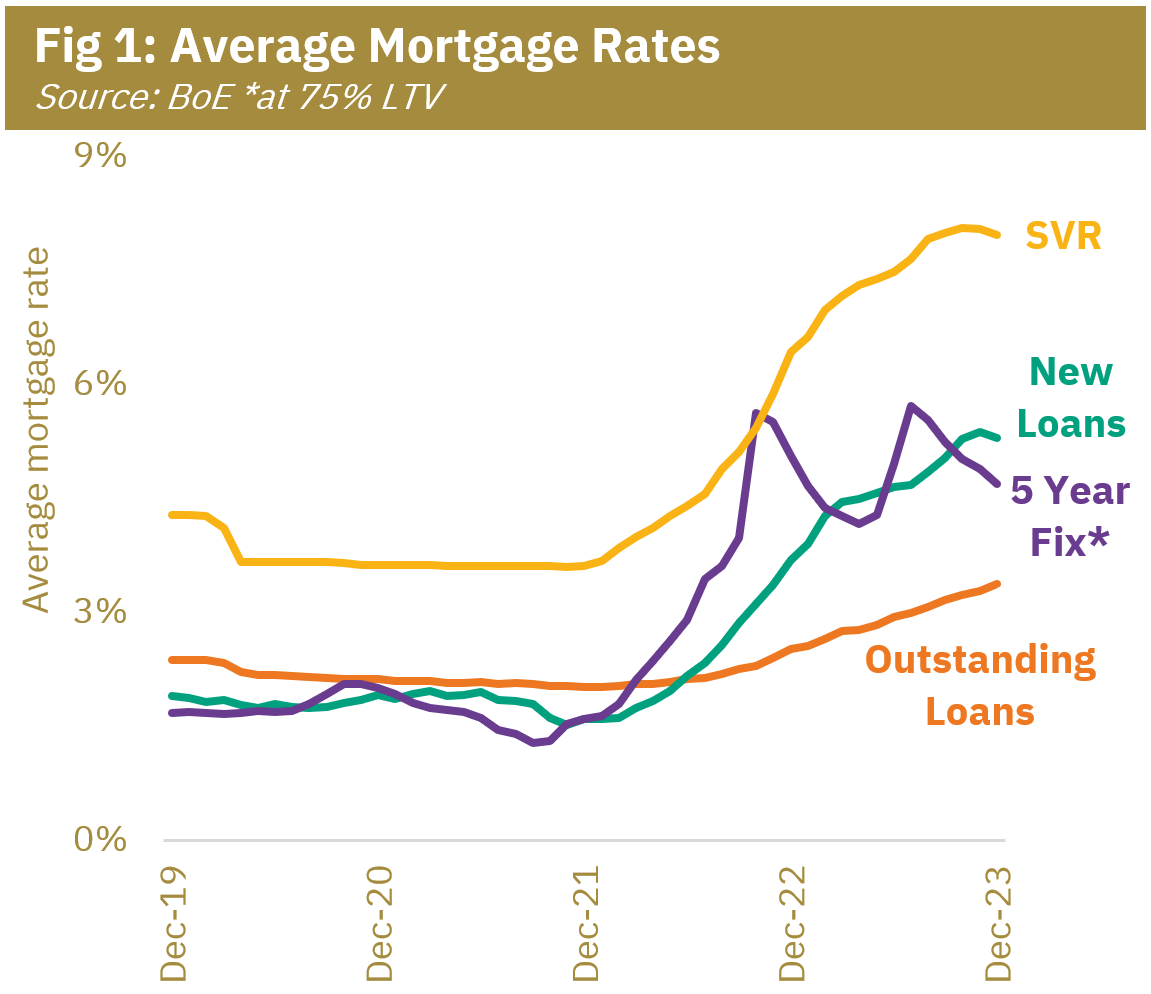
January has seen widespread reporting of positive news for the housing market. Mortgage rates have fallen to slightly more affordable levels, with the Bank of England’s average rate on new lending (both purchase and remortgage) in December recording its first monthly fall since November 2021. Even the Standard Variable Rate (SVR) that many borrowers are stress tested against appears to have peaked in October last year (Fig 1). Though not positive for everyone, house price falls are easing with Rightmove reporting an annual fall in asking prices of 0.7% and Nationwide reporting an annual fall of just 0.2% in January. Meanwhile, listing portals have been reporting higher levels of buyer demand(PDF) and sales agreed(PDF) than this time last year and there are more properties available to buy. It might appear that everything is awesome and there’s no need to worry.
Despite the positive news, the prospects for the housing market this year are far from certain. While we are clearly through the worst of the inflationary period, the global geopolitical outlook is still highly volatile. Swap rates have risen slightly since the beginning of the month, so some of the cheapest mortgage deals might disappear in the short-term.
The future of the housing market is still very dependent on where mortgage rates settle in the medium term, but also the prospects for the economy and any damage done by this period of higher rates. It’s still too early to know whether we’ve passed through this inflationary period relatively unscathed. However, while history doesn’t exactly repeat, if rates do ease further this year, then 2023 might end up looking a bit more like 2005 than 2008 for future house price prospects given the relaxation in mortgage lending metrics we’ve seen over the last year.
Projecting The Past
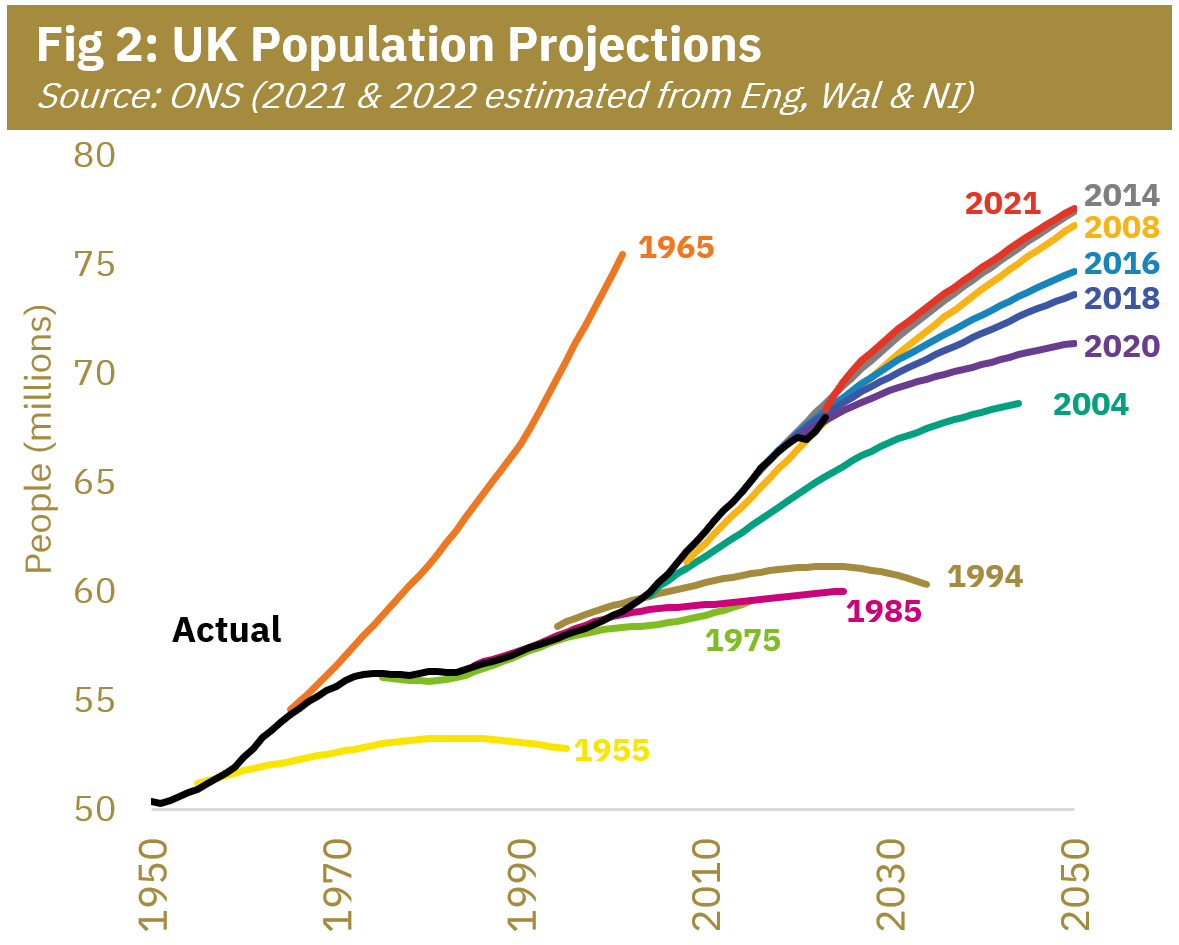
This week the ONS published their latest population projections: the 2021-based interim projections which include data from the 2021 Census. They show a significant change in the future size of the UK’s population compared to recent projections, bringing the figures back into line with previously high years (2008 and 2014). This result is largely due to international migration with an assumption that long-term net international migration will fall from current very high levels to 315,000 people per year from 2028 onwards compared to a long-term assumption of 245,000 people in the previous 2020-based projections. As always, these are projections rather than predictions (as this ONS blog highlights) and, as Fig 2 shows, recent trends are not always indicative of what will happen in the future.
Market At A Glance
Economy – UK
The ONS estimated monthly GDP increased 0.2% in the year to November 2023. Thanks to recent revisions, monthly GDP was 1.7% above the pre-pandemic peak recorded in January 2020. However, this monthly data will continue to be revised in the future.
House Prices - UK
Rightmove reported a 0.7% annual fall in asking house prices in January 2024 while Nationwide reported a 0.2% annual fall in their mortgage approval based index over the same period. Meanwhile, the ONS reported a 2.1% annual fall in its sales agreed index for the year November 2023.
Transactions – UK
HMRC provisionally reported 80,420 residential transactions in December. This was 18% lower than the same month in 2019. Meanwhile, the Bank of England reported mortgage approvals for house purchase were 25% lower in December 2023 than the same month in 2019.