


The Housing Market Is Doing Great
Everything Else Is Rather Worrying
The UK’s housing market appears to have shrugged off recent interest rate fluctuations and is doing great. Though it is reliant on first-time buyers and their tax holiday is due to end soon. Everything else is looking a bit worrying.
The Housing Market Is Doing Great
The housing market has shrugged off the recent rise and subsequent fall in interest rates, with lots of reports of increased activity and rising house prices. Hometrack recently reported(PDF) “Buyer demand is 13% higher than a year ago, with 10% more homes for sale and 12% more sales agreed” while Rightmove reported(PDF) “The number of buyers contacting agents about properties for sale since Boxing Day is 9% ahead of last year, and the number of sales being agreed over the same period is up by 11%”. For once this doesn’t just reflect a poor start last year – there are signs of recovery but it’s not yet clear whether they can be sustained over time.
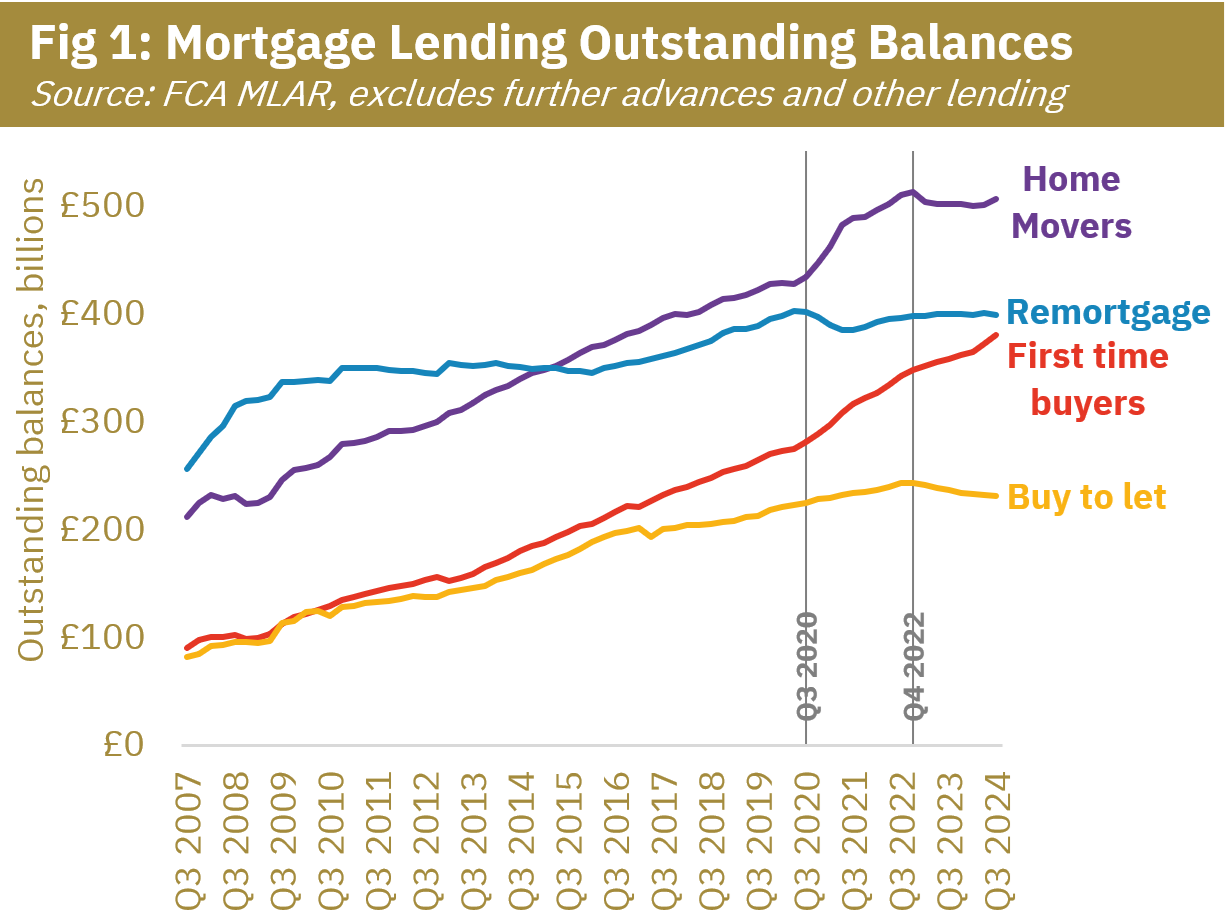
The rise in interest rates over the last couple of years has seen a decline in discretionary buyers such as investors and home movers, and the resilience of needs-based ones such as first-time buyers. As Fig 1 shows, the growth in outstanding mortgage lending balances over the last couple of years has been focussed on those trying to buy their first home and escape the private rented sector or childhood bedroom. That looks set to continue as lenders look for sectors to grow their mortgage books – you don’t get paid a bonus for stagnation. Lenders will be hoping that mortgage rates fall sharply and lobbying hard to ease regulations limiting their lending to first-time buyers. However, it remains to be seen whether first-time buyer demand will remain high following the end of the SDLT relief on the 31st of March.
Everything Else Is Rather Worrying
Housing market activity and prices might be rising but everything else is looking concerning. We’ve regularly highlighted how policy mistakes are an important factor in previous housing market downturns – along with changing interest rates and rising energy costs – and we’re not out of the woods yet. The Bank of England has just reduced Bank Rate to 4.5%, but the damage to the economy may be more severe than official data shows.
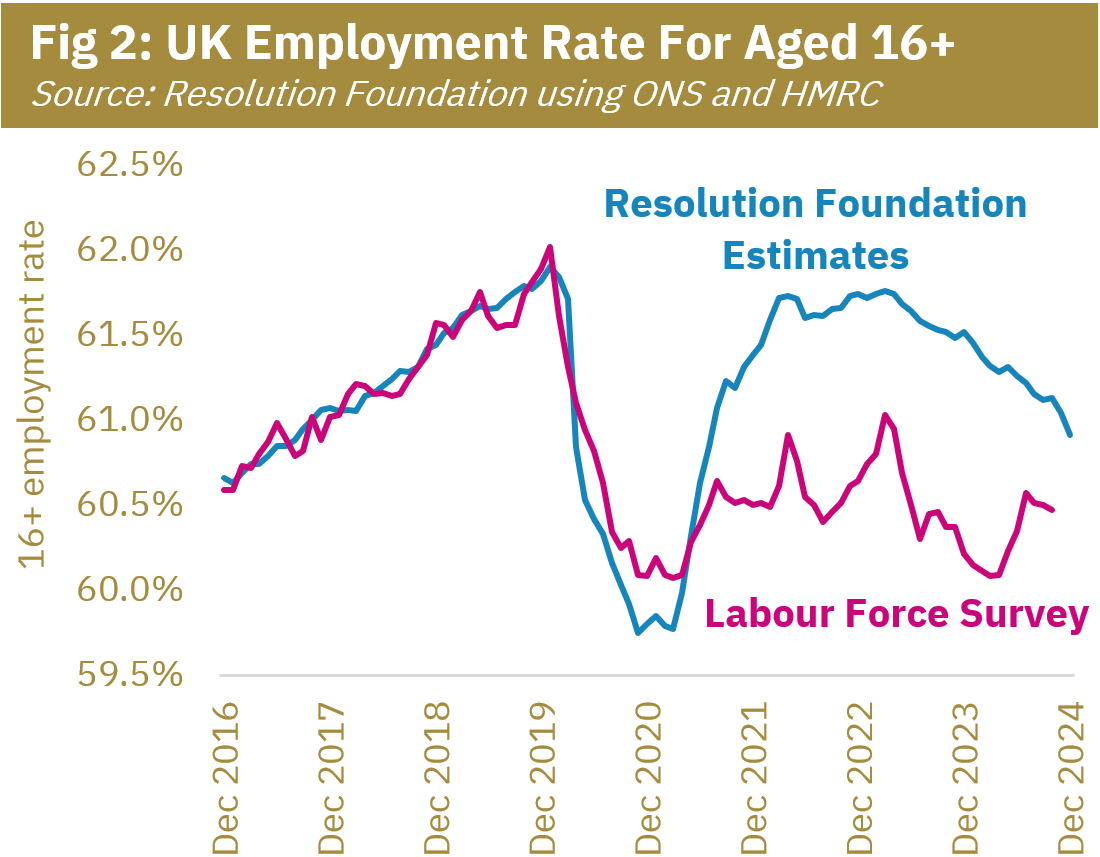
Poor data is not just a housing issue, it also affects some of the key economic data that policy makers and others use. Perhaps the most important is the issues facing the ONS Labour Force Survey, which is used for measuring employment. Unfortunately, it has been compromised by low response rates since the pandemic. Instead, the Resolution Foundation have published estimates of the employment rate using alternative official stats – which they have kindly allowed me to publish in Fig 2. Their data is subject to change but shows a much stronger rebound in 2021. The employment rate then peaked in March 2023 and has fallen since. It suggests the impact of higher interest rates on the economy and employment could be worse than policy makers may appreciate. And that’s before we see any of the fallout from the US hit the UK and global economy – it’s rather worrying over there.
At A Glance
Economy – UK
The ONS estimated monthly GDP increased 1.0% in the year to November 2024. Monthly GDP was 2.6% above the pre-pandemic peak recorded in January 2020. However, this monthly data will continue to be revised in the future.
House Prices - UK
Rightmove reported a 1.8% annual rise in asking house prices in January 2025 while Nationwide reported a 4.1% annual rise in their mortgage approval-based index over the same period. Meanwhile, the ONS reported a 3.3% annual rise in its sales agreed index for the year to November 2024.
Transactions – UK
HMRC provisionally reported 96,330 residential transactions in December. This was 3% below the pre-pandemic (2013-2019) average. Meanwhile, the Bank of England reported mortgage approvals for house purchase were 1% higher in December 2024 than the pre-pandemic average.